Imagine you are writing a research paper or trying to settle a heated debate. You type a query into your browser, click the first result, and land on a Wikipedia is a free, web-based, collaborative encyclopedia that anyone can edit. The article looks perfect. It has citations at the end of every paragraph. But here is the catch: those citations often point to paywalled academic journals are peer-reviewed publications where researchers publish original studies and scholarly articles.. Can you actually read them? Do they say what Wikipedia claims they say? This gap between the summary and the source is where the real story lies.
Wikipedia’s relationship with academic literature is complex. On one hand, it relies heavily on these journals to maintain credibility. On the other, the platform’s open-editing model creates unique challenges in verifying that information. Understanding this dynamic is crucial for anyone who uses Wikipedia as a starting point for learning or research. Let’s break down how this system works, where it shines, and where it falls short.
The Backbone of Credibility: Why Wikipedia Loves Journals
At its core, Wikipedia operates on a simple rule: everything must be verifiable. This doesn’t mean the editors believe something is true just because it is written down; it means they need a reliable source to back it up. For most topics, especially in science, history, and medicine, peer-reviewed journals are publications where experts evaluate the quality and validity of research before it is published. serve as the gold standard.
Why? Because the peer-review process acts as a filter. Before an article lands in a journal like Nature or The Lancet, it undergoes scrutiny by other experts in the field. They check for methodological errors, biased conclusions, and lack of evidence. When Wikipedia editors cite these journals, they are borrowing that layer of trust. It transforms a random claim on the internet into a documented fact supported by the scientific community.
This reliance on academic sources gives Wikipedia a distinct advantage over other blogs or opinion sites. It forces contributors to step outside their personal knowledge and anchor their edits in established research. If you want to add information about a new drug’s side effects, you cannot just say “it causes headaches.” You must link to a clinical trial published in a reputable medical journal. This requirement keeps the content grounded in reality.
The Paywall Problem: Accessibility vs. Verification
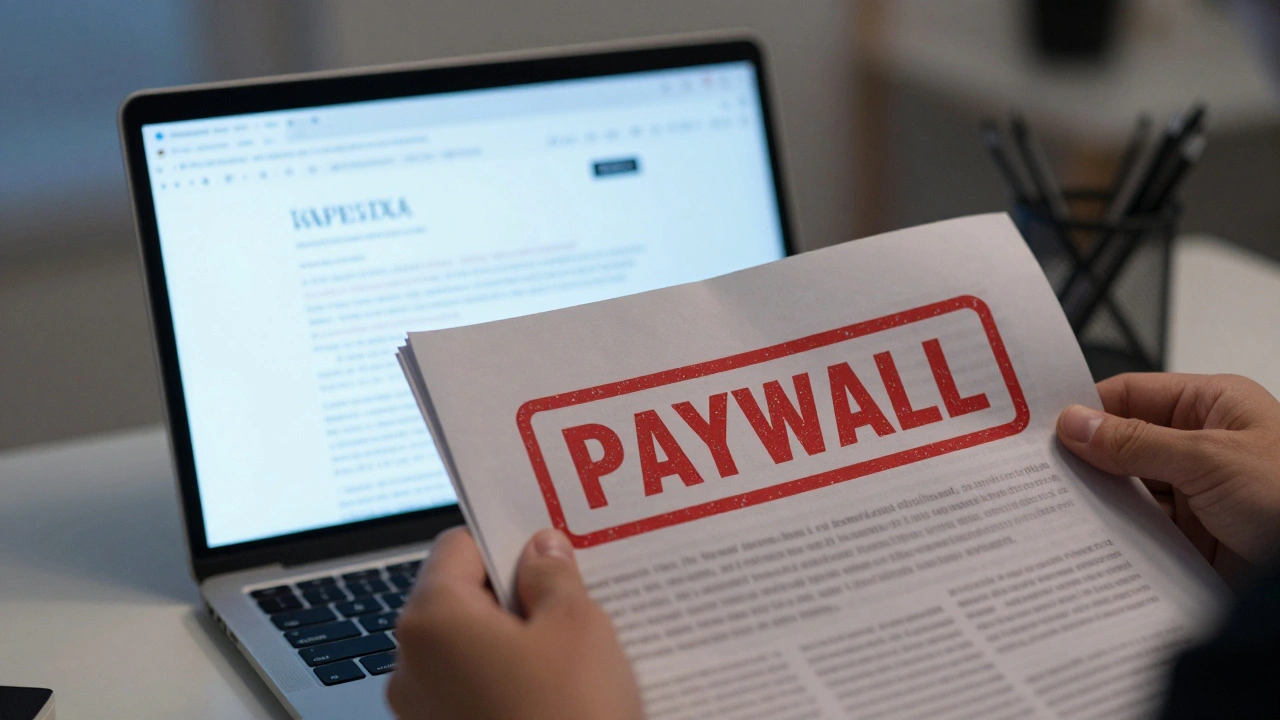
Here is where things get tricky. While Wikipedia demands high-quality sources, many of those sources are locked behind expensive paywalls. A single article from a major publisher like Elsevier or Springer can cost $30 to $50 if you do not have an institutional subscription. Most casual readers-and even many dedicated editors-do not have access to these databases.
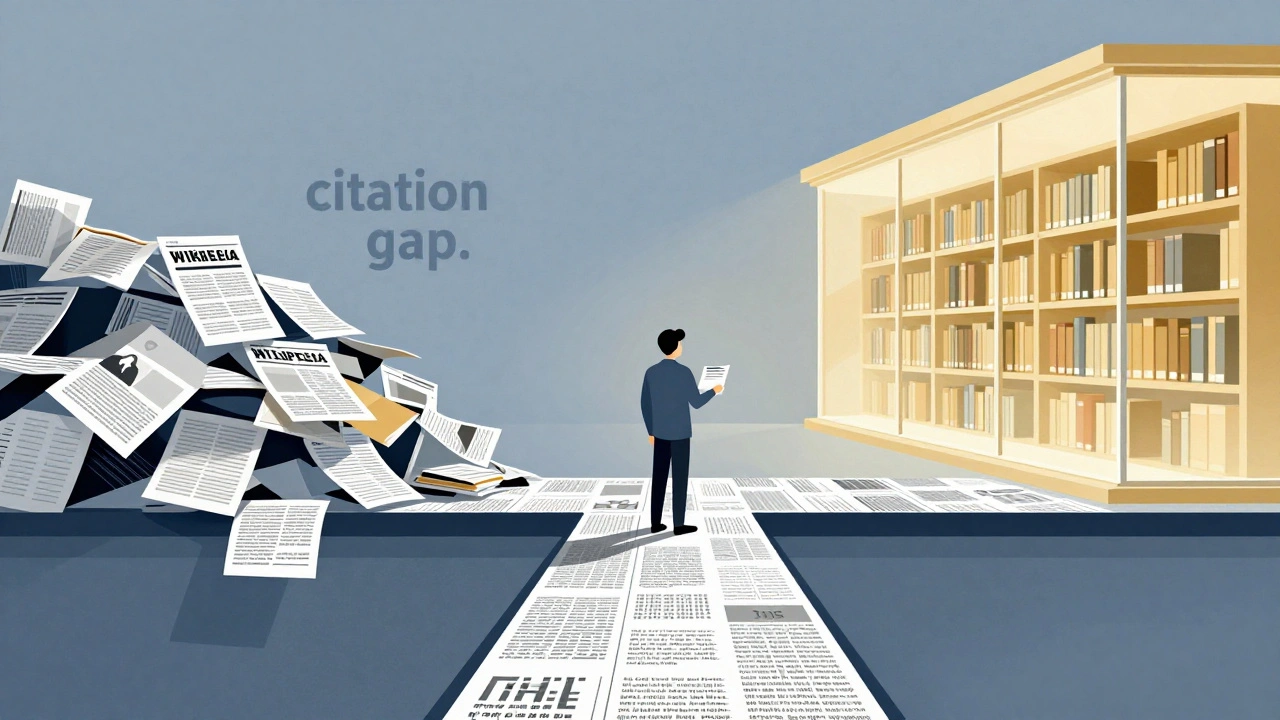
This creates a significant limitation known as the “citation gap.” An editor might copy a sentence from a news report that cites a study, then paste the DOI (Digital Object Identifier) link into Wikipedia. The reference looks valid. However, unless the editor has university library access, they cannot verify if the study actually supports the claim. They are trusting the secondary source (the news report) rather than the primary source (the journal).
This issue disproportionately affects users in developing countries or those without higher education backgrounds. It also makes it harder for new editors to contribute confidently. If you cannot read the source, you cannot judge its context. Is the study small? Was it retracted later? Does it contradict other findings? Without direct access, these nuances are lost.
Misinterpretation and Cherry-Picking
Even when editors can access the journals, human error plays a role. Academic papers are dense, technical, and often nuanced. Summarizing a complex statistical analysis into a single sentence for an encyclopedia entry requires deep understanding. Misinterpretation happens more often than you might think.
Consider a study on climate change that shows a slight increase in temperature in one region over ten years. A well-meaning but inexperienced editor might summarize this as “global temperatures are rising,” ignoring the regional scope and limited timeframe. Another editor might cherry-pick a quote from the discussion section that supports a specific viewpoint, while omitting the authors’ caveats about uncertainty.
This is not necessarily malicious. It is a natural consequence of summarizing complex information. However, it highlights a key limitation: Wikipedia entries can drift away from the original meaning of the cited literature. Over time, through multiple edits, the nuance can erode, leaving a simplified version that may not fully represent the academic consensus.
The Role of Open Access and Preprints
Luckily, the landscape is changing. The rise of Open Access publishing is a model where research articles are freely available to read online without subscription fees. has helped bridge the accessibility gap. Journals like those from PLOS (Public Library of Science) or BioMed Central allow anyone to read the full text. This empowers Wikipedia editors to verify claims directly, reducing reliance on secondary interpretations.
Additionally, preprint servers like arXiv or bioRxiv allow researchers to share their work before formal peer review. While Wikipedia generally discourages citing preprints due to lack of vetting, they can provide early insights into emerging topics. Some communities use them cautiously, noting their status clearly. This flexibility helps keep Wikipedia current in fast-moving fields like artificial intelligence or virology, where waiting for traditional publication could make the information obsolete.
Community Vigilance and Vandalism Checks
One of Wikipedia’s greatest strengths is its community-driven oversight. Thousands of volunteer editors monitor changes in real-time. If someone adds a dubious claim backed by a fake or irrelevant journal, it is usually caught quickly. Tools like ORES (Objective Revision Evaluation Service) use machine learning to flag potentially problematic edits based on past patterns.
Experienced editors often specialize in specific topics. A doctor editing health-related pages will know which journals are reputable and which are predatory. They can spot when a citation is being used out of context. This collective expertise acts as a second layer of peer review, complementing the academic process. It is not perfect, but it is remarkably effective at maintaining quality.
| Source Type | Reliability Level | Accessibility | Verification Difficulty |
|---|---|---|---|
| Peer-Reviewed Journals | High | Low (often paywalled) | High (requires expertise) |
| Open Access Journals | High | High (free) | Medium (still requires expertise) |
| News Articles | Medium | High | Low (easy to read) |
| Preprints | Low/Medium | High | High (unvetted) |
Practical Tips for Readers and Editors
If you are using Wikipedia for research, treat it as a map, not the territory. Use the references to find the original studies. Look for patterns across multiple sources rather than relying on a single citation. Check the talk page of the article-it often contains debates about the reliability of certain claims.
For editors, always prioritize open-access sources when possible. If you must cite a paywalled journal, ensure you have read the full text yourself. Avoid paraphrasing loosely; stick closely to the authors’ conclusions. And remember, adding a citation is not enough-you must understand what it says.
The Future of Scholarly Integration
As digital libraries expand and AI tools improve, verifying academic sources may become easier. Projects like Wikidata aim to structure knowledge so that facts can be linked directly to their origins. Imagine clicking a statement on Wikipedia and instantly seeing the relevant data points from the original study. This level of transparency would strengthen trust in the platform significantly.
Until then, the balance between openness and accuracy remains delicate. Wikipedia’s strength lies in its ability to aggregate vast amounts of information quickly. Its limitation is the human element involved in curating that information. By understanding both sides, we can use this tool more effectively and critically.
Is Wikipedia considered a reliable academic source?
No, Wikipedia is generally not accepted as a primary academic source because it is user-generated and can change frequently. However, it is excellent for finding initial background information and locating credible primary sources through its reference lists.
How can I tell if a Wikipedia citation is trustworthy?
Check if the source is a peer-reviewed journal, a reputable news outlet, or an official government publication. Avoid citations from personal blogs, self-published books, or non-expert websites. Look for multiple independent sources supporting the same claim.
What is the difference between a primary and secondary source on Wikipedia?
A primary source is an original document, such as a research study or historical letter. A secondary source analyzes or interprets primary sources, like a textbook or review article. Wikipedia prefers secondary sources for general statements to avoid original research.
Can I cite a Wikipedia article in my school essay?
Most educators advise against citing Wikipedia directly. Instead, use the references listed at the bottom of the article to find the original studies or books. Cite those original sources in your bibliography to demonstrate deeper research.
How does Wikipedia handle retracted scientific papers?
If a cited paper is retracted, editors remove the citation and update the article to reflect current consensus. The revision history records these changes, allowing readers to see how the information evolved. Reliable sources replace the invalid ones.