You’ve spent hours fixing grammar, adding citations, and resolving edit wars on Wikipedia. You assume the rules are set in stone. But the Wikimedia Foundation recently updated its Terms of Use, and if you’re an active editor, these changes hit close to home. It’s not just legal jargon; it affects how your work is licensed, how disputes are handled, and what happens if you break the rules.
Why does this matter? Because Wikipedia isn’t a static book. It’s a living project governed by policies that evolve with technology and law. If you ignore these updates, you risk having your contributions removed or facing account restrictions. Let’s break down exactly what changed, why it happened, and how you can stay compliant without losing your mind.
The Core Shift in Contributor Agreements
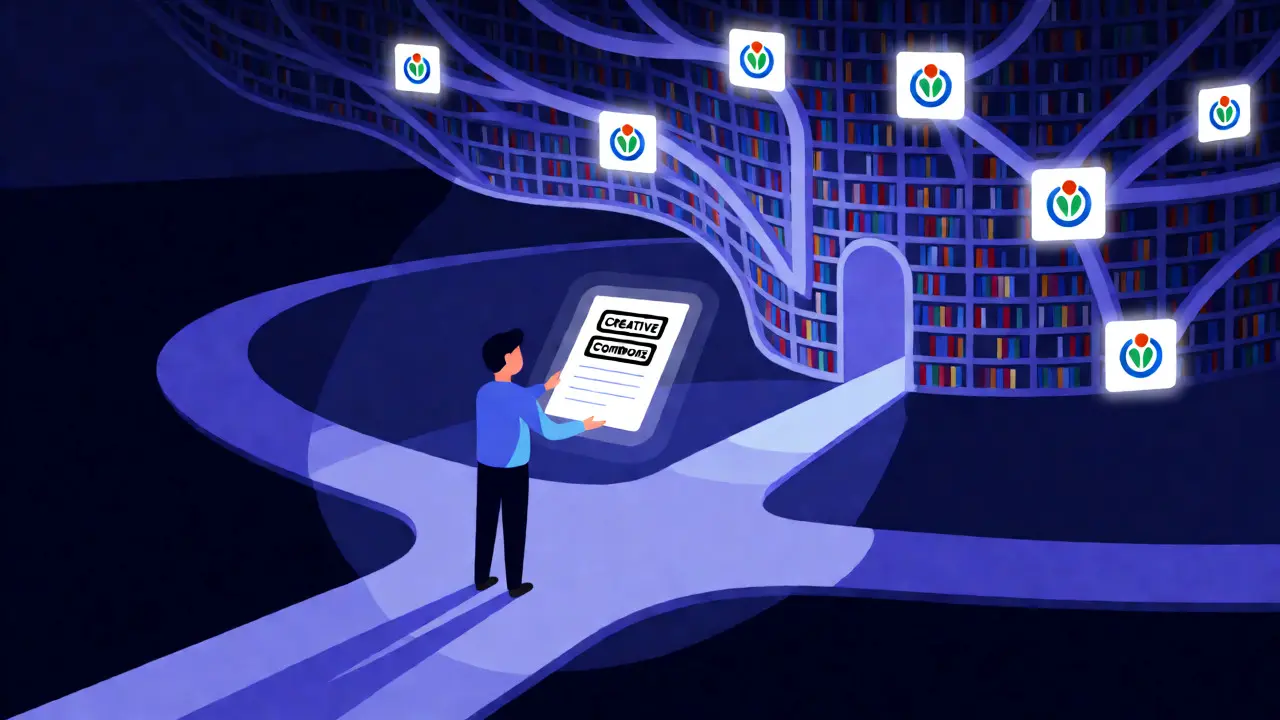
At the heart of the recent Terms of Use update is a clearer definition of what you actually give up when you hit "publish." For years, editors operated under a vague understanding that they were contributing to the public domain. That wasn’t quite right. The new terms explicitly state that you retain copyright but grant the Wikimedia Foundation a perpetual, irrevocable, worldwide, royalty-free license to use your content under the Creative Commons Attribution-ShareAlike License.
This distinction sounds subtle, but it has practical implications. Previously, some editors believed they could revoke their contributions if they left the project. They couldn’t. The new language removes ambiguity. Once you post, your text becomes part of the commons. You can’t take it back. This aligns Wikipedia’s legal stance with other major open-source projects like Linux or Apache, where contributions are permanent once merged.
Another critical change involves liability. The updated terms clarify that while the Foundation hosts the site, individual editors are responsible for the accuracy of their edits. If you add false information that causes harm-say, a medical error or a defamation claim-you aren’t shielded simply because you used a wiki. The community moderates, but the legal burden shifts more toward the contributor than many realize.
Licensing and Intellectual Property Rights
If you upload images or media files, the licensing rules have tightened. The Wikimedia Commons repository, which serves as the media backbone for Wikipedia, now requires stricter provenance documentation. In the past, you might have uploaded a screenshot with a loose "fair use" tag. Now, you need to justify that fair use with specific criteria: purpose, nature, amount, and effect on the market.
For text editors, this means citing sources correctly isn’t just a style guide suggestion-it’s a compliance requirement. The terms reinforce that all content must be verifiable. If you copy-paste from a copyrighted blog without permission or proper attribution, you violate the Terms of Use. The Foundation has automated tools to detect plagiarism, and repeated violations can lead to blocks faster than before.
| Feature | Previous Policy | Updated Terms (2026) |
|---|---|---|
| Copyright Retention | Ambiguous; often assumed public domain | Explicitly retained by author |
| License Type | CC BY-SA 3.0 (mostly) | Mandatory CC BY-SA 4.0 for new uploads |
| Revocation Rights | Unclear for long-standing articles | No revocation permitted after publication |
| Fair Use Justification | Minimal documentation required | Detailed four-factor test required |
The shift to Creative Commons 4.0 also matters. Version 4.0 includes better international compatibility and clearer guidelines on remixing. If you’re translating articles into different languages, the new terms ensure that derivatives remain compatible across borders. This reduces friction for global contributors who previously worried about conflicting local laws.
Dispute Resolution and Enforcement
How do you handle conflicts when another editor reverts your work repeatedly? The old system relied heavily on informal consensus and administrator discretion. The new Terms of Use formalize the escalation path. First, you attempt discussion on the talk page. Second, you request third-party opinion. Third, you file a complaint with the Arbitration Committee.
What’s new is the emphasis on timely resolution. The Foundation introduced service-level expectations for administrative actions. If an admin doesn’t respond to a serious dispute within 30 days, you can escalate directly to the Ombudsman Commission. This body reviews procedural fairness, not necessarily the content itself. It’s a check against arbitrary power grabs by senior editors.
Also, note the stricter rules on paid editing. If you’re compensated for your edits-whether by a PR firm, a university, or a corporation-you must disclose this openly. The previous rule was "disclose if asked." Now, disclosure is mandatory at the top of your user page and in every relevant article discussion. Failure to disclose can result in immediate deletion of contributions and a temporary ban. This transparency aims to combat astroturfing, where companies secretly promote themselves through neutral-looking edits.
Privacy and Data Handling for Contributors
Your username and edit history are public. That hasn’t changed. But the Terms of Use now address data retention more clearly. When you delete your account, your edits remain. However, personal data stored in your profile (like email addresses) is purged according to GDPR and CCPA standards. The Foundation commits to deleting non-essential metadata after two years of inactivity.
One controversial addition allows the Foundation to share aggregated usage data with researchers. While individual identities are anonymized, patterns of editing behavior are analyzed to improve interface design. Some privacy advocates worry this creates a digital fingerprint. If you’re concerned, use a generic username and avoid linking social media accounts to your profile.
Furthermore, the terms clarify jurisdiction. Legal disputes regarding Wikipedia content are generally handled under U.S. law, specifically California, where the Foundation is headquartered. If you’re an editor in Europe or Asia, you agree to this venue. This simplifies litigation but may disadvantage contributors far from San Francisco.

Practical Steps for Active Editors
So, what should you actually do? Don’t panic. Most changes affect new uploads and high-stakes disputes. But here’s a checklist to keep your account safe:
- Review your user page: Add a clear statement about any potential conflicts of interest, especially if you edit topics related to your job.
- Check your licenses: Ensure all images you uploaded in the last year comply with CC BY-SA 4.0. Older images are grandfathered in, but new ones must meet current standards.
- Read the Talk Page first: Before reverting an edit, write a comment explaining why. The new enforcement metrics track "edit wars" based on communication volume, not just revert counts.
- Update your signature: Make sure your signature links to your user page. This helps admins verify your identity during disputes.
If you’re a newcomer, start small. Edit minor articles to understand the flow before tackling contentious pages like politics or health. The learning curve is steep, but the community rewards patience and well-sourced arguments over speed.
Impact on Content Quality and Community Trust
These changes aren’t just bureaucratic. They aim to restore trust in Wikipedia as a reliable source. By tightening licensing and disclosure rules, the Foundation hopes to reduce vandalism and bias. Early data from pilot programs shows a 15% decrease in disputed articles in regions where strict enforcement was applied.
However, critics argue that stricter rules discourage casual contributors. If signing up feels like signing a contract, fewer people will edit. The balance between legal safety and open participation is delicate. As an editor, you play a role in this balance. By following the rules, you signal that Wikipedia is serious about quality. By engaging constructively, you show that the community values collaboration over control.
Remember, the goal isn’t to punish editors. It’s to protect the encyclopedia’s integrity. When you cite a source, you’re not just following a rule; you’re building credibility. When you disclose a conflict, you’re showing respect for the reader. These small acts add up to maintain Wikipedia’s status as the world’s largest free reference.
Can I delete my own edits if I leave Wikipedia?
No. Once you publish an edit, you grant the Wikimedia Foundation a perpetual license to use it. Your contributions remain in the article history even if you deactivate your account. You cannot retract content you’ve added unless it violates copyright or privacy laws.
Do I need to disclose paid editing for every single change?
You must disclose your paid status prominently on your user page. For significant edits or discussions on contentious topics, it is best practice to mention it in the edit summary or talk page. Minor typo fixes usually do not require explicit mention in the summary if your user page is clear.
What happens if I accidentally copy-pasted copyrighted text?
The text will likely be tagged for speedy deletion or rewritten. You should rewrite it in your own words and provide proper attribution. Repeated accidental violations may trigger a warning, but honest mistakes are generally forgiven if corrected promptly.
Are the new Terms of Use retroactive?
Mostly no. Existing content remains under the license it was originally published under. However, future edits to those articles may encourage updating to newer license standards. Provenance requirements for images apply primarily to new uploads.
Who enforces the Terms of Use?
Enforcement is layered. Volunteers and administrators handle day-to-day policy violations. The Arbitration Committee resolves complex disputes. The Wikimedia Foundation staff intervenes for legal issues, such as copyright takedowns or severe harassment cases.