Wikipedia isn’t supposed to be a place where opinions win. It’s supposed to be a collection of facts, presented fairly, without favoring one side over another. But anyone who’s ever edited a Wikipedia page knows how easy it is to slip into bias-even when you mean well. A well-meaning edit can accidentally make a political figure look worse, or a corporation look better. That’s why the Neutral Point of View (NPOV) policy exists. And why smart editors use checklists to catch bias before it slips in.
What NPOV Really Means
NPOV doesn’t mean avoiding strong facts. It means presenting them without stacking the deck. If 70% of historians agree on something, say so. If a minority view exists, mention it-but only if it’s notable and properly sourced. You’re not deciding what’s true. You’re reporting what reliable sources say, and how much support each claim has.
Think of it like a courtroom. You don’t argue for the defendant or the prosecutor. You just lay out the evidence, who said what, and how much weight it carries. Wikipedia editors are the court reporters, not the lawyers.
The Core Checklist for NPOV
Before you hit "Save", run through this simple checklist. It’s based on real edits that got reverted-and later fixed-by experienced editors.
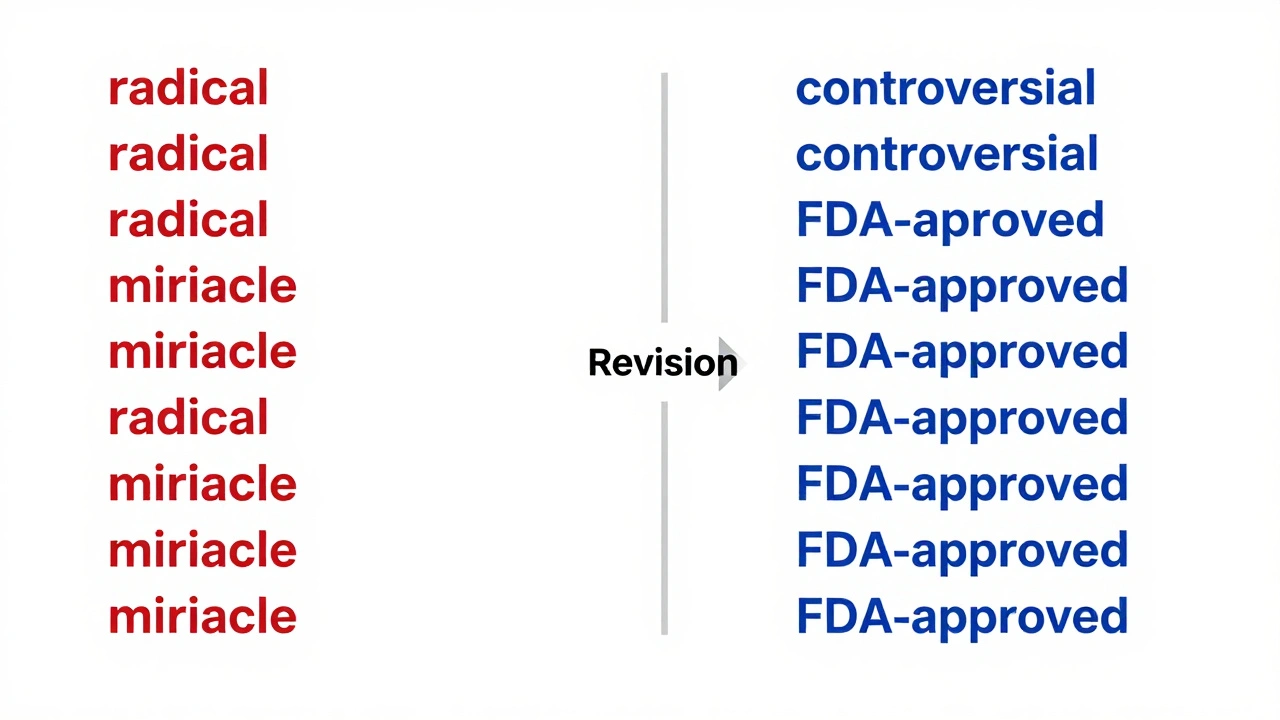
- Are you using loaded language? Words like "radical," "extreme," "corrupt," or "brilliant" carry emotional weight. Replace them with neutral terms: "controversial," "divisive," "widely criticized," or "highly regarded."
- Are you giving disproportionate space to one side? If a topic has three major viewpoints, each should get roughly equal coverage-unless one is backed by 80% of scholarly sources. Then say so explicitly: "Most experts agree..."
- Are you citing only sources that match your view? If you’re editing a page about climate change, and all your sources are from environmental groups, you’re missing half the story. Look for peer-reviewed journals, government reports, and major news outlets across the political spectrum.
- Are you attributing claims properly? Never write "The policy failed." Write "According to a 2023 study by the University of Oxford, the policy led to a 12% drop in public trust." Attribution isn’t just good practice-it’s the backbone of neutrality.
- Are you omitting key context? If you mention that a company donated to a political campaign, but leave out that it also donated to the opposing party, you’re misleading. Context isn’t optional. It’s required.
Common Bias Traps and How to Avoid Them
Some biases are sneaky. They don’t scream. They whisper. Here are the most common ones editors miss:
- Association bias: "A former employee of Company X said..." implies guilt by association. Instead: "John Doe, who worked at Company X from 2018 to 2021, stated..."
- Source bias: Relying only on blogs, Reddit, or activist websites. Wikipedia requires reliable sources-peer-reviewed journals, books from university presses, major newspapers, and official publications.
- Temporal bias: Focusing only on recent events and ignoring historical context. A current protest might be linked to policies from 30 years ago. Don’t skip the timeline.
- Geographic bias: Assuming your local perspective is universal. A law that’s controversial in the U.S. might be uncontroversial in Germany. Always check international sources.
- Literalism bias: Taking quotes out of context to make someone look bad-or good. If a politician says "I support funding for education," but you leave out that they meant "only for private schools," you’ve distorted their position.

How to Spot Bias in Others’ Edits
You don’t have to be the one who introduced bias to fix it. Often, you’re the first person to notice it. Here’s how to respond:
- Don’t revert with anger. Use the talk page. Say: "I noticed this edit uses the term 'radical.' The NPOV policy asks for neutral language. Could we rephrase it as 'controversial' and cite the source?"
- Use the NPOV template. Wikipedia has a built-in tag:
{{NPOV}}. Add it to the top of a page if you suspect bias. It triggers a notice to other editors. - Check the edit history. If one user keeps adding the same biased phrasing, look at their other edits. Are they consistently favoring one side? That’s a red flag.
- Don’t assume bad intent. Most bias comes from ignorance, not malice. A new editor might not know that "fanatic" is loaded. Your job is to guide, not punish.
Real Examples from Wikipedia Edits
Let’s look at two real cases from Wikipedia’s edit history:
Example 1: The 2020 U.S. Election
Original edit: "The election was stolen by widespread fraud."
Revised: "Claims of widespread voter fraud were made by some political figures and media outlets. Multiple audits and court rulings, including those by Republican-appointed judges, found no evidence of systemic fraud."
Example 2: A Pharmaceutical Company
Original edit: "Company Y developed a miracle drug that saved millions."
Revised: "Company Y developed Drug X, which received FDA approval in 2021. Clinical trials showed a 40% reduction in symptoms for patients with Condition Z. Independent researchers have questioned the long-term safety data, and the company has faced lawsuits over marketing practices."
Both revisions removed judgment. They added attribution. They included countervailing evidence. That’s NPOV in action.
Tools and Resources
Wikipedia has built-in tools to help you stay neutral:
- The NPOV guide: Found at Wikipedia:Neutral point of view. It’s long, but the first three sections are all you need.
- Reliable sources noticeboard: If you’re unsure whether a source counts, post it there. Editors will tell you.
- WikiProject Bias: A group of editors who review pages for neutrality. You can request a review if you’re stuck.
- Checklists: Many editors use printable NPOV checklists. Search "Wikipedia NPOV checklist PDF"-you’ll find several community-made versions.
Why This Matters Beyond Wikipedia
Wikipedia is the fifth most visited website in the world. Millions of students, journalists, and professionals rely on it as a first source. If Wikipedia becomes a mirror for partisan narratives, it loses its credibility. And when it loses credibility, everyone loses.
Editing for neutrality isn’t about being boring. It’s about being trustworthy. It’s about giving readers the facts they need to form their own opinions-not the ones you want them to have.
Next time you edit, ask yourself: "Would someone who disagrees with me still recognize this as fair?" If the answer isn’t yes, go back. Revise. Rethink. That’s how Wikipedia stays useful.
What happens if I violate Wikipedia’s NPOV policy?
If your edit is seen as biased, it will likely be reverted by other editors. You may receive a warning on your talk page, especially if it’s a repeat issue. Repeated violations can lead to temporary editing restrictions. The goal isn’t punishment-it’s correction. Most editors are happy to help you understand why a change was problematic.
Can I use opinionated sources like blogs or YouTube channels?
Generally, no. Wikipedia requires reliable sources-those with editorial oversight, fact-checking, and accountability. Blogs, personal YouTube channels, and social media posts don’t meet that standard. You can mention them if they’re widely cited in reliable sources, but never as primary evidence. For example: "A viral YouTube video claimed X, but this was later debunked by The New York Times and a peer-reviewed study in Nature."
How do I know if a source is "reliable"?
Reliable sources include peer-reviewed journals, books from university presses, major newspapers (like The Guardian, Reuters, or The Washington Post), government publications, and established news organizations. Avoid sources with clear conflicts of interest, like corporate PR sites or partisan think tanks unless they’re cited in reputable media. Wikipedia’s official guideline on reliable sources lists over 20 types of acceptable sources.
Is it okay to say "some people believe"?
Yes-but only if you follow it with context. "Some people believe climate change is a hoax" is incomplete. Better: "Some political figures and media outlets have claimed that climate change is a hoax, though this view is rejected by over 97% of climate scientists according to a 2021 study in Environmental Research Letters." Always tie vague claims to specific sources and quantify their support.
Do I need to cite every single fact?
Yes. Wikipedia’s core policy is "verifiability," not "truth." Even facts that seem obvious-like "The Earth orbits the Sun"-need citations if they’re part of a contested topic. For widely accepted facts, use a standard textbook or encyclopedia. For less obvious claims, cite a peer-reviewed paper or major news outlet. Uncited claims are removed.