Imagine spending three hours writing a detailed section on a local historical figure, only to have it deleted by an anonymous user who thinks you're biased. Or worse, receiving a personal email from that same user threatening to "teach you a lesson." For the millions of volunteers who keep Wikipedia is a free, web-based collaborative project that aims to compile all knowledge in the language of mankind, these aren't hypotheticals. They are daily realities managed by a complex system known as Trust and Safety operations.
While most people see Wikipedia as a static database, it is actually a living ecosystem governed by human interaction. The core challenge isn't just fact-checking; it's keeping thousands of passionate, often anonymous contributors from driving each other crazy. This article breaks down how the Wikimedia Foundation is the non-profit organization that hosts and supports Wikipedia and its sister projects handles this delicate balance between open access and community health.
The Hidden Infrastructure Behind Open Knowledge
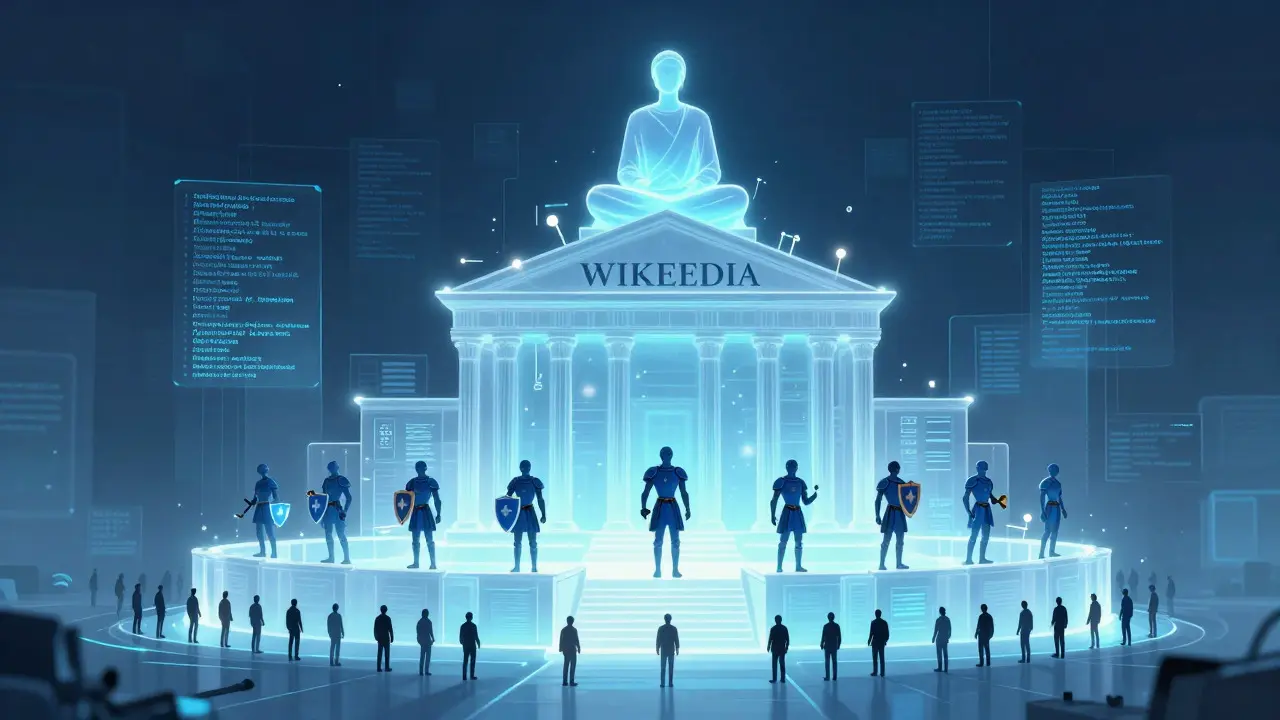
You might think that because anyone can edit a page, there are no rules. In reality, the opposite is true. The platform runs on a strict set of norms enforced by a layered hierarchy of users. At the bottom, you have regular editors. Above them sit administrators, often called "sysops," who have technical tools to block users or protect pages. But the real backbone of trust and safety lies in the specialized committees that handle disputes when sysops get involved or when conflicts escalate beyond simple editing wars.
This structure is designed to prevent any single group from holding too much power. If you look at the history of the English-language Wikipedia, you'll find that early on, a small group of admins held absolute control. That model failed. It led to accusations of bias and stagnation. Today, the system relies on checks and balances. When an editor feels unsafe or harassed, they don't just complain to a random admin. They file a report with specific bodies depending on the severity of the issue. This procedural clarity is what keeps the volunteer base stable despite high turnover rates.
Defining Harassment in a Digital Space
One of the biggest hurdles in maintaining a safe environment is defining what counts as harassment. In the physical world, we have laws against stalking and defamation. Online, the lines are blurrier. Is it harassment if someone edits your bio page to say you're a "bad writer"? Probably not, unless it's done repeatedly and personally. Is it harassment if someone creates a fake account to vote against your proposals? Yes, that's likely sock puppetry, a form of bad faith editing.
The community has developed a nuanced understanding of these behaviors. They distinguish between "edit warring," which is usually a disagreement over facts, and "personal attacks," which target the editor rather than the content. The key metric here is intent. If the goal is to improve the encyclopedia, friction is expected. If the goal is to silence a specific person, it's a safety violation. This distinction requires human judgment, which is why automated bots alone can't solve the problem. They flag patterns, but humans decide context.
The Role of the Arbitration Committee
For the English-language version of Wikipedia, the Arbitration Committee is a body of elected members who resolve disputes between editors through binding decisions acts as the supreme court. It’s a fascinating, if sometimes frustrating, institution. Members are elected by the community every year, meaning their mandate comes directly from the people they judge. This democratic legitimacy is crucial. If the ArbCom were appointed by the Foundation, editors would likely view it as an external authority imposing rules. Because it’s internal, it feels like peer review.
However, the process is slow. A case can take months to resolve. During this time, the parties involved are often stuck in limbo. Some editors choose to step away entirely, fearing that engaging in the arbitration process will drain their energy. This is a known pain point. Critics argue that the slow pace allows toxic behavior to fester. Supporters counter that rushing justice leads to unfair outcomes. Finding that balance is an ongoing operational challenge for the project.
Global Rights and Cross-Wiki Complexity
Wikipedia isn't just one site. There are over 300 language versions. This creates a unique problem: what happens if a bad actor moves from the English wiki to the German wiki to escape sanctions? To address this, the Foundation created global roles. Stewards, for example, can block users across all wikis. Bureaucrats can create new accounts. These global rights holders are powerful, but they are also hard to reach. Most are based in Europe or North America, creating a timezone gap for users in Asia or Africa.
To mitigate this, the community established Ombuds Committees. These groups act as independent auditors for the global staff. If you believe a Steward abused their power, you don't complain to another Steward. You go to the Ombuds. This separation of powers is critical for trust. Without it, global rights holders could become a shadow government, unchecked by the local communities they affect. The existence of these oversight bodies is a direct response to past controversies where global admins were accused of favoring certain languages or political viewpoints.
Technological Tools for Behavioral Change
Human judgment is essential, but technology helps scale the solution. The MediaWiki software, which powers Wikipedia, includes several features designed to reduce friction. One of the most effective is the "Talk Page" system. Before you make a controversial edit, you’re encouraged to discuss it on the associated talk page. This forces a pause. It turns a silent deletion into a conversation. Many conflicts die out simply because both parties realize the other was working from outdated information.
More recently, the platform has introduced better notification systems. If someone replies to your comment, you know immediately. If your edit is reverted, you get a clear reason code. These small UX improvements lower the emotional temperature of interactions. When you feel heard, you’re less likely to react defensively. The Foundation invests heavily in these developer resources, recognizing that good design is a form of conflict prevention. It’s cheaper to build a feature that prevents a fight than to hire a moderator to break one up.

Challenges Facing Future Operations
Despite these robust systems, the landscape is shifting. The rise of social media has changed how people expect communication to work. On Twitter or Reddit, speed is king. On Wikipedia, consensus is king. Newer generations of editors, coming from fast-paced digital environments, sometimes struggle with the slower, more formal tone of Wikipedia discussions. This cultural mismatch can lead to misunderstandings that older editors interpret as rudeness, while newer editors interpret as gatekeeping.
Additionally, the threat of coordinated bad faith editing is growing. State-sponsored disinformation campaigns now target Wikipedia to alter narratives about geopolitical events. Unlike individual trolls, these actors use sophisticated techniques, such as rotating IP addresses and using multiple accounts, to evade detection. Detecting these patterns requires advanced data analysis, pushing the need for specialized tech teams within the Foundation. The battle for truth is no longer just about facts; it’s about detecting the fingerprints of organized manipulation.
How You Can Contribute to a Safer Environment
You don’t need to be an administrator to help. As a regular editor, your behavior sets the tone. Assume good faith. If someone reverts your edit, assume they saw something you missed, not that they hate you. Use the talk page. Write clearly and politely. Avoid sarcasm, which rarely translates well in text. And if you do encounter toxicity, document it. Keep records of dates, times, and specific comments. This makes it easier for moderators to assess the situation objectively.
If you feel unsafe, remember that you have options. You can request a temporary block. You can ask for a page to be protected. You can even step back for a few weeks. Taking a break isn’t quitting; it’s preserving your mental health so you can return with fresh eyes. The community values longevity over intensity. A contributor who lasts five years brings more value than one who burns out in six months. Protecting yourself is part of protecting the project.
Frequently Asked Questions
Who exactly decides if an editor is being harassed?
It depends on the severity. Minor issues are handled by Administrators. Major, unresolved disputes go to the Arbitration Committee on the English Wikipedia. For cross-language issues involving global admins, the Ombuds Committees make the final call. The decision is always based on documented evidence and community guidelines, not personal opinion.
Can I be banned from Wikipedia forever?
Yes, but it is rare. Bans are usually temporary, ranging from days to months. A permanent ban typically requires extreme misconduct, such as legal threats, severe personal abuse, or proven coordination with bad faith actors. Even then, appeals are possible after a significant period of good behavior elsewhere.
What is the difference between a Sysop and a Steward?
A Sysop (Administrator) has powers limited to one language version of Wikipedia, like English or Spanish. A Steward has global powers, allowing them to block users across all Wikipedia language editions. Stewards are harder to elect and face stricter scrutiny because their reach is much wider.
Does the Wikimedia Foundation pay moderators?
Generally, no. Most community moderators, including admins and ArbCom members, are volunteers. However, the Foundation employs full-time staff in the Community Engagement team who support these processes, provide training, and handle legal matters. They facilitate the work but rarely make direct editorial decisions.
How long does it take to resolve a dispute?
Simple vandalism is fixed in minutes. Interpersonal disputes can take weeks. Arbitration cases can take several months due to the volume of evidence and the part-time nature of the committee members. Patience is a required skill for navigating the dispute resolution system.