Wikipedia is one of the most visited sources of health information in the world. Millions of people look up symptoms, treatments, and medical conditions here every day. But not all health articles on Wikipedia are created equal. Some are detailed, well-sourced, and updated regularly. Others are outdated, vague, or even misleading. That’s where WikiProject Medicine comes in.
What Is WikiProject Medicine?
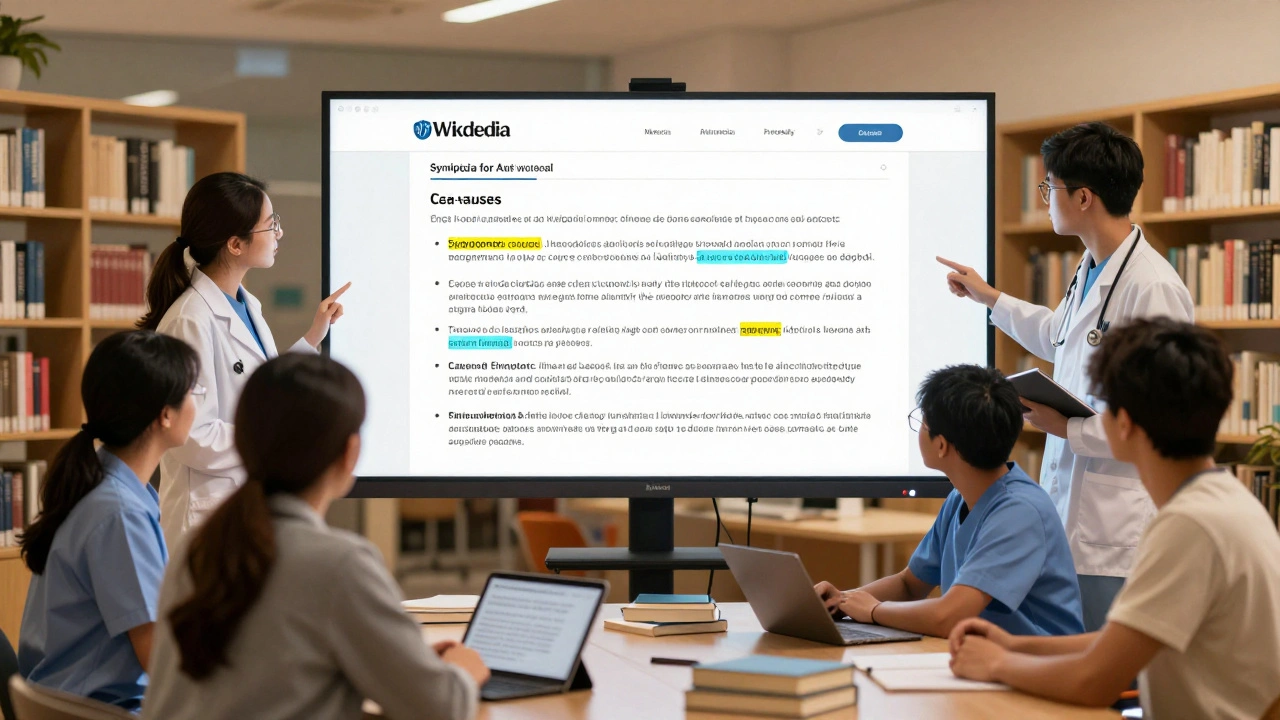
WikiProject Medicine is a group of volunteers-doctors, nurses, researchers, students, and laypeople-who work together to improve the quality of medical content on Wikipedia. It started in 2004 and has grown into one of the largest and most active WikiProjects on the platform. Its goal is simple: make sure every health-related article on Wikipedia is accurate, clear, and based on reliable science.
Unlike many other Wikipedia projects, WikiProject Medicine doesn’t just edit articles. It builds systems. It creates templates for consistency, trains new editors, reviews articles for quality, and flags content that needs urgent updates. It even has its own peer-review process, where experienced editors check articles before they’re marked as "Good Articles" or "Featured Articles"-the highest quality ratings on Wikipedia.
Why Does This Matter?
When someone Googles "what causes migraines?" or "is aspirin safe during pregnancy?", the top result is often a Wikipedia page. Studies show that over 70% of medical students use Wikipedia as a first reference. Patients rely on it to understand diagnoses. Emergency rooms sometimes check Wikipedia to quickly verify symptoms before ordering tests.
But here’s the problem: not all medical information online is trustworthy. A 2018 study in the British Medical Journal found that 1 in 4 Wikipedia medical articles contained at least one significant error. That’s not just a mistake-it’s a risk. If someone reads a poorly written article about antibiotics and decides to stop their prescription, the consequences can be deadly.
WikiProject Medicine exists to fix that. It doesn’t just fix typos. It ensures that every claim is backed by peer-reviewed journals, textbooks, or official health guidelines from the WHO, CDC, or NHS.
How Are Articles Rated?
Not every medical article on Wikipedia is the same. WikiProject Medicine uses a clear rating system to show readers how reliable an article is:
- Stub - One or two sentences. Barely useful.
- Start - A basic outline with some facts, but missing key details.
- C-Class - Covers the main points, but lacks depth or citations.
- B-Class - Well-structured, cites reliable sources, and includes treatment options, causes, and prevention.
- Good Article - Meets strict quality standards. Reviewed by at least two experienced editors.
- Featured Article - The best of the best. Comprehensive, neutral, and thoroughly sourced. Only about 1% of medical articles reach this level.
As of 2025, over 1,200 medical articles on Wikipedia are rated as Good or Featured. That’s up from fewer than 200 in 2015. Progress is real-but there’s still a long way to go. Roughly 40% of medical articles are still at C-Class or lower.
What Makes a Good Medical Article?
Writing a high-quality health article isn’t just about copying information from a textbook. It’s about organizing it in a way that’s useful to real people. Here’s what works:
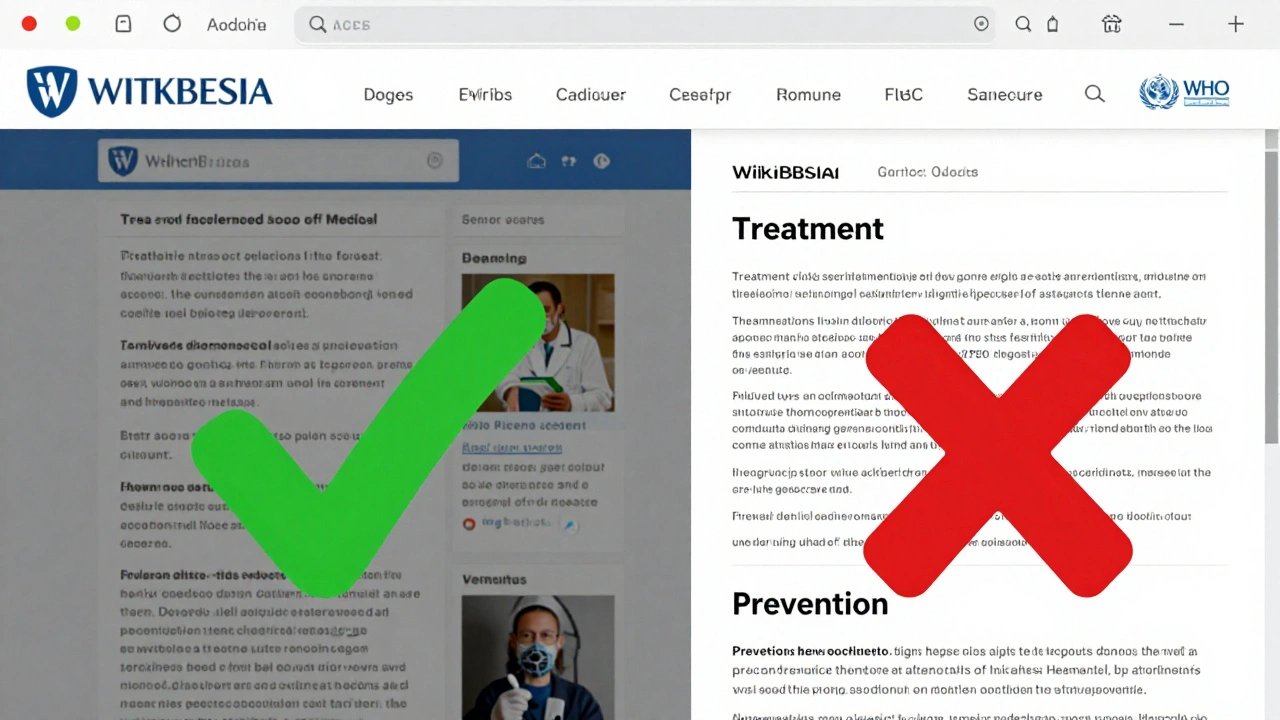
- Clear structure - Sections like "Symptoms," "Causes," "Diagnosis," "Treatment," and "Prevention" help readers find what they need fast.
- Plain language - Avoid jargon. Instead of "dyspnea," say "shortness of breath." Instead of "antihypertensive," say "blood pressure medication."
- Up-to-date sources - Articles must cite recent studies (last 5 years) and official guidelines. Outdated info like "aspirin is safe in children" (it’s not-Reye’s syndrome risk) gets flagged and removed.
- Balance - If a treatment has risks, they’re stated. If evidence is weak, it’s labeled. No cherry-picking.
- Citations - Every claim must have a source. Not just any source-peer-reviewed journals, textbooks, or trusted health organizations. Blogs, forums, and drug company websites don’t count.
For example, the article on type 2 diabetes now includes detailed sections on lifestyle changes, medication options, complications, and screening recommendations-all cited from the American Diabetes Association’s 2024 guidelines. That’s the standard.
Who Writes These Articles?
You might think only doctors edit medical articles. That’s not true. While many contributors are healthcare professionals, a large portion are students, patients, or curious volunteers. What matters isn’t your title-it’s your ability to follow the rules.
Doctors bring clinical knowledge. Nurses know how patients experience illness. Pharmacists understand drug interactions. Students bring fresh eyes and time to research. Patients offer real-life perspectives on symptoms and treatment side effects.
WikiProject Medicine doesn’t require credentials. It requires diligence. You don’t need to be an MD to improve an article. You just need to:
- Find an article that’s incomplete or outdated.
- Check the references-are they recent and reliable?
- Add missing sections using trusted sources.
- Use the project’s templates to format it correctly.
- Submit it for review.
One volunteer, a medical student in India, improved the article on "dengue fever" by adding local treatment protocols used in rural clinics. Another, a retired nurse in Canada, updated the "heart failure" article with new guidelines from the Canadian Cardiovascular Society. These aren’t rare cases-they’re the norm.
Common Mistakes to Avoid
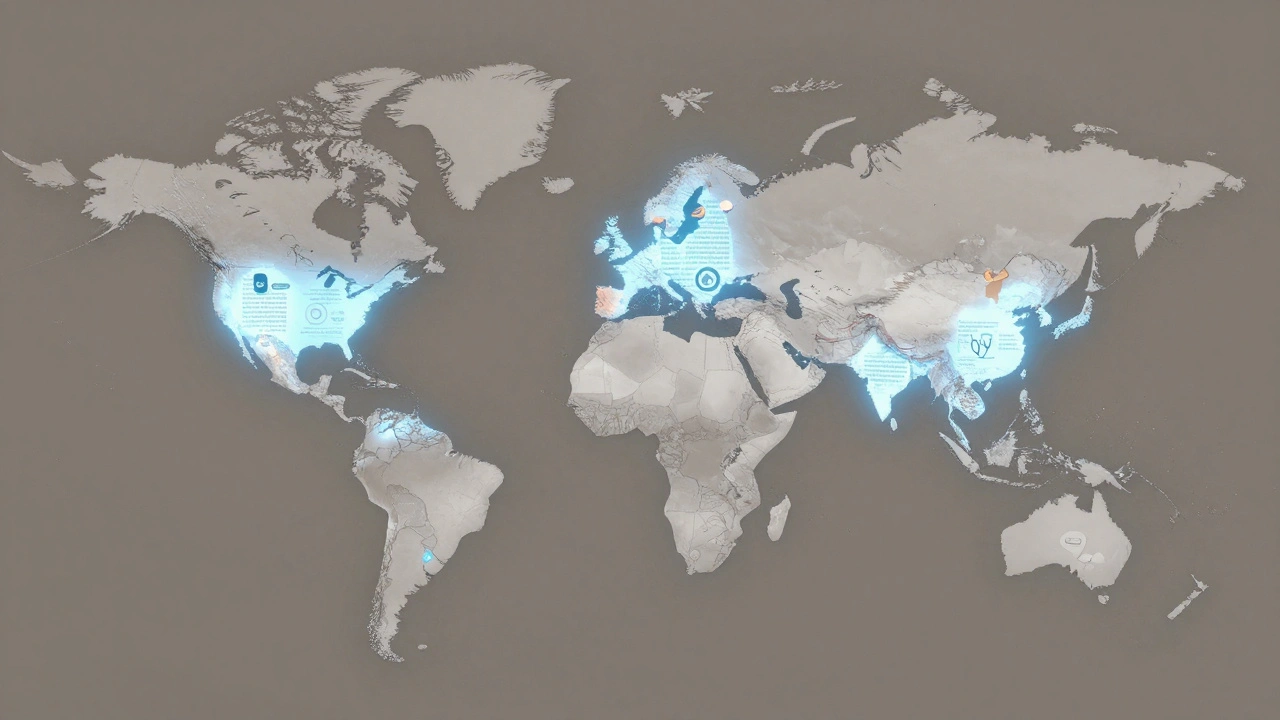
Even experienced editors make mistakes. Here are the most common ones:
- Using non-scientific sources - WebMD, Healthline, or Medscape are useful for patients, but they’re not primary sources. Wikipedia requires peer-reviewed journals or official guidelines.
- Writing in promotional language - Saying "this treatment is the best" is a red flag. Say "this treatment is recommended by the WHO for patients with X condition."
- Ignoring conflicts of interest - If you work for a pharmaceutical company, you can’t edit articles about your company’s drugs without full disclosure.
- Overloading with detail - Medical articles aren’t textbooks. Don’t list every rare side effect. Focus on what matters to patients and clinicians.
- Not updating - A 2020 study on a new cancer drug is outdated in 2025. If a new guideline came out last year, the article must reflect it.
How to Get Involved
If you care about accurate health information, you can help. You don’t need to be a scientist or a doctor. Here’s how to start:
- Go to Wikipedia:WikiProject Medicine.
- Click on "Task List" to see articles that need work.
- Choose an article that interests you-maybe one about a condition your family has dealt with.
- Check the references. Are they outdated? Missing? Replace them with sources from PubMed, Cochrane, or official health sites.
- Use the project’s templates for structure. They’re built to help you organize information correctly.
- Save your changes and add the {{WikiProject Medicine}} tag to the article’s talk page.
- Wait for feedback. Other editors will review your edits and help you improve them.
Many people start by fixing one sentence. Then two. Then a whole section. Before long, you’re editing entire articles. And you’re helping millions of people get better information.
The Bigger Picture
Wikipedia isn’t just a website. It’s a public health tool. In low-income countries, where access to doctors is limited, Wikipedia is often the only source of medical advice. In refugee camps, in rural villages, in places without internet access to medical journals-Wikipedia is what people have.
When an article on "malaria prevention" is accurate, it saves lives. When a guide on "signs of stroke" is clear, it helps someone get to the hospital in time. When a parent reads about fever in children and knows when to worry, it prevents unnecessary ER visits.
WikiProject Medicine isn’t about perfection. It’s about progress. Every edit counts. Every citation matters. Every time someone improves an article, they’re not just writing for Wikipedia-they’re writing for the next person who will search for help.