If you want your piece to resonate, you have to stop looking at the interface and start looking at the people clicking the buttons. Whether you're exploring the secret wars between editors or the psychological drive of a top contributor, the goal is to turn a dry database into a living, breathing narrative.
Key Takeaways
- Focus on individual human stories to anchor abstract systemic issues.
- Use the "edit history" as a primary source for narrative tension.
- Avoid the trap of merely explaining how the site works; instead, explore why it matters.
- Combine digital footprints with traditional boots-on-the-ground reporting.
Finding Your Narrative Hook
You can't just write a 'history of' piece. That's boring. To make a feature work, you need a hook that creates immediate stakes. Instead of explaining how the site is organized, find a specific conflict. Maybe there's a heated dispute over the biography of a minor 19th-century poet, or a coordinated effort to scrub a politician's scandals. This is where narrative non-fiction thrives. You take a real event and apply the pacing and structure of a novel.
Ask yourself: who is winning, who is losing, and what happens if the truth is changed? For example, if you're looking at the "gender gap" in editorship, don't just cite statistics. Find one woman who feels the weight of the gaze when she edits a page. Show the reader the friction. When you focus on a single person's experience, the reader cares about the larger system because they care about that person.
Mining the Edit History for Drama
One of the best tools for a journalist is the "View history" tab. This is essentially a time-machine for human conflict. In feature writing, we call this 'found footage.' You can see a sentence be changed, reverted, and changed again ten times in an hour. That isn't just data; that's a fight. It's an argument happening in real-time, often lasting for years.
To turn these logs into a story, map out the timeline. Identify the primary combatants. Who is the "administrator" stepping in to stop the fight? What was the tipping point? By treating the Wiki markup and discussion pages as dialogue, you can reconstruct scenes that feel cinematic. You aren't just reporting on a website; you're reporting on a digital battlefield where the weapon is a citation.

The Art of the Deep Interview
Interviewing editors is a strange experience because many of them are anonymous. They live behind usernames like "HistoryBuff88" or "TruthSeeker." This anonymity can be an asset. It allows them to speak more freely about the internal politics of the Wikimedia Foundation than they would if their real names were on the line.
Don't treat these interviews as Q&A sessions. Instead, ask about the obsession. Why do they spend six hours a day arguing about the exact date a village was founded in rural France? The magic of long-form pieces is in the details-the dim light of their home office, the way they describe the rush of hitting 'save,' the frustration of a page being locked. This is how you bridge the gap between the sterile white background of the website and the messy reality of human nature.
Balancing Technicality with Readability
You will inevitably run into terms like "citogenesis," "edit warring," or "sysops." If you spend three paragraphs explaining the technical hierarchy of the site, you'll lose your reader. The rule of thumb is to explain a concept only at the moment it becomes necessary for the plot. If a character is banned by a superuser, explain what that is in one sentence and keep moving.
| The Technical Fact | The Boring Approach | The Feature Approach |
|---|---|---|
| Edit Warring | "Edit warring occurs when two users disagree on content." | "For three days, the page flickered between two versions, a digital tug-of-war over a single adjective." |
| Citations | "Wikipedia requires verifiable sources for all claims." | "He spent hours hunting for a 1954 newspaper clipping, the only thing that could save his claim from the delete button." |
| Admin Privileges | "Administrators have the power to lock pages." | "With a single click, the admin silenced the debate, locking the page into a cold, unchangeable truce." |
The goal is to make the technology invisible. The reader shouldn't feel like they're reading a manual on how to use a CMS (Content Management System). They should feel like they're reading a story about people who happen to use a CMS.

Structural Strategies for Long-Reads
A 5,000-word piece needs a skeleton. If you just follow a chronological order, you risk the "middle slump." Instead, try a braided structure. Weave together three different threads: a personal profile of an editor, the broader social implication of the topic, and the historical context of the Open Source movement.
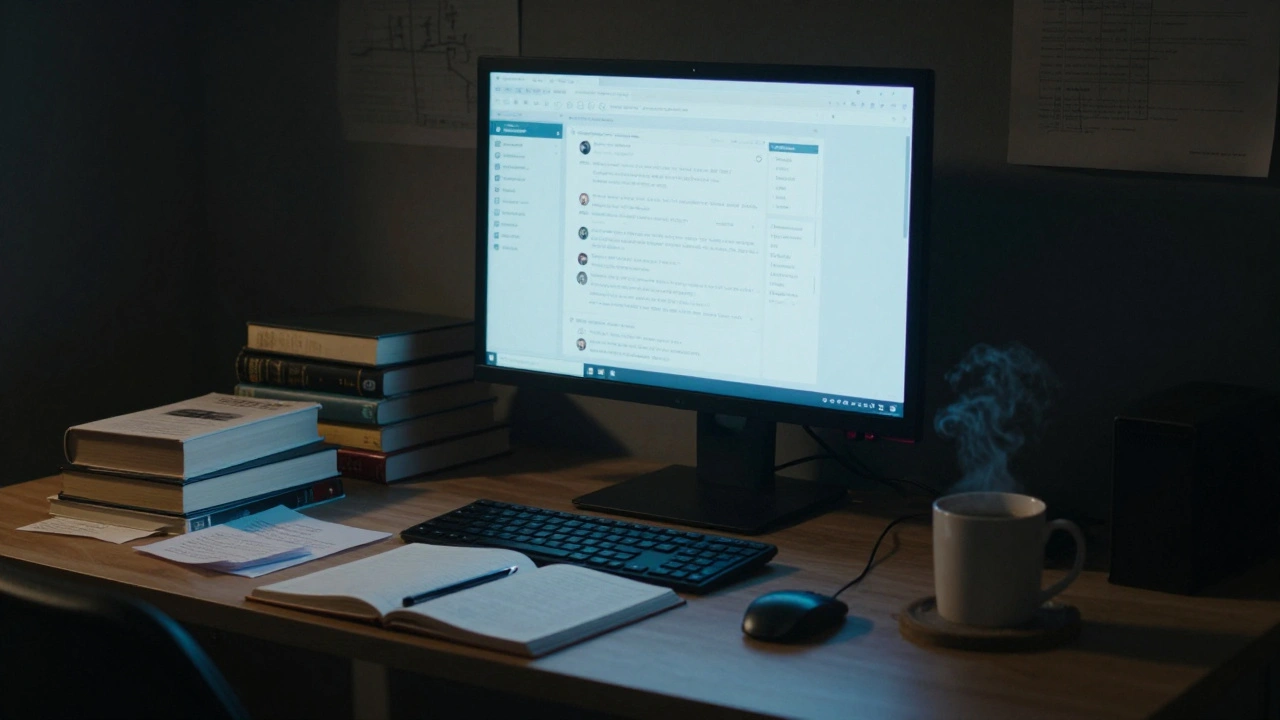
Switch between these threads every few pages. Start with a high-tension scene (the hook), move into the systemic explanation, then pivot back to the human emotion. This keeps the reader engaged by changing the scale of the story-from the microscopic (a single comma) to the macroscopic (the democratization of knowledge). Use sensory details to ground the piece. Describe the sound of the keyboard, the glow of the monitor at 3 AM, and the physical isolation that often accompanies digital obsession.
Avoiding Common Pitfalls
The biggest mistake writers make when covering digital platforms is staying inside the digital world. If your entire story takes place in screenshots and chat logs, it's not a feature; it's a report. You must get the story out into the physical world. Go to where the people live. Describe their environment. Contrast the global reach of their digital influence with the smallness of their physical reality.
Another trap is the "wonder" angle. We've all read the piece that says, "Isn't it amazing that we have all this knowledge for free?" That's an essay, not journalism. Journalism requires conflict. Look for the failures, the biases, and the systemic flaws. Examine how the algorithm or the community guidelines accidentally suppress certain voices. The most interesting stories aren't about how the system works, but about how it breaks.
How do I verify anonymous sources on Wikipedia?
Verification requires a multi-step approach. First, analyze their edit history to see if their contributions are consistent and authoritative. Second, move the conversation to a secure, encrypted channel like Signal. Third, ask for "proof of identity" through internal site actions-such as having them leave a specific, unique mark on a talk page-to ensure they are who they claim to be.
What is the best way to visualize edit wars for a reader?
Since raw logs are boring, use "narrative snapshots." Describe the most contentious sentence and show it evolving over time. If the piece is digital, a simple side-by-side comparison of the two competing versions of a paragraph is more effective than a complex graph.
Should I focus on the software or the community?
Always prioritize the community. The software (MediaWiki) is just the tool. The drama, the politics, and the emotional stakes all reside in the people. A story about software is a tech review; a story about the people using it is journalism.
How long should a long-form feature about a digital topic be?
Typically, long-form features range from 3,000 to 7,000 words. However, the length should be determined by the complexity of the human arc you're following. If you're tracing a multi-year conflict, you'll need more space to establish the stakes and the resolution.
How do I handle the legal risks of quoting a public forum?
Generally, Wikipedia talk pages are public. However, ethics in journalism differ from legality. If a user is speaking in a capacity they believe is private, or if quoting them puts them at risk, consider paraphrasing or using a pseudonym while maintaining the essence of their argument. Always consult with a legal editor regarding fair use and privacy laws in your specific jurisdiction.