It is a common trap for writers: you see a perfect quote or statistic on Wikipedia, and you want to use it. But if you cite Wikipedia as your source, you are not actually citing the truth-you are citing a summary that might be wrong, biased, or unverified. This creates a dangerous loop known as circular citation. For journalists, this mistake can destroy credibility, lead to retractions, and spread misinformation at scale. The solution isn't just "don't use Wikipedia." It is learning how to dig deeper, find the primary sources behind the entries, and verify facts independently.
The Danger of Circular Logic in Reporting
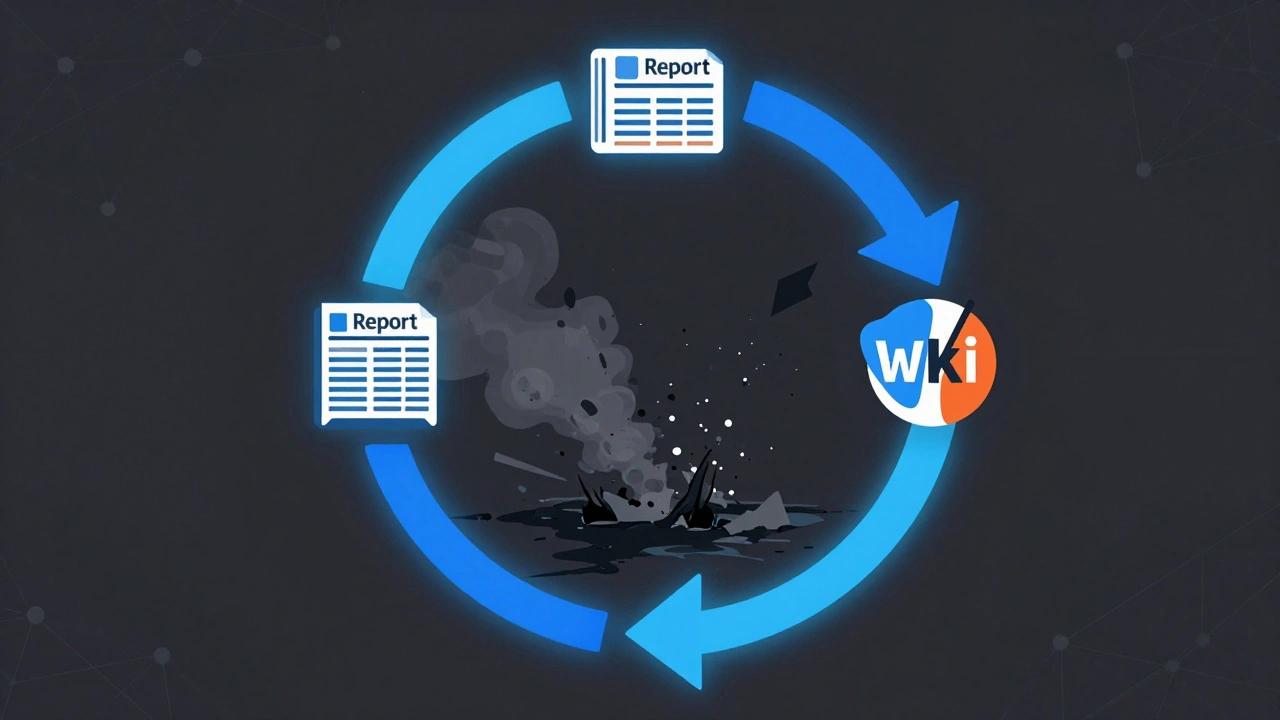
Circular citation happens when Source A cites Source B, and Source B cites Source A. In journalism, this often looks like a reporter using Wikipedia to support a claim, while Wikipedia uses that same reporter's article to update its entry. Suddenly, a single piece of information circulates endlessly without ever being anchored to an original event, document, or expert statement.
Imagine a local news outlet reports that a specific chemical spill occurred based on a Wikipedia edit. Later, someone edits Wikipedia to include that news report as a reference. If another journalist reads Wikipedia months later, they might think there are two independent confirmations of the spill. There are none. There is only one story talking to itself. This phenomenon, often called "self-referential sourcing," undermines the core purpose of journalism: verification.
Search engines and AI models sometimes amplify this error by scraping content from multiple sites that all rely on the same weak source. To avoid this, journalists must treat Wikipedia not as a source, but as a starting point-a map that points toward real evidence.
Why Wikipedia Is Not a Primary Source
Wikipedia is a user-generated encyclopedia. Anyone can edit it. While many contributors are knowledgeable, others may have agendas, misunderstandings, or simple errors. Wikipedia’s own guidelines explicitly state that it is not a reliable source for itself. It relies on external references-books, peer-reviewed journals, official records, and reputable news outlets-to establish accuracy.
When a journalist cites Wikipedia directly, they skip the verification step entirely. They accept the curated summary without checking the underlying data. This is risky because:
- Entries can be vandalized or manipulated before corrections are made.
- Editors may interpret complex topics differently, introducing bias.
- References within Wikipedia can be broken, outdated, or misinterpreted by subsequent editors.
Instead of citing the encyclopedia, journalists should click through the references listed at the bottom of each page. These links lead to primary sources-the actual interviews, studies, government reports, or press releases that form the basis of the information.
Step-by-Step: How to Trace Back to Original Sources
Avoiding circular citation requires discipline. Here is a practical workflow for journalists who encounter useful information on Wikipedia:
- Identify the Claim: Note the specific fact, quote, or statistic you need. Do not copy the entire paragraph.
- Check the Reference List: Scroll to the bottom of the Wikipedia page. Look for superscript numbers next to the claim. Click these links to access the original material.
- Evaluate the Source Quality: Is the reference a peer-reviewed journal? An official government document? A reputable newspaper? Or is it another blog or wiki?
- Access the Original Document: Open the linked source. Read it fully. Does it support the claim exactly as stated on Wikipedia? Sometimes, context gets lost in translation.
- Cite the Original, Not the Summary: In your article, reference the primary source directly. Mention Wikipedia only if you are discussing how the topic was covered online, not as proof of fact.
This process takes extra time, but it ensures your reporting stands on solid ground. If a Wikipedia entry has no references for a particular claim, treat that claim as unverified. Do not use it.
Red Flags That Signal Weak Sourcing
Not all Wikipedia pages are created equal. Some are well-maintained with robust citations; others are sparse or controversial. Watch for these warning signs:
- "Citation Needed" Tags: These indicate that a statement lacks supporting evidence. Never use such claims in your reporting.
- Recent Edits Without References: If a section was recently updated but lacks new citations, the information may be speculative.
- Reliance on Secondary Sources Only: If all references point to other articles rather than primary documents (like court filings or raw data), the chain of evidence is thin.
- Biased Language: Neutral point of view is a core Wikipedia policy. If language seems emotional or promotional, scrutinize the sources closely.
When in doubt, consult alternative encyclopedias or databases. Britannica, for example, employs professional editors and fact-checkers. While it also cites secondary sources, its editorial oversight reduces the risk of unchecked claims.
Building a Reliable Source Network Beyond Wikis
To break free from dependency on wikis, journalists should cultivate relationships with primary sources. This includes:
- Government Agencies: Access public records, legislative transcripts, and statistical databases directly.
- Academic Institutions: Reach out to researchers for unpublished data or expert commentary.
- Corporate Filings: Use SEC filings, annual reports, and press releases for business-related stories.
- Local Archives: Libraries and historical societies often hold unique documents not available online.
Tools like ProPublica’s Newsroom or OpenSecrets provide curated datasets that bypass the need for intermediary summaries. By building a personal library of trusted sources, journalists reduce their reliance on general knowledge platforms.

The Role of Fact-Checking Organizations
Independent fact-checkers play a crucial role in combating circular citation. Organizations like PolitiFact, Snopes, and Reuters Fact Check specialize in verifying claims that appear widely across the internet. When a story breaks, check whether these groups have already analyzed the key assertions.
If a claim appears on Wikipedia but has been debunked by a major fact-checker, do not use it. Conversely, if a fact-checker confirms a detail found on Wikipedia, you can safely cite their analysis instead of the wiki entry. This adds a layer of professional validation to your work.
| Source Type | Reliability Level | Best Use Case | Risk of Circular Citation |
|---|---|---|---|
| Primary Documents (e.g., court records) | High | Legal, political, financial reporting | None |
| Peer-Reviewed Journals | High | Science, health, academic topics | Low |
| Reputable News Outlets | Medium-High | Breaking news, general interest | Medium (if cross-cited) |
| User-Generated Wikis | Variable | Background research only | High |
| Social Media Posts | Low | Trend identification, not sourcing | Very High |
Practical Tips for Daily Reporting
Integrating these practices into your daily workflow prevents accidental circular citation. Consider these habits:
- Create a Source Log: Keep a spreadsheet where you record every claim and its corresponding primary source. This makes audits easier.
- Use Browser Extensions: Tools like Mozenda or custom scripts can help track link rot and ensure references remain valid.
- Collaborate with Editors: Have a second pair of eyes review your sources before publication. Fresh perspectives catch overlooked dependencies.
- Update Regularly: Revisit old articles to ensure cited sources haven’t changed or been retracted.
Remember, the goal is not to avoid Wikipedia altogether-it is an invaluable tool for discovery. The goal is to use it responsibly, always tracing back to the origin of information.
Can I ever cite Wikipedia in a news article?
Generally, no. Wikipedia should never be used as a direct source for factual claims. However, you may mention it when discussing how a topic is perceived online, analyzing digital culture, or reporting on vandalism incidents. Always clarify that you are referencing the platform itself, not its content as truth.
What if a Wikipedia page has no references?
Treat any claim on an unreferenced Wikipedia page as unverified. Do not use it in your reporting. Instead, search for independent confirmation through primary sources, expert interviews, or authoritative databases.
How do I know if a source is truly primary?
A primary source is original material created at the time of an event. Examples include raw data sets, official transcripts, photographs taken during an incident, or firsthand interviews. Secondary sources analyze or summarize these materials. Always prioritize primary sources for critical facts.
Is Britannica safer than Wikipedia for sourcing?
Yes, generally. Britannica employs professional editors and fact-checkers, reducing the risk of unchecked errors. However, even Britannica relies on secondary sources. For highest reliability, trace Britannica’s citations back to primary documents whenever possible.
What tools help journalists verify online sources quickly?
Tools like Wayback Machine (for archived web pages), TinEye (reverse image search), and specialized databases like ProQuest or JSTOR help verify authenticity. Additionally, browser extensions designed for source tracking can streamline the process of identifying original references.