Imagine spending three weeks writing a detailed article on a niche historical event. You cite primary sources, format it perfectly, and hit publish. Two hours later, an editor with zero history in that topic tags your work for deletion because they believe you violated the Neutral Point of View (NPOV) policy. You argue back. They ignore you. Now what? Do you quit? Do you edit war until one of you gets blocked? Or do you know where to take this fight?
This is the reality of life on Wikipedia. It isn’t just a website; it’s a legal system without judges, lawyers, or juries-at least not in the traditional sense. The backbone of keeping this massive project from collapsing into chaos is its unique blend of informal social pressure and formal institutional power. At the heart of this system are two distinct but connected mechanisms: Arbitration, handled by the elected Arbitration Committee (ArbCom), and Appeals, which range from simple requests for comment to complex review boards.
The Myth of "Just Be Bold"
Newcomers often hear the mantra: "Be bold." It sounds empowering. But boldness has limits. When you break a rule-or when someone else thinks you did-the consequences aren't always immediate bans. Usually, it starts with a warning. If that fails, you might get a topic ban. If that fails, you might end up before the Arbitration Committee. Understanding the hierarchy of these steps saves you from burning out.
Most disputes never reach the top. In fact, over 90% of conflicts are resolved through talk pages or minor administrative actions. The real value in understanding appeals and arbitration lies in knowing when to escalate and when to step back. Escalating too fast looks like trolling; escalating too slow lets bad behavior set precedent.
How Policy Enforcement Actually Works
Before we dive into arbitration, you need to grasp how policies are enforced day-to-day. There is no central police force. Instead, enforcement relies on Administrators, who are experienced editors granted technical tools like page protection and user blocking. They act as first responders.
But administrators aren't gods. They can be wrong. They can be biased. That’s why Wikipedia has built-in checks. If an admin blocks you, you don’t just accept it. You have rights. You can request an unblock via email, post on their talk page, or file a Request for Comment (RfC). These lower-level appeals are crucial because they keep power decentralized. An RfC is essentially a public trial where any editor can vote. It’s messy, loud, and often exhausting, but it works.
| Mechanism | Who Decides | Binding Power | Typical Duration |
|---|---|---|---|
| Talk Page Discussion | Editors involved | Social Consensus | Hours to Days |
| Request for Comment (RfC) | Community Volunteers | Strong Social Pressure | Days to Weeks |
| Administrator Review | Other Admins | Technical Reversal | Hours to Days |
| Arbitration Committee | Elected Arbitrators | Binding Decision | Weeks to Months |
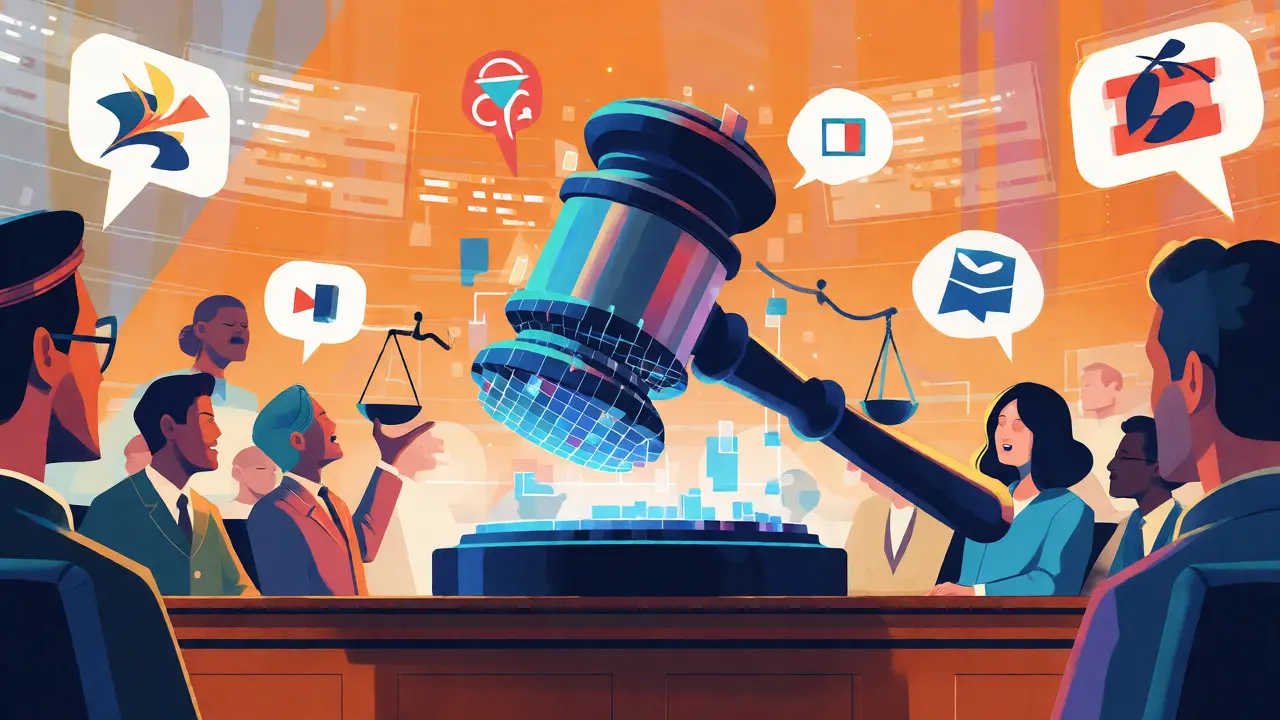
The Arbitration Committee: Wikipedia's Supreme Court
When community consensus breaks down completely, the case goes to the Arbitration Committee. This is a small group of highly trusted editors elected by the community. Unlike admins, arbitrators don't just enforce rules; they interpret them in gray areas. Their decisions are binding. If ArbCom says you are banned from editing articles about politics, you cannot edit articles about politics. Period.
Why is it called arbitration instead of mediation? Because mediation implies finding a middle ground everyone likes. Arbitration means making a hard call that one side will hate. ArbCom cases often involve long-standing feuds between powerful editors or systemic issues within specific topic areas. For example, if a whole category of articles keeps getting vandalized by a coordinated group, ArbCom might issue a topic ban for all members of that group, regardless of individual intent.
Getting a case heard by ArbCom isn't automatic. You must prove that other methods failed. You need to show evidence of repeated violations, good faith efforts to resolve the issue, and why the current situation harms the encyclopedia. Many users try to use ArbCom as a personal grievance court. "This editor insulted me!" doesn't cut it. "This editor's insults are disrupting the collaborative process and driving away contributors" does.
The Appeals Process: Challenging a Ban
If you receive a block or a ban, your first instinct might be anger. Don't let it dictate your next move. The appeals process is designed to give you a second look, but it requires humility and precision. Here is how a standard appeal works:
- Understand the Reason: Read the block message carefully. Is it for vandalism? Harassment? Edit warring? Misunderstanding the reason leads to ineffective appeals.
- Wait Out the Cooling Off: Unless it's a short block, wait at least 24-48 hours. Emotional appeals rarely succeed.
- Draft Your Statement: Acknowledge mistakes. Even if you think you're right, acknowledging the disruption caused helps. Blaming others exclusively makes you look defensive.
- Submit via Proper Channels: Use the Unblock Ticket Request System (UTRS) or the relevant noticeboard. Do not spam multiple channels simultaneously.
For longer bans or topic restrictions, you might face an Appeals Review Board. These are temporary groups formed specifically to review contentious blocks. They operate differently than regular admin reviews. They require a quorum of votes and often involve reviewing past conduct logs. This is where your editing history matters. A clean record supports your claim of rehabilitation; a history of similar offenses weakens it.
Policy Evolution Through Case Law
Here is the fascinating part: Wikipedia policies aren't static documents written by a committee in a vacuum. They evolve through application. Every major arbitration case sets a precedent. When ArbCom interprets "Conflict of Interest" in a new way, that interpretation becomes de facto policy for thousands of future edits.
Consider the evolution of the Biographies of Living Persons (BLP) policy. Early versions were vague. High-profile arbitration cases involving celebrity pages forced stricter standards for sourcing and tone. Today, BLP violations are treated more severely than many content disputes because previous rulings established that harm to a living person outweighs editorial flexibility.
This creates a common law-like system. Editors learn not just from reading the policy text, but from reading the outcomes of past cases. Experienced editors know which arguments win and which lose based on historical data. Newcomers often fail because they argue from first principles rather than precedent.

Pitfalls to Avoid
Many users lose their appeals due to predictable errors. Recognizing these patterns can save your account.
- The Victim Complex: Claiming you are the only victim ignores the systemic nature of wiki disputes. Arbitrators want neutrality, not martyrdom.
- Ignoring Evidence: Stating opinions without linking to diffs or timestamps looks like gaslighting. Always provide proof.
- Over-Escalating: Taking a minor formatting disagreement to ArbCom wastes resources and annoys the committee. They will likely dismiss it as frivolous.
- Under-Escalating: Trying to solve a persistent harassment campaign through polite talk pages alone allows the harasser to continue unchecked.
Practical Tips for Effective Advocacy
If you find yourself in a dispute, treat it like a professional negotiation. Keep records. Save links to every relevant discussion. When writing your appeal, structure it clearly: Background, Actions Taken, Current Status, Proposed Solution. Arbitrators and reviewers are volunteers with limited time. Make it easy for them to say yes.
Also, consider seeking third-party opinion. Sometimes, asking a neutral editor to review your case before submitting it provides valuable feedback. They might spot logical gaps you missed. Community support matters. If ten respected editors back your interpretation of a policy, your argument carries more weight than if you stand alone.
Finally, remember that losing an appeal isn't the end. Policies change. Administrators rotate. Arbitrators term out. What seems like an unjust ruling today might be overturned in six months if community norms shift. Patience is a strategic tool.
Frequently Asked Questions
Can I appeal an administrator's decision directly to the Arbitration Committee?
Generally, no. You must exhaust lower-level remedies first. This usually means discussing with the admin, posting on their talk page, and potentially filing a Request for Comment (RfC) or an Administrator Noticeboard (AN) report. ArbCom typically rejects cases where the community hasn't had a fair chance to resolve the issue themselves.
What is the difference between a block and a ban?
A block prevents you from editing entirely for a set period. A ban restricts you from editing specific topics, articles, or interacting with specific users, while allowing you to contribute elsewhere. Bans are often issued by ArbCom or through community consensus for behavioral issues that don't warrant a total shutdown of your contributions.
How long does an arbitration case take?
Complex cases can take several months. Simple cases might resolve in a few weeks. The timeline depends on the complexity of the evidence, the number of parties involved, and the availability of the arbitrators. During this time, interim measures may be imposed to prevent further disruption.
Are arbitration decisions final?
Yes, within the scope of the dispute. ArbCom decisions are binding. However, they can be revisited if new evidence emerges or if circumstances change significantly. There is no higher authority within Wikipedia to overturn an ArbCom decision, though the Wikimedia Foundation Trustee Board has ultimate oversight, rarely intervening in editorial matters.
What happens if I violate a topic ban?
Violating a topic ban is considered a serious offense. It often results in an immediate indefinite block. Because the ban was a negotiated or imposed restriction agreed upon to allow continued contribution, breaking it signals an inability to collaborate. Reinstatement after such a violation is difficult and requires demonstrating significant behavioral change.