
Wikipedia is built by volunteers. Millions of edits happen every day. Most of them are harmless - fixing a typo, updating a date, adding a citation. But sometimes, editors clash hard. Over what counts as reliable sourcing. Over whether a person deserves a biography. Over whether a topic is notable enough to exist at all. When these fights turn into wars, and no amount of talk fixes it, there’s one final stop: the Arbitration Committee.
What the Arbitration Committee Actually Does
The Arbitration Committee, or ArbCom, isn’t a court in the traditional sense. There are no lawyers, no judges in robes, no gavels. It’s a group of experienced Wikipedia editors, elected by the community, who step in when everything else has failed. They don’t rewrite articles. They don’t decide if a fact is true. They decide who can edit what - and under what rules.
Think of it like a traffic cop for edit wars. If two editors keep reverting each other’s changes on a high-profile article - say, one about climate change or a political figure - and they’ve already been warned by admins, blocked, and mediated, ArbCom steps in. They look at the history. They read the talk pages. They listen to both sides. Then they issue an order: maybe one editor gets restricted from editing that article. Maybe both get blocked from editing certain topics. Sometimes, they impose a cooling-off period. Or they require edits to go through a third-party review.
ArbCom doesn’t care who’s right. They care about whether the editing process is broken. Their job is to restore order, not to settle truth.
How Cases Get to ArbCom
Not every fight makes it here. Most disputes get resolved at the talk page level, or through mediation. But when a dispute becomes repetitive, hostile, or disruptive, any editor can file a request for arbitration. The request has to include:
- A clear summary of the conflict
- Links to relevant edit histories and talk page discussions
- Proof that other resolution methods were tried
Once filed, the case is reviewed by a small group of volunteer arbitrators. If they think it’s serious enough, they open it to the community. Other editors can comment, submit evidence, or even ask to join the case as interested parties. Then, the full ArbCom team reviews everything - sometimes for weeks.
It’s not fast. It’s not glamorous. But it’s the only formal process on Wikipedia that can actually change how people interact with the site.
What Kinds of Cases Do They Handle?
ArbCom doesn’t handle every kind of problem. They don’t deal with copyright violations, vandalism, or simple mistakes. Those are handled by regular admins. ArbCom deals with behavioral issues - the kind that poison the editing environment.
Common case types include:
- Editing wars over politically sensitive topics (e.g., Israel-Palestine, U.S. elections)
- Coordinated editing by users with hidden agendas (sockpuppetry)
- Harassment or personal attacks between editors
- Systematic bias in article content, where one side keeps pushing their POV
- Editors who refuse to follow Wikipedia’s core policies, no matter how many times they’re told
One well-known case in 2023 involved a group of editors who had been systematically removing citations from articles about LGBTQ+ rights, replacing them with sources from ideologically aligned blogs. After months of conflict and multiple blocks, ArbCom issued a sweeping ruling: those editors were restricted from editing any article related to gender, sexuality, or human rights unless they submitted edits for review by a neutral third party. The change didn’t fix the content - it fixed the process.

How Decisions Are Made
ArbCom operates with transparency. All case filings, discussions, and rulings are public. Anyone can read them. The committee usually has between 9 and 15 members at a time, elected annually. They rotate in and out. No one stays forever.
Decisions are made by majority vote. But they’re not just votes. Each arbitrator writes a detailed rationale. These aren’t legal briefs, but they’re thorough. They cite Wikipedia’s policies - Neutral Point of View, No Original Research, Verifiability - and explain how the behavior violated them.
One of the most important rules: ArbCom can’t create new policies. They can only enforce existing ones. That’s by design. If they started making up rules, they’d become a dictatorship. Instead, they act as a last-resort enforcer of the community’s own rules.
What Happens After a Ruling?
ArbCom’s rulings are binding. They’re not suggestions. If an editor violates a restriction, they get blocked - sometimes permanently. There’s no appeal to another committee. The only way out is to wait out the restriction and ask for reinstatement later.
But enforcement is tricky. Some editors just create new accounts. Others leave Wikipedia for a while and come back under a different name. That’s why ArbCom often includes technical restrictions - like blocking IP ranges, preventing account creation from certain networks, or requiring email verification.
They also sometimes assign “watchers” - trusted editors who monitor the restricted user’s activity for a set period. If the user follows the rules, the restrictions are lifted. If not, they’re extended.
Why It Matters
Wikipedia’s success isn’t just because of its content. It’s because of its ability to self-govern. Without ArbCom, Wikipedia would collapse under the weight of its own conflicts. Imagine if every edit war over a controversial article turned into a legal battle, or if bad actors could dominate topics by sheer persistence.
ArbCom keeps the platform functional. It’s not perfect. Critics say it’s too slow, too opaque, or too biased. But the data shows it works. In 2024, over 80% of ArbCom rulings were followed without further dispute. The number of long-running edit wars dropped by 42% between 2020 and 2025, largely because editors now know ArbCom is watching.
It’s the quiet backbone of Wikipedia’s credibility. You don’t notice it unless something breaks. But when it works - when a toxic edit war ends, when a biased article stabilizes, when a user learns to respect the rules - that’s when Wikipedia becomes more than a website. It becomes a functioning community.
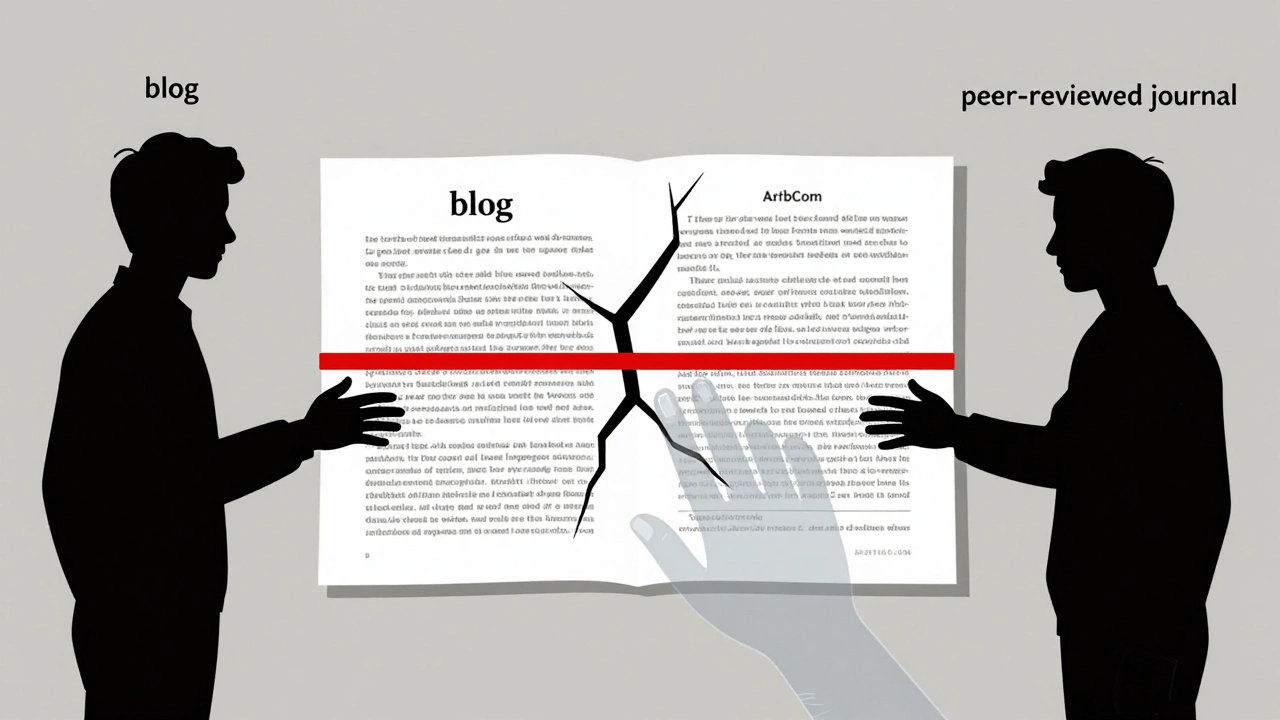
What Happens If ArbCom Doesn’t Intervene?
Without ArbCom, Wikipedia would look very different. Some topics would be dominated by the loudest, most persistent editors - not the most accurate. Biased articles would become permanent. New editors would be scared off by the hostility. The site would start to look less like an encyclopedia and more like a battleground.
There are real examples. Before ArbCom was formed in 2003, Wikipedia had dozens of articles locked in endless edit wars. One article on the Israeli-Palestinian conflict had over 1,200 reversions in a single month. The article was essentially unusable. ArbCom didn’t rewrite it. They restricted the worst offenders. And slowly, the article stabilized.
Today, that same article is one of the most cited on Wikipedia. Not because ArbCom made it perfect - but because they made it possible to edit it without chaos.
How You Can Help
You don’t have to be on ArbCom to make a difference. Most disputes never reach them. You can help by:
- Staying calm on talk pages - even when others are angry
- Citing reliable sources, not just your opinion
- Reporting persistent bad behavior early, before it escalates
- Participating in mediation requests
- Voting in ArbCom elections - yes, you can vote if you’ve made enough edits
Wikipedia doesn’t run on authority. It runs on participation. The more people who follow the rules, the less often ArbCom has to step in.
Final Thought
ArbCom isn’t the hero of Wikipedia. It’s the emergency brake. It doesn’t make the car go faster. It doesn’t steer. It just stops it from crashing when the driver loses control. And sometimes, that’s all you need.
Can anyone file a case with the Arbitration Committee?
Yes, any registered Wikipedia editor can file a request for arbitration if they believe a dispute has become unresolvable through other means. The request must include evidence of prior attempts to resolve the issue, such as talk page discussions or mediation efforts. Anonymous users or unregistered editors cannot file cases.
How long does an arbitration case usually take?
Most cases take between 2 and 8 weeks from filing to ruling. Simpler cases may be resolved faster, while complex ones involving multiple users or extensive evidence can take longer. The committee prioritizes cases based on severity and urgency, but they avoid rushing decisions to ensure fairness.
Are ArbCom decisions final?
Yes. ArbCom rulings are binding and cannot be appealed through other Wikipedia committees. However, editors who are restricted can request a review after the restriction period ends, provided they demonstrate changed behavior. Repeated violations can lead to permanent bans.
Do ArbCom members get paid?
No. All members of the Arbitration Committee are unpaid volunteers who are elected by the Wikipedia community. They are experienced editors who have demonstrated deep knowledge of Wikipedia’s policies and conflict resolution practices. Their work is done in their spare time, outside of any official employment with the Wikimedia Foundation.
Can ArbCom remove articles from Wikipedia?
No. ArbCom does not have the authority to delete articles. That’s handled by deletion discussions and admins. ArbCom can restrict editing on an article, require content changes, or block users from editing it - but they cannot remove the article itself. If an article is deemed non-notable or violates policies, it goes through the standard deletion process.