
Wikipedia doesn’t allow just any source. It needs reliable sources-ones that are fact-checked, transparent, and not pushing a hidden agenda. That’s why think tanks and advocacy groups are tricky. Some are respected research institutions. Others are thinly veiled lobbying operations with glossy reports and flashy websites. Knowing the difference isn’t just helpful-it’s essential if you’re editing Wikipedia or trying to spot bias in articles you read.
What Makes a Source Reliable on Wikipedia?
Wikipedia’s guideline on reliable sources isn’t about prestige. It’s about independence and verification. A source should have editorial oversight, fact-checking, and a track record of accuracy. Major newspapers, academic journals, and government publications usually pass this test. Think tanks and advocacy groups? It depends.
Take the Brookings Institution. It’s a nonprofit that publishes peer-reviewed research, invites outside experts to review its work, and discloses its funding. That’s the kind of transparency Wikipedia likes. Now compare that to the Heritage Foundation, which openly advocates for conservative policy and often releases reports timed to influence legislation. Its findings are still cited on Wikipedia-but editors flag them with caveats. The difference? One builds knowledge. The other builds influence.
Red Flags in Think Tank and Advocacy Group Sources
Not all advocacy groups are bad. But many show clear signs of bias that make them unreliable as standalone sources. Watch for these:
- They don’t disclose funding sources. If you can’t find who pays for their research, assume it’s not neutral.
- They only publish when it serves a political goal. For example, a climate advocacy group releases a study the week before a vote on emissions rules but never publishes follow-ups.
- They cite themselves repeatedly. If every claim in their report comes from their own prior work, that’s circular reasoning.
- Their language is emotional or promotional. Words like "crisis," "disaster," or "solution" without data are warning signs.
- Their staff are mostly lobbyists, not researchers. Check their bios. If most people have titles like "Director of Policy Advocacy," you’re dealing with an advocacy group, not a research institute.
Wikipedia editors have seen this pattern too often. A 2023 analysis of 2,000 Wikipedia citations to think tanks found that 37% of those from organizations with known political affiliations were flagged for neutrality concerns. That’s not a small number.
How to Verify Their Credibility
Don’t take their website at face value. Here’s how to dig deeper:
- Check their funding. Use OpenSecrets.org or Guidestar.org (now Candid) to see who gives them money. If 80% of their funding comes from one corporation or political group, their objectivity is questionable.
- Look for independent peer review. Did another academic institution or journal review their findings? If yes, that’s a good sign. If their report was only reviewed by their own team, treat it as opinion.
- Search for criticism. Type the group’s name + "criticism" or "controversy" into Google. Are there reputable outlets like The New York Times, Reuters, or academic journals questioning their methods?
- Compare their claims to other sources. If their report says unemployment dropped by 15% due to a specific policy, but the Bureau of Labor Statistics shows a 2% change, that’s a red flag.
- Check their publication history. Do they publish regularly, or only around election cycles? Consistency matters.
For example, the Cato Institute and the Center for American Progress both produce detailed policy papers. But Cato is funded largely by libertarian donors and consistently argues for smaller government. The Center for American Progress is funded by progressive foundations and argues for stronger social programs. Both are cited on Wikipedia-but always alongside neutral sources like the Congressional Research Service or peer-reviewed journals.
When Can You Use Them?
You can use think tanks and advocacy groups-but not as proof of fact. Use them to show what a group believes, not what is true.
For example, if you’re writing about climate policy, you might say:
"The Union of Concerned Scientists argues that carbon emissions from power plants should be capped at 20% below 2005 levels by 2030. This position is supported by their 2024 policy brief, which cites EPA data and peer-reviewed climate models. Critics, including the American Enterprise Institute, argue that such caps would harm industrial competitiveness, citing a 2023 economic analysis funded by fossil fuel industry donors."
Notice how you’re not saying the claim is true. You’re reporting what each side says-and you’re showing the funding and methodology behind each claim. That’s how Wikipedia handles contested topics.
What Wikipedia Editors Actually Do
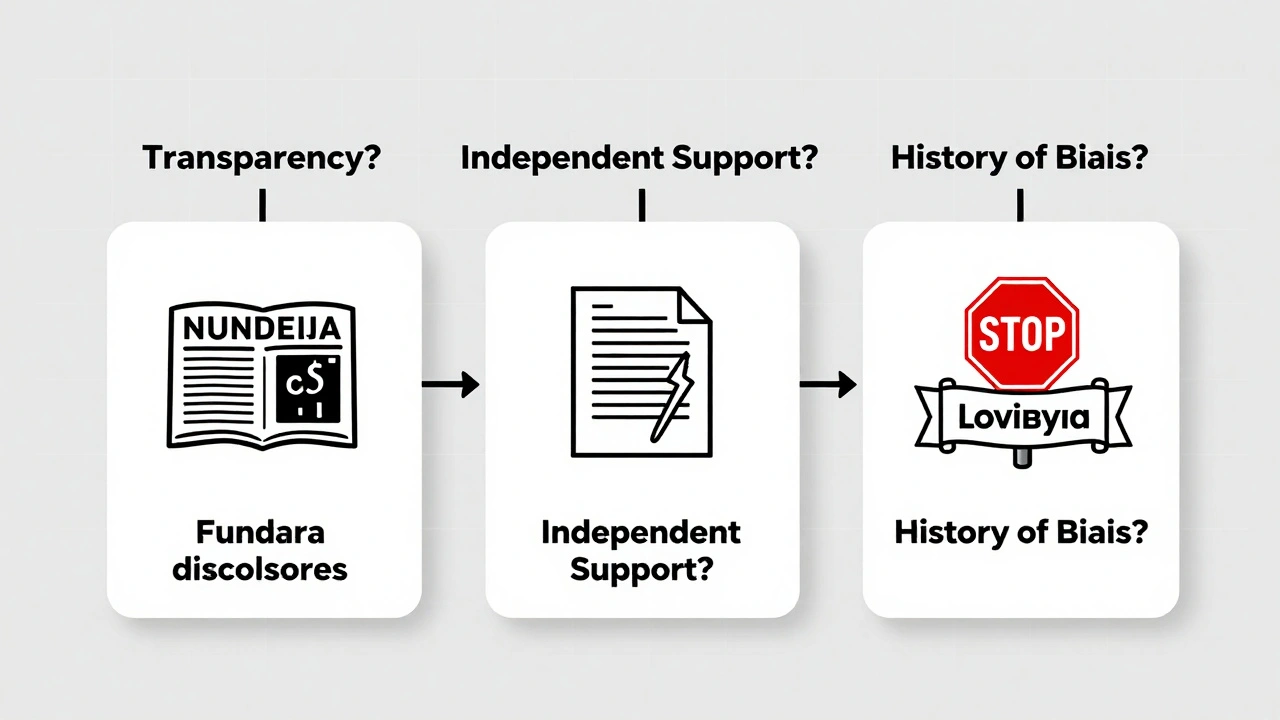
Wikipedia editors don’t ban think tanks outright. They use a three-step filter:
- Is the source transparent about funding and methodology?
- Is the claim supported by independent, neutral sources?
- Does the source have a history of bias or misinformation?
If the answer to the first two is yes, and the third is no, the source might be acceptable. If the third is yes, the source gets a note: "This source has a known ideological bias and should be used with caution."
On the English Wikipedia, there’s a dedicated template for this: {{Cite source with bias}}. It’s used over 12,000 times. That’s not a small number. It means editors are actively flagging these sources every day.
Real Examples: What Works and What Doesn’t
Let’s look at two real cases from Wikipedia articles.
Case 1: The Economic Policy Institute (EPI)
EPI is a left-leaning think tank focused on labor issues. Their reports on minimum wage impacts are often cited. Why? Because they publish detailed datasets, use publicly available Census and BLS data, and disclose all funding sources. They also get cited by The Washington Post and The Atlantic. On Wikipedia, EPI is allowed-but only when paired with data from the Bureau of Labor Statistics or peer-reviewed economics journals.
Case 2: The American Legislative Exchange Council (ALEC)
ALEC is a conservative group that drafts model legislation for state lawmakers. Their "policy papers" are often identical to bills introduced in statehouses. They don’t disclose all donors, and their "research" is rarely peer-reviewed. Wikipedia editors have repeatedly removed ALEC as a source for factual claims. Instead, they cite the bills themselves or independent analyses from the Center for American Progress or the National Conference of State Legislatures.
The lesson? It’s not about the label-"think tank" or "advocacy group." It’s about what’s behind the report.
How to Use These Sources Without Getting Flagged
If you’re editing Wikipedia and want to use a think tank or advocacy group, follow this checklist:
- Always pair it with a neutral source (government agency, academic journal, major news outlet).
- Don’t use it to prove a fact. Use it to describe a position.
- Disclose funding in the citation if it’s relevant (e.g., "Funded by the Koch Foundation").
- Add a neutrality tag if the group is known for bias.
- Check the talk page of the article. Has this source been debated before? If yes, read the discussion.
Wikipedia doesn’t want you to avoid these groups. It wants you to be honest about them. The goal isn’t to silence voices-it’s to make sure readers know who’s speaking and why.
What Happens When You Get It Wrong?
Incorrect sourcing can lead to edits being reverted, articles being locked, or even editor bans. In 2022, a Wikipedia editor added a claim from a pro-gun group that gun violence dropped 40% after a state passed concealed carry laws. The claim wasn’t backed by data from the CDC or peer-reviewed studies. Within 48 hours, the edit was removed, the source was flagged, and the editor received a warning.
Wikipedia’s community moves fast. If you cite a biased source as fact, you won’t get a second chance.
Final Rule of Thumb
Ask yourself: If this source disappeared tomorrow, would the claim still be supported by other reliable sources? If the answer is no, don’t use it as proof. If the answer is yes, you can mention it-but only to show perspective, not truth.
Think tanks and advocacy groups aren’t inherently bad. But on Wikipedia, they’re not trusted until they prove they’re trustworthy. And that proof comes from transparency, independence, and verification-not from how polished their website looks or how many times they’re quoted on TV.
Can I use think tank reports as primary sources on Wikipedia?
No. Think tank reports are not primary sources on Wikipedia. Primary sources are original documents or direct evidence like government records, interviews, or raw data. Think tank reports are secondary sources at best. They interpret data, not create it. Wikipedia requires secondary sources to be reliable and neutral, and most think tanks don’t meet that bar unless paired with independent verification.
Are all advocacy groups unreliable on Wikipedia?
No. Some advocacy groups produce high-quality research and disclose their funding, methodology, and limitations. But they’re still treated with caution. Wikipedia allows them only to describe their positions-not to prove facts. Always cross-check their claims with neutral sources like government agencies or peer-reviewed journals.
How do I know if a think tank is biased?
Look at their funding, language, and publication patterns. If they’re funded mostly by one political group or corporation, use emotionally charged language, or only publish reports around elections or policy votes, they’re likely biased. Check their Wikipedia talk pages or search for independent critiques. Transparency is key-if they hide their donors, assume they’re hiding their agenda.
What’s the difference between a think tank and an advocacy group?
Think tanks aim to produce research and influence policy through analysis, while advocacy groups aim to promote a specific cause or ideology. The line is blurry-many think tanks are advocacy groups with research departments. The real difference is transparency. A think tank that publishes peer-reviewed studies with full data sets is more credible than an advocacy group that releases glossy brochures with cherry-picked stats.
Can I cite a think tank if it’s cited by The New York Times?
Yes-but only if The New York Times is verifying the claim, not just repeating it. If the Times says, "A 2024 report by the Center for Strategic and International Studies claims X," and then adds, "However, independent analysts dispute this," you can cite the Times as the source. But don’t cite the think tank directly unless you’ve checked its methodology. The Times is the reliable source here, not the think tank.
Next Steps for Editors and Readers
If you’re editing Wikipedia, start by checking the talk page of any article that cites think tanks. Look for debates about neutrality. If you’re a reader, don’t trust a Wikipedia claim just because it has a citation. Click the link. Read the source. Ask: Who paid for this? How was it reviewed? Is this claim backed by other sources?
Wikipedia’s strength isn’t in having all the answers. It’s in showing you how to find them. And that starts with asking the right questions about who’s speaking-and why.