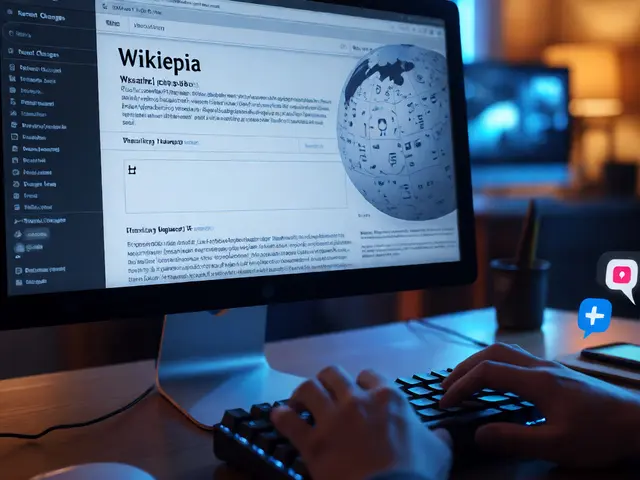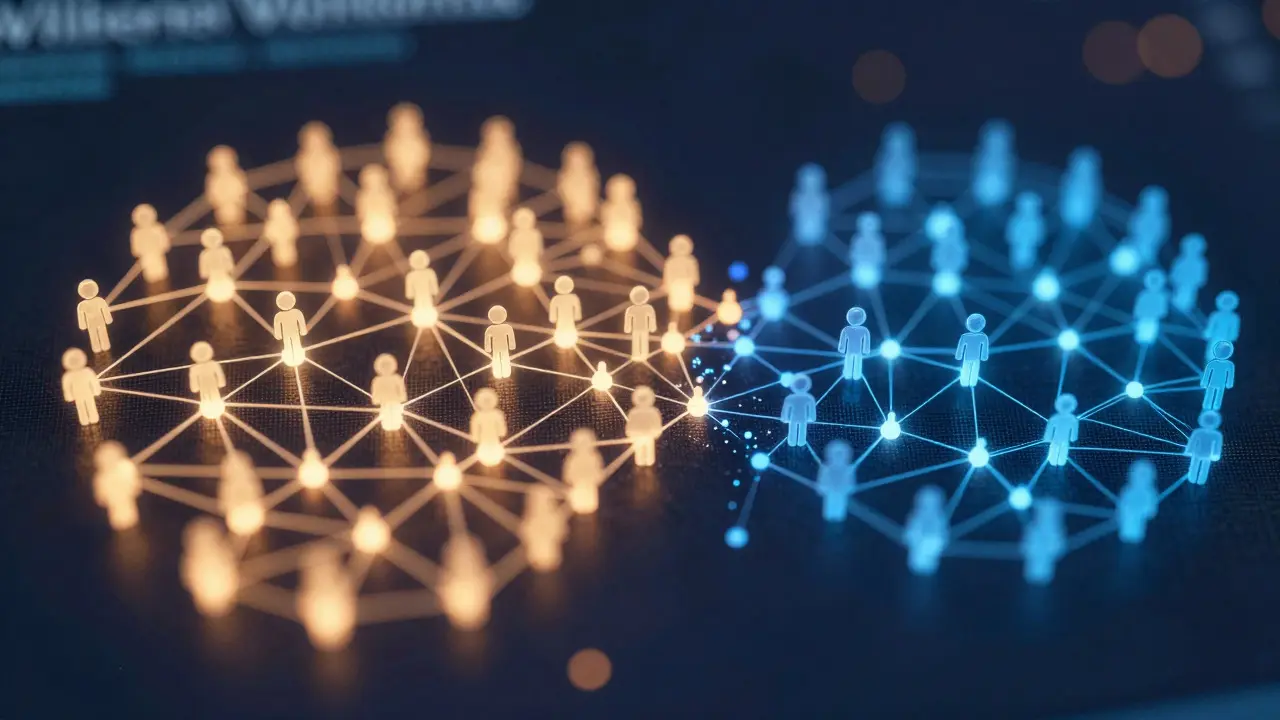
Imagine opening a Wikipedia article about a controversial political figure and noticing that the tone feels subtly different from an entry about a neutral historical event. You might not be able to point to exactly why it feels off, but you sense a lack of balance. This is the core problem that Bias Detection Research aims to solve. It is a field of study that uses data science and social analysis to measure whether encyclopedia entries reflect a fair, neutral perspective or lean toward specific cultural, political, or linguistic viewpoints.
The challenge isn't just about finding obvious errors. It's about identifying subtle patterns in language, citation choices, and structural emphasis that skew information. For readers, this matters because we often treat Wikipedia as a primary source for quick facts. If the underlying data is biased, our understanding of the world becomes skewed without us realizing it. Recent studies have moved beyond simple word counts to complex machine learning models that can predict bias with surprising accuracy.
Defining Neutrality in Digital Spaces
To detect bias, researchers first have to define what "neutral" actually means. In the context of Wikipedia, neutrality doesn't mean ignoring all perspectives. Instead, it refers to the Neutral Point of View (NPOV). This policy requires articles to represent significant viewpoints fairly, using reliable sources, and avoiding promotional language. However, translating this human-readable rule into code is difficult.
Researchers typically categorize bias into three main types:
- Linguistic Bias: The choice of words, adjectives, and sentence structures that convey emotion or judgment (e.g., using "activist" vs. "terrorist").
- Citation Bias: Relying heavily on sources from one region, political ideology, or demographic group while ignoring others.
- Structural Bias: Differences in article length, image quality, or section organization between topics (e.g., famous men having more detailed biographies than equally famous women).
Understanding these categories helps explain why a single metric rarely captures the full picture. A sentence might be linguistically neutral but cited exclusively from partisan media, creating a hidden bias that text analysis alone would miss.
Methodologies in Modern Bias Research
Early research relied on manual audits, where teams of humans read articles and scored them for fairness. While accurate, this method was slow and expensive. Today, most studies use Natural Language Processing (NLP) techniques. These algorithms analyze thousands of articles simultaneously to find patterns that humans might overlook.
One popular approach involves Sentiment Analysis. Researchers train models on datasets labeled by experts as "biased" or "neutral." The model then learns to associate specific phrases with bias. For example, if an article describes a protest as "chaotic" rather than "vigorous," the model flags it as potentially negative. Another advanced method uses Topic Modeling to see which subjects are over-represented or under-represented across different demographics.
Here is how a typical modern bias detection pipeline works:
- Data Collection: Scraping raw text and metadata from Wikipedia pages.
- Preprocessing: Cleaning the text, removing templates, and standardizing formats.
- Feature Extraction: Identifying key indicators like word frequency, citation domains, and edit history.
- Model Training: Using machine learning algorithms to classify bias levels.
- Validation: Comparing algorithm results against human expert judgments to ensure accuracy.
Case Study: Gender Representation Gaps
One of the most well-documented areas of bias research focuses on gender representation. Studies consistently show that articles about women tend to be shorter, less referenced, and focus more on personal life details (like relationships) compared to articles about men, which focus on professional achievements. This is known as the Gender Gap in encyclopedic coverage.
A notable case study involved analyzing the top 10,000 most-viewed biography articles. Researchers found that while male figures dominated the list, female figures who did appear were often categorized under broader terms like "women's rights" rather than their specific fields, such as "computer science" or "physics." This structural bias makes it harder for users to discover prominent female leaders in non-traditional fields.
The impact of this bias is real. When students search for role models in STEM, they are statistically less likely to encounter female pioneers if the articles are poorly linked or underdeveloped. To combat this, projects like WikiProject Women have been launched to systematically improve these entries. Their success serves as a benchmark for how community-driven efforts can correct algorithmic and editorial biases.

Case Study: Political Leaning in Current Events
Bias detection becomes even trickier when dealing with current events. Unlike historical facts, current political situations are fluid and highly debated. Researchers have examined articles related to major elections and geopolitical conflicts to see how quickly Wikipedia reflects a neutral consensus.
In one analysis of election-related articles, scientists tracked changes in word usage over time. They observed that during campaign seasons, language became more polarized. Terms associated with one party were described with positive connotations, while terms associated with the opposing party used negative descriptors. However, within weeks of the election result, the language stabilized significantly. This suggests that Wikipedia has a self-correcting mechanism, but there is a critical window of vulnerability where readers might absorb skewed information.
This case highlights the importance of Edit History Analysis. By looking at who edited an article and when, researchers can identify coordinated editing campaigns. If a group of users suddenly adds citations from a single news outlet, it’s a red flag for potential bias, even if the final text looks neutral.
The Role of Machine Learning Models
Machine learning has transformed bias detection from a qualitative art into a quantitative science. Models like BERT (Bidirectional Encoder Representations from Transformers) allow computers to understand context, not just keywords. Before BERT, a computer might flag the word "controversial" as biased. With contextual understanding, it can determine if "controversial" is being used factually (describing a debate) or pejoratively (implying something is bad).
Despite these advances, challenges remain. Algorithms inherit biases from their training data. If the dataset used to teach the model consists mostly of English-language articles from Western countries, the model may view those perspectives as "neutral" and flag non-Western viewpoints as "biased." This is a crucial limitation that researchers must address to ensure global fairness.
| Method | Strengths | Limitations | Best Use Case |
|---|---|---|---|
| Manual Audit | High accuracy, captures nuance | Slow, expensive, subjective | Small-scale validation |
| Sentiment Analysis | Fast, scalable | Misinterprets sarcasm/context | Large-scale linguistic screening |
| Citation Network Analysis | Reveals source bias | Requires extensive metadata | Detecting ideological leaning |
| Edit History Tracking | Identifies coordinated edits | Noisy data, hard to interpret | Monitoring current events |
Implications for Readers and Editors
What does this research mean for you? If you rely on Wikipedia for research, don't assume every article is perfectly balanced. Look at the references. Are they diverse? Check the talk page, where editors discuss disagreements. And remember that bias is rarely malicious; it usually stems from the demographics of the editors themselves. Since the majority of Wikipedia contributors have historically been male, white, and based in North America or Europe, the encyclopedia naturally reflects those perspectives.
For editors, this research provides tools to make better decisions. Understanding that certain phrases trigger bias alerts can help you choose more neutral language. It also encourages collaboration with editors from different backgrounds to broaden the scope of reliable sources.
Frequently Asked Questions
Is Wikipedia truly neutral?
Wikipedia strives for neutrality through its Neutral Point of View policy, but it is not perfectly neutral. Research shows gaps in representation regarding gender, geography, and political topics. However, the open-editing model allows for continuous correction, making it generally reliable for factual information if used critically.
How do algorithms detect bias in text?
Algorithms use Natural Language Processing to analyze word choice, sentence structure, and citation patterns. They compare the text against trained datasets to identify emotional loading, one-sided sourcing, or structural imbalances that deviate from established norms of neutral reporting.
What is the biggest source of bias on Wikipedia?
The primary source of bias is the demographic makeup of the editor base. Because contributors are disproportionately from certain regions and genders, the encyclopedia tends to cover topics relevant to those groups in greater depth, leaving other areas underrepresented or viewed through a specific cultural lens.
Can I check if an article is biased myself?
Yes. You can check the reference list for diversity of sources, look at the article's talk page for ongoing debates, and compare the article with other reputable sources. Tools like WikiMap can also visualize the network of links to see if an article is isolated from related topics.
Does bias detection affect how Wikipedia is curated?
Indirectly, yes. Research findings often inform community discussions and policies. For example, studies on gender gaps led to the creation of specific outreach programs and editing drives aimed at improving coverage of women's histories and achievements.