When a major earthquake hits Turkey, a wildfire sweeps through California, or a hurricane floods the Caribbean, millions turn to Wikipedia within minutes. Not because it’s a news site, but because it’s often the fastest, most detailed source of facts when everything else is still spinning. But how does Wikipedia - a platform built by volunteers - manage to keep up with the chaos of real-time disasters? The answer isn’t magic. It’s a set of strict, battle-tested standards that kick in the moment a crisis breaks.
How Wikipedia handles breaking disaster news
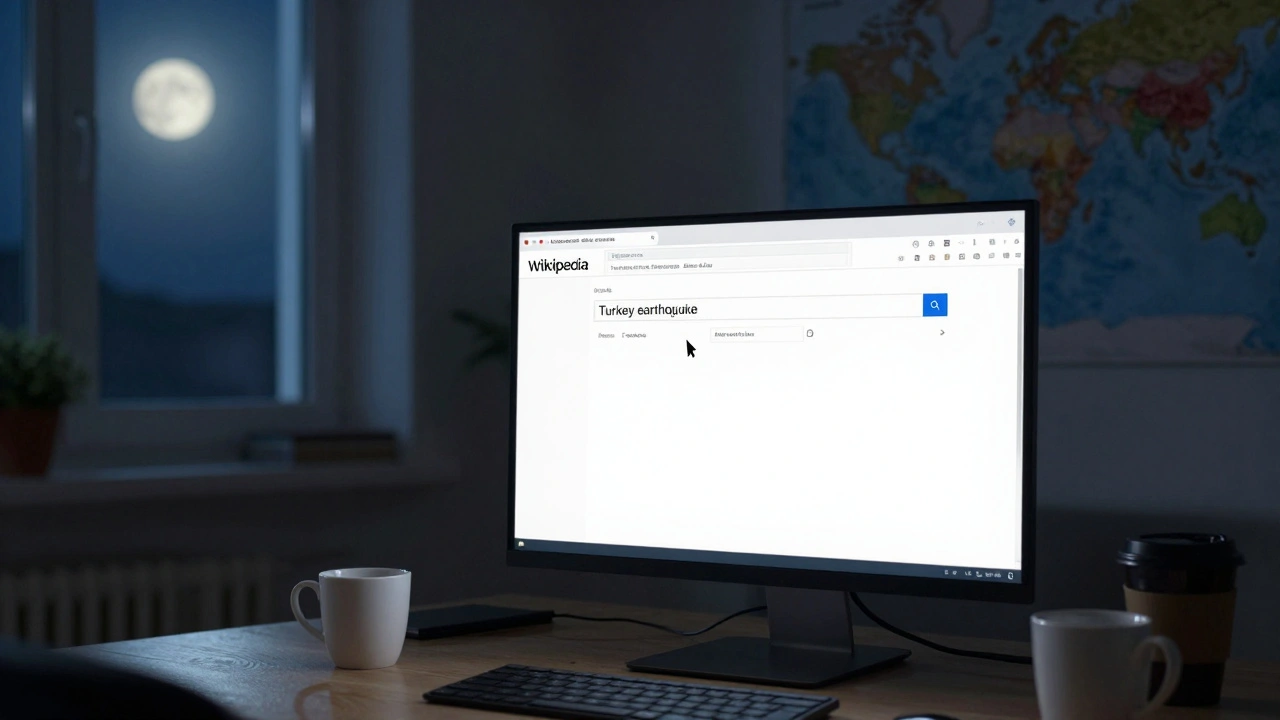
Wikipedia doesn’t report news. It documents what’s already happened, verified, and widely reported. That’s the rule. But during a disaster, that line gets blurry. A 7.8-magnitude quake strikes at 3 a.m. local time. By 3:15 a.m., someone in Istanbul types “Turkey earthquake” into Wikipedia’s search bar. The page doesn’t exist yet. So they create it.
That’s when the crisis protocols activate. The first edit is usually a bare-bones template: location, time, magnitude, initial death toll from a trusted source like the USGS or the Red Cross. No speculation. No unconfirmed rumors. No photos from social media unless they’re from verified accounts or official agencies. The goal isn’t to be first - it’s to be accurate.
Within hours, dozens of editors from around the world jump in. A volunteer in Tokyo checks Japanese news outlets. Someone in Berlin cross-references European disaster databases. A former emergency responder in Chicago reviews evacuation maps. All of them are working off the same playbook: reliable sources only.
What counts as a reliable source during a crisis
Not every news outlet is equal when the ground is shaking. Wikipedia’s standards for disaster coverage are stricter than most newsrooms. Here’s what works:
- Government agencies (FEMA, USGS, Japan Meteorological Agency, National Hurricane Center)
- International organizations (Red Cross, UN OCHA, WHO)
- Major global news agencies (AP, Reuters, AFP, BBC, CNN - but only their official reports, not social media posts)
- Peer-reviewed scientific journals for long-term impact analysis
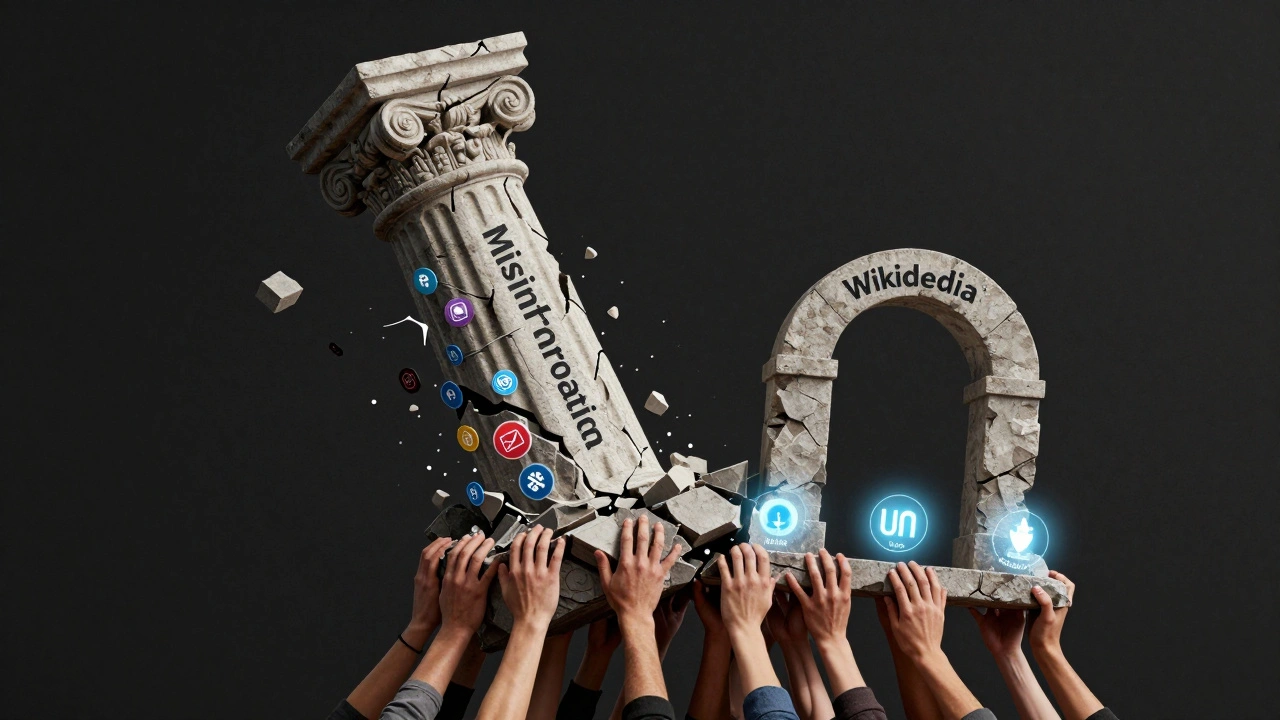
Local blogs, TikTok clips, unverified Twitter threads, and anonymous forum posts? They’re blocked. Even if they’re “true.” The reason is simple: misinformation spreads faster than facts in a crisis. Wikipedia’s job is to slow that down.
For example, during the 2023 Turkey-Syria earthquake, early Wikipedia edits cited death tolls from Turkish media. Within 48 hours, those numbers were updated as the Turkish Disaster and Emergency Management Authority (AFAD) released official figures. Editors didn’t wait for consensus - they waited for authoritative confirmation.
The role of automated tools and bots
Manual editing can’t keep up with the volume. That’s where bots come in. Wikipedia runs dozens of automated tools that monitor global disaster feeds. One bot, called DisasterBot, scans feeds from the USGS, EM-DAT (the international disaster database), and the Copernicus Emergency Management Service. When it detects a new event matching known criteria - magnitude 6.5+, death toll over 50 - it auto-generates a draft page with placeholders for location, time, and initial data.
It doesn’t publish it. It just creates a starting point. Human editors then review, verify, and expand. The bot also flags conflicting reports. If one source says 200 dead and another says 800, the bot highlights the discrepancy so editors know to dig deeper.
Another bot, ImageCheck, scans uploaded photos. It blocks images that are mislabeled - like a photo from a 2018 flood in Indonesia being used to illustrate a 2025 earthquake in Nepal. It cross-references metadata, EXIF data, and reverse image searches. Over 90% of misused disaster images are caught before they go live.

How Wikipedia avoids sensationalism
Other platforms thrive on urgency. Wikipedia thrives on calm. There’s no headline like “HORRIFYING IMAGES AS CITY VANISHES.” No clickbait. No emotional language. The tone is clinical, even when describing unimaginable loss.
Here’s how that works in practice:
- “Hundreds of buildings collapsed” - OK
- “The entire town was wiped off the map” - deleted
- “At least 1,200 people confirmed dead” - OK, if sourced
- “Thousands feared dead” - removed until confirmed
Wikipedia’s Neutral Point of View policy isn’t optional during disasters - it’s the foundation. Editors are trained to avoid phrases like “tragedy,” “catastrophe,” or “devastating.” They use “event,” “incident,” or “disaster” - neutral terms that don’t manipulate emotion.
This isn’t cold. It’s necessary. In the aftermath of the 2024 Haiti earthquake, a Wikipedia page was edited over 300 times in 12 hours. One editor added a paragraph describing “children crying in the rubble.” It was reverted. Not because it wasn’t true - but because it wasn’t sourced. A photo caption isn’t a reliable source. A survivor’s quote on a local radio station? Only if the station is a recognized media outlet with editorial oversight.
What happens when information changes
Disaster data is messy. Initial reports are wrong. Bodies are counted twice. Power outages delay official numbers. Wikipedia doesn’t hide that. It documents the change.
Every major update gets a clear edit summary: “Updated death toll from 890 to 1,120 based on AFAD official release (2025-01-07).” The old number isn’t erased - it’s preserved in the edit history. Anyone can see how the page evolved.
This transparency is one of Wikipedia’s biggest strengths. In 2023, researchers at Stanford analyzed 1,200 disaster-related Wikipedia pages. They found that 78% of initial death tolls were revised within 72 hours. But the revisions were always traceable. Unlike news sites that quietly correct a headline, Wikipedia makes every change public.
That’s why emergency responders, aid organizations, and even governments use Wikipedia as a reference. The U.S. State Department’s crisis response team keeps a bookmarked list of disaster pages. They know they can trust the numbers - because they can see how they got there.
How volunteers stay safe and sane
Editing disaster pages isn’t just technical work. It’s emotionally heavy. Volunteers are often the first to see raw data - names of victims, photos of destroyed homes, lists of missing children. Many editors report feeling overwhelmed.
Wikipedia has support systems. There’s a private channel for disaster editors to talk, share resources, and take breaks. The Wikimedia Foundation funds mental health stipends for editors who spend more than 20 hours on crisis pages in a week. Some volunteers take days off after major events. Others switch to editing less intense topics.
It’s not perfect. But it’s human. And that’s why it works.
Why this matters beyond Wikipedia
Wikipedia’s crisis standards aren’t just about keeping a website accurate. They’re a model for how information should be handled in emergencies. In an age of AI-generated misinformation, deepfakes, and viral lies, Wikipedia shows that speed doesn’t have to mean sloppiness.
When a child in rural Kenya looks up “cyclone in Mozambique” on their phone, they’re not getting a tweet. They’re getting a page built by people in 17 countries, all checking sources, correcting errors, and refusing to guess. That’s not just useful - it’s a public good.
Wikipedia doesn’t save lives directly. But it gives people the facts they need to act. And in a disaster, facts are the first form of aid.
Can anyone edit a Wikipedia page during a natural disaster?
Yes, anyone can edit, but edits are monitored closely. New or unregistered users face stricter review. High-traffic disaster pages are often semi-protected, meaning only experienced editors can make changes. This prevents vandalism and misinformation while still allowing rapid updates from trusted contributors.
Why doesn’t Wikipedia use social media for disaster updates?
Social media lacks editorial oversight. A viral post might be emotional, compelling, or even true - but without verification, it can’t be trusted. Wikipedia requires sources with established credibility, like government agencies or major news organizations. Even if a tweet from a local official is accurate, it’s only used if the official’s agency has a published communication policy.
How quickly does Wikipedia update after a disaster?
Initial pages often appear within minutes of a major event being reported by trusted sources. Full, detailed pages with maps, timelines, and impact data are usually completed within 24-48 hours. Speed depends on the scale of the event and how many volunteers are available - but accuracy always comes before speed.
Are Wikipedia’s disaster pages used by real emergency responders?
Yes. Organizations like the Red Cross, Médecins Sans Frontières, and the U.S. Federal Emergency Management Agency (FEMA) reference Wikipedia during crisis response. It’s not their primary tool, but it’s a trusted secondary source because of its transparency, source citations, and real-time updates.
What happens if a disaster page contains outdated information?
Outdated information is flagged and corrected quickly. Wikipedia’s edit history preserves every version, so no data is lost. Editors regularly patrol high-traffic disaster pages for outdated figures. Automated tools also alert editors when new official data becomes available. If a death toll is updated, the old number is archived in the edit summary, not deleted.