Most people think Wikipedia is just English. It’s not. Over 300 language editions exist, and dozens of them have fewer than 10,000 articles. These tiny editions aren’t failures-they’re laboratories for how knowledge spreads when resources are scarce. In places like Basque, Maori, or Hausa, volunteers are building Wikipedia from the ground up with no corporate backing, no paid staff, and often no internet access beyond a single phone. What they’ve learned could change how we think about global knowledge forever.
Why Small Editions Matter More Than You Think
When a language has only 50,000 speakers, you won’t find a Wikipedia article on local medicine, traditional farming, or regional history in English. Those gaps aren’t just inconvenient-they’re cultural erasure. Small Wikipedia editions fill them. The Wikipedia edition in Yoruba, for example, has 8,700 articles. That’s tiny next to English’s 6.8 million. But in southwestern Nigeria, where over 40 million people speak Yoruba, those articles are the only place where local knowledge is documented in writing. A farmer in Oyo State can now read how to treat a common plant disease in her own language. That’s not a footnote-it’s survival.
These communities don’t have Google Translate or AI tools. They have people. A 72-year-old retired teacher in Oaxaca writes about Zapotec textiles. A university student in Accra uploads photos of Ghanaian funeral rites. These aren’t volunteers in the usual sense. They’re archivists, educators, and storytellers doing work no institution will pay for.
The Hidden Rules of Building a Small Wikipedia
There’s no handbook for building a Wikipedia in a language with no standardized spelling, no digital fonts, or no formal grammar. So each community invents its own rules.
- In Guarani (Paraguay), editors use WhatsApp to debate article topics before posting. A group of 12 elders and teens meet weekly to approve new entries.
- In Tswana (Botswana), articles are written in notebooks first, then typed on public library computers once a week.
- In Cherokee (USA), editors use a custom keyboard layout created by a high school teacher in 2018. The keyboard still runs on a USB stick passed between homes.
They don’t follow Wikipedia’s formal policies. They adapt them. One rule they all share: every article must be read aloud before it’s published. If it sounds right to a native speaker, it stays. If it sounds like a translation, it gets rewritten.
What They’ve Learned About Technology
Small Wikipedia teams don’t use fancy tools. They use what works.
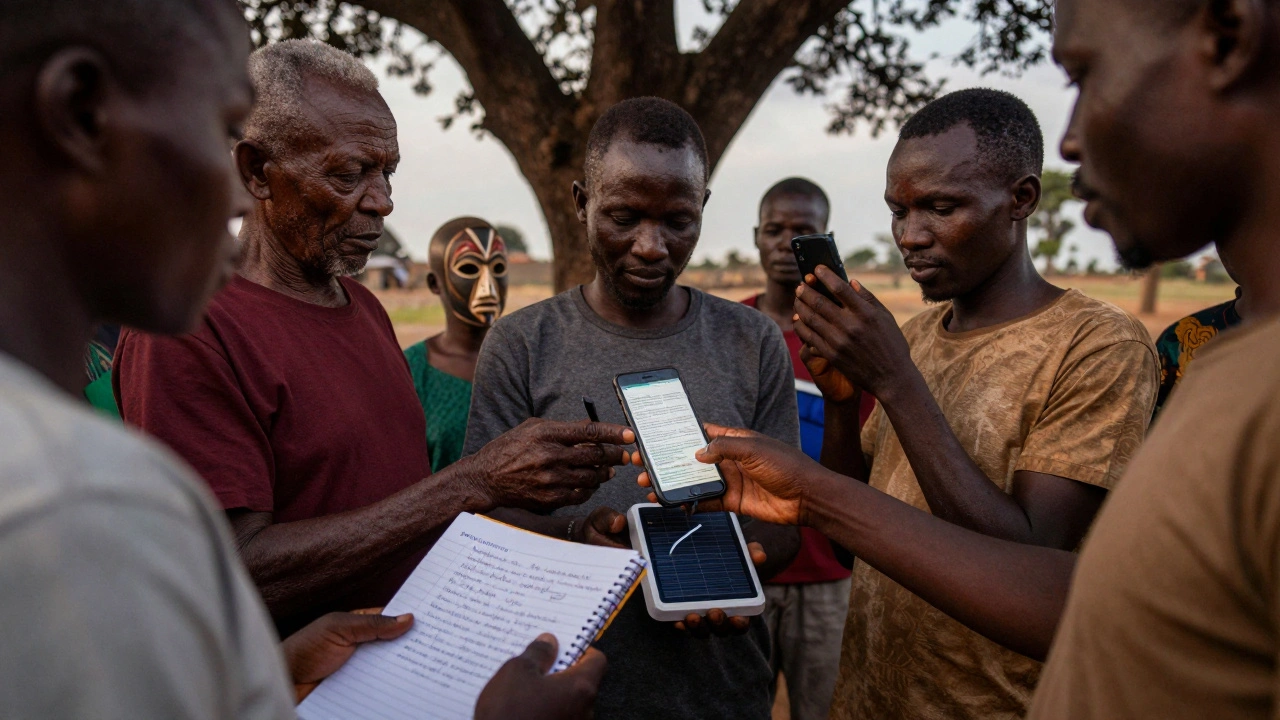
The Wikipedia mobile app is their lifeline. In rural Nepal, editors use a single smartphone to upload 30 articles a week. They charge it with a solar panel tied to a tree. In Madagascar, volunteers download articles to offline mode and edit on buses between villages.
They’ve also hacked their way around technical barriers. The Wikimedia Foundation doesn’t offer voice-to-text tools for most small languages. So the Khmer community built their own using free Android apps and a shared Google Sheet. Now, elders can dictate stories into a phone, and a teen transcribes them. It’s slow. It’s messy. But it’s working.
And here’s the surprise: they’ve learned more about editing than English Wikipedia editors. Why? Because they can’t afford mistakes. A wrong spelling in Welsh might mean a child never learns the word for ‘river’ again. So every edit is reviewed. Every photo is sourced. Every citation is checked by hand.
Why Bigger Editions Should Pay Attention
English Wikipedia has over 200,000 active editors. It’s a machine. But it’s also bloated. Articles on pop stars have 50 references. Articles on indigenous water rights have three. That imbalance isn’t accidental-it’s systemic.
Small editions show what happens when knowledge is built around need, not popularity. In Quechua (Peru), the most-read article isn’t about Inca history. It’s about how to grow quinoa without pesticides. In Swahili (Tanzania), the top 10 articles are all about maternal health. These aren’t niche topics-they’re lifelines.
English Wikipedia could learn from this. Instead of adding 100 new articles about video games, what if it added 100 articles on local healing practices from 100 different languages? The infrastructure is already there. The tools are free. What’s missing is the will.
The Real Barrier Isn’t Technology-It’s Recognition
Most small Wikipedia editions get no funding. No press. No training. The Wikimedia Foundation gives grants to big projects. Not to the ones that need it most. A 2024 internal report showed that 87% of grants went to languages spoken by over 10 million people. Languages with under 1 million speakers got 0.3%.
And yet, these tiny editions have higher retention rates. A 2023 study from the University of Cape Town found that 68% of editors in small-language Wikipedias stayed active for over three years. In English Wikipedia, it’s 19%. Why? Because they’re not editing for clicks. They’re editing because their language is disappearing.
One editor in Yup’ik (Alaska) told a researcher: "I write so my granddaughter doesn’t have to Google her grandmother’s stories and find nothing." That’s not a project. That’s a promise.

How You Can Help Without Spending a Dollar
You don’t need to be a coder or a linguist. You just need to care.
- Find a small Wikipedia edition in a language you know-even if you only speak one phrase. Edit one article. Fix one typo. Add one photo.
- Share articles from small editions on social media. Tag them. Link them. People don’t know they exist.
- If you’re a teacher, use them in class. Show students how knowledge is built differently across cultures.
- Ask your local library to add links to small-language Wikipedias. Not just English.
There are 7,000 languages in the world. Wikipedia has 300 editions. That means 95% of human languages have no Wikipedia. That’s not a technical problem. It’s a choice.
Can anyone edit a small Wikipedia edition, even if they don’t speak the language?
Yes, but only if you’re helping someone who does. Most small-language Wikipedias welcome non-native editors who assist with formatting, sourcing, or translation-especially if they’re working with a native speaker. But no one is allowed to write content in a language they don’t understand. The rule is simple: if you can’t read it aloud to a native speaker and they nod, it doesn’t go live.
Why don’t big organizations fund these projects more?
Most funding goes to projects with measurable outcomes: page views, editor counts, article growth. Small editions grow slowly. They don’t have dashboards. They don’t report numbers. They have stories. And stories don’t fit into grant applications. Some organizations have started changing this-like the Endangered Languages Project-but progress is still minimal. The real issue isn’t money. It’s seeing value in knowledge that doesn’t look like what we’re used to.
Do small Wikipedia editions use AI tools?
Very rarely. Most small-language communities distrust AI because it often gets names, grammar, and cultural context wrong. One editor in Tamazight (Morocco) tried using an AI translator to convert an article from French. The AI turned a sacred ritual into a "cultural performance." The community deleted it and wrote a new version by hand. They’ve since banned AI tools entirely. Human knowledge, they say, isn’t something you can automate.
What’s the smallest active Wikipedia edition?
As of early 2026, the smallest active edition is Wikipedia in Goan Konkani, with 214 articles. It’s run by three people-a librarian, a retired schoolteacher, and a college student-who update it once a month. They don’t count their articles. They count the children who now write their homework using words their grandparents taught them.
How do these communities stay connected?
They use WhatsApp, Telegram, and Facebook Groups-not Wikipedia’s official forums. Many don’t even have Wikipedia accounts. They meet in person at community centers, churches, or under trees. One group in Papua New Guinea holds monthly "Wikipedia picnics"-people bring food, laptops, and stories, and spend the day adding articles. There’s no internet. But there’s trust.
What Comes Next
The future of knowledge isn’t in the biggest library. It’s in the quietest corners. A single article in Hmong about how to treat a snakebite. A photo in Warlpiri of a sacred rock painting. A step-by-step guide in Chuukese on repairing a fishing net. These aren’t footnotes. They’re foundations.
Wikipedia was built on a radical idea: that anyone can write the world’s knowledge. Small editions prove that idea still works. They just need us to stop looking for big numbers-and start listening to quiet voices.