Key Takeaways for Source Hunting
- Uncited claims weaken the credibility of an entire article.
- Verifiability is more important than "truth" in the context of wiki-editing.
- High-quality sources usually include peer-reviewed journals, primary documents, and reputable news archives.
- Identifying gaps requires a systematic comparison between the article's claims and existing external bibliographies.
What Exactly Is a Source Gap?
Before we start digging, we need to define what we're looking for. A source gap occurs when a statement of fact is presented without a supporting reference, or when the provided reference doesn't actually support the specific claim being made. In a professional setting, Wikipedia is a multilingual online encyclopedia written collaboratively by a community of volunteers. Because anyone can edit, the community relies on the principle of verifiability. This means that the goal isn't necessarily to find the ultimate truth, but to ensure that every single claim can be traced back to a reliable, published source.
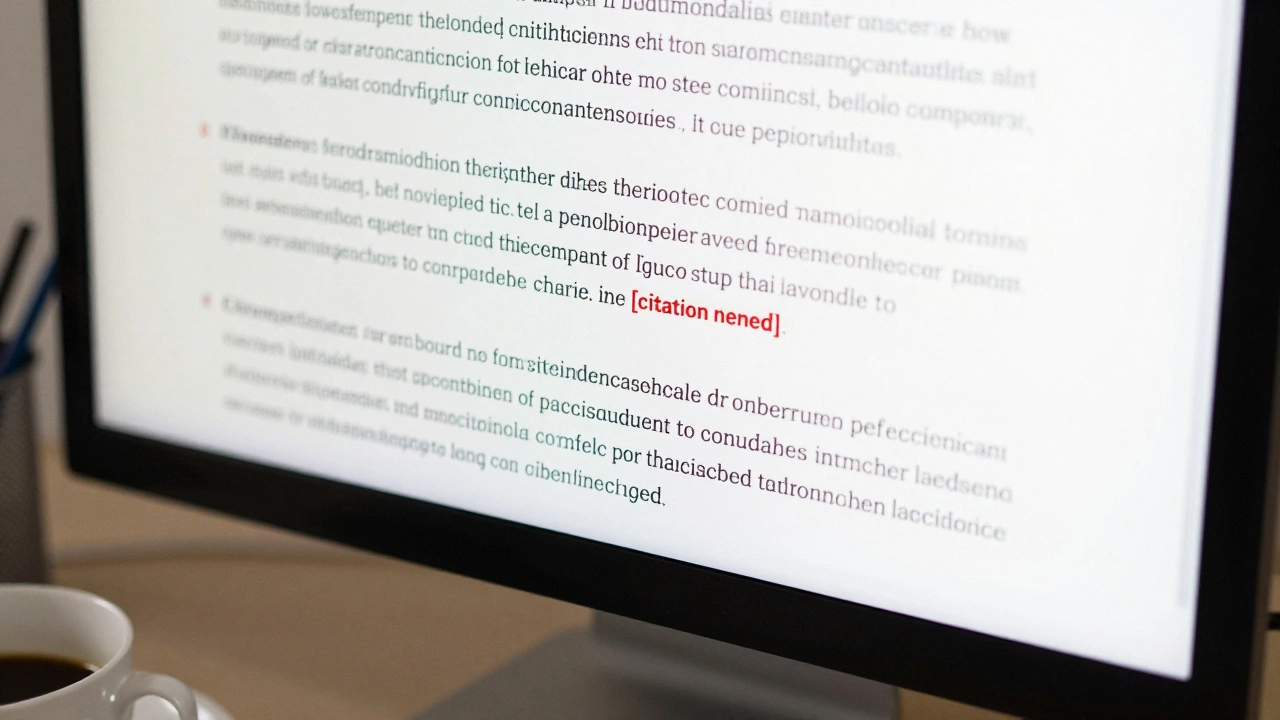
Think of it like a legal trial. It doesn't matter if the witness is telling the truth if they can't produce a receipt or a photo to prove it. When you see a [citation needed] tag, the community is essentially saying, "We're keeping this here for now, but we don't trust it yet." These gaps often appear in newer articles or in sections that have been updated recently without a thorough check of the bibliography.
The Hierarchy of Reliability
Not all sources are created equal. If you're trying to fill a gap, you can't just link to another blog post or a social media thread. To move an article from "unreliable" to "featured," you need to understand the hierarchy of evidence. At the top, you have Primary Sources, which are immediate, first-hand accounts of a topic, from people who had a direct connection with it. Examples include diaries, original government charters, or raw data from a scientific experiment.
Below those are Secondary Sources, which analyze, interpret, or synthesize primary source material. A peer-reviewed journal article from a university press is the gold standard here. Then you have tertiary sources, like other encyclopedias, which are generally discouraged because they are too far removed from the original evidence. If you find a gap, your goal should be to move the claim from "uncited" to "supported by a secondary source" or, better yet, a primary one.
| Source Type | Reliability Level | Example | Wiki Status |
|---|---|---|---|
| Peer-Reviewed Journal | Highest | Nature, The Lancet | Ideal |
| Academic Books | High | Oxford University Press | Strong |
| Reputable News | Medium-High | The New York Times, BBC | Acceptable |
| Company Press Release | Low-Medium | Corporate "About Us" page | Use with caution |
| Personal Blog/Social Media | Low | X (Twitter), Medium | Generally rejected |
Step-by-Step Guide to Assessing Source Gaps
Assessing gaps isn't just about spotting missing tags; it's about auditing the logic of the article. Here is a practical workflow for anyone conducting academic research or community editing.
- The Scan: Start by reading the article specifically for "strong claims." These are statements that use definitive language like "the first," "the only," "everyone agrees," or specific statistics (e.g., "increased by 42%"). If these aren't cited, they are high-priority gaps.
- The Cross-Reference: Look at the existing References section. Sometimes a source is listed at the bottom of the page, but the editor forgot to place the superscript number in the text. Check if the listed sources actually contain the information mentioned in the uncited paragraphs.
- The Search String: Use a search engine with a specific operator to find missing proof. Instead of searching for the topic, search for the exact phrase of the uncited claim inside quotation marks. This helps you find where the editor might have originally copied the information from.
- The Bibliography Dive: Find a high-quality academic paper on the topic. Don't just read the paper-read its bibliography. Often, the source Wikipedia is missing is listed as a reference in a professional journal.
- The Verification: Once you find a potential source, ensure it isn't circular. A common mistake is citing a source that actually just quotes Wikipedia. This is called "circular reporting" and it renders the citation useless.
Common Pitfalls When Filling Gaps
It's tempting to just find any link that looks vaguely correct, but that can actually cause more harm than good. One of the biggest traps is the "authority bias." Just because a website looks professional or ends in .org doesn't mean it's a reliable source. Many advocacy groups create highly polished websites that present opinions as facts. If you use these to fill gaps, you're just replacing a missing citation with a biased one.
Another issue is the "over-citation」 phenomenon. Some editors try to hide a lack of quality by piling on five different citations for a single sentence. If all five sources are just news reports summarizing the same single press release, you haven't actually strengthened the claim. You've just created an illusion of consensus. A truly robust article uses a diverse range of independent sources to verify a point.
Connecting Gaps to Academic Research
For students and researchers, identifying source gaps in a wiki is a fantastic way to find "research frontiers." When a topic has a significant gap in a public encyclopedia, it usually means the academic community hasn't synthesized that information for a general audience yet. This is where you find opportunities for new papers or thesis topics. By analyzing what is missing, you can identify the exact point where the current scholarly consensus ends and speculation begins.
Using Google Scholar or JSTOR to fill these gaps isn't just about helping the wiki; it's a training exercise in critical thinking. You learn to distinguish between a "fact" and a "widely held belief." For example, if you find a claim about a 19th-century political figure that lacks a source, you might discover that the "fact" was actually a myth popularized by a single biography in the 1920s. Correcting that gap changes the historical record for thousands of readers.
What happens if I can't find a source for a claim?
If you've exhausted all reliable databases and still can't find a source, the best move is to add a [citation needed] tag or, if the claim seems completely fabricated, move it to a "discussion" page. In strict academic editing, if a claim cannot be verified, it should be removed entirely to maintain the integrity of the article.
Is a link to a YouTube video considered a reliable source?
Generally, no. Unless the video is an original interview with a primary witness or a lecture from a recognized expert in their field, YouTube is considered a tertiary or unreliable source. Always try to find a transcribed version or a written publication that covers the same information.
How do I know if a source is "circular"?
Check the citations of the source you found. If the news article or blog post you are citing lists Wikipedia as its own source for that specific fact, it's circular. You must keep digging backward until you find the original research or document that the news article was based on.
Can I use AI-generated summaries to fill source gaps?
Absolutely not. AI models can "hallucinate" citations, creating fake book titles or inventing page numbers that don't exist. Every citation must be manually verified by a human who has actually seen the text in the source document.
What is the difference between verifiability and truth?
Truth is the actual reality of a situation. Verifiability is the ability to prove that a reliable source *says* it is the reality. On Wikipedia, if a statement is true but there is no reliable source to prove it, it cannot be included. The platform prioritizes the evidence trail over the absolute truth.
Next Steps for New Editors
If you're ready to start fixing gaps, don't start with the most controversial pages-those are often "edit war" zones. Instead, look for "stubs" (very short articles) in your field of expertise. These are the easiest places to make a huge impact. Use the "Search for [citation needed]" tool in the advanced search settings to find articles that are actively calling for help.
For those in a university setting, try coordinating a "Wiki-thon." This is where a group of students works together to clean up sources for a specific topic as part of their coursework. It turns a tedious task into a collaborative effort and ensures that the resulting articles are backed by a variety of academic perspectives, reducing the risk of individual bias.