The Core Idea Behind the Wiki Model
At its heart, Wikipedia runs on Wiki software a collaborative website tool that allows users to create and edit pages via a web browser . The word "wiki" comes from the Hawaiian word "wiki-wiki," which means "quick." The goal was simple: make it fast for anyone to contribute information without needing to be a computer scientist.
Unlike a traditional book, where the text is static once printed, a wiki is a living document. This means that as soon as a news event happens-say, a sudden change in government or a scientific discovery-an editor can update the page in seconds. This speed is why it often beats traditional news outlets to the punch with raw data. But does that speed come at the cost of accuracy? That depends on the community's ability to police itself.
Who Actually Runs the Show?
While the writers are volunteers, the infrastructure is managed by the Wikimedia Foundation a non-profit organization based in San Francisco that operates Wikipedia and other free knowledge projects . The Foundation doesn't write the articles. Instead, they handle the servers, the legal battles over free speech, and the fundraising campaigns you see every year. They ensure that the site remains ad-free, which is a rarity for a platform that serves billions of views.
The real power lies with the community. There are different levels of users, from "Anonymous」 editors who make a one-time typo fix, to "Administrators" who have the power to block disruptive users or protect pages from "edit wars." This hierarchy is loosely organized and based on trust and tenure within the community. If you spend enough time making high-quality contributions, you earn the respect (and the tools) to help manage the site.
| Feature | Traditional Encyclopedia (e.g., Britannica) | Wikipedia |
|---|---|---|
| Authorship | Paid subject matter experts | Global community of volunteers |
| Update Speed | Years (between printed editions) | Seconds (real-time) |
| Cost | Expensive subscriptions/books | Free (funded by donations) |
| Scope | Curated and limited | Massive and exhaustive |
| Vetting | Centralized editorial board | Decentralized community consensus |
The Golden Rules: Verifiability and Neutrality
You can't just write "My dog is the best dog in the world" and expect it to stay on Wikipedia. To prevent the site from becoming a giant blog, the community follows strict guidelines. The most important is Verifiability the requirement that information be attributable to a reliable published source . If a claim isn't backed by a citation-like a newspaper article, a peer-reviewed journal, or a book-it can be flagged or removed entirely.
Then there is the Neutral Point of View (NPOV) a policy requiring that articles be written without bias, representing all significant views fairly . Editors are told not to take sides. For example, if an article is about a controversial political figure, it shouldn't say "This leader is a tyrant." Instead, it should say "Critics, including [Source X], have described the leader as a tyrant," while also mentioning the views of their supporters. This balance is what keeps the site from becoming a propaganda tool.
How Content is Validated (The Secret Sauce)
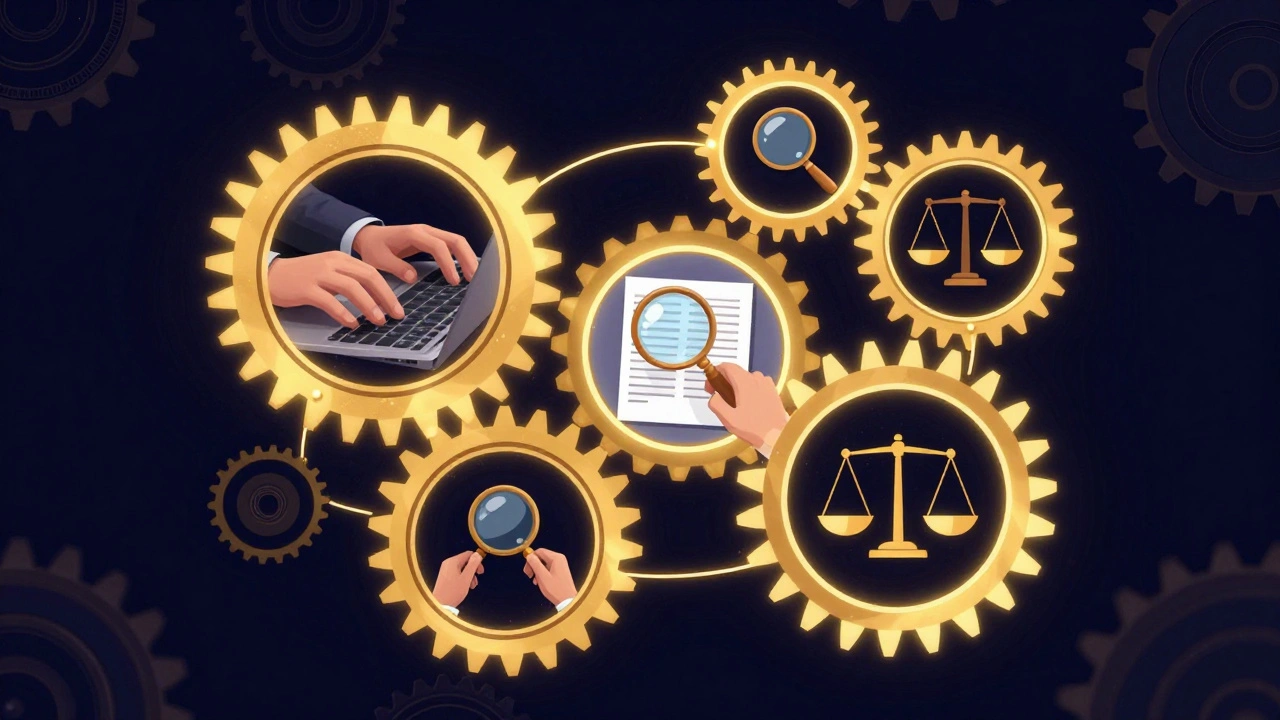
You might be thinking, "But anyone can edit it!" Yes, they can. But that is actually why it often works. This is known as Linus's Law: "given enough eyeballs, all bugs are shallow." When a high-profile page (like "United States" or "Climate Change") is edited, it is watched by hundreds of bots and humans. A malicious edit is usually reverted within seconds.
To keep the quality high, Wikipedia uses several tools:
- Watchlists: Users can "follow" a page to get notified whenever a change is made.
- Discussion Pages: Every article has a "Talk" page where editors argue and debate the wording of a section before changing it.
- Recent Changes Feed: A live stream of every single edit happening across the entire site.
- Bots: Automated scripts that instantly revert obvious vandalism, such as pages being cleared or filled with gibberish.
Common Pitfalls and Why You Should Be Careful
Despite the checks, Wikipedia isn't perfect. The biggest issue is "systemic bias." Because a huge portion of editors are from North America and Europe, topics related to those regions are often more detailed than those from the Global South. You might find a 10,000-word article on a small town in Ohio, but only a paragraph on a major city in Central Africa.
There is also the risk of "citation circles." This happens when a Wikipedia editor adds a fact to a page, and then a journalist writes an article based on that Wikipedia page. Later, another editor uses that news article as a source for the Wikipedia page. Suddenly, a fact that was originally just a guess looks like it has multiple independent sources. This is why you should always click the little superscript numbers and check the original source yourself.
How to Contribute Without Getting Banned
If you want to help, don't start by writing a massive biography of your cousin. That will get deleted for "lack of notability" in minutes. Instead, start small. Fixing a typo or adding a missing comma is a great way to learn the interface. Once you're comfortable, try adding a reference to a claim that is currently missing one. Using Cite the process of providing a reference to a reliable source to support a statement is the most valuable thing a new editor can do.
Always remember to use the Talk page if you disagree with someone. If you just keep changing a sentence back and forth, you'll enter an "edit war," and an administrator will likely lock the page, preventing anyone (including you) from editing it for a while.
Is Wikipedia a reliable source for school papers?
Generally, no. Most professors and teachers forbid citing Wikipedia directly because it is a tertiary source. However, it is an incredible starting point. Use it to understand the general topic and then scroll to the "References" section at the bottom. Those original books and journals are the sources you should actually cite in your work.
How does Wikipedia make money?
Wikipedia is funded almost entirely by small donations from its users. The Wikimedia Foundation periodically runs banners asking for a few dollars to keep the site running. They avoid corporate advertising to prevent commercial influence over the content.
What happens if I delete a page by accident?
Don't panic. Every single version of every page is saved in the "History" tab. You (or any other user) can simply click on a previous version and restore it. Nothing is ever truly gone from Wikipedia unless an administrator performs a hard deletion for legal or policy reasons.
Can I create a page for my own business?
You can, but it's risky. Wikipedia has a strict "Conflict of Interest" policy. If you write about yourself or your own company, you're likely to be accused of promoting. The best approach is to ensure your business is "notable" first-meaning it has been covered by independent, reliable news sources-and then let a neutral third party create the page.
Why are some pages locked?
Pages are locked (semi-protected) when they are targets of frequent vandalism or intense edit wars. This usually happens to pages of living political figures or highly controversial social topics. Only confirmed users with a certain amount of edits can change these pages.
Moving Beyond the Basics
Now that you know how the machine works, you can explore other projects under the Wikimedia umbrella. If you like data, Wikidata a collaboratively edited knowledge base that stores structured data in a machine-readable format is the backend that powers many of the info-boxes you see on Wikipedia pages. If you love images, Wikimedia Commons a repository of free-use images, sound, and other media files is where all those photos are stored.
Whether you use it as a quick fact-checker or dive into the rabbit hole of obscure history, Wikipedia is a testament to what people can achieve when they collaborate without a central boss. Just remember: always check the sources, and never trust a single page blindly.