Imagine you wrote a blog post about your local bakery’s history. You want to add it to the Wikipedia article for that bakery. It feels logical: you know the facts, and the source is right there. But if you try to cite it, an editor might delete it instantly. Why? Because Wikipedia treats a source published by the subject of the article itself, often without independent editorial oversight with extreme caution. This isn’t just a rule; it’s a shield against bias.
The core problem with self-published material is the lack of independent verification. When a company writes its own press release, or a musician posts their tour dates on their personal website, who is checking the accuracy? In academic terms, we call this a primary source when it comes from direct observation, but in Wikipedia’s context, it’s often treated as unreliable unless it serves a very specific purpose. The policy isn't about banning these sources entirely; it’s about knowing exactly when they are allowed and when they are traps.
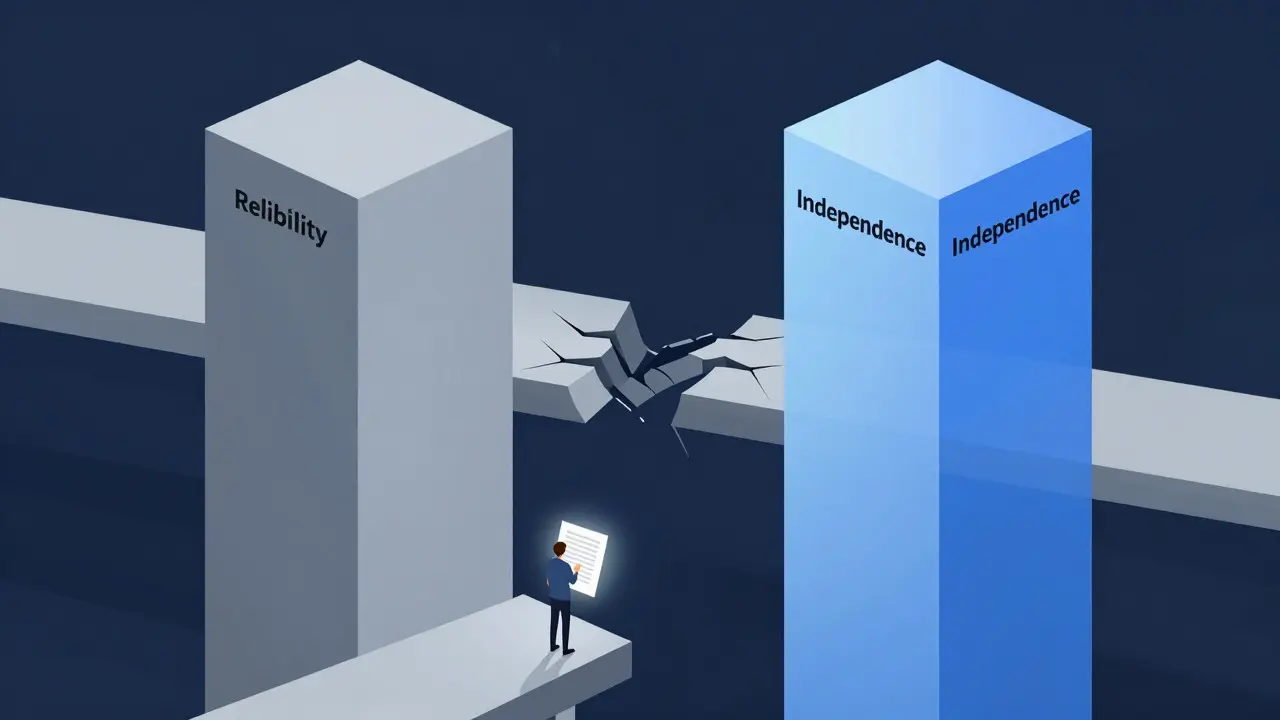
Understanding the Core Rule: Reliability vs. Independence
To navigate this, you have to understand two distinct concepts that often get mixed up: reliability and independence. A source can be reliable (accurate) but not independent (biased). Or it can be independent but not reliable (inaccurate). Wikipedia generally requires both for most claims.
- Reliability: Does the source have a track record of accuracy? Is it peer-reviewed or fact-checked?
- Independence: Is the publisher separate from the subject? If the subject pays the publisher, independence is compromised.
Self-published sources usually fail the independence test. However, they don’t always fail the reliability test. For example, if a university publishes its own list of enrolled students, that source is self-published, but it is highly reliable for the specific fact of enrollment numbers. The key is matching the source type to the claim being made.
The "Primary Source" Exception
This is where many editors get confused. Wikipedia allows self-published sources when they are used as documents created by the subject themselves, used to support statements about the subject's own actions, words, or works. Think of it like a court case. If a defendant says, "I was at home," their own testimony is a primary source. It proves they said it, but it doesn’t prove they were actually at home.
So, if a band releases an album, you can cite their official website to say, "The album was released on May 1st." That is a factual statement about their action. But you cannot cite that same website to say, "The album is considered a masterpiece by critics." That is an opinion that requires a secondary, independent source.
Common Scenarios for Primary Use
- Bibliographic Data: Citing a book’s publisher page to confirm the ISBN or publication date.
- Event Details: Citing a conference organizer’s site to confirm the time and location of the event.
- Quotes: Citing a politician’s official press release to verify what they specifically said.
When Self-Published Sources Are Allowed for General Claims
There are rare cases where a self-published source is acceptable for broader claims, provided it meets high standards of reliability. This usually happens when the publisher has a strong reputation for accuracy, even if they are the subject.
| Source Type | Independence | Reliability | Acceptable Use Case |
|---|---|---|---|
| Official Government Report | Low (Self) | High | Statistical data, legal definitions |
| Company Press Release | None | Variable | Announcing product launch only |
| Personal Blog | None | Low | Rarely, only for niche community events |
| Academic Journal | High | High | Scientific findings, historical analysis |
For instance, if you are writing about a specific piece of legislation, citing the official government gazette is perfectly fine. It is self-published by the state, but it is the authoritative record of the law. Similarly, religious texts are self-published by their respective faiths, yet they are accepted as primary sources for describing the beliefs of that faith, just not for proving those beliefs are objectively true.
The Danger Zone: Biased Editing and Conflict of Interest
The biggest risk isn’t just getting your citation deleted; it’s getting accused of editing a Wikipedia article about a topic in which the editor has a personal stake. If you are a small business owner adding your own website as a source, editors may suspect you are trying to inflate your importance. This is called a conflict of interest (COI).
To avoid this, follow the "Talk Page First" rule. Before making changes, go to the discussion area of the article. Explain why you think the source is valid. Ask if other editors agree. This transparency builds trust. If you jump straight into editing and cite your own blog, you look like you’re hiding something. If you discuss it openly, you look like a contributor.
Navigating Specific Edge Cases
Not all self-published sources are equal. Here are three tricky situations and how to handle them.
1. The Niche Community Website
If you are writing about a very obscure hobby, like competitive pigeon racing, there may be no major news outlets covering it. In this case, the official association’s website becomes the de facto standard. While technically self-published, it acts as a tertiary source because it aggregates information from members. Editors are more likely to accept this if the site has been stable for years and has clear editorial guidelines.
2. The Personal Website of a Scholar
A professor’s personal webpage listing their publications is a self-published source. However, it is often accepted as a reliable index of their work. Why? Because the professor has an incentive to keep it accurate for professional reasons. But again, use it to list the works, not to evaluate their quality. For evaluation, you need citations from other scholars’ reviews.
3. The Corporate Blog
Companies like Apple or Microsoft maintain blogs. These are self-published. Can you cite them? Yes, but only for what the company officially announced. If Apple’s blog says, "We launched iPhone 15 today," that’s a fact. If the blog says, "Users love the new design," that’s marketing fluff and should be ignored unless backed by independent user surveys.

Practical Checklist for Contributors
Before you hit save on a citation involving a self-published source, run through this mental checklist:
- Is the claim factual or interpretive? Factual claims (dates, names, prices) are safer. Interpretive claims (quality, impact, significance) are risky.
- Is there a better alternative? Always check if a newspaper, journal, or third-party database covers the same point.
- Does the source have editorial control? If anyone can comment or edit the page, reliability drops significantly.
- Are you disclosing your COI? If you are the author of the source, mention it on the talk page.
Remember, Wikipedia is a collaborative project. The goal isn’t to win an argument; it’s to build a consensus based on verifiable facts. Using self-published sources correctly shows respect for that process. Misusing them signals that you value promotion over accuracy.
Frequently Asked Questions
Can I cite my own blog post on Wikipedia?
Generally, no, unless it is a primary source for a specific fact about yourself (like your birth date) or a niche topic with no other coverage. Always disclose your connection to the source on the talk page first.
What is the difference between a primary and secondary source in Wikipedia?
A primary source is created by the subject or a direct observer (e.g., a speech transcript). A secondary source analyzes or interprets the primary source (e.g., a newspaper review of that speech). Wikipedia prefers secondary sources for general claims.
Are government websites considered self-published?
Yes, technically. However, they are often treated as highly reliable for statistical and legal data because they serve as the official record. They are best used for facts rather than opinions.
Why do editors delete self-published citations so quickly?
Editors delete them to prevent bias and ensure neutrality. Without independent verification, self-published sources are prone to exaggeration or error. Quick deletion encourages contributors to find better, independent evidence.
How do I handle a conflict of interest when citing a source?
Disclose your relationship to the subject or source on the article's talk page. Explain why the source is relevant and ask for feedback before making edits. This transparency helps build trust with other editors.