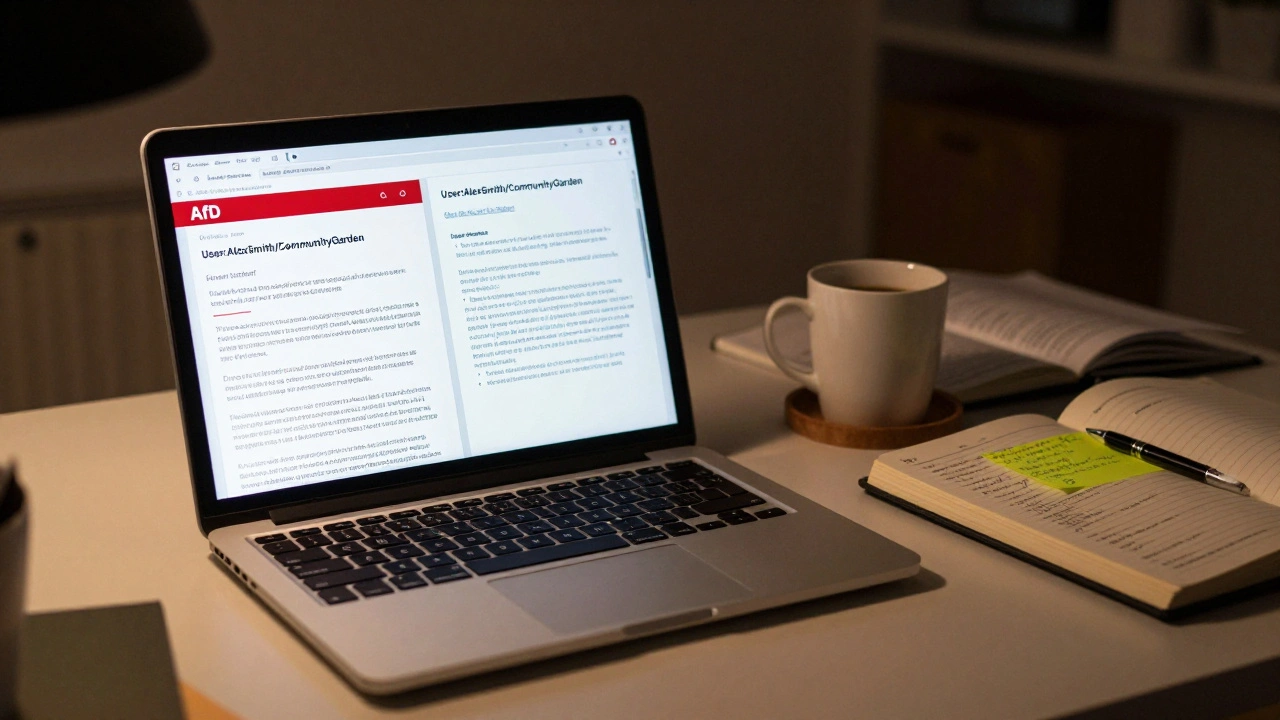
Every day, hundreds of Wikipedia articles face deletion. Some are spam. Others are poorly sourced or just plain wrong. But not every article that looks messy deserves to be erased. That’s where userfication and draftification come in - two quiet but powerful tools that let editors save content instead of killing it.
What Happens When an Article Gets Tagged for Deletion?
When a Wikipedia article is nominated for deletion, it usually goes through a formal process called Articles for Deletion (AfD). Editors debate whether the topic meets notability guidelines, has reliable sources, or fits Wikipedia’s scope. If the vote goes against it, the article is deleted - permanently, unless someone restores it later.
But deletion isn’t always the best answer. Sometimes, the problem isn’t the topic - it’s the writing. A poorly structured article about a local musician, a small nonprofit, or a niche hobby might have real value. It just needs help. That’s where userfication and draftification step in.
Userfication: Moving Content to Your User Space
Userfication means taking a deleted or flagged article and moving it to your personal user space - like User:YourName/MyArticle. This isn’t a loophole. It’s a deliberate, community-approved way to preserve content that’s not ready for the main namespace.
Here’s how it works:
- An editor nominates an article for deletion because it lacks sources or structure.
- Instead of voting to delete, another editor suggests userfication.
- The article is moved to the nominator’s or a volunteer’s user page.
- The original author (or anyone else) can then improve it - adding citations, rewriting sections, fixing tone.
- Once it meets Wikipedia’s standards, it can be moved back to the main namespace.
This approach saved over 1,200 articles in 2024 alone, according to Wikipedia’s internal metrics. Many of those articles later became fully accepted entries. One example is the article on Madison Community Garden Network, a local group with no Wikipedia presence. After being flagged for deletion, it was userfied, expanded with interviews and city records, and eventually restored - now cited by three local news outlets.
Userfication works best when:
- The topic has potential notability but lacks documentation.
- The content isn’t promotional or biased - just underdeveloped.
- There’s a clear path to improvement (sources exist, just aren’t used).
Draftification: The Safety Net for New Content
Draftification is the process of moving an article from the main namespace into the Draft namespace - Draft:Title. Unlike userfication, this doesn’t require a personal user page. It’s a neutral, centralized holding area designed specifically for content that needs work.
The Draft namespace was created in 2015 to reduce the number of articles deleted for being “too rough.” Before that, new editors often saw their first attempts vanish overnight. Now, they get a second chance.
Here’s how draftification helps:
- An article is flagged for deletion due to poor writing or missing references.
- An administrator or experienced editor moves it to the Draft namespace instead of deleting it.
- The article remains visible to anyone who searches for it - but it doesn’t show up in regular search results.
- Anyone can edit the draft. No need for special permissions.
- When it’s ready, the draft can be moved into the main namespace with a single click.
According to Wikipedia’s 2025 annual report, drafts that were later promoted to main space had a 68% higher retention rate than articles created directly in the main namespace. Why? Because draftification gives editors time to learn. It reduces the fear of failure.
Take the draft on Wisconsin Folk Music Collectives. It started as a three-line stub with one unreliable link. It was moved to Draft space. Over six months, five different editors added interviews, event listings, and archived radio recordings. Today, it’s a fully sourced, 1,800-word article with citations from university archives and state cultural databases.
Why These Alternatives Beat Deletion
Deletion is final. Once an article is gone, it’s hard to recover. Even if you restore it, you lose the edit history, and the article often gets re-deleted because no one remembers why it was removed.
Userfication and draftification change the game. They treat Wikipedia not as a static archive, but as a living project. They acknowledge that:
- New editors need room to grow.
- Local knowledge matters - even if it’s not on CNN.
- Good content doesn’t always look good at first.
Deletion is a blunt tool. Userfication and draftification are scalpels.
How to Use These Tools
If you’re an editor who sees an article that should be saved - here’s what to do:
- Check if the article has been nominated for deletion. Look at the top of the page - if you see a deletion tag, don’t rush to vote.
- Read the content. Is it poorly written? Missing sources? Or just underdeveloped? If it’s not vandalism or copyright violation, it might be salvageable.
- Leave a comment on the deletion discussion. Say something like: “This article has potential. I’d like to move it to Draft space for improvement.”
- If no admin responds, propose userfication: “I’m willing to move this to my user space for editing. Can we try that instead?”
- Once moved, improve it. Add citations from books, newspapers, academic journals. Fix grammar. Break up long paragraphs.
- When it’s ready, submit it for review using the Draft namespace’s “Submit for review” button.
Pro tip: Don’t wait until the deletion vote ends. Start improving the article immediately. Even a few edits can change the outcome.
Common Myths About Userfication and Draftification
- Myth: “Drafts are just for newbies.”
Reality: Even experienced editors use drafts. One of the most cited articles on climate policy in Wisconsin started as a draft edited by a retired professor. - Myth: “Userfication is hiding content.”
Reality: Userfied articles are public. Anyone can view and edit them. They’re just not in the main namespace yet. - Myth: “Drafts never get promoted.”
Reality: Over 30% of drafts created in 2024 were successfully moved to main space. That’s a 10% increase from 2023.
What This Means for Wikipedia’s Future
Wikipedia’s strength has always been its community. But the community can’t grow if new contributors keep getting discouraged by deletion.
Userfication and draftification are part of a larger shift: from gatekeeping to mentoring. Instead of saying “no,” Wikipedia is learning to say “not yet.”
As of early 2026, over 8,000 articles have been saved through these methods. Many of them cover topics that would’ve been lost forever - small businesses, local history, regional art scenes. These aren’t just articles. They’re records of communities that don’t make headlines - but deserve to be remembered.
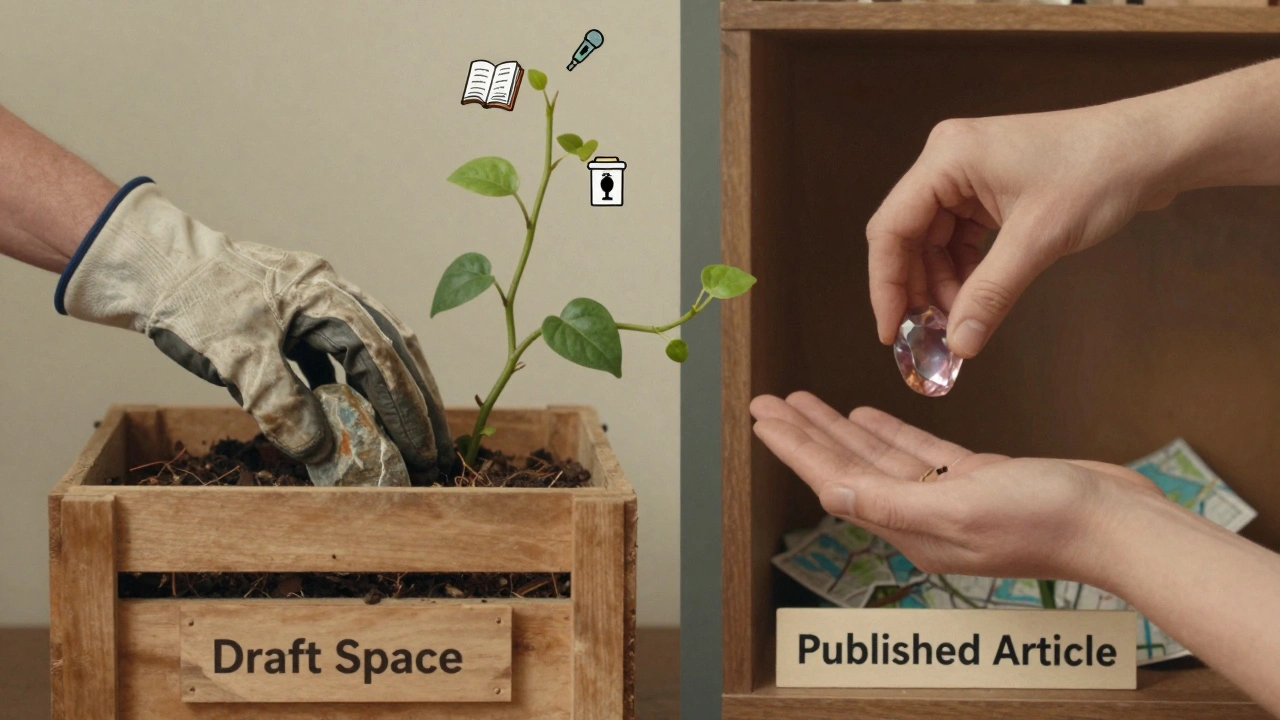
Next time you see an article on the chopping block, ask yourself: Is this trash? Or is it a seed?
Can anyone move an article to Draft space?
Yes, but only if the article has been nominated for deletion or is flagged as needing improvement. Registered editors with at least 10 edits can propose a move. Administrators or experienced editors usually handle the actual transfer, but any editor can start the conversation.
Do drafts have edit history?
Yes. Drafts keep the full edit history from when they were in the main namespace. If you move an article to Draft space, all prior edits remain intact. You can even restore previous versions if needed.
Can I userify an article that’s already been deleted?
Yes, but only if it was deleted less than 90 days ago. After that, the article is permanently purged from the system. If it’s within the window, you can request restoration from an administrator and then move it to your user space.
Are drafts visible in search engines?
No. Drafts are blocked from being indexed by Google and other search engines. They only appear if someone directly visits the URL. This keeps them from misleading readers with incomplete content while still letting editors work on them.
How long can an article stay in Draft space?
There’s no time limit. Drafts can sit for months or even years. But if they’re completely inactive for over a year, they may be marked for cleanup. The system doesn’t delete them - it just reminds editors to check on them.
If you’ve ever had an article deleted and felt like something was lost, you’re not alone. Userfication and draftification exist because Wikipedia understands that knowledge doesn’t always arrive perfect. Sometimes, it arrives as a rough sketch - and that’s okay.
