Wikipedia’s climate change articles are among the most viewed and most edited pages on the entire site. Every day, thousands of people check them to understand what’s happening to the planet. But behind those clean, factual pages is a decades-long battle over language, sources, and what counts as "neutral." The challenge isn’t just about science-it’s about how a global community decides what truth looks like when powerful interests want to rewrite it.
What Does "Neutrality" Mean on Wikipedia?
Wikipedia’s neutrality policy, or NPOV (Neutral Point of View), doesn’t mean giving equal weight to all opinions. It means representing views in proportion to their prominence in reliable sources. That’s a crucial distinction. You won’t find a Wikipedia article that says "some scientists think climate change is real, others think it’s a hoax" and treats both sides as equally valid. That’s not neutrality. That’s false balance.The policy requires editors to reflect the consensus of peer-reviewed science. When 97% of climate scientists agree that human activity is driving global warming, Wikipedia doesn’t give 3% of the space to skeptics. It mentions them, but only where they’re actually cited in credible publications-and even then, it flags the outlier status.
How Scientific Consensus Shapes the Content
The climate change article on Wikipedia draws its content from authoritative sources: the Intergovernmental Panel on Climate Change (IPCC), NASA, NOAA, the Royal Society, and dozens of university-led studies. These aren’t blogs or think tanks with funding ties to fossil fuel companies. They’re institutions that publish data, review methods, and replicate results.For example, the article states that global temperatures have risen by about 1.2°C since the late 19th century. That number isn’t pulled from a tweet. It’s from the IPCC’s Sixth Assessment Report, which analyzed over 14,000 scientific papers. Wikipedia editors track every claim back to a published source. If a claim can’t be verified by a reliable reference, it gets removed-no matter how popular it is online.
Even controversial claims, like the rate of Arctic ice loss or sea level rise projections, are tied to specific datasets. You’ll see citations to satellite measurements from the European Space Agency or ice core samples from the Antarctic Ice Core Project. This isn’t opinion. It’s documented evidence.
The Battle Over Language
One of the most heated debates on Wikipedia isn’t about numbers-it’s about words. Should the article say "global warming" or "climate change"? Should it call climate denial a "myth," a "belief," or a "position"?Editors spent years arguing over terms like "climate crisis," "climate emergency," and "global heating." Some argued these terms were activist language. Others said they were scientifically accurate descriptions of what the data shows. In 2019, after reviewing usage in peer-reviewed journals, Wikipedia’s consensus shifted. "Climate change" remains the primary term, but "climate crisis" is now used in contexts where it’s cited by major scientific bodies like the American Meteorological Society and the United Nations.
The same happened with "climate denial." Early drafts called it "climate skepticism," which sounded like a legitimate scientific debate. But when editors checked the sources, they found that most "skeptics" weren’t publishing in scientific journals-they were writing op-eds or appearing on talk shows. The term was changed to "climate denial" to reflect how those views are actually classified in academic literature: as rejection of established science, not a minority scientific perspective.
Who Edits These Articles?
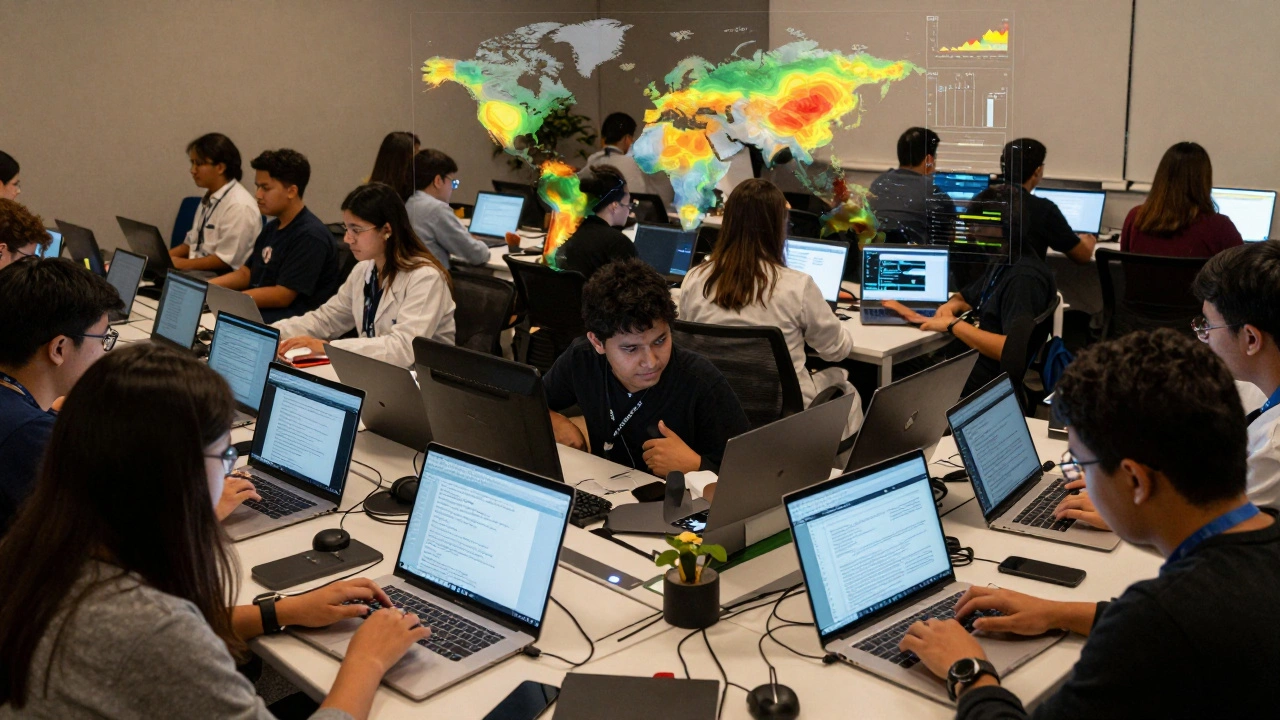
Contrary to what some believe, Wikipedia’s climate articles aren’t written by activists or government agents. The vast majority of edits come from volunteers-students, retired scientists, journalists, engineers-who care about accuracy. Many are regular contributors who’ve been editing for over a decade.There’s no secret team controlling the narrative. Instead, there’s a system of checks: edit histories, talk pages, arbitration committees, and automated tools that flag edits from known conflict-of-interest accounts. If someone tries to insert a claim without a source, it gets reverted within hours. If a user repeatedly pushes biased edits, they’re blocked.
Studies from the University of Oxford and MIT have shown that Wikipedia’s climate articles are more accurate and less biased than many mainstream media outlets. Why? Because every sentence must be backed by a source, and every source must be vetted. There’s no room for sensationalism.
How Climate Denial Groups Try to Influence Wikipedia
It’s not all smooth sailing. Fossil fuel-funded groups have tried to manipulate Wikipedia for years. In 2010, a PR firm hired by a coal lobby created dozens of fake accounts to edit climate articles, downplaying warming trends and exaggerating natural variability. They were caught within weeks. Their edits were traced back to IP addresses linked to corporate offices.Another tactic? Creating fake "experts." Some groups commission non-scientists to publish papers in predatory journals-low-quality publications that charge fees to publish anything. Then they cite those papers on Wikipedia. But Wikipedia’s policy requires sources to be peer-reviewed and reputable. Predatory journals are explicitly excluded.
When these attempts fail, they turn to legal threats or public campaigns. In 2016, a climate denial organization sued a Wikipedia editor in Germany, claiming defamation over a line in the article. The case was dismissed. Courts have repeatedly upheld Wikipedia’s right to rely on scientific consensus.
Why This Matters Beyond Wikipedia
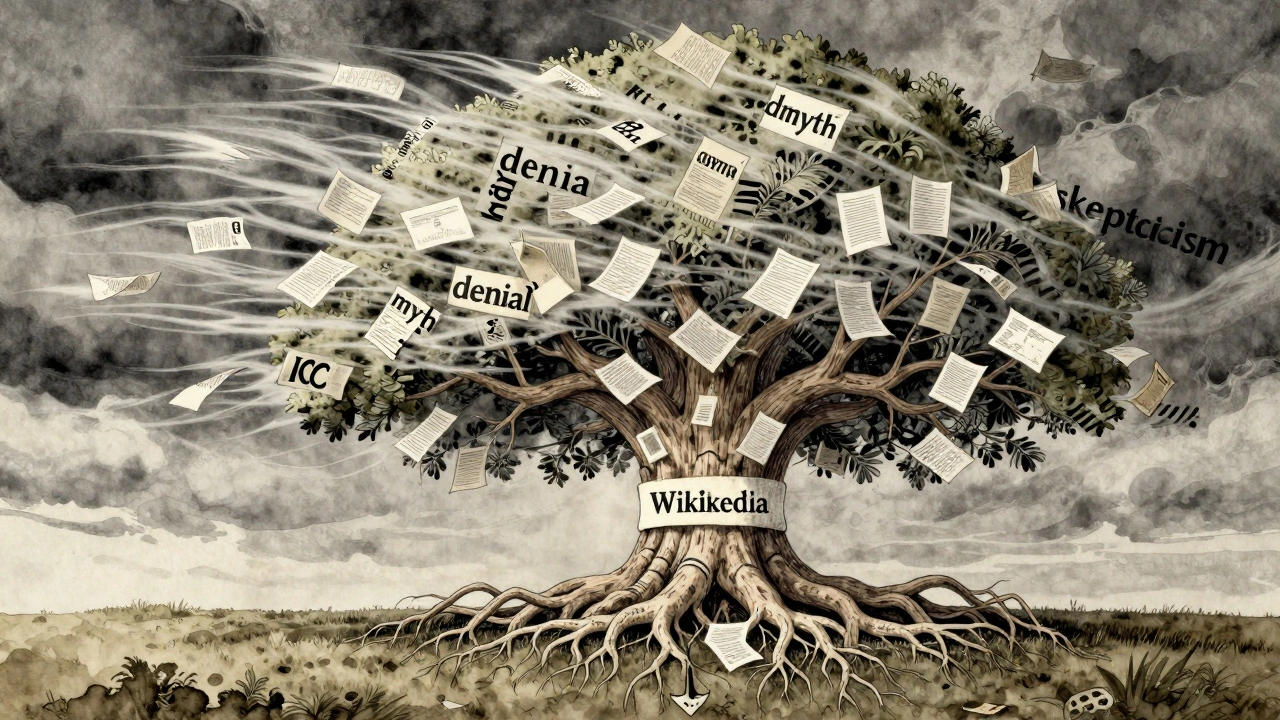
Wikipedia isn’t just an encyclopedia. It’s the first place millions of people go to learn about complex topics. In the U.S., over 50 million people visit the climate change page each year. In India, it’s one of the top-searched science pages. In Brazil, it’s often the only source in Portuguese that explains the link between deforestation and rising temperatures.If Wikipedia allowed misinformation to spread under the guise of "balance," it would become a tool for deception. Instead, it holds the line. It doesn’t pretend that all views are equally valid. It says: here’s what the science says. Here’s what the evidence shows. Here’s who disagrees-and why their views are marginal.
This isn’t censorship. It’s responsibility. And it’s why climate scientists, educators, and librarians around the world rely on Wikipedia as a trusted reference-even when they disagree with how other platforms handle the topic.
What You Can Do to Check for Bias
If you’re reading Wikipedia’s climate articles and wondering if they’re biased, here’s how to check:- Click the "View history" tab. See who edited what and when. Look for patterns of edits from new accounts pushing the same claim.
- Check the "Talk" page. That’s where editors debate changes. You’ll see citations, disagreements, and resolutions.
- Follow the references. Click any citation. Go to the original source. Is it a peer-reviewed journal? A government agency? Or a blog with no author?
- Compare with other reliable sources. NASA, IPCC, and NOAA all publish summaries. Do they match Wikipedia’s numbers?
Wikipedia doesn’t claim to be perfect. But it’s the only major platform that lets you see exactly how its content was built-and who challenged it.
What’s Next for Wikipedia’s Climate Coverage?
The articles are constantly updated. As new IPCC reports come out, editors revise the text. When a major study on methane leaks from permafrost is published, it’s added within days. When a new climate model improves predictions for extreme weather, it’s integrated.Future updates will likely include more regional breakdowns-how climate change affects small island nations, Arctic communities, or African agriculture. There’s also growing pressure to link climate articles to human rights, migration, and economic impacts. These aren’t political additions. They’re scientific findings.
The goal isn’t to push an agenda. It’s to reflect reality as accurately as possible. And right now, reality is clear: the planet is warming, humans are the main cause, and the impacts are accelerating.
Wikipedia doesn’t decide that. The science does. And Wikipedia just reports it.
Is Wikipedia biased against climate change skeptics?
No. Wikipedia doesn’t exclude skeptical views-it just doesn’t give them equal weight unless they’re supported by credible, peer-reviewed research. Most climate skepticism comes from non-scientific sources like think tanks or media personalities, not journals. Wikipedia reflects the actual distribution of scientific opinion, which is overwhelmingly in favor of human-caused climate change.
Can anyone edit Wikipedia’s climate articles?
Yes, anyone can edit. But edits are reviewed by experienced volunteers and automated tools. Unsubstantiated claims are quickly reverted. Edits from known conflict-of-interest accounts, like those linked to fossil fuel lobbyists, are blocked. The system is open, but not uncontrolled.
Why doesn’t Wikipedia use the term "global warming" instead of "climate change"?
"Climate change" is the broader, more accurate term used by the IPCC and major scientific organizations. "Global warming" refers only to rising temperatures, while "climate change" includes sea level rise, extreme weather, ocean acidification, and shifts in ecosystems. Wikipedia uses both terms, but "climate change" is the primary heading because it reflects the full scope of the phenomenon.
Are the sources on Wikipedia’s climate page reliable?
Yes. Wikipedia requires all claims to be backed by reliable, published sources-peer-reviewed journals, government agencies, and major scientific institutions. It excludes blogs, opinion pieces, and publications that charge authors to publish. Every citation is traceable to a verifiable source.
How often are Wikipedia’s climate articles updated?
They’re updated continuously. Major reports, like the IPCC’s Sixth Assessment, trigger comprehensive revisions within weeks. New studies on ice melt, carbon emissions, or extreme weather events are added as soon as they’re published and verified. The page is one of the most actively maintained on Wikipedia.