Key Takeaways
- Wikipedia runs on MediaWiki, an open-source engine that requires strict version control and community consensus.
- Changes move through a pipeline: Proposal → Development → Testing (Beta) → Deployment.
- Governance is a hybrid model mixing volunteer contributions with Wikimedia Foundation (WMF) oversight.
- The process prioritizes stability and accessibility over rapid, experimental feature releases.
The Engine Under the Hood: MediaWiki
To understand how changes ship, we first have to talk about MediaWiki is the free and open-source software platform that powers Wikipedia and its sister projects. It's written primarily in PHP and relies on MariaDB for its database layer. Because the site is so massive, you can't just "push to production" and hope for the best. A single inefficient SQL query could potentially take down the entire encyclopedia for millions of users.
This risk creates a culture of caution. The governance model ensures that no single person has total control over the codebase. Instead, the community uses a version control system-specifically Phabricator (though the ecosystem has been transitioning toward Gerrit and other tools)-to track every single change, bug report, and feature request. Every line of code is scrutinized by other developers before it ever touches a server.
The Life Cycle of a Technical Change
So, how does a new feature actually happen? It doesn't start with code; it starts with a conversation. Whether it's a volunteer developer or a staff member at the Wikimedia Foundation (the non-profit that hosts the site), the process generally follows a specific path to ensure the Wikipedia technical governance remains transparent.
- The Proposal: Someone identifies a problem or a need. They open a ticket in the task management system. Here, the community debates if the change is actually necessary. For example, adding a new way to cite sources might seem simple, but if it breaks compatibility with thousands of existing templates, the community will vote it down.
- Development and Patching: Once a consensus is reached, the developer writes the code. They don't work on the live site. They work on a local installation of MediaWiki or a development environment.
- Peer Review: This is the heartbeat of the governance. Other developers review the code for security vulnerabilities, performance bottlenecks, and adherence to coding standards. If the code is too "clever" (meaning it's hard to maintain), it gets sent back for simplification.
- Testing in Staging: The code moves to a staging environment. This is a mirror of the real Wikipedia where testers can try to break the feature. They look for "edge cases"-those weird scenarios that only happen once in a million hits but could crash the site.
- Canary Deployment: The change is rolled out to a small percentage of users or a specific "beta" wiki. If the metrics show a spike in errors, the change is instantly rolled back.
- Full Release: Only after surviving all previous stages is the code merged into the main branch and deployed globally.
Who Actually Calls the Shots?
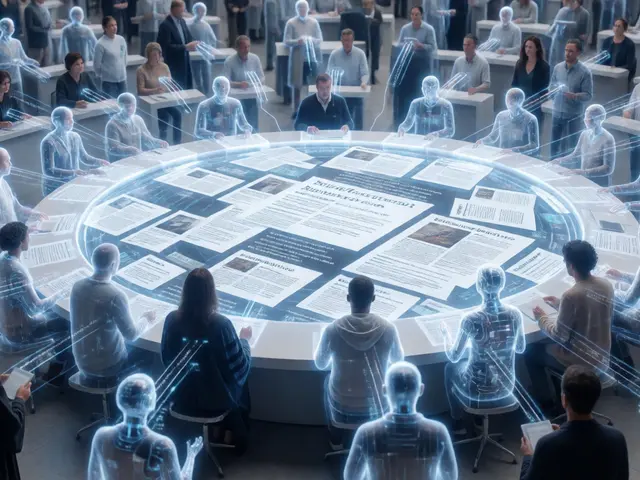
Governance is where the "human" part of tech becomes messy. Wikipedia uses a hybrid model. On one side, you have the volunteer community-people from all over the world who love the project. On the other, you have the professional engineers employed by the WMF. This can create a natural tension: volunteers want features and flexibility, while staff engineers prioritize scalability and security.
To manage this, the project uses a system of "Bureaucrats" and "Administrators," but for technical changes, the power lies in the Consensus Model. If a large group of experienced developers and power users disagree with a technical direction, the WMF usually listens. Why? Because the project's legitimacy comes from its community. If the people who write the articles hate the tool, the tool is a failure regardless of how elegant the code is.
| Role | Primary Goal | Influence on Code | Authority Source |
|---|---|---|---|
| Volunteer Devs | Feature Innovation | High (Write the patches) | Community Merit |
| WMF Engineers | Site Stability | High (Manage Infrastructure) | Professional Employment |
| Power Users | Usability | Medium (Feedback/Testing) | Edit History/Reputation |
| Project Admins | Policy Alignment | Low (Set Requirements) | Community Election |
The Bottlenecks: Why Changes Feel Slow
If you've ever used a modern SaaS app, you're used to "Continuous Deployment" where updates happen every few minutes. Wikipedia is the opposite. It's an intentional slow-down. Because the platform is an Open Source project, every change must be backward compatible. You can't just delete a database column because that might break ten other sister projects like Wiktionary or Wikisource.
Furthermore, the "accessibility requirement" is a huge hurdle. Wikipedia must work on a 10-year-old browser in a region with slow internet. A fancy JavaScript framework that adds 2MB to the page load is a non-starter. This technical constraint forces the governance process to be even more rigorous. Every new library or dependency added to the core must be justified. If a developer suggests using a new framework, they have to prove it doesn't degrade the experience for a user on a low-end Android device in rural India.
Real-World Example: The VisualEditor Transition
A great example of this governance in action was the rollout of VisualEditor, the tool that lets users edit pages without knowing WikiText. This wasn't a simple update; it was a paradigm shift. For years, the community debated whether a WYSIWYG (What You See Is What You Get) editor would ruin the precision of the site.
The shipping process for VisualEditor took years of iterations. It started as a separate project, moved to a beta flag, and was refined based on thousands of pieces of feedback from the community. The developers didn't just build it; they had to "socialize" it. They held workshops, wrote extensive documentation, and allowed the community to vote on which features were most important. This is a prime example of tech governance: the technical solution is only half the battle; the social agreement to use that solution is the other half.
Pitfalls and Common Failures
Even with this strict process, things go wrong. The most common failure is "feature creep," where a tool becomes so complex that it intimidates new editors. Another issue is the "knowledge silo," where only a few people truly understand how a specific part of the legacy code works. When those people leave the project, the governance slows down because everyone is afraid to touch the "magic' code" that keeps the site running.
To fight this, the project emphasizes Documentation. Every major technical decision is archived in a public record. This ensures that a new developer in 2026 can look back at a decision made in 2014 and understand why a certain architectural choice was made, preventing the same mistakes from being repeated.
Can anyone contribute code to Wikipedia?
Yes, because MediaWiki is open source. Anyone can fork the code on Gerrit or GitHub, make a change, and submit a patch. However, getting that patch merged into the actual Wikipedia site requires passing a rigorous peer review and gaining community consensus.
Does the Wikimedia Foundation control everything?
Not exactly. While the WMF controls the servers and employs the core engineers, the project operates on a philosophy of community governance. Major technical shifts are usually discussed and vetted by the broader community of volunteers before being implemented.
How often does the technical infrastructure get updated?
Small bug fixes and security patches happen constantly. Larger feature updates are released in cycles, often starting as "beta" features that are available to a subset of users before a global rollout. This avoids breaking the site for millions of people at once.
What happens if a code update crashes Wikipedia?
The system is designed for rapid rollback. Because they use canary deployments, an error usually only affects a tiny fraction of users. Engineers can revert the commit almost instantly, returning the site to the last known stable version while they debug the issue in a staging environment.
Why is Phabricator used instead of just using GitHub?
For a long time, Phabricator provided a more robust suite of tools for task management and revision control specifically tailored to the scale of Wikimedia's needs. However, the ecosystem is always evolving, and they often integrate multiple tools to handle the massive volume of reports and patches.
Next Steps for Aspiring Contributors
If you're a developer looking to get involved, don't start by trying to rewrite a core system. The best way to enter the ecosystem is to look for "good first issues" in the task tracker. Start by fixing a small bug or improving documentation. This builds your reputation within the community, which is the primary currency of governance.
For those interested in the policy side, spend time reading the "Village Pump" forums. This is where the social consensus is built. Understanding the why behind a technical restriction is just as important as knowing the how of the code. Once you understand the balance between stability, accessibility, and innovation, you'll see why the shipping process is designed the way it is.