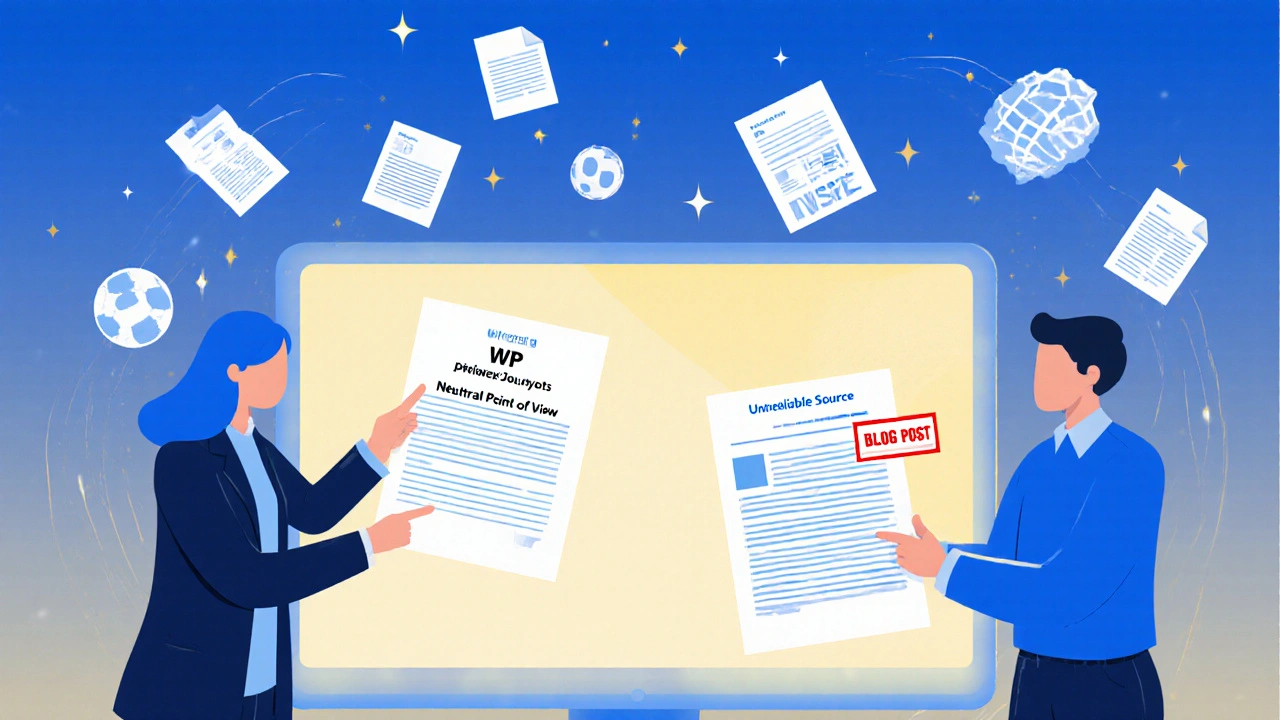
Wikipedia isn’t just a collection of articles-it’s a living conversation between thousands of strangers trying to agree on what’s true. But when two editors clash over a sentence in a biography, or a whole section of a political article, things can turn ugly fast. Edit wars, block requests, and heated talk page threads aren’t rare. They’re part of the system. The real skill isn’t knowing the rules-it’s knowing how to build consensus when everyone’s dug in.
Start with the policy, not the personality
When a dispute flares up, it’s easy to focus on the person. "They’re biased." "They keep reverting me." "They don’t read the sources." But Wikipedia doesn’t care about intent. It cares about policy. Before you reply, ask: What does WP:Neutral point of view say? What does WP:Verifiability require? What does WP:No original research forbid? The most effective editors don’t argue about what they think is right. They point to what the rules say. "According to WP:Biographies of living persons, we need reliable secondary sources for claims about private life," is far more powerful than "You’re making this up."Use talk pages like a mediator, not a courtroom
Talk pages aren’t comment sections. They’re negotiation spaces. The best way to de-escalate is to reframe the conversation. Instead of saying, "You’re wrong," try: "I see you’re using this source, but it’s a blog post. Could we find a peer-reviewed study or news report that confirms this?" Don’t reply to every edit summary. Don’t flood the page with replies. Pick one or two key points and address them clearly. Use bullet points. Keep paragraphs short. Leave space for the other person to respond. If they’re not replying, wait 48 hours. Most disputes cool down with time.Anchor the discussion in reliable sources
Wikipedia doesn’t decide truth by majority vote. It decides by sourcing. That’s why the most successful consensus-builders don’t say, "I think..." They say, "This 2023 study from the Journal of History confirms..." or "The New York Times reported this in March 2024, and it’s been cited by three other major outlets since." If the other editor is using a blog, a forum, or a self-published book, don’t just say it’s unreliable. Show them why. Link to WP:Reliable sources. Point to the specific criteria: "This source isn’t peer-reviewed, and the author has no institutional affiliation. Wikipedia requires third-party sources with editorial oversight." It’s not about shutting them down. It’s about giving them a clear path to get their point accepted.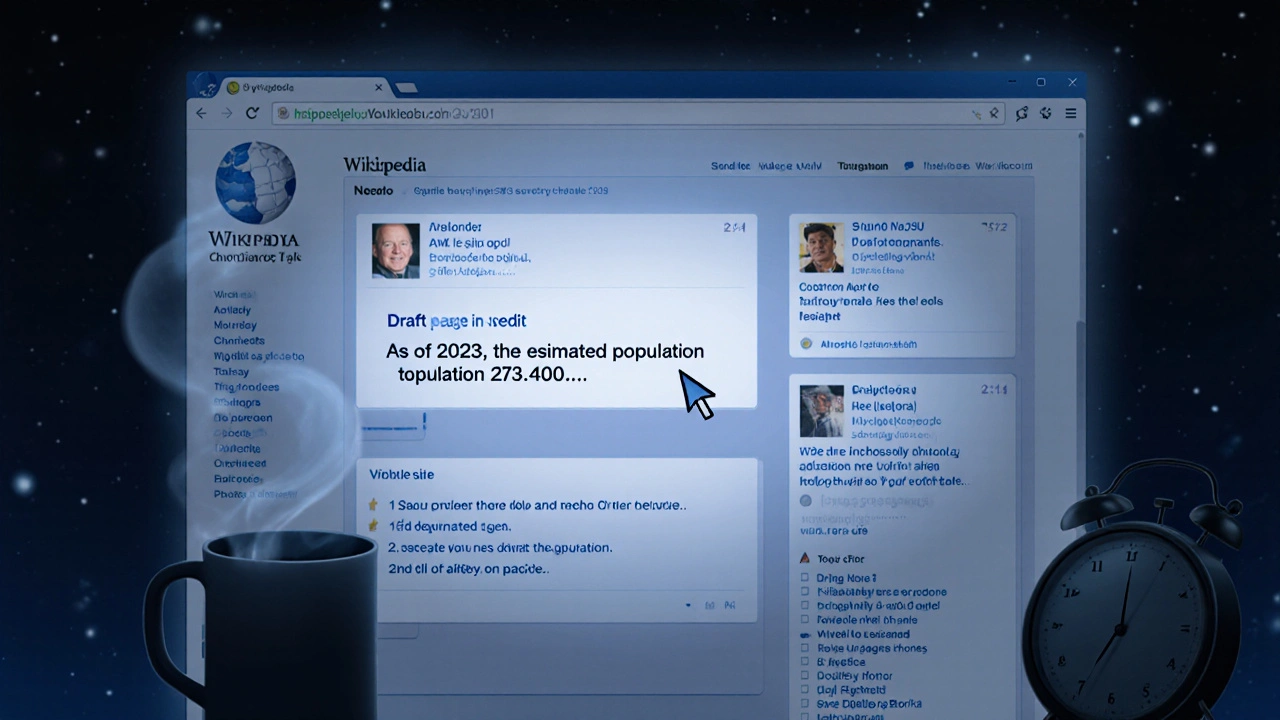
Find common ground before pushing your version
Even in heated disputes, people usually agree on more than they admit. Start by identifying what both sides already accept. "We both agree the event happened in 2018, right?" "We both agree the source is from a government agency?" Once you’ve locked in those points, build outward. Propose a neutral version that includes the agreed facts, then invite feedback: "Would this version work? It sticks to the confirmed dates and sources from both of us." This approach works because it makes the other person feel heard. People don’t resist facts-they resist feeling dismissed. If you can make them co-authors of the compromise, they’re far more likely to stand by it.Know when to walk away-and when to escalate
Not every dispute needs to be won. Sometimes, the best move is to pause. If you’ve made three polite, policy-based replies and the other editor keeps reverting or attacking, stop. Wait. Let someone else jump in. Wikipedia has formal dispute resolution tools: Request for Comment (RfC), Mediation, and the Administrators’ Noticeboard. But these aren’t weapons. They’re last resorts. Use RfC when you’ve tried everything else and need broader input. Don’t use it to win. Use it to find out if your version aligns with the community’s standards. Write a clear, neutral summary of the dispute, list the sources each side uses, and ask: "Which version better reflects reliable sources and policy?" Most RfCs resolve without admin intervention. The community often sees the imbalance you couldn’t point out alone.Don’t be the editor who always has to be right
The most respected Wikipedia contributors aren’t the ones who win the most arguments. They’re the ones who help the article improve-even if it means giving up part of their version. If you’ve spent three hours arguing over a single phrase, ask yourself: Does this change actually make the article more accurate? Or does it just match your personal view? Wikipedia thrives when editors prioritize the article over their ego. A well-sourced, neutral paragraph that took ten edits to get right is better than a perfect version that took twenty reverts and three warnings.
Real example: A city population dispute
In 2024, an article about Madison, Wisconsin, had a back-and-forth over the city’s population. One editor used a 2023 estimate from a local planning group. Another used the 2020 U.S. Census. Both were technically correct-but the census was outdated, and the estimate wasn’t widely cited. Instead of fighting, the first editor wrote: "The 2020 Census lists 269,720. The City of Madison’s 2023 estimate is 273,400, based on housing permits and school enrollment. The state’s official demographic office cites both, but notes the estimate is preliminary. Would it be fair to say: 'As of 2023, the estimated population is 273,400, according to the city’s planning department, while the 2020 Census recorded 269,720'?" The other editor replied: "That works. I’ll update it." No blocks. No RfC. Just clarity, patience, and policy.What doesn’t work
Avoid these traps:- Calling someone "vandal" or "biased"-it triggers defensiveness.
- Editing while angry-wait until the next day.
- Using obscure or niche sources that only you trust.
- Trying to win by outlasting-Wikipedia’s not a marathon.
- Ignoring the talk page and just reverting edits.
Final rule: Be the editor you’d want to work with
Imagine you’re reading this article five years from now. Would you be proud of how it was built? Did it become better because of the way the edits happened? Wikipedia’s power isn’t in its algorithms or its servers. It’s in its people. And the people who make it work aren’t the loudest. They’re the ones who listen, cite, and compromise-not because they’re weak, but because they know the article matters more than their pride.What if the other editor refuses to cite sources?
If someone keeps adding unsourced claims, don’t argue. Just revert and leave a clear edit summary: "Reverting per WP:Verifiability-no reliable source provided." Then, on the talk page, say: "I’m happy to include this information if you can find a published source like a newspaper, academic journal, or official report. Can you help me find one?" Most editors respond to this calm, policy-based nudge.
Can I use Wikipedia’s own content as a source?
No. Wikipedia articles are not reliable sources. Even if they’re well-written, they’re summaries of other sources. You must go back to the original books, journals, or news reports that those articles cite. If you see a claim on Wikipedia without a source, treat it like a rumor-don’t use it to support your edit.
How long should I wait before using an RfC?
Wait at least 48 hours after your last polite, policy-based comment. If there’s no response, or if the other editor keeps reverting without discussion, it’s time for an RfC. Don’t rush it-rushing makes the community think you’re trying to force a result. The goal is to get neutral input, not to pressure the other editor.
What if I’m outnumbered in an RfC?
Being outnumbered doesn’t mean you’re wrong. It means your version didn’t convince enough people. Review the feedback carefully. Did others point to better sources? Did they show you misunderstood a policy? If so, revise your edit. If the RfC results are unclear or biased, you can request mediation. But never ignore the outcome-Wikipedia’s strength is collective judgment, not individual authority.
Is it okay to collaborate with the other editor outside Wikipedia?
Yes, if both parties agree. Some editors use email or messaging apps to hash out tough edits. Just make sure the final agreement is documented on the article’s talk page. Transparency is key. Wikipedia’s rules still apply-even if the conversation started elsewhere.