
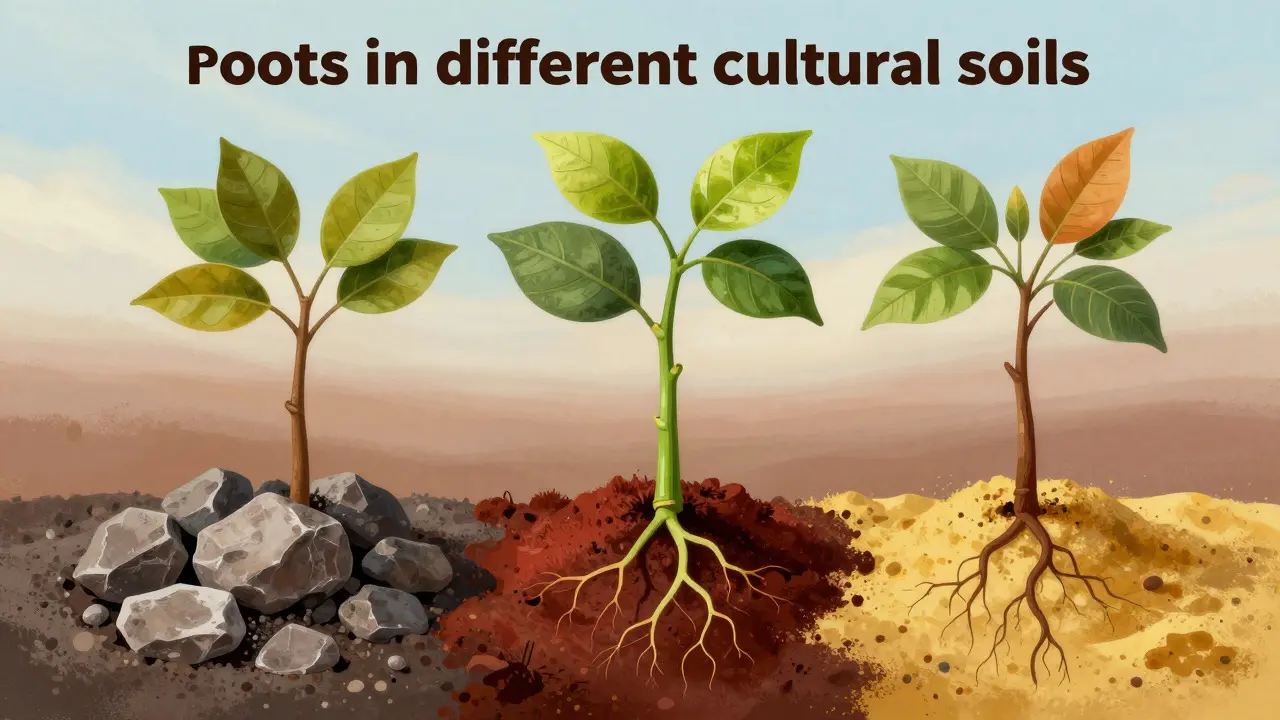
Imagine launching a product in Berlin and Tokyo simultaneously. You write one master document in English, then have it translated into German and Japanese. Six months later, you update the English version with new features. Do you re-translate everything? Or do you just tweak the local versions to fit the market? This decision defines content forking, which is the practice of allowing localized content to diverge from the original source material to better suit specific regional audiences. It’s not just about translation; it’s about giving your content roots in different cultural soils.
The Core Mechanics of Divergence
Most companies start with a strict "one-to-one" model. One English page equals one Spanish page. But as you scale, this becomes a bottleneck. Localization is the process of adapting content to meet the linguistic, cultural, and technical requirements of a specific target market. When you fork content, you break that rigid link. The French version might highlight different customer testimonials than the US version. The Japanese version might use a completely different call-to-action button style because of user behavior patterns in that region.
This approach shifts the workflow from linear to parallel. Instead of waiting for the central team to finish a draft before local teams can start, local editors work from a snapshot. They adapt, edit, and publish independently. This speed is critical in fast-moving industries like SaaS or e-commerce where weekly updates are standard. If you wait for a full re-translation cycle every time, you lose relevance. Forking allows you to keep the core message consistent while letting the delivery method evolve locally.
Why Brands Embrace Local Autonomy
The primary benefit is relevance. A joke that works in New York might fall flat in London. A color scheme that signifies luxury in Paris might signal mourning elsewhere. By forking content, you allow local marketers to inject cultural nuance without needing approval from headquarters for every minor change. This autonomy leads to higher engagement rates. Users trust brands that speak their dialect, not just their language.
Consider the legal implications. In the European Union, data privacy laws under GDPR require specific disclosures that aren't present in US marketing copy. If you force a single template, you risk compliance issues. Forking lets you embed these legal nuances directly into the local pages. Similarly, search engine optimization (SEO) varies by region. Keywords that rank well in Germany often differ significantly from those in France. Localized teams know their markets best. They can optimize meta tags, headings, and internal linking structures specifically for their local search intent, rather than relying on a generic global strategy.
The Hidden Costs of Fragmentation
However, freedom has a price. The biggest risk is inconsistency. If the US page promises a 30-day money-back guarantee, but the German page accidentally says 14 days due to an outdated fork, you have a trust issue. Customers notice these discrepancies quickly. Word-of-mouth spreads fast online. One confused user on social media can turn into a viral complaint if the brand looks sloppy or deceptive.
There is also the maintenance burden. Managing ten separate versions of a blog post is harder than managing one. Without a robust system, you end up with "zombie pages"-local versions that were updated once and never touched again. These pages drift further away from the truth over time. They become sources of misinformation. For technical products, this is dangerous. If a software tutorial in Brazil describes a feature that was removed two years ago, users will feel frustrated and likely churn. The cost of auditing and correcting these stale forks can outweigh the initial savings of faster publishing.
Strategic Frameworks for Controlled Forking
You don’t have to choose between total control and total chaos. There is a middle ground called "managed forking." This involves defining clear boundaries. What parts of the content are locked? What parts are free to change?
- Locked Elements: Brand voice guidelines, legal disclaimers, core value propositions, and key metrics. These must remain consistent across all languages to maintain brand identity.
- Forkable Elements: Examples, case studies, imagery, idioms, and supplementary resources. These should be tailored to the local context.
- Hybrid Elements: Headlines and CTAs. These often require local adaptation but need quick review to ensure they align with the global campaign goals.
Technical Implementation and Workflow
Implementing this technically requires more than just a translation memory database. You need a workflow that supports parallel editing. Traditional CMS platforms often treat translations as child records of a parent. This is fine for simple sites, but for complex content strategies, it creates dependencies. Modern headless CMS architectures allow for looser coupling. Each language version can exist as its own entity, linked only by metadata. This makes it easier to publish them at different times. Maybe the US version launches on Monday, and the Asian-Pacific versions launch on Wednesday to match local business hours.
Communication is the other half of the equation. You need regular sync meetings between global and local teams. Not to micromanage, but to share insights. If the local team discovers that a certain image performs poorly in their region, that feedback should inform future global assets. Conversely, if the global team releases a major product update, local teams need immediate briefings so they can adjust their forks accordingly. This two-way street turns forking from a siloed activity into a collaborative advantage.
| Feature | Strict Localization | Content Forking |
|---|---|---|
| Consistency | High | Moderate (requires monitoring) |
| Cultural Relevance | Low to Moderate | High |
| Time to Market | Slow (sequential) | Fast (parallel) |
| Maintenance Effort | Centralized | Distributed |
| Risk of Error | Translation errors | Information drift |

Measuring Success in a Multilingual Context
How do you know if forking is working? Don’t just look at traffic. Look at conversion rates per locale. If your forked content is truly resonating, you should see higher engagement metrics in those regions compared to when you used a direct translation. Track bounce rates. A high bounce rate in a specific language version might indicate that the content feels foreign or irrelevant. Use heatmaps to see where users click. Are they engaging with the localized examples, or are they ignoring them?
Also, monitor support tickets. If customers are asking questions that the website should already answer, your content isn't doing its job. In a forked environment, this could mean the local version is missing a crucial detail that was in the global version. Regularly audit your top-performing pages against your lowest-performing ones. Identify the gaps. Is it a tone issue? A structural issue? A factual error? Fixing these gaps is cheaper than rebuilding your entire content strategy from scratch.
Frequently Asked Questions
What is the main difference between translation and content forking?
Translation converts text from one language to another while keeping the meaning identical. Content forking allows the adapted version to diverge structurally and culturally from the original to better serve the local audience, potentially changing examples, tone, and even layout.
Does content forking hurt SEO?
Not if done correctly. In fact, it often helps. Search engines prefer content that is highly relevant to the user's location and language. Forked content can be optimized for local keywords and search intent, leading to better rankings than a direct translation that ignores local search behaviors.
How do I prevent information drift in forked content?
Use a centralized content management system with version control. Define "locked" elements that cannot be changed without approval. Implement automated alerts when the source content changes, prompting local teams to review their forks. Conduct regular audits to check for consistency in facts and figures.
Is content forking suitable for small businesses?
It depends on your scale. If you operate in only two or three markets, strict localization might be sufficient. However, if you have distinct cultural differences between your markets, even a small business can benefit from forking key landing pages to improve conversion rates. Start small by forking only your highest-value pages.
What tools are best for managing forked content?
Headless CMS platforms like Contentful or Sanity are well-suited for this because they decouple content from presentation. Translation management systems like Smartling or Transifex can also help manage workflows, but they need to be integrated with your CMS to handle the divergence logic effectively.