
Imagine trying to look up basic facts about your own government’s history, only to find a blank screen or a connection error. For millions of people in certain countries, this isn't a hypothetical scenario-it's their daily reality with Wikipedia, the world's largest online encyclopedia. While most of us take free access to knowledge for granted, several nations have blocked the site entirely or censored specific articles. This isn't just about politics; it's about who gets to decide what we know.
The tension between open information and state control has turned Wikipedia into a major geopolitical battleground. From the Great Firewall of China to recent legal battles in India and Russia, the platform constantly navigates a minefield of local laws and international pressure. If you're wondering why a website that claims to be neutral keeps getting banned, you need to look at the specific flashpoints where content clashes with national narratives.
Why Governments Block Wikipedia
Governments don't block Wikipedia because they hate encyclopedias. They do it because the site is hard to control. Unlike state-run media, Wikipedia is written by volunteers from around the world. This decentralized model means a user in Berlin can edit an article about a scandal in Beijing, often before local journalists can publish it. For authoritarian regimes, this speed and global perspective are threats.
Most blocks fall into three categories:
- National Security: Claims that certain military or political details are sensitive.
- Political Stability: Preventing citizens from seeing alternative historical accounts or opposition figures.
- Moral/Cultural Standards: Blocking content deemed inappropriate or blasphemous.
The irony is palpable. By blocking the site, governments often draw more attention to the very topics they want hidden. It’s the Streisand Effect on a national scale.
China: The Longest-Running Ban
China represents the most significant and enduring case of Wikipedia censorship. Since April 2019, all language editions of Wikipedia have been completely blocked within mainland China. Before that, the Chinese-language version was accessible but heavily filtered.
The primary trigger for the full ban was likely the editing wars over articles related to Hong Kong protests and Taiwan’s political status. In China, Taiwan is considered a province, not a country. Wikipedia editors, however, often list it as a disputed territory or separate entity, depending on the context. When editors refused to align strictly with Beijing’s stance, the Great Firewall-the massive system of filtering and surveillance operated by the Chinese government-cut off access entirely.
For users inside China, accessing Wikipedia requires circumvention tools like VPNs. But even then, speed and reliability vary. The block extends beyond just the English site; it includes the Chinese edition, which ironically could have been moderated locally. The decision signals that partial compliance wasn't enough for regulators who wanted total narrative control.
Turkey: The Legal Battle Over Terror Definitions
If China uses technology to block, Turkey used law. In April 2017, Turkish authorities blocked all languages of Wikipedia. The conflict centered on articles describing two militant groups-the People's Defense Units (YPG) and the Free Syrian Army-as "terrorist organizations" or linking them to terrorism-related activities.
Ankara argued that these descriptions smeared its foreign policy partners and allies. The Wikimedia Foundation refused to change the text, citing neutrality policies. The standoff lasted until January 2020, when Turkey lifted the ban after agreeing to form a joint committee to discuss content disputes. This case set a precedent: dialogue might work where brute force fails, but it takes years.
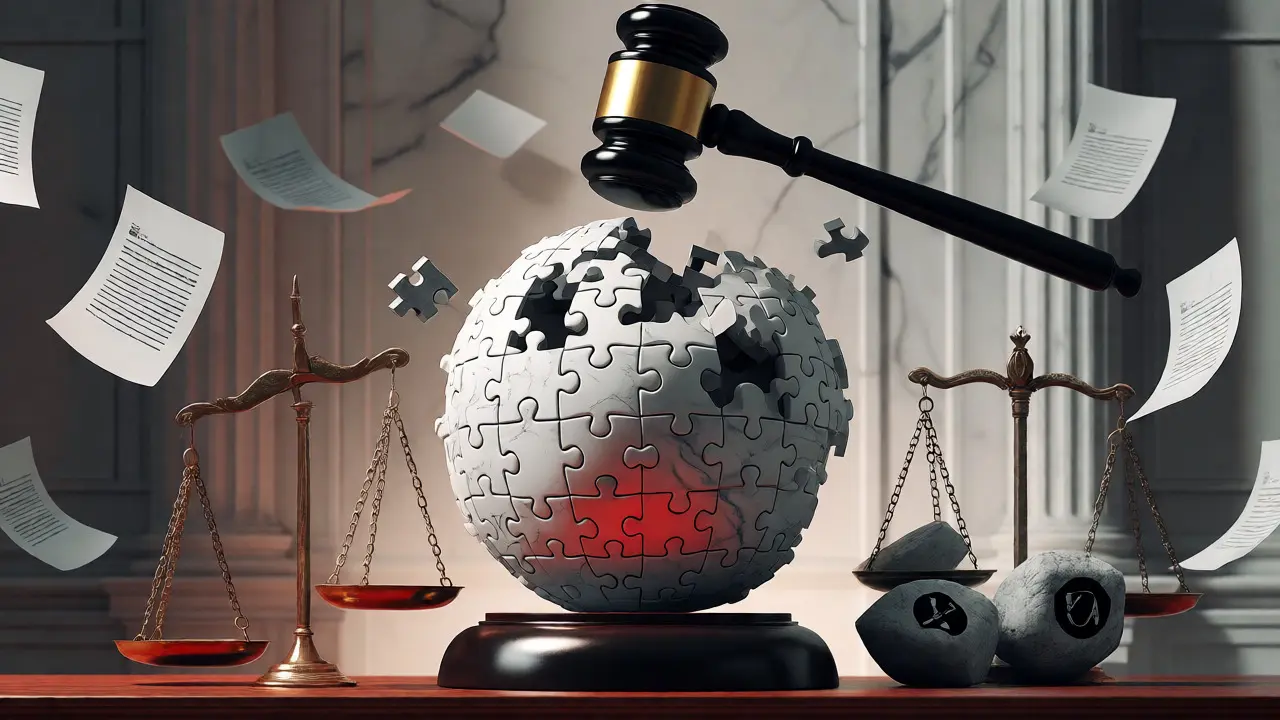
Russia: Fines and Threats of Full Closure
Russia’s approach is more subtle but equally aggressive. Instead of a hard technical block, Moscow uses financial penalties and legal threats. In 2022, following the invasion of Ukraine, Russian courts fined Wikipedia millions of rubles for keeping articles that described the war as an "invasion" rather than a "special military operation."
The Roskomnadzor, Russia's federal communications agency, warned that failure to comply could lead to a complete block. As of 2026, the site remains accessible, but editors face constant pressure. Many Russian-language articles now carry disclaimers or have been edited to soften language, creating a patchwork of accuracy that reflects political pressure rather than factual consensus.
| Country | Status | Primary Reason | Duration/Impact |
|---|---|---|---|
| China | Full Block | Political neutrality, HK/Taiwan issues | Ongoing since 2019; affects 1B+ users |
| Turkey | Lifted (2020) | Terrorism definitions in articles | Banned 2017-2020; resolved via committee |
| Russia | Threatened/Fined | War terminology, propaganda laws | Ongoing fines; risk of block remains high |
| Venezuela | Intermittent | Political criticism, election results | Multiple short-term blocks during crises |
| India | Selective | Sensitive religious/political edits | Specific articles blocked, not whole site |
Other Notable Flashpoints
Beyond the big three, other countries have joined the fray. Venezuela has blocked Wikipedia intermittently during political crises, particularly when articles about President Nicolás Maduro or election controversies sparked debate. These blocks are often short-lived, lasting days or weeks, serving as temporary silencing tools during volatile news cycles.
In India, the situation is nuanced. The government hasn’t banned the whole site, but it has demanded the removal of specific articles. Disputes often arise around religious figures or caste-related topics. In 2023, there were reports of warnings issued to editors regarding articles on Hindu nationalism, showing how local politics can trickle down to global platforms.
Even democratic nations aren't immune to friction. France and Germany have had minor tiffs over privacy laws and right-to-be-forgotten requests, though these rarely result in full-site blocks. The difference is that in democracies, these are legal disputes; in authoritarian states, they are existential threats to the platform's presence.

How Users Bypass Restrictions
When a government pulls the plug, users get creative. The most common method is using a Virtual Private Network (VPN). Services like NordVPN or ExpressVPN route traffic through servers in uncensored countries, making it appear as if the request comes from outside the restricted zone.
Another popular trick is using Wikipedia mirrors. Sites like Wikiwand or DBpedia pull data from Wikipedia but host it on different domains. Sometimes these escape filters, though governments are increasingly sophisticated at blocking IP ranges associated with known mirrors.
There’s also the Tor Browser, which routes traffic through multiple nodes worldwide. It’s slower but offers higher anonymity. For activists and researchers in blocked countries, maintaining a mirror of critical articles offline is a crucial backup strategy. Knowledge preservation becomes an act of resistance.
The Future of Open Knowledge
As we move deeper into 2026, the trend seems to be shifting from outright bans to algorithmic suppression and AI-driven moderation. Governments are less interested in blocking the whole site and more focused on shaping what appears in search results. With AI tools summarizing Wikipedia content for users, whoever controls the AI layer controls the narrative.
The Wikimedia Foundation continues to advocate for digital rights, arguing that access to information is a human right. But without enforcement power, they rely on public pressure and diplomatic channels. The battle for Wikipedia is really a battle for the future of truth itself. Will knowledge remain borderless, or will it fracture into national silos?
For now, the site remains a beacon of hope for many, despite the walls built around it. Every time someone bypasses a firewall to read an unbiased account of history, they’re voting for a connected world.
Is Wikipedia blocked in China?
Yes, all language editions of Wikipedia have been fully blocked in mainland China since April 2019. Users typically need a VPN to access the site.
Why did Turkey ban Wikipedia?
Turkey banned Wikipedia in 2017 because articles described certain militant groups as terrorist organizations, which Ankara contested. The ban was lifted in 2020 after negotiations.
Can I use a VPN to access Wikipedia in Russia?
Yes, while Wikipedia is currently accessible in Russia, using a VPN ensures uninterrupted access and protects against potential future blocks or throttling.
Does Wikipedia censor itself?
Not officially. However, editors may remove content based on community guidelines regarding neutrality, verifiability, and no original research. This is distinct from government-imposed censorship.
Which countries have blocked Wikipedia recently?
China maintains a permanent block. Russia faces ongoing legal threats. Venezuela has imposed intermittent blocks during political crises. India has targeted specific articles rather than the whole site.