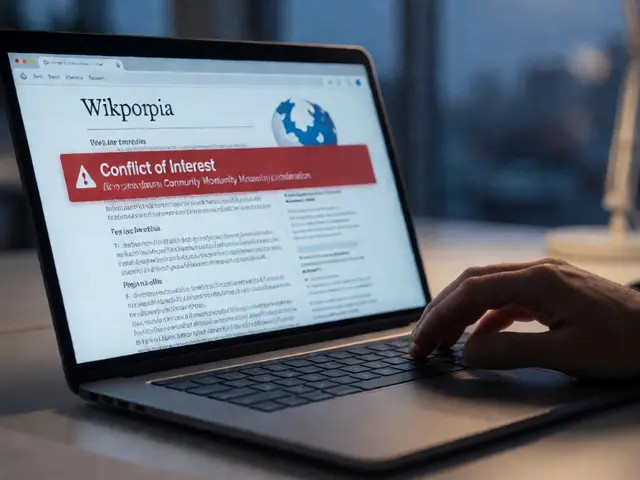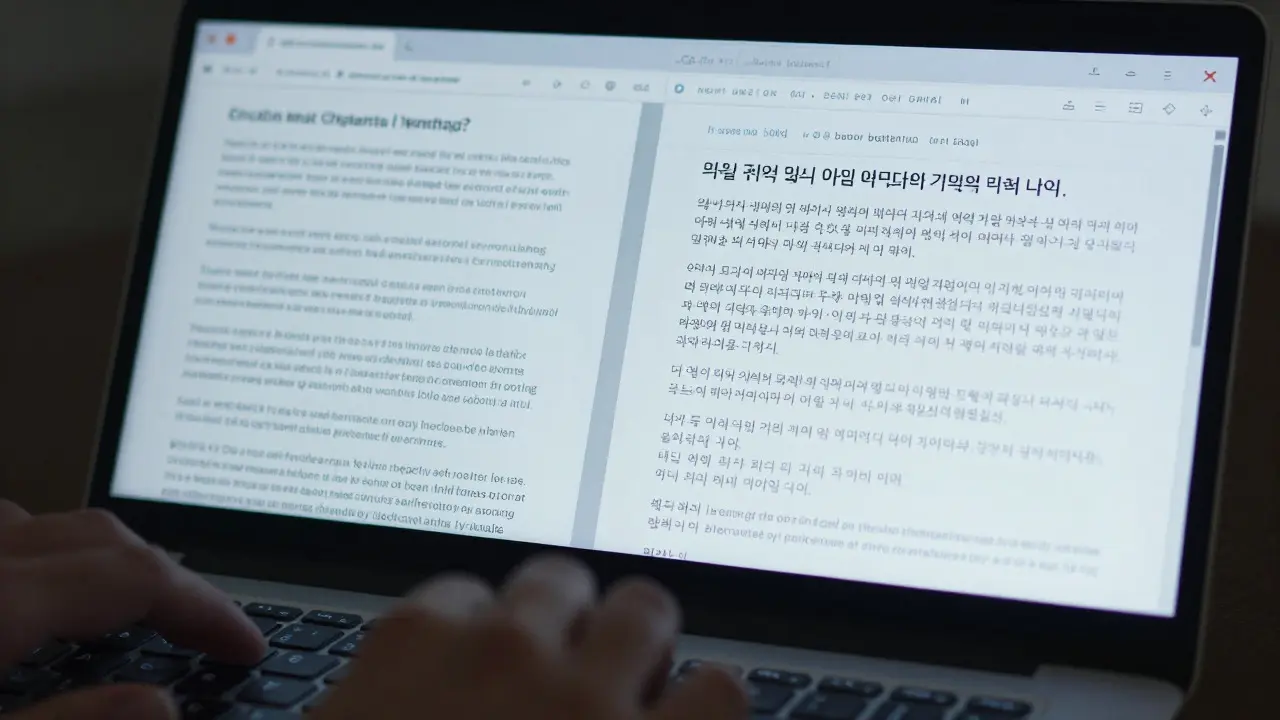
Imagine opening the English Wikipedia article for a local political figure in South Korea and then switching to the Korean version. You might find that one edition describes them as a "visionary leader" while the other notes their controversial tax history. This isn't a bug; it's a feature of how human knowledge is organized across cultures. When topics diverge between Wikipedias, it reveals deep-seated differences in what communities consider important, factual, or neutral.
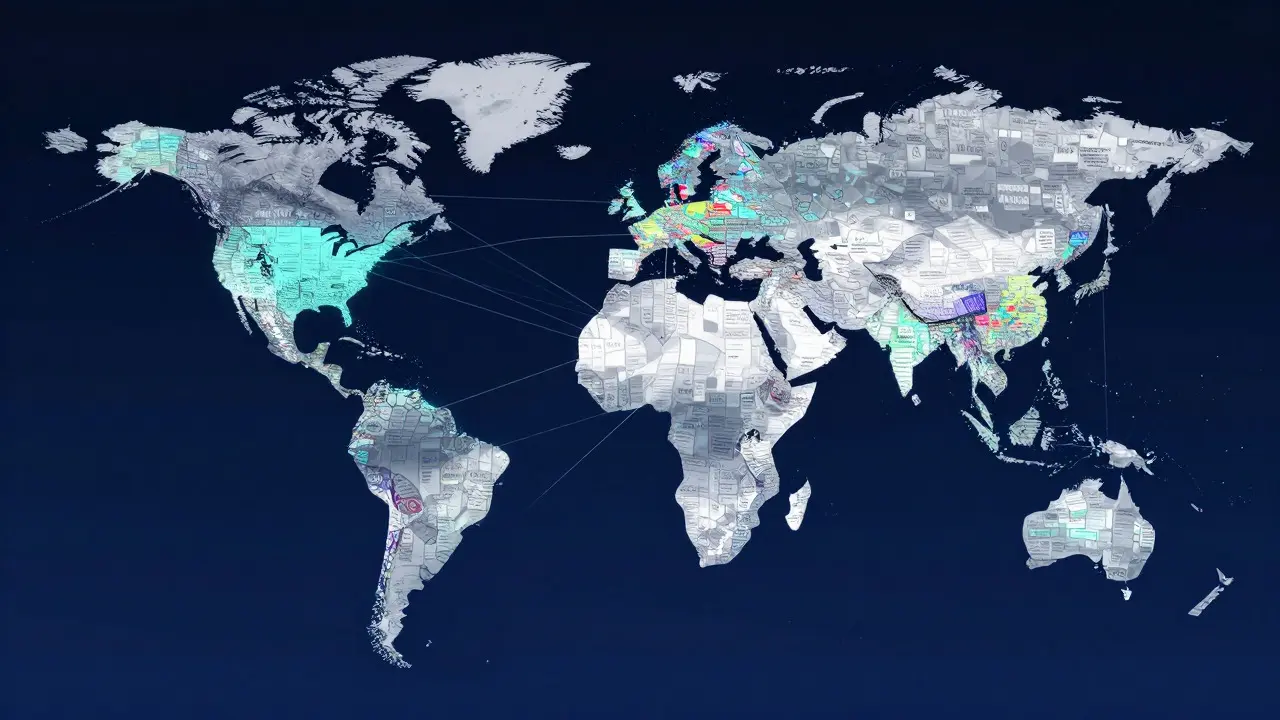
Multilingual Wikipedia is a network of independent encyclopedic projects in over 300 languages, each with its own community of editors, policies, and cultural perspectives. While they share the same software platform, MediaWiki, and a common goal of free knowledge, they do not share a single editorial voice. The result is a fascinating mosaic where the same event can look drastically different depending on which flag icon you click.
The Anatomy of Divergence
Why do these differences exist? It’s rarely about simple translation errors. Most often, the gap stems from editorial scope. A topic might be considered too niche for the English edition but central to national identity in the Japanese edition. Conversely, a global pop star might have a massive article in Spanish Wikipedia but only a stub in Finnish Wikipedia because the local audience doesn't engage with that specific genre.
Consider the case of historical conflicts. In the Middle East, articles regarding border disputes often reflect the dominant narrative of the country where the majority of editors reside. If 80% of the active editors on the Arabic Wikipedia are from Egypt, the perspective on regional politics will naturally lean Egyptian. This isn't necessarily "bias" in the malicious sense; it's a reflection of demographic reality within the volunteer base. Understanding this helps readers navigate the information more critically.
- Scope Differences: What constitutes a notable topic varies. A minor local festival in India may have a full article in Hindi Wikipedia but no presence in German Wikipedia.
- Tone Variance: Cultural norms influence writing style. Some language editions prefer highly formal, academic tones, while others allow for more accessible, conversational explanations.
- Source Availability: Access to primary sources matters. If most reliable sources for a subject are published in Mandarin, the Chinese Wikipedia will likely have deeper detail than the English version, which relies on secondary translations.
How Editors Handle Conflicts
When two language editions disagree on a fact, there is no central authority to arbitrate. The English Wikipedia does not dictate rules to the French Wikipedia. Instead, each community resolves disputes internally through discussion pages and consensus-building. This independence preserves cultural autonomy but also means that "truth" can feel relative depending on your starting point.
However, collaboration does happen. Projects like Wikidata aim to create a shared database of facts (such as dates of birth or geographic coordinates) that all language editions can pull from. This reduces discrepancies on objective data points. Yet, for subjective or interpretive content-like the significance of a historical event-divergence remains inevitable.
| Factor | Impact on Content | Example Scenario |
|---|---|---|
| Editor Demographics | Skews perspective toward editor nationality | German Wikipedia having more detailed articles on German industrial history |
| Source Language | Limits depth to available literature | Japanese folklore being better documented in Japanese Wikipedia due to original texts |
| Cultural Notability | Determines if a topic gets an article at all | A local Korean band having a page in Korean but not English Wikipedia |
| Translation Quality | Introduces nuance loss or error | Idioms or technical terms being mistranslated in auto-translated sections |
Navigating the Information Gap
For readers, these divergences present both a challenge and an opportunity. The challenge is avoiding confirmation bias-if you only read the English Wikipedia, you miss the nuances captured in other editions. The opportunity is gaining a multi-dimensional view of complex topics. By comparing the English, Chinese, and Russian versions of an article on Sino-Russian relations, you get a richer, more balanced picture than any single edition could provide.
Here are practical tips for handling cross-cultural disputes in your research:
- Check the Talk Page: Before assuming an error, look at the discussion section. Often, the reason for a specific phrasing is explained there.
- Compare Editions: Use browser extensions or manual tabs to view the same article in 2-3 major languages relevant to the topic.
- Look at Wikidata: For hard facts like dates or numbers, check the underlying Wikidata entry to see if the discrepancy is in the interpretation or the raw data.
- Assess Source Diversity: See if the references in one edition are significantly different from another. If one side cites only local newspapers and the other cites international journals, that explains the tone difference.

The Role of Technology in Bridging Gaps
Technology is slowly changing the landscape. Machine translation tools now allow non-native speakers to read foreign-language articles with reasonable accuracy. This lowers the barrier for readers to explore other editions. However, it also introduces new risks. If a reader relies solely on machine-translated text without understanding the cultural context, they might misinterpret subtle nuances or idioms.
Furthermore, AI-driven summarization tools are beginning to synthesize content from multiple language editions into a single, coherent summary. These tools attempt to identify consensus points and highlight areas of disagreement explicitly. While still evolving, this approach promises to make the "cross-cultural dispute" visible rather than hidden, allowing users to see exactly where and why opinions differ.
Building Better Global Knowledge
Ultimately, the existence of cross-cultural disputes in Wikipedia is a testament to the complexity of human experience. There is no single, monolithic truth that fits every cultural context. Instead, we have a spectrum of perspectives, each valid within its own framework. Embracing this diversity makes our collective knowledge base stronger, not weaker.
As digital literacy grows, so does the ability of readers to navigate these differences. The next time you notice a discrepancy between two Wikipedia editions, don’t dismiss it as an error. Treat it as a clue. It’s an invitation to dig deeper, understand the context, and appreciate the rich tapestry of global knowledge that volunteers around the world are building, one edit at a time.
Why do Wikipedia articles differ between languages?
Articles differ because each language edition has its own independent community of editors with different cultural backgrounds, access to sources, and notions of notability. There is no central editorial board enforcing uniformity across all languages.
Is one language version of Wikipedia more accurate than others?
Not necessarily. Accuracy depends on the topic. For subjects originating in a specific culture, the native language edition often has more depth and nuance. For global scientific topics, major language editions tend to converge closely.
What is Wikidata and how does it help?
Wikidata is a free, collaborative knowledge base that stores structured facts (like dates and locations). It allows different Wikipedia language editions to share consistent basic data, reducing discrepancies on objective facts.
Can I report a cross-cultural dispute on Wikipedia?
You can discuss it on the talk page of the specific article in question. However, since editions are independent, fixing it in one language does not automatically fix it in another. You would need to propose changes in each relevant edition separately.
Does machine translation solve the language barrier?
Machine translation helps accessibility but doesn't eliminate cultural bias. It translates words, not always context or intent. Readers should still verify critical information against multiple sources or editions when possible.