
Every time you click "Edit" on Wikipedia, you’re stepping into a silent war. Not a war of words, but a war of values. On one side are the deletionists - the editors who believe Wikipedia should be a lean, authoritative reference. On the other are the inclusionists, who think knowledge is messy, and if it’s notable, it deserves a place. This isn’t just about deleting articles. It’s about who gets to decide what counts as knowledge - and who gets left out.
The Roots of the Divide
The fight between deletionism and inclusionism started early. Wikipedia launched in 2001 with no clear rules. Anyone could write about anything. By 2003, the site was drowning in stubs, personal blogs, and obscure local businesses. Some editors panicked. They started tagging articles for deletion, arguing that Wikipedia wasn’t a web directory or a personal homepage. They wanted quality over quantity. Others pushed back. They pointed out that Wikipedia was built on the idea that anyone could contribute. If a topic mattered to even a few people, why erase it? One of the earliest and most vocal inclusionists was Jimmy Wales himself, who once said, "Wikipedia is not paper." He meant that digital space doesn’t have the same limits as printed books. There’s room for more. That tension never went away. It just got formalized. In 2004, Wikipedia created the "Notability" guideline. But the guideline didn’t solve anything - it just gave both sides new ammunition. Deletionists used it to argue for strict standards. Inclusionists used it to argue that notability isn’t always obvious at first.What Deletionists Really Want
Deletionists aren’t trying to erase culture. They’re trying to protect credibility. Their main fear? That Wikipedia becomes a dumping ground. They point to studies showing that users trust Wikipedia more when it looks like a professional encyclopedia. A 2018 study by the University of Minnesota found that articles with fewer edits and longer histories were rated as more trustworthy - even when content quality was identical. They also worry about bias. If every local sports team, indie band, or startup gets a page, the site becomes skewed. Who decides what’s "notable"? Often, it’s editors from wealthier countries with better internet access. Deletionists argue that strict rules help balance that. Their tools are clear: CSD (speedy deletion), AfD (Articles for Deletion), and PROD (proposed deletion). These processes let editors vote or debate whether a page should be removed. If an article gets tagged and no one defends it, it vanishes - sometimes within hours.What Inclusionists Believe
Inclusionists see Wikipedia as a living archive. They don’t just want encyclopedic entries - they want records of human activity. A fan page for a band that never made it big? That’s a cultural artifact. A Wikipedia article about a small-town mayor who never made national news? That’s local history preserved. They argue that deletionism favors the powerful. Big companies, famous people, and Western institutions dominate the site. Meanwhile, indigenous knowledge, grassroots movements, and non-English topics get deleted for lacking "reliable sources." But here’s the catch: those sources often don’t exist because mainstream media ignores them. Inclusionists point to Wikipedia’s own principles. "Wikipedia is not censored" is one of its five pillars. They say deleting articles based on arbitrary standards is censorship by another name. They also note that many now-famous topics - like the 2011 Arab Spring or the rise of TikTok - started as obscure Wikipedia pages. Their tools are different: they fight deletion with citations, expand stubs, and tag articles for improvement instead of removal. They don’t want to keep everything - just everything that has even a shred of verifiable relevance.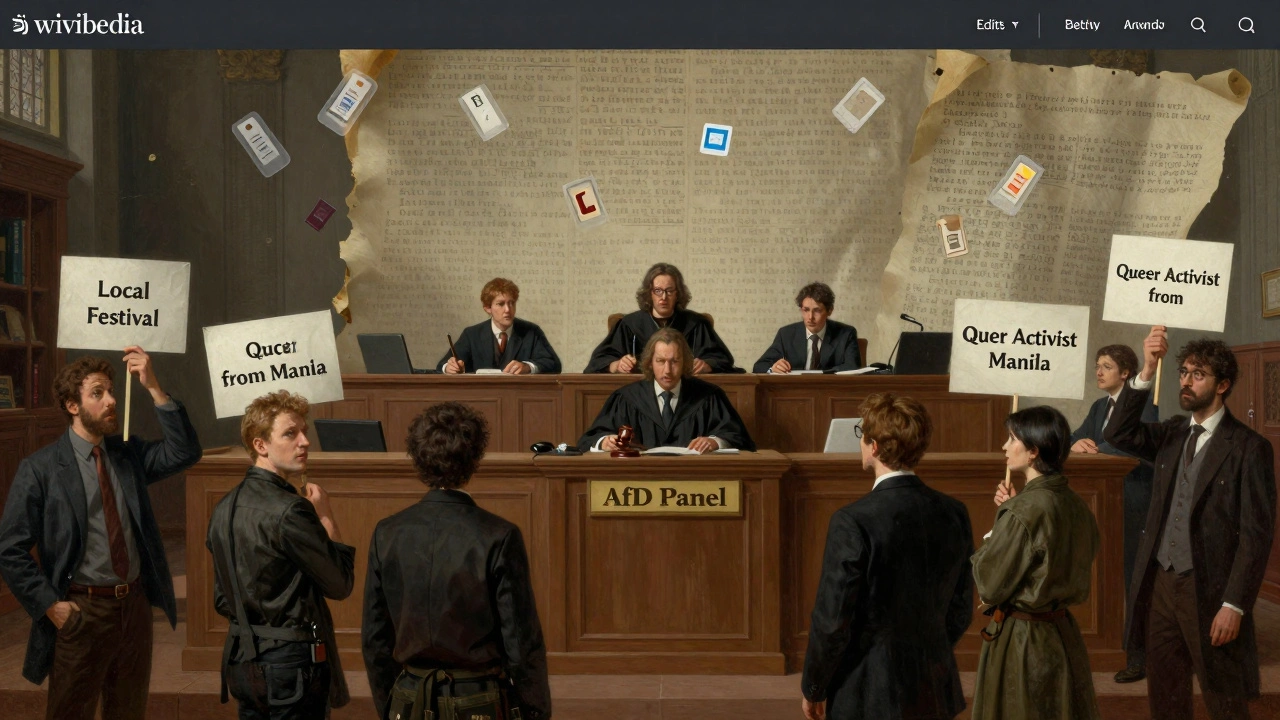
The Real Battle: Who Gets to Decide?
The real conflict isn’t about articles. It’s about power. Deletionists are often experienced editors with deep knowledge of policy. They’ve spent years learning how to navigate AfD, cite reliable sources, and spot vanity pages. They’re the gatekeepers. Inclusionists are often newer editors - students, hobbyists, people from underrepresented regions. They’re the ones who notice that Wikipedia has no article on a local festival in Nigeria, or a queer activist from Manila, or a community garden in Detroit. They’re the ones who get their edits reverted with a template saying, "Not notable." This isn’t just about policy. It’s about culture. The deletionist mindset reflects a top-down, academic view of knowledge. The inclusionist mindset reflects a bottom-up, democratic one. And the system favors deletionists. The AfD process requires a minimum of five votes to delete. But it only takes one person to nominate. Most new editors don’t know how to respond. They don’t know where to find sources. They get discouraged. And the article disappears.What Happens When You Delete
Delete an article, and you don’t just remove text. You remove context. In 2017, Wikipedia deleted the article on the "Mysore Palace Festival." The deletion was based on lack of English-language sources. But the festival draws over 500,000 people every year. It’s covered in Kannada newspapers, local TV, and government tourism sites. None of that counted. The article was gone for six months before someone restored it - after a long, heated debate. Another example: the article on "The 2012 Delhi gang rape protests." It was almost deleted because it was seen as "too current." But those protests changed Indian law. The article became one of the most-read pages on Wikipedia in 2013. Deletion isn’t neutral. It’s a choice. And that choice often reflects whose voices are already heard - and whose aren’t.
Where the Middle Ground Lives
Most editors aren’t extremists. They’re somewhere in between. They don’t want every cat photo or self-published memoir. But they also don’t want Wikipedia to become a museum of only the famous. That’s why the "notability" rule keeps evolving. In 2020, Wikipedia updated its guidelines to recognize "independent coverage" from non-Western sources. A local newspaper in Indonesia now counts as a reliable source. A blog by a respected academic in Brazil counts too. There’s also the "stub" solution. Instead of deleting a weak article, editors turn it into a placeholder - a "stub" - and invite others to expand it. This keeps the topic alive while giving it room to grow. And then there’s the "redirect" trick. Instead of deleting an article about "John Smith, local baker," editors redirect it to "Bakeries in Madison, Wisconsin." That way, the name stays searchable, but the article doesn’t become a standalone vanity page.What’s at Stake
Wikipedia is the fifth most visited website in the world. Over 2 billion people use it every month. For many, it’s the first place they look for answers. If deletionism wins, Wikipedia becomes cleaner - but narrower. It becomes a tool for the educated elite. The gaps in knowledge get wider. Who learns about the history of queer activism in Kenya? Or the traditional farming methods of the Mapuche people? Probably not from Wikipedia. If inclusionism wins, Wikipedia becomes richer - but messier. It becomes harder to find the most important information. It risks becoming unreliable. The truth? It’s already both. Wikipedia is a contradiction. It’s the most reliable source for most things - and still full of errors. It’s the most open encyclopedia ever made - and still controlled by a small group of volunteers. The debate isn’t going away. It’s the heartbeat of Wikipedia. And as long as people care about knowledge - who gets to make it, who gets to keep it, and who gets left out - the fight will continue.What You Can Do
If you’ve ever thought about editing Wikipedia but felt intimidated, here’s the truth: you don’t need to be an expert. You just need to care. If you see an article that was deleted unfairly - say, about a local event you know happened - you can request its restoration. Go to the deletion log. Find the reason. Then, find a source - a news article, a government page, even a Facebook event with screenshots. Submit it to the AfD archive. If you’re new, start small. Turn a stub into a real article. Add a citation. Fix a broken link. That’s how inclusionism works - not with grand declarations, but with quiet, persistent edits. And if you’re a deletionist? Don’t just delete. Explain. Teach. Link to the guidelines. Help the new editor understand why their article doesn’t fit - and how they can make it better. Wikipedia doesn’t need perfect editors. It needs engaged ones.What’s the difference between deletionism and inclusionism on Wikipedia?
Deletionists believe Wikipedia should only include topics that meet strict notability standards, aiming for a clean, authoritative reference. Inclusionists believe any verifiable topic with even minor significance deserves a page, arguing that knowledge is diverse and shouldn’t be filtered by gatekeepers.
Why do some Wikipedia articles get deleted so quickly?
Articles are often deleted quickly if they’re flagged for lacking reliable sources, being promotional, or failing notability guidelines. Experienced editors can nominate them for deletion using tools like CSD or PROD. New editors rarely respond in time, so the article disappears before anyone defends it.
Can a deleted Wikipedia article be restored?
Yes. If you find a deleted article you believe was removed unfairly, you can request restoration through the deletion log. You’ll need to provide new, reliable sources that prove notability. The community will review your case, and if it’s valid, the article can be brought back.
Does Wikipedia favor Western or English-language topics?
Yes. Studies show that articles in English and about Western subjects are more likely to be kept, while non-English or non-Western topics face higher deletion rates - often because they lack sources in English-language media. Wikipedia has tried to fix this by accepting non-English sources, but bias still exists.
How can I help reduce deletionism on Wikipedia?
You can help by expanding stubs, adding citations to underdeveloped articles, and supporting inclusionist edits. Instead of deleting, try tagging articles for improvement. Teach new editors how to meet notability standards. Small edits add up - and they keep knowledge alive.