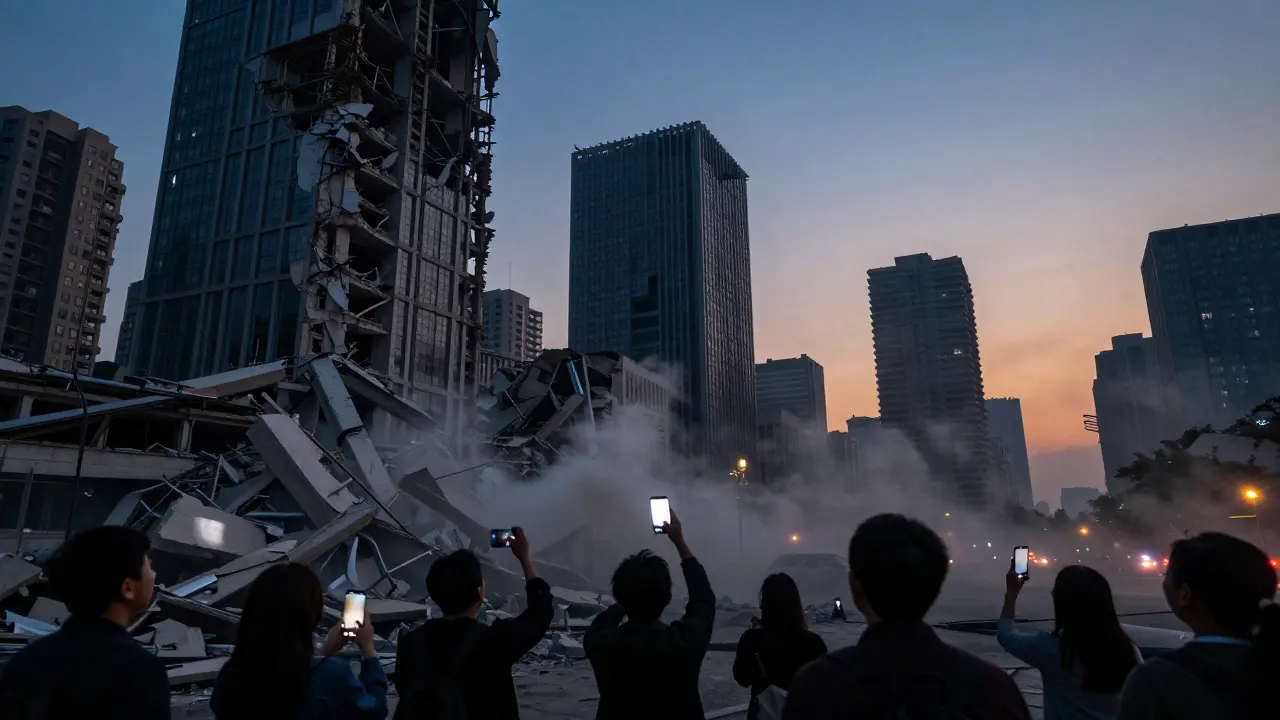
When a major earthquake strikes or a hurricane makes landfall, millions of people don't just check the news; they go to Wikipedia is a free, web-based collaborative project intended to be a universal encyclopedia written in cooperation by editors around the world. The platform serves as an immediate reference point for facts, maps, and historical context during crises. But what happens to the data behind those pages? Understanding the surge in traffic and the speed of updates reveals how the internet processes collective trauma and information needs in real-time.
The Immediate Spike: Why Readers Flood Disaster Pages
Within minutes of a confirmed disaster, page view counts on relevant Wikipedia articles often jump by 500% to 1,000%. This isn't random noise. It’s a specific behavioral pattern known as "information seeking." People want to know if their city has been hit before, what the official name of the storm is, or where the epicenter lies. Unlike social media, which offers opinions and rumors, Wikipedia offers structured, cited facts. This reliability drives the initial wave of visitors.
Consider the 2023 Turkey-Syria earthquakes. Within hours, the article for "2023 Turkey-Syria earthquakes" became one of the most viewed pages globally. Users weren't just reading; they were cross-referencing death tolls, aid logistics, and geological explanations. The spike usually peaks within the first 24 to 48 hours, coinciding with breaking news cycles. After that, traffic stabilizes but remains significantly higher than baseline levels for weeks, as long-term recovery efforts continue to generate interest.
How Editors Keep Up: The Mechanics of Rapid Updates
While readers are consuming content, editors are working at breakneck speed. Disaster response editing is distinct from routine maintenance. It requires high accuracy under pressure. Editors must balance the urge to add every new fact with the need for verifiable sources. A common pitfall is adding unverified casualty figures from early reports, which can lead to reverts and edit wars.
Experienced editors use specific strategies to manage this chaos:
- Sourcing First: Only adding data from reputable agencies like the USGS, Red Cross, or national meteorological services.
- Consensus Building: Using talk pages to agree on neutral phrasing, especially when political tensions surround the event.
- Infobox Accuracy: Prioritizing the summary box at the top, as this is what mobile users see first.
The result is a dynamic document that evolves rapidly. In the first week, an article might change 50 times a day. By the third month, changes drop to a few per week, focusing on long-term impact analysis and economic costs rather than immediate rescue operations.
Comparing Coverage: Natural vs. Human-Made Disasters
Not all disasters generate the same type of engagement. Natural events like hurricanes and earthquakes tend to have sharp, short-lived traffic spikes. Human-made disasters, such as industrial accidents or conflicts, often sustain higher traffic over longer periods due to ongoing investigations and policy debates.
| Disaster Type | Peak Traffic Window | Primary User Intent | Update Frequency (First Week) |
|---|---|---|---|
| Natural (e.g., Earthquake) | 0-48 Hours | Facts, Location, Magnitude | High (50+ edits/day) |
| Weather (e.g., Hurricane) | Pre-landfall to 72 Hours Post | Path, Safety, Damage Estimates | Very High (Continuous tracking) |
| Human-Made (e.g., Factory Fire) | 1-7 Days | Cause, Liability, Investigation | Moderate (10-20 edits/day) |
| Pandemic/Epidemic | Sustained Months | Statistics, Protocols, History | Variable (Data-driven) |
This table highlights that weather events, particularly hurricanes, offer the most predictable traffic patterns because the event's timeline is known in advance. Readers follow the path of the storm, keeping the article active from days before landfall until cleanup begins.

The Role of Media and External Links
Wikipedia doesn't exist in a vacuum. Its traffic is heavily influenced by mainstream media outlets. When a major newspaper or TV network links to a Wikipedia article in their reporting, it acts as a massive amplifier. This is why you often see a second, smaller traffic spike 24-48 hours after the initial event, corresponding to in-depth investigative pieces that cite the encyclopedia for background context.
Furthermore, social media algorithms play a role. If a specific phrase from a Wikipedia article goes viral on Twitter or Facebook, it can drive niche traffic to that specific section. For example, a debate about the structural integrity of a building after an explosion might keep a subsection of the article active for months, even if the main article's traffic has declined.
Long-Tail Impact: How Disasters Shape Encyclopedia Content
Beyond the immediate crisis, disaster response leaves a permanent mark on Wikipedia's structure. New categories are created, templates are developed for future similar events, and interlinking improves. For instance, after significant volcanic eruptions, editors often create detailed sub-articles about specific lava flows or ash clouds, linking them back to the main event page. This creates a semantic web that helps both humans and search engines understand the scope of the event.
These structural improvements mean that subsequent disasters are covered more efficiently. Editors have pre-built templates, established sourcing standards, and clearer definitions of what constitutes notability for minor aftershocks or secondary incidents. This institutional memory is a key asset of the platform, ensuring that each new crisis is handled with more precision than the last.
Challenges in Maintaining Neutrality
One of the biggest hurdles in disaster response editing is maintaining a neutral point of view (NPOV). During a crisis, emotions run high. Readers may expect the article to reflect outrage or grief, while editors must stick to factual reporting. This tension can lead to vandalism or biased edits, particularly in politically charged disasters. Moderation becomes critical, with administrators stepping in to protect the article's integrity while allowing legitimate updates.
Additionally, language barriers can affect coverage quality. Disasters in non-English speaking regions often rely on translators for accurate details. This can introduce delays or inaccuracies if primary sources aren't directly accessible. However, the global nature of Wikipedia means that international editors often collaborate to fill these gaps, ensuring a comprehensive view regardless of geographic location.
What This Means for Future Coverage
As climate change increases the frequency of extreme weather events, we can expect disaster response articles to become a standard part of Wikipedia's daily workflow. The infrastructure is already there: rapid update protocols, community consensus mechanisms, and robust traffic monitoring tools. The challenge will be scaling this model to handle multiple simultaneous disasters, a scenario that is becoming increasingly likely. For now, the platform remains a resilient hub for truth in turbulent times, balancing the speed of the internet with the rigor of academic citation.
How quickly does Wikipedia update disaster articles?
Updates can happen within minutes of a major event. Editors prioritize verified sources, so the first substantial edits usually occur within 1-2 hours, with continuous refinement over the following days.
Why do Wikipedia traffic spikes happen during disasters?
Readers seek reliable, structured facts during crises. Wikipedia provides neutral, cited information that contrasts with the opinion-heavy nature of social media, driving high volumes of informational searches.
Do natural disasters get more traffic than human-made ones?
Natural disasters typically have sharper, shorter traffic spikes. Human-made disasters often sustain higher traffic over longer periods due to ongoing investigations, legal proceedings, and policy debates.
How do editors ensure accuracy during fast-moving events?
Editors rely on authoritative sources like government agencies and international organizations. They use talk pages to reach consensus on wording and avoid adding unverified details until they are confirmed by multiple reliable outlets.
Does media coverage affect Wikipedia traffic?
Yes, significantly. Mainstream media outlets frequently link to Wikipedia articles for background context, which drives secondary traffic spikes. Social media virality of specific facts can also boost traffic to particular sections of an article.