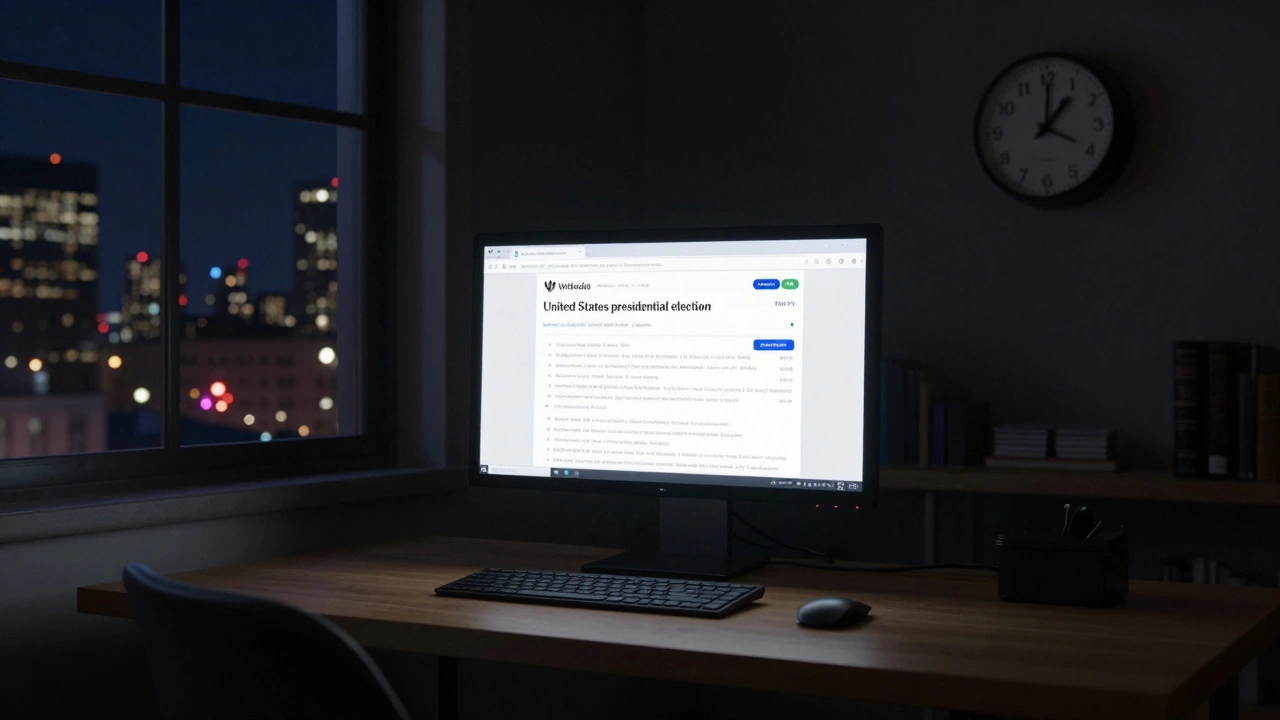
On election night, Wikipedia doesn’t just sit quietly in the background-it becomes one of the most visited websites in the world. When polls close and results start rolling in, millions of people turn to Wikipedia not for breaking news, but for clear, verified, and neutral summaries of what’s happening. Unlike news sites that compete for clicks, Wikipedia’s job is to explain, not to alarm. And that’s why certain pages explode in traffic the moment an election begins.
Why Wikipedia Gets So Busy on Election Night
People don’t go to Wikipedia because they want headlines. They go because they want context. When a candidate wins a state, viewers don’t just want to know the name-they want to know who that person is, what their platform means, how this race fits into history, and what happens next. Wikipedia answers all of that in one place, without ads, without opinion, and without clickbait.
During the 2020 U.S. presidential election, the page for Joe Biden the 46th President of the United States, who won the election against Donald Trump in 2020 after serving as the 47th Vice President hit over 12 million views in a single day. The page for Donald Trump the 45th President of the United States, who lost the 2020 election and was later indicted on multiple charges got nearly as many. That’s not just traffic-it’s a global search for understanding.
Pages That Always Spike
Some pages are guaranteed to surge every election cycle. These aren’t just candidates-they’re the systems, institutions, and events that shape how elections work.
- United States presidential election the process by which the president and vice president of the United States are elected every four years through the Electoral College-this page gets over 5 million views every presidential year. People check how the Electoral College works, what happens if no candidate gets 270 votes, and how swing states decide outcomes.
- Electoral College (United States) the body of electors chosen by voters in each state to formally elect the president and vice president-a perennial favorite. Every election, thousands of first-time voters look this up after hearing the term on TV.
- Voting in the United States the process by which eligible citizens cast ballots for public officials, including requirements, registration, and voter suppression debates-this page sees heavy traffic from people trying to confirm if they can vote, how to check their registration, or what ID laws apply in their state.
- Ballot measures state or local propositions put to a direct vote by the electorate, such as legalizing marijuana or changing tax laws-in states with lots of initiatives, this page becomes a live reference tool. In 2024, pages for ballot measures in California, Florida, and Ohio each got over 2 million views.
Local Races Matter Too
It’s not just about the presidency. Down-ballot races-governors, senators, state attorneys general-often drive just as much traffic in their home states. In 2022, the page for Katie Hobbs the Democratic governor of Arizona who won a closely watched race against Kari Lake in 2022 got 800,000 views in the 24 hours after her win. In Georgia, the page for Raphael Warnock the U.S. Senator from Georgia who won a runoff election in 2021 and was re-elected in 2022 spiked after his victory.
Wikipedia editors track these local pages closely. They update bios, campaign histories, and policy positions in real time. You won’t find that kind of detail on most news sites.
What Happens Behind the Scenes
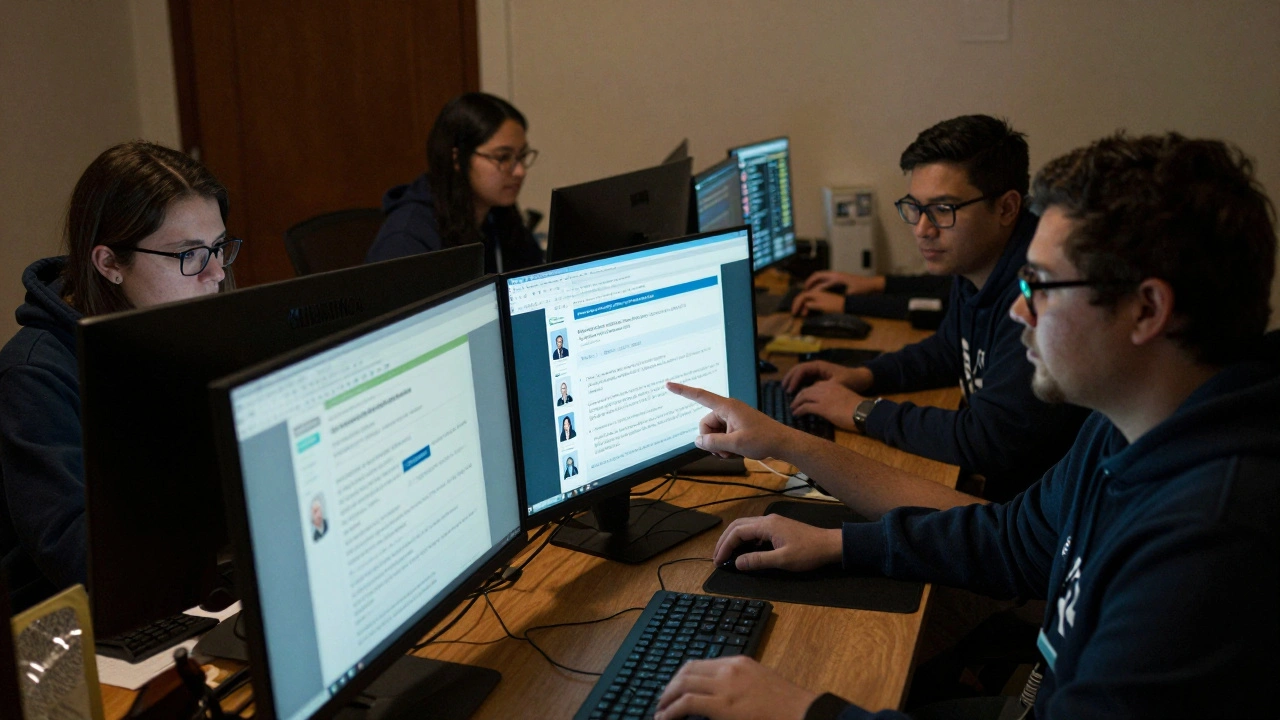
Behind every spike in traffic is a team of volunteer editors working nonstop. On election night, hundreds of Wikipedia editors-many of them retired journalists, academics, and political staffers-monitor changes, verify sources, and update pages as results come in. They don’t get paid. They don’t get credit. But they make sure the information is accurate.
They follow strict rules: no speculation. No unverified claims. No opinion. Only what’s confirmed by official sources like state election boards, major news outlets, and government press releases. If a candidate claims victory before the state certifies results? The page stays unchanged. If a news organization calls a race, editors wait for a second source. This isn’t fast-but it’s reliable.
How to Use Wikipedia Wisely on Election Night
If you’re checking Wikipedia during an election, here’s what you should know:
- Don’t trust the first edit. Pages are updated in real time, but early changes can be wrong. Wait for consensus.
- Check the talk page. If there’s a major dispute-like a recount or legal challenge-it’s usually discussed there.
- Look at the references. Every claim has citations. Click them. You’ll often find links to official results.
- Don’t confuse it with news. Wikipedia doesn’t report breaking news-it explains what the news means.
For example, if you see a headline saying "Candidate X wins by 10,000 votes," go to Wikipedia. It’ll tell you if those votes are certified, if there’s a recount pending, or if the margin falls within the automatic recount threshold in that state.

What Happens After the Night
Once the votes are certified, traffic doesn’t drop-it shifts. The pages for winning candidates get updated with new titles: "President-elect," "Governor-elect," "U.S. Senator." The pages for losing candidates get updated with their next steps-whether they concede, file a lawsuit, or retire from politics.
Within days, Wikipedia becomes the permanent archive. The page for the 2024 presidential election will still be updated years later with new data: final vote totals, analysis of turnout, demographic breakdowns, and historical comparisons. It’s not a news story. It’s a historical record.
What You Won’t See on Wikipedia
Wikipedia avoids certain things on election night:
- No polling predictions. Even reputable polls aren’t considered "confirmed."
- No commentary on candidates’ character. Only their official positions.
- No speculation about future actions. "Will they run again?" isn’t answered until they say so.
- No social media clips. Memes, tweets, and viral videos aren’t sources.
This makes Wikipedia frustrating for some. But for others, it’s the only place where you can find the truth without the noise.
What to Watch This Election Night
Here are the top 10 pages to monitor during the next U.S. election:
- United States presidential election
- Electoral College (United States)
- Voting in the United States
- Ballot measures
- Presidency of the United States the office held by the president, including powers, succession, and historical context
- United States House of Representatives the lower chamber of the U.S. Congress, with 435 voting members elected every two years
- United States Senate the upper chamber of the U.S. Congress, with 100 members serving six-year terms
- Election denial in the United States the movement that falsely claims elections are fraudulent, particularly after the 2020 election
- Voter suppression in the United States policies or practices that reduce voter turnout among specific groups
- List of United States presidential candidates a comprehensive list of individuals who have run for president, including minor party candidates
Bookmark these. Check them after the polls close. You’ll get a clearer picture than any news network can offer.
Why does Wikipedia get so much traffic on election night?
Wikipedia gets heavy traffic because people use it to understand-not just to react. Unlike news sites that report breaking results, Wikipedia explains the context: who the candidates are, how the system works, and what the results mean. It’s neutral, verified, and free of ads, making it a trusted source when emotions are high.
Can I trust Wikipedia during an election?
Yes-if you know how to use it. Wikipedia doesn’t report live results. It waits for confirmation from official sources like state election boards or major news organizations. Editors update pages only after multiple reliable sources agree. It’s slower than CNN, but far more accurate.
Are Wikipedia pages updated in real time?
Yes, but not instantly. Volunteers monitor results and update pages as soon as official results are confirmed. There’s often a 5-15 minute delay between a news outlet calling a race and Wikipedia updating its page. This delay ensures accuracy over speed.
Do Wikipedia editors have political biases?
Wikipedia’s policies require strict neutrality. Editors are trained to cite reliable sources and avoid personal opinions. While individual editors may have views, the system is designed to filter out bias through peer review, edit histories, and discussion pages. Pages about controversial topics like voting laws or candidates are often protected from anonymous edits to prevent manipulation.
What’s the difference between Wikipedia and news sites during elections?
News sites report what’s happening now-often with analysis, emotion, or opinion. Wikipedia explains what it means. For example, if a candidate wins a state, a news site might say, "Shocking upset!" Wikipedia will say, "Candidate X won 27 electoral votes in [State], bringing their total to 270. This is the first time since 2008 that [State] has voted for [Party]." It’s factual, not flashy.