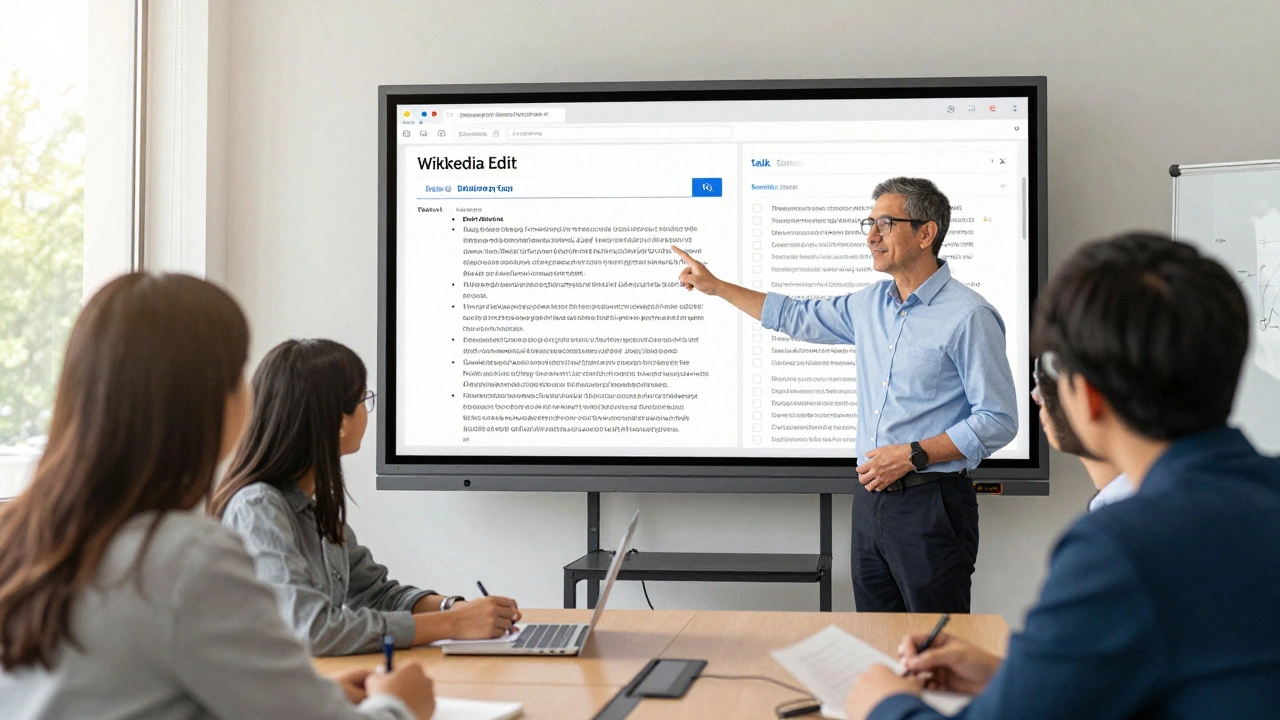
Most professors know Wikipedia is the first place students look. But too many still tell students to avoid it entirely. That’s not just outdated-it’s missing a real teaching opportunity. Wikipedia isn’t the enemy of academic integrity. It’s a living, collaborative archive of how knowledge is built, debated, and revised. Training faculty to use it in coursework isn’t about replacing textbooks. It’s about teaching students how to think critically about sources, not just memorize them.
Why Faculty Need to Engage with Wikipedia
Over 2 billion people visit Wikipedia every month. Students aren’t ignoring scholarly sources-they’re starting with Wikipedia because it’s free, fast, and organized. A 2023 study from the University of Edinburgh found that 87% of undergraduates used Wikipedia to begin research for a paper. The problem isn’t that they use it. The problem is that no one teaches them how to use it well.
Faculty who ban Wikipedia miss a chance to show students how knowledge is constructed. Every Wikipedia article has a talk page, edit history, and citation trail. These aren’t flaws. They’re features. They show you who wrote it, why they changed it, and what evidence backs it up. That’s exactly what critical thinking looks like in the real world.
What Faculty Actually Need to Learn
Training isn’t about teaching professors how to edit articles. It’s about helping them see Wikipedia as a classroom tool. Here’s what works:
- Understanding the difference between Wikipedia and peer-reviewed journals-Wikipedia summarizes existing knowledge; journals create new knowledge. Both matter, but in different ways.
- Reading the talk page and edit history-These reveal bias, disputes, and gaps in coverage. A student can learn more about source evaluation by analyzing a Wikipedia article’s edit wars than by reading ten textbook chapters.
- Using Wikipedia’s citation tools-Every reliable Wikipedia citation links to a primary or secondary source. Students can trace a claim back to the original study, book, or report.
- Recognizing structural bias-Wikipedia reflects who edits it. Most editors are male, English-speaking, and from the Global North. That shapes what gets covered-and what doesn’t. Students should learn to ask: Whose voices are missing?
A biology professor at the University of Minnesota started requiring students to improve a Wikipedia article on a lesser-known disease. They didn’t just write a paper-they had to find peer-reviewed sources, summarize them accurately, and get their edits approved by the Wikipedia community. The result? Student engagement jumped 62%. And their citation accuracy improved more than in any previous assignment.
How to Start Training Faculty
Workshops don’t need to be long. A 90-minute session with hands-on practice is enough to change how faculty see Wikipedia. Here’s a simple structure:
- Start with a myth-Ask faculty: "Is Wikipedia unreliable?" Then show them a 2019 study in Nature that found Wikipedia’s science articles were as accurate as Encyclopaedia Britannica.
- Do a live edit-Pick a short, underdeveloped article. Show how to add a citation from a journal article. Walk through the edit summary and why it matters.
- Compare sources-Show the same topic in a textbook, a Wikipedia article, and a scholarly journal. Ask: What’s missing? What’s exaggerated? What’s cited?
- Share student examples-Show before-and-after edits from real courses. Students improved articles on Indigenous medicine, local environmental history, and women in STEM. These weren’t perfect-but they were real contributions.
Many universities now offer Wikipedia ambassador programs. These are trained students or staff who help faculty design assignments. At the University of Wisconsin-Madison, the program has supported over 120 faculty members since 2020. No tech skills needed. Just curiosity.
Assignments That Work
Here are three low-risk, high-impact assignments faculty can use right away:
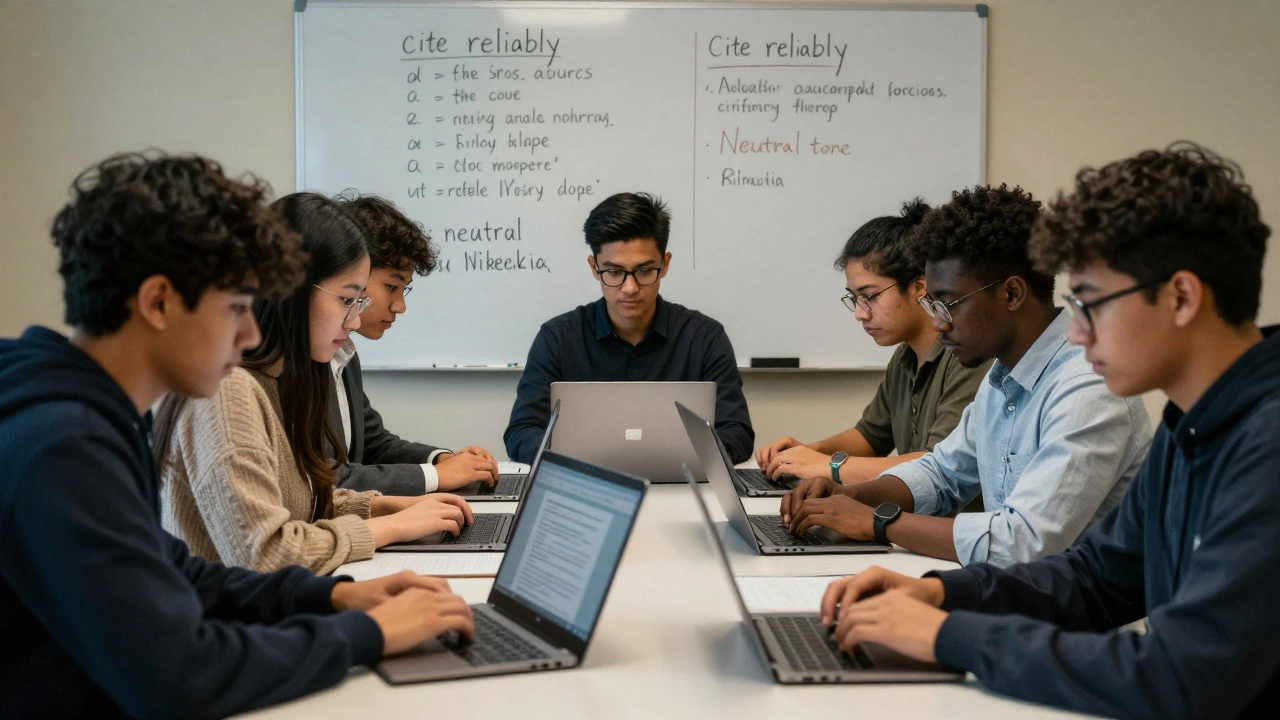
- The Citation Challenge-Students find one claim in a Wikipedia article that lacks a citation. They locate a credible source, add it, and explain why it’s reliable. This teaches source evaluation in one task.
- The Gap Analysis-Students pick a topic covered in class but missing from Wikipedia (e.g., "Black women in early computing"). They write a draft article, citing at least five academic sources. This builds research and synthesis skills.
- The Edit History Analysis-Students track how an article changed over a year. What events triggered edits? Who edited it? What was removed? This turns Wikipedia into a case study in knowledge politics.
These aren’t "Wikipedia projects." They’re critical thinking assignments that happen to use Wikipedia as the platform. The goal isn’t to make students editors. It’s to make them smarter consumers of information.
Common Fears-and How to Answer Them
Faculty worry about three things:
- "What if students edit something wrong?"-Wikipedia doesn’t publish edits instantly. They go through review. And students learn quickly. One professor at Stanford said her students made 14 edits in a semester. Only one was reverted-and the student learned more from that mistake than from any lecture.
- "It’s not scholarly enough."-Wikipedia isn’t meant to be scholarly. But it’s a gateway to scholarship. Students who learn to trace a Wikipedia citation to a peer-reviewed article are doing real academic work.
- "I don’t have time to learn this."-You don’t need to be an expert. Start small. Use a campus Wikipedia ambassador. Or assign the Citation Challenge. It takes 20 minutes to explain and 2 hours for students to complete.
The biggest barrier isn’t technical. It’s mindset. Faculty who once saw Wikipedia as a cheat code now see it as a classroom.
What Happens When Faculty Get On Board
At the University of Toronto, a history department required every first-year student to improve a Wikipedia article as part of their final grade. In three years, students added over 200,000 words to Wikipedia. They cited 1,800 academic sources. And the articles they edited were viewed over 5 million times.
That’s not just about Wikipedia. It’s about students realizing their work matters beyond the professor’s desk. When a student’s edit helps someone else learn, they start caring more about accuracy, clarity, and fairness.
Wikipedia doesn’t need to replace your syllabus. It needs to be part of it. Faculty who train with it don’t just teach better-they teach differently. They show students that knowledge isn’t fixed. It’s built. And they’re part of the building.
Can students really edit Wikipedia without breaking rules?
Yes, as long as they follow basic Wikipedia policies: cite reliable sources, avoid original research, and write neutrally. Most campus programs include a short orientation on these rules. Edits are reviewed by experienced editors before going live. Mistakes are corrected quickly-and become learning moments.
Do I need to grade Wikipedia edits?
No, and you shouldn’t. Wikipedia editors don’t grade each other. Instead, grade the process: the quality of sources used, the clarity of writing, the thought behind the edits. Use a rubric that values research depth, citation accuracy, and revision, not the final Wikipedia score.
Is Wikipedia biased? Shouldn’t we avoid it?
Wikipedia reflects the biases of its editors-but so do textbooks, journals, and lectures. The power of using Wikipedia in class is that students can see those biases in action. They learn to ask: Why is this topic covered? Who’s missing? What sources were used? That’s critical thinking, not avoidance.
What if my students just copy from Wikipedia?
That’s a plagiarism issue, not a Wikipedia issue. The solution isn’t banning Wikipedia-it’s teaching citation and paraphrasing. When students edit Wikipedia, they’re forced to rephrase ideas in their own words to meet Wikipedia’s standards. That’s the opposite of copying.
How do I find help to start this in my course?
Most universities have a Wikipedia education program or campus ambassador. Search for "Wikipedia Education Program" and your university name. If yours doesn’t have one, the Wiki Education Foundation offers free training, resources, and support for faculty in the U.S. and Canada.
Next Steps for Faculty
Start small. Pick one assignment. Try the Citation Challenge with your next reading list. Ask students to find one uncited claim and fix it. You don’t need to be a Wikipedia expert. You just need to be willing to let students see how knowledge works-and how they can help shape it.
Wikipedia isn’t the final word. It’s the first draft. And now, your students can help write it.