Wikipedia isn’t a democracy. It’s not a forum. And it definitely isn’t a place where the loudest voice wins. But if you’ve ever been on the receiving end of an edit war, you know how easy it is to feel like it is. One person reverts your change. You revert theirs. Then someone else jumps in. Suddenly, you’re stuck in a loop of accusations, vague claims, and unreadable diffs. The truth? Winning a dispute on Wikipedia isn’t about being right-it’s about evidence and how you present it.
What Happens When Edits Go Wrong
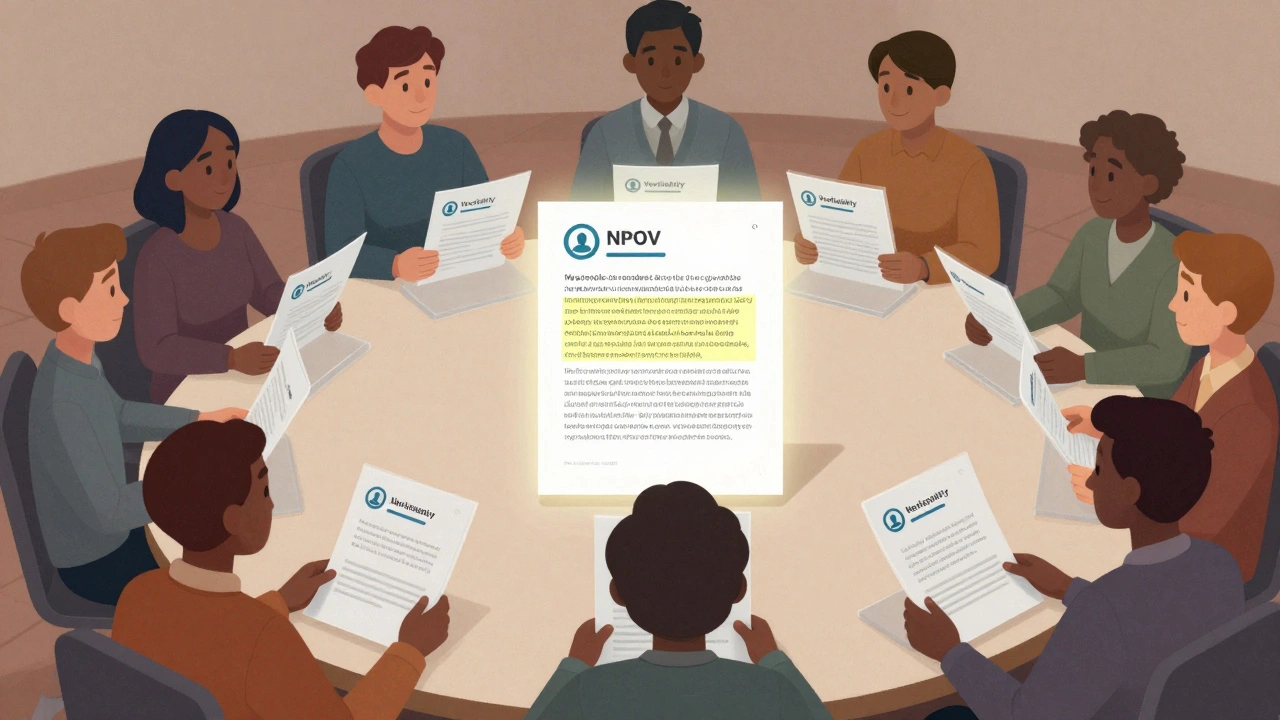
Every day, thousands of edits happen on Wikipedia. Most are harmless: fixing a typo, updating a date, adding a citation. But when someone removes content you added-or adds something you think is wrong-it triggers a response. That’s normal. What’s not normal is how people react.Some editors delete your edit without explanation. Others leave long, emotional comments on talk pages. A few even resort to personal attacks. These aren’t just bad manners-they’re violations of Wikipedia’s core policies: Neutral Point of View, Verifiability, and No Original Research.
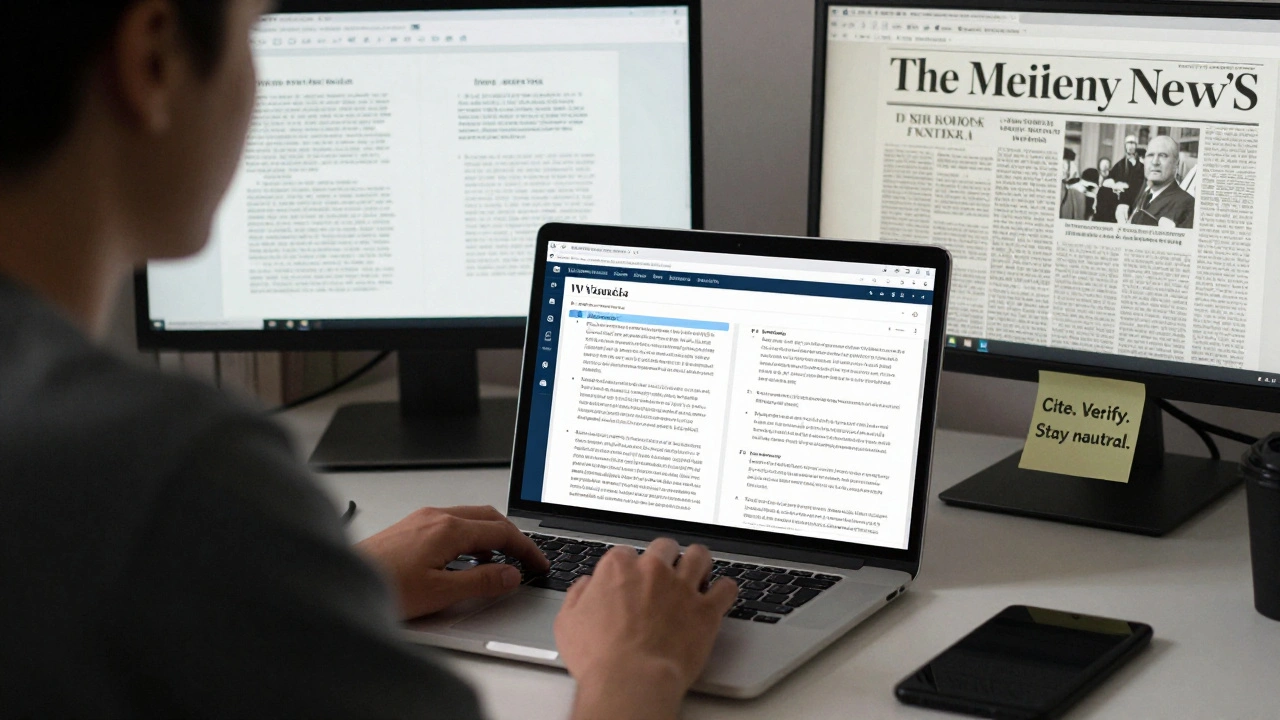
Here’s the reality: if you want to keep your edit, you need to show, not tell. You can’t say, “This is true.” You have to say, “This is stated in The New York Times on January 3, 2025.” That’s the difference between an opinion and an edit that sticks.
The Power of the Diff
A diff is the difference between two versions of a page. It’s not just a technical tool-it’s your evidence locker. Every time you revert an edit or respond to a dispute, you should link directly to the diff that shows what changed.Why? Because a diff removes ambiguity. Saying “You added false information” is vague. Linking to a diff that shows exactly which sentence was added, and then citing the policy that it violates, turns a subjective complaint into an objective argument.
For example:
- Bad: “You shouldn’t have removed that paragraph.”
- Good: “The paragraph was removed in this edit. It cited the 2024 CDC report on vaccine uptake, which is still live and verifiable. Removing it without replacement violates Verifiability.”
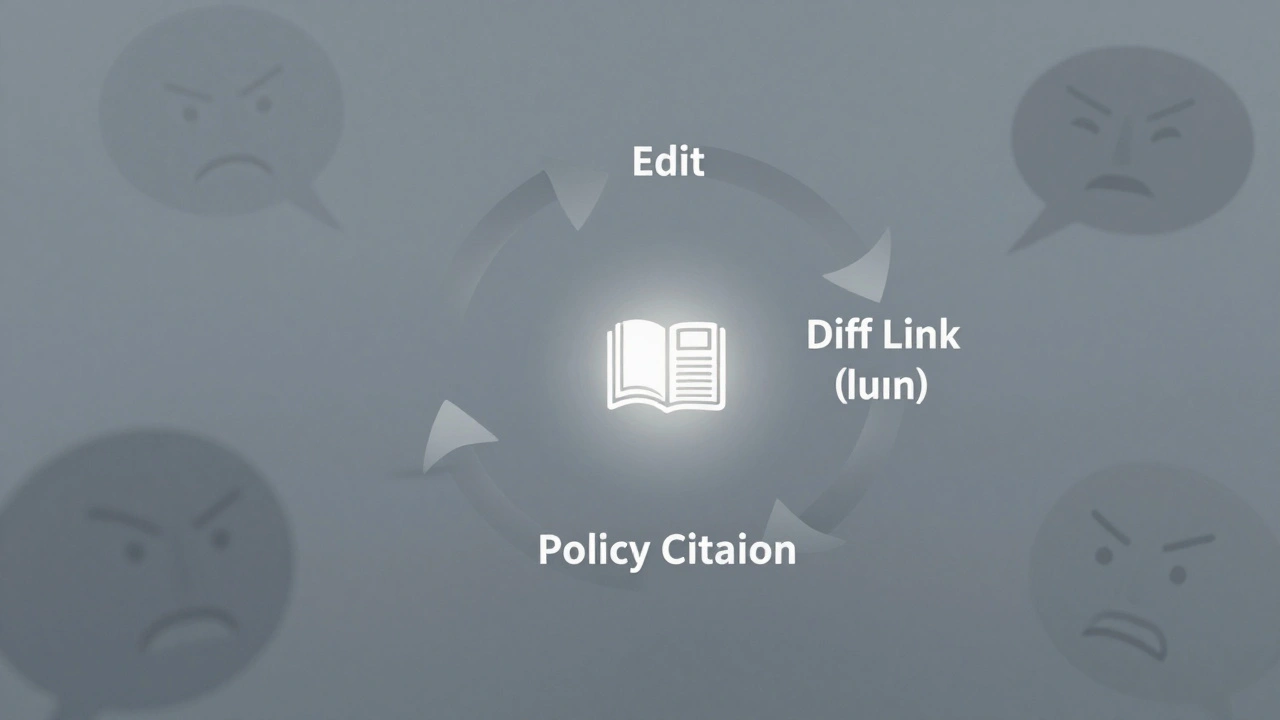
Notice the structure: What happened → Where to see it → Which policy was broken. That’s the gold standard. It’s calm, clear, and impossible to ignore.
What Counts as Evidence?
Wikipedia doesn’t accept hearsay. It doesn’t accept personal blogs, YouTube videos, or tweets-even if they’re from experts. What it does accept are reliable sources.According to Wikipedia’s Reliable Sources policy, acceptable sources include:
- Peer-reviewed academic journals
- Books published by university presses
- Major newspapers like The Guardian, Le Monde, or The Washington Post
- Official government publications (e.g., CDC, WHO, Statistics Canada)
- Reputable magazines like Nature, Science, or The Economist
What’s not acceptable? Self-published content, personal websites, corporate press releases, or anything that can’t be independently verified. If you’re citing a blog post by a professor, link to their university profile, not their personal site. If you’re using a tweet, find the original study it references and cite that instead.
Here’s a real example: In 2023, an editor added a claim that “70% of U.S. adults support climate action.” The edit was reverted because no source was cited. The editor then found a 2022 Pew Research Center report that said 68% of Americans believed climate change was mostly caused by human activity. They updated the number, cited the report, and included the link. The edit stood. The difference? One was a guess. The other was evidence.
How to Respond When You’re Attacked
It’s easy to get defensive. Someone reverts your edit. You feel frustrated. You type a reply full of emotion. Big mistake.Wikipedia’s community has a zero-tolerance policy for personal attacks. Even if you’re right, if your tone is hostile, you’ll lose support. The goal isn’t to win the argument-it’s to show you’re following the rules.
Here’s how to respond when things get tense:
- Wait 24 hours. Emotions cool. Clarity returns.
- Go to the article’s talk page. Start fresh.
- Use neutral language: “I noticed the section was changed. Can we discuss the source?”
- Link to the diff. Link to the policy. Link to the source.
- Ask for help: “Does anyone have access to the original study this was based on?”
Don’t say: “You’re wrong.”
Do say: “According to the policy on verifiability, edits need to be backed by published sources. The current version lacks that.”
People respond to logic. They don’t respond to anger.
When to Ask for Help
Not every dispute needs to be solved alone. Wikipedia has a whole system of dispute resolution tools.Use them when:
- Three or more editors are involved
- The same edit is being reverted multiple times
- Personal attacks are happening
- You’ve tried talking on the talk page for over a week with no progress
Here are your options:
- Request for Comment (RFC): Post a summary on the article’s talk page, link to all relevant diffs, and ask for input from editors outside the dispute. This is the most common way to break deadlocks.
- Mediation: If RFC doesn’t work, you can request a neutral third party to mediate. This is formal, but effective.
- Administrative noticeboard: For serious policy violations, like harassment or vandalism, use the Administrators’ Noticeboard.
Don’t try to handle everything yourself. Wikipedia is a collaboration. Asking for help isn’t weakness-it’s strategy.
Common Mistakes (And How to Avoid Them)
Most editors lose disputes for the same reasons:- Not citing sources - If you can’t link to a reliable source, your edit won’t survive.
- Using vague language - “Many people believe…” is not evidence. Name the people, name the source.
- Ignoring policy - If you don’t know what Verifiability or No Original Research means, read them before you edit.
- Editing in silence - Never make a major change without discussing it first on the talk page.
- Assuming you’re right - You might be. But if you can’t prove it, you’re not helping.
Pro tip: Before you edit, ask yourself: “If someone reverted this, could I defend it in 3 sentences using only policy and a source?” If not, pause. Find the source first.
What Happens When You Do It Right
There’s a quiet satisfaction in winning a Wikipedia dispute the right way. Not because you defeated someone. But because you helped make the article better.One editor in 2024 added a paragraph about a local policy change in Wisconsin. It was removed twice. They didn’t argue. They went to the talk page, linked to the official city council minutes, cited the policy on reliable sources, and asked for feedback. Within 48 hours, two other editors agreed. The edit stayed. And the article became more accurate.
That’s the power of evidence. Not force. Not persistence. Not noise. Just clear, cited, policy-aligned information.
Wikipedia isn’t perfect. But its rules are. And if you follow them, you don’t just win your edit-you help build something that lasts.
What if someone reverts my edit without leaving a reason?
First, check the edit summary. Sometimes the reason is hidden there. If not, go to their talk page and politely ask for clarification. Use a diff to show exactly which edit you’re referring to. Most editors will respond if you’re calm and specific. If they don’t, wait a few days and raise the issue on the article’s talk page.
Can I use Wikipedia as a source for my own edit?
No. Wikipedia is not a reliable source for citing other Wikipedia articles. It’s a tertiary source-it compiles information from primary and secondary sources. If you want to add a fact, find the original source: a journal, book, or news article. Wikipedia’s citations are there to help you find those.
How do I know if a source is reliable?
Ask three things: Is it published? Is it independent? Can it be verified? A university press book, a major newspaper, or a government report usually passes. A personal blog, a forum post, or a company press release usually doesn’t. Check Wikipedia’s Reliable Sources page for detailed guidelines.
Is it okay to edit my own article?
Yes, but with caution. You can edit articles about yourself, your organization, or your work-but you must follow the same rules as everyone else. Avoid promotional language. Cite independent sources. Disclose your conflict of interest on the talk page. Many editors will trust you more if you’re transparent.
What should I do if I’m banned from editing a page?
Page protection is usually temporary and based on edit wars or vandalism. If you’re banned, don’t try to circumvent it. Wait for the protection to expire, then return with a well-researched edit and a clear explanation on the talk page. If the issue persists, request mediation or an RFC to resolve the underlying conflict.