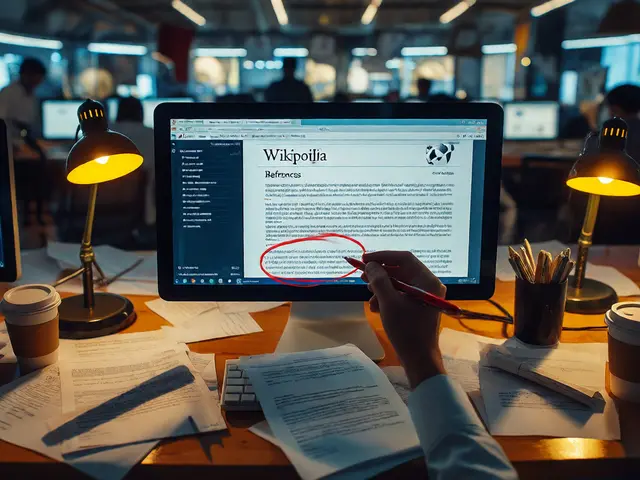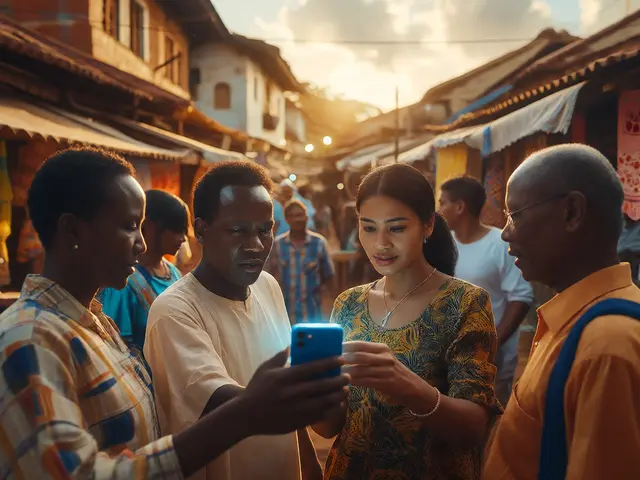
Wikipedia isn’t just a website anymore. It’s a global public good - built by volunteers, funded by small donations, and used by over 2 billion people every month. But what happens next? The Wikimedia Foundation, the nonprofit behind Wikipedia, has laid out its long-term vision for the next decade, and it’s not just about adding more articles. It’s about fixing the system that keeps knowledge locked away - even on a platform meant to be free.
Knowledge Shouldn’t Be Locked Behind Paywalls
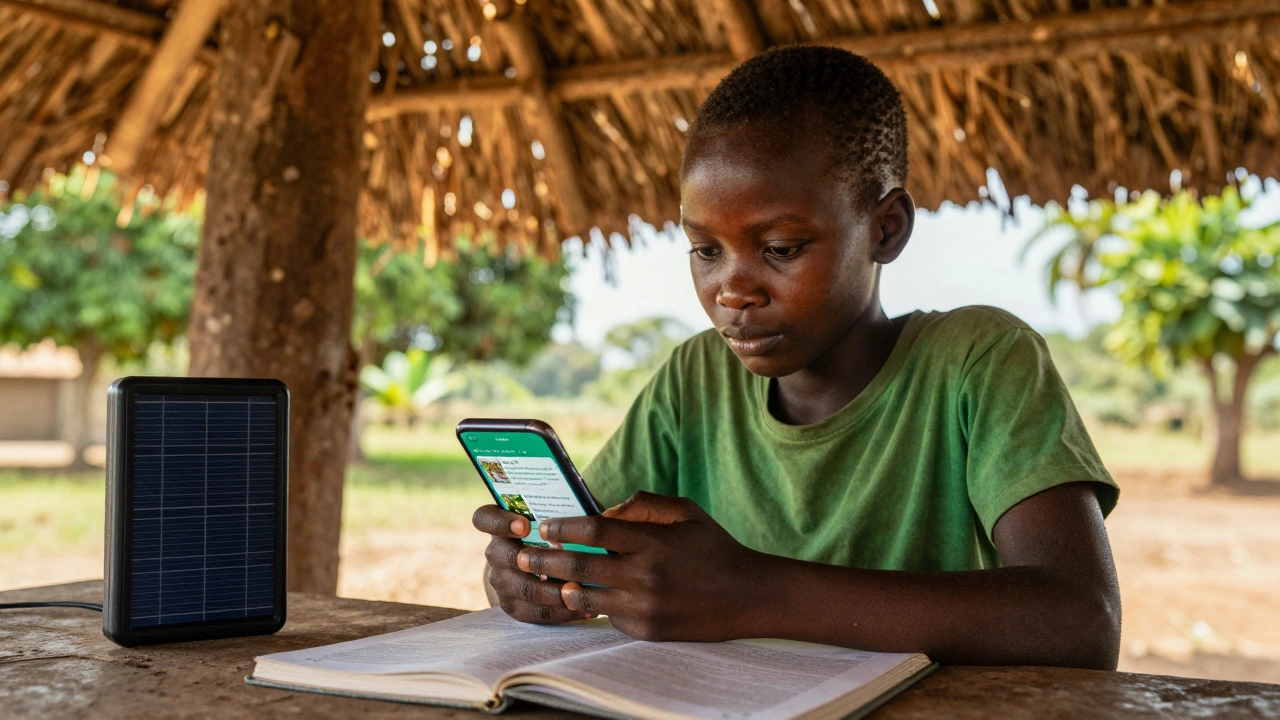
Right now, millions of people can’t access reliable information because they’re in places with slow internet, expensive data plans, or censorship. The Wikimedia Foundation’s first big goal is to make Wikipedia work offline. Not just a static download, but a smart, updateable version that syncs when a connection is available. Imagine a student in rural Nigeria downloading a full set of Wikipedia articles on their phone, then using it for weeks without Wi-Fi. That’s already happening in test zones. By 2030, the Foundation wants to deliver Wikipedia to every person who needs it - even if they can’t afford to stream video or load a webpage.
This isn’t just a tech fix. It’s a justice issue. Right now, the most reliable sources of information are often behind paywalls - academic journals, subscription databases, corporate encyclopedias. Wikipedia’s answer? Open everything. All edits, all data, all tools. The Foundation is releasing its entire edit history as open data, so researchers, educators, and developers can build tools that help people find truth faster. No more guessing which source is real. Just one click to see who wrote it, when, and why.
Fixing the Bias in the Knowledge We Have
Wikipedia has a well-known problem: it’s mostly written by men in the Global North. About 80% of editors are male, and most live in North America or Europe. That means a lot of knowledge is missing - especially about women, Indigenous cultures, and communities in Africa, Latin America, and Southeast Asia.
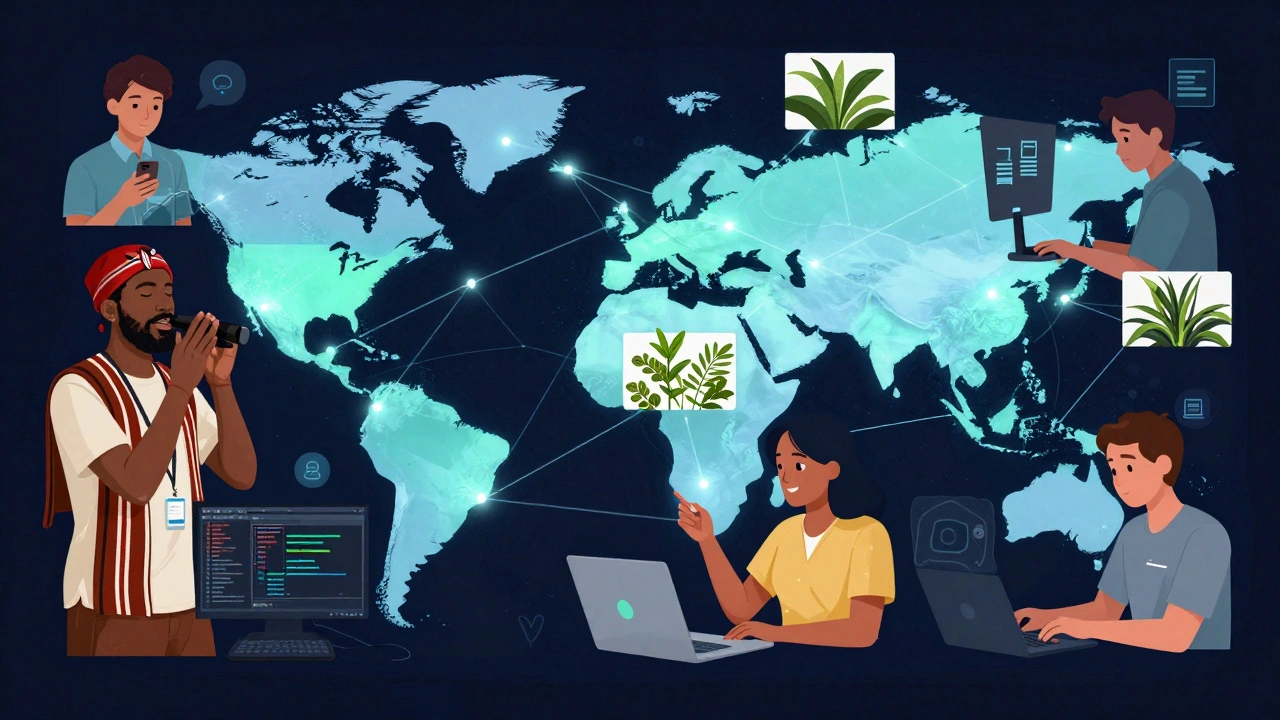
The Foundation isn’t just asking for more editors. It’s changing how editing works. New tools are being tested to help people contribute without needing to learn wiki markup. A farmer in Kenya can now record an oral history in Swahili using voice input, and the system automatically turns it into a well-formatted article. A teacher in Peru can use a simple app to add local plant species to Wikipedia with photos from her phone. These aren’t experiments - they’re live features being used by over 150,000 new contributors in the last year alone.
And it’s working. Articles about African medicinal plants have grown by 400% since 2022. Indigenous language versions of Wikipedia, like Quechua and Yoruba, now have over 10,000 articles each - up from under 1,000 five years ago. The goal? To have at least one active Wikipedia in every language spoken by more than 100,000 people. That’s over 1,000 versions. Right now, there are 330.
AI Won’t Replace Volunteers - It Will Help Them
Everyone’s talking about AI. But the Wikimedia Foundation isn’t scared of it. They’re using it to make editing easier, not to replace humans. A new AI tool called WikiGrok is an open-source AI assistant trained on Wikipedia’s edit history and community guidelines. It doesn’t write articles. It helps editors find gaps.
Let’s say someone writes a short article about a local river in Bangladesh. WikiGrok checks it against existing data and says: "This article mentions three fish species, but only one has a verified scientific name. Here are three peer-reviewed sources to add." Or: "The map in this article is from 1985. Updated satellite data from 2024 is available. Would you like to replace it?"
This tool is already used in over 40 languages. It cut the time editors spend fact-checking by 35%. But here’s the key: every suggestion is optional. The human editor still decides what to change. The Foundation refuses to let AI make final calls. Knowledge must be shaped by people - not algorithms.
Money Doesn’t Come From Ads - It Comes From You
Wikipedia doesn’t run ads. It doesn’t sell data. It doesn’t take venture capital. The entire operation - servers, staff, tools - is funded by small donations from people around the world. In 2025, over 6 million people gave an average of $15. That’s $90 million. And it’s enough to keep Wikipedia running without debt.
The Foundation’s next step is to make donations easier in places where credit cards are rare. In India, you can now donate via UPI. In Nigeria, through mobile airtime. In Brazil, via Pix. The goal is to have at least one local payment option in every country where Wikipedia is used. This isn’t about making more money. It’s about making everyone feel like they’re part of it.
And it’s working. Donation rates from low-income countries rose by 68% in 2024. People aren’t just reading Wikipedia - they’re investing in it.
The Real Measure of Success Isn’t Page Views
Most companies track clicks, views, and time spent. The Wikimedia Foundation tracks something else: impact. How many students used Wikipedia to finish a school project in a country without textbooks? How many doctors accessed treatment guidelines during a power outage? How many activists used Wikipedia to document human rights violations?
In 2025, researchers from the University of Oxford and the Berkman Klein Center found that Wikipedia was the primary source for 72% of high school students in Sub-Saharan Africa. In Ukraine, 89% of teachers used Wikipedia to prepare lessons after schools lost internet access during attacks. These aren’t stats on a dashboard - they’re real stories.
The Foundation’s new metric? Knowledge access equity. Are people in every region, language, and income group getting the same quality of information? That’s the only number that matters now.
What’s Next? It’s Not Just Wikipedia
The Wikimedia Foundation isn’t stopping at Wikipedia. Wiktionary, Wikidata, Wikimedia Commons, Wikisource - these are all part of the same ecosystem. And they’re growing fast.
Wikidata, the structured knowledge base behind Wikipedia’s infoboxes, now holds over 1 billion facts. It’s used by scientists, governments, and even Google. By 2030, it will be the central hub for all open knowledge - linking people, places, events, and data across every language.
Commons, the free media library, has over 100 million files. New tools let users upload photos, audio, and video directly from smartphones. A teacher in Indonesia can now record a 30-second explanation of a traditional dance, upload it to Commons, and it becomes part of the world’s public archive.
The vision? A global library - free, open, and constantly updated - that no corporation, government, or algorithm can control. Not just Wikipedia. Not just articles. But all of human knowledge, accessible to anyone, anywhere.
Is Wikipedia going to start charging for access?
No. Wikipedia will never charge for access. The Wikimedia Foundation’s legal charter requires it to remain free for everyone. Funding comes from donations, not subscriptions or ads. Even the mobile app is free. This isn’t a policy change - it’s a core principle.
Can I trust Wikipedia if AI is helping write articles?
Yes - because AI doesn’t write the articles. It only helps human editors. Every edit still goes through community review. AI tools like WikiGrok flag gaps, suggest sources, or check citations - but they can’t publish anything. The final decision always rests with a human editor. That’s non-negotiable.
How is Wikimedia different from Google or Facebook?
Google and Facebook make money by selling your attention and data. Wikimedia makes money by asking people to donate to keep knowledge free. It doesn’t track you, doesn’t target ads, and doesn’t algorithmically boost certain content. Its only goal is to make information accessible - not profitable.
Why doesn’t Wikipedia have more articles in African languages?
Historically, most editors came from wealthier countries with better internet access. But that’s changing fast. With new voice-to-text tools, mobile apps, and community training programs, African language Wikipedias are growing faster than any other region. Swahili, Hausa, and Amharic now have over 50,000 articles each - up from under 5,000 in 2020.
What happens if a government tries to block Wikipedia?
Wikipedia has been blocked in countries like China, Iran, and Russia. But the Foundation doesn’t give up. It works with local volunteers to distribute offline versions, mirror sites, and encrypted access tools. In 2024, over 3 million people in blocked regions accessed Wikipedia through alternative methods. The goal isn’t to fight censorship - it’s to make sure knowledge finds a way through.