When a major news outlet gets something wrong, it doesn’t just disappear. It lives on in search results, social media shares, and sometimes even in Wikipedia articles-until someone fixes it.
How Wikipedia catches news mistakes
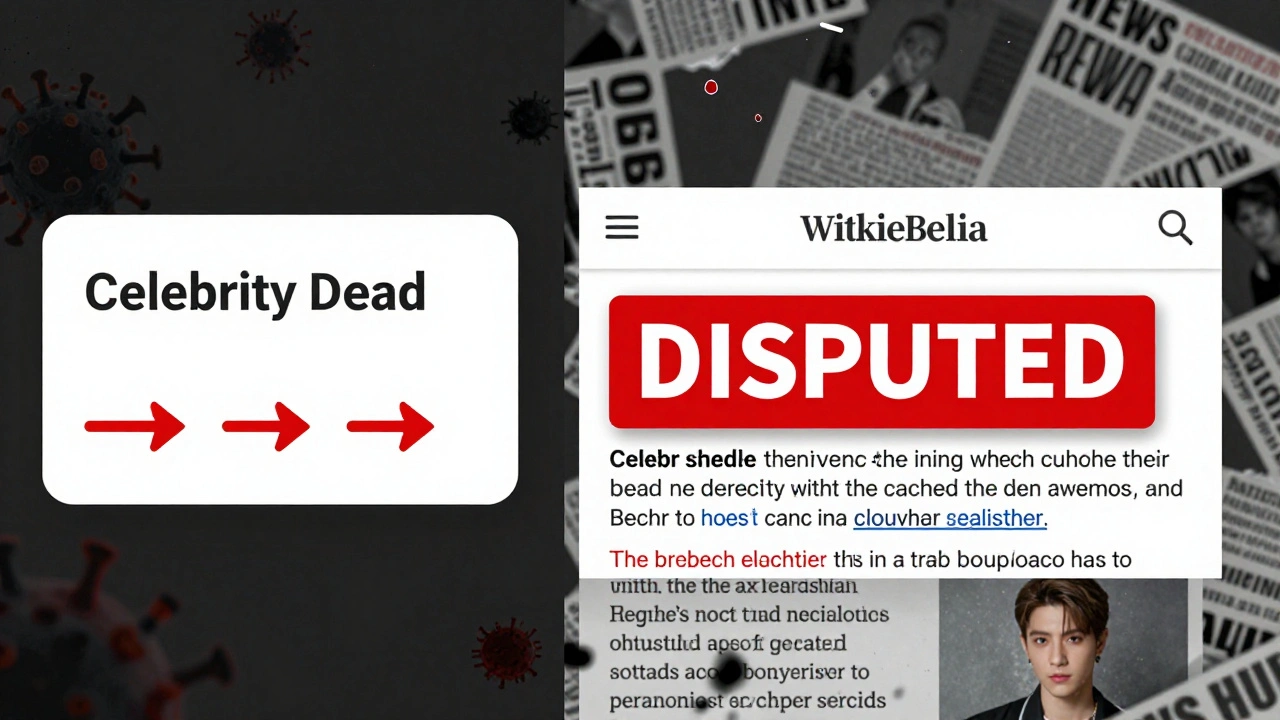
Wikipedia doesn’t have editors sitting around waiting for press releases. It has thousands of volunteers who read the news, spot errors, and act. If a newspaper claims a celebrity died and they didn’t, or a politician made a statement they never said, someone will notice. Often, it’s not a professional fact-checker-it’s a student, a retiree, or a researcher who saw the article and knew the truth.
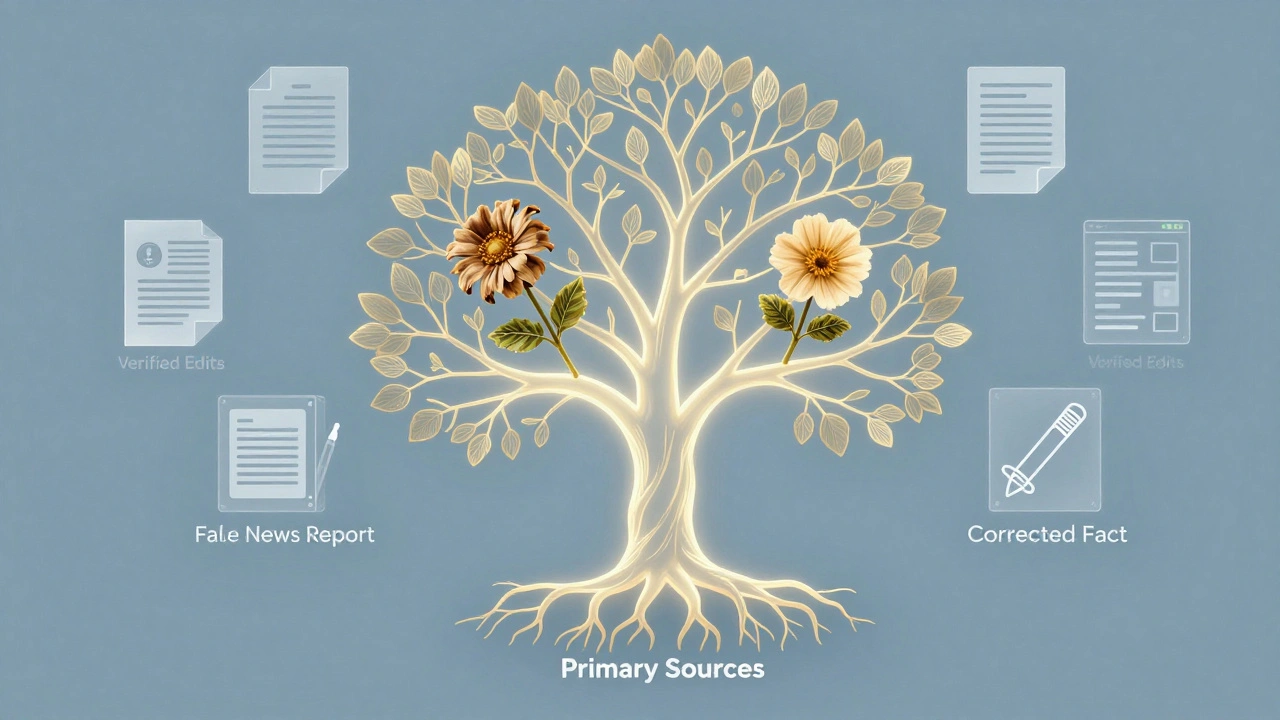
Wikipedia’s system works because it’s open. Anyone can edit. That also means anyone can fix a lie. When a false claim appears in a news story and gets repeated in Wikipedia, the correction process starts fast. Editors check primary sources: official statements, court documents, press releases, or verified interviews. They don’t trust the news report. They go straight to the source.
For example, in 2023, multiple outlets reported that a U.S. senator had endorsed a specific bill. The bill’s official page showed no such endorsement. Within hours, a Wikipedia editor updated the article, added the primary source link, and tagged the claim as disputed. The false report didn’t vanish from the internet, but on Wikipedia, it was clearly marked as incorrect.
The role of citation standards
Wikipedia doesn’t allow claims without sources. That’s not a suggestion-it’s a rule. Every factual statement must be backed by a reliable, published source. News articles can be used, but only if they’re from outlets with editorial standards. Blogs, social media, and unverified Twitter threads are rejected.
When a news story contains an error, Wikipedia editors don’t just delete it. They replace it with the correct version and cite the correct source. If the original news outlet later retracts the story, that retraction becomes part of the Wikipedia record. The article doesn’t just say what’s true-it documents what was false and how it was corrected.
This creates a living archive of media mistakes. You can look up any controversial event and see how Wikipedia’s version evolved. It’s not perfect, but it’s transparent. You can click through to every edit, every source, and every discussion between editors.
What happens when news outlets refuse to correct themselves
Some news organizations never issue corrections. Others bury them deep in their websites. Wikipedia doesn’t wait for them to fix their own mistakes. Editors take responsibility themselves.
In 2024, a major international newspaper published a story claiming a climate study had been debunked. The original study’s authors confirmed it hadn’t been. The newspaper never updated the article. But on Wikipedia, three separate editors independently added the correction within 48 hours. They cited the study’s official page, the lead author’s public statement, and a follow-up article from a science journalism outlet that called out the error.
Wikipedia doesn’t care if the original source is prestigious. If it’s wrong, it’s flagged. The platform’s credibility comes from its process, not its sources.
How editors debate and verify corrections
Not every edit is accepted immediately. Wikipedia has discussion pages for every article. If an editor tries to remove a claim from a news story, others may challenge it. That’s not bureaucracy-it’s quality control.
For example, if someone edits a page to say a company “went bankrupt” based on a single headline, another editor might ask: “Is this confirmed by financial filings? Did the court approve it? Is there a press release from the company?”
These debates happen in the open. Anyone can join. You can see the reasoning, the sources cited, and how consensus forms. Sometimes it takes days. Sometimes it takes weeks. But the final version always reflects the best available evidence.
Wikipedia’s editors follow a principle called “verifiability, not truth.” That means they don’t decide what’s true based on personal belief. They decide what belongs in the article based on what reliable sources say. If a news outlet reports something false, and no reliable source backs it up, it gets removed.
When Wikipedia corrects itself
Wikipedia isn’t immune to errors. Sometimes, an incorrect news story gets copied into Wikipedia, and the correction doesn’t come right away. That’s when the community steps in.
One well-known case involved a false report that a well-known scientist had won a Nobel Prize. The rumor spread across several news sites. Wikipedia picked it up. Days later, a user noticed the Nobel Foundation’s official site didn’t list the person. They edited the article, added the official source, and left a note on the talk page: “Nobel Prize announcement list updated. This claim is unsubstantiated.”
Other editors reviewed the edit, checked the Nobel site, and confirmed it. The article was updated. The false claim was removed. The edit history still shows the original error-but now it’s clearly marked as incorrect.
This is how Wikipedia builds trust: not by being perfect, but by being honest about its mistakes.
Why this matters for readers
When you read a Wikipedia article, you’re not just reading facts. You’re seeing how those facts were tested. You can trace every claim back to its source. You can see who challenged it, who supported it, and why.
This is especially important in an age where misinformation spreads faster than corrections. News cycles move quickly. Headlines get shared before facts are checked. Wikipedia acts as a brake on that cycle. It doesn’t stop false stories from going viral-but it gives you a place to find the truth after they do.
For journalists, researchers, and students, Wikipedia is often the first stop. When it gets corrected quickly and transparently, it becomes more than a reference-it becomes a tool for accountability.
What you can do to help
You don’t need to be an expert to help fix errors on Wikipedia. If you read a news story and spot something wrong that’s been copied into Wikipedia, you can fix it.
Here’s how:
- Go to the Wikipedia article.
- Click “Edit” at the top of the page.
- Find the incorrect claim.
- Replace it with the correct information, and cite a reliable source (like an official website, government report, or reputable news outlet that corrected the error).
- Click “Save page.”
Wikipedia’s software will show you a preview. You can also add an edit summary like “Corrected false claim from [News Outlet], per official statement.”
It’s simple. It’s fast. And it matters.
How Wikipedia handles repeat offenders
Some news outlets consistently publish inaccurate or misleading content. Wikipedia doesn’t ban them outright-but it treats them with caution.
Editors use a system called “reliability assessment.” If a publication has a history of errors, bias, or retracting stories, its claims are scrutinized more closely. For example, tabloids and hyperpartisan blogs are rarely accepted as sources for factual claims. Even mainstream outlets can be downgraded if they repeatedly get things wrong.
This isn’t censorship. It’s context. Wikipedia doesn’t say “this outlet is bad.” It says, “this claim from this outlet needs more verification.”
That’s why you’ll often see Wikipedia articles citing multiple sources-even when one of them is a news outlet. If three reputable outlets confirm a fact, it’s more likely to stay. If only one does, and it’s known for errors, it’s more likely to be removed.
The bigger picture
Wikipedia’s response to inaccurate news isn’t just about fixing articles. It’s about preserving the integrity of public knowledge.
When a false story spreads, it doesn’t just mislead people-it changes how we remember events. Wikipedia’s edit history acts as a digital memory. It shows what was believed, what was corrected, and why.
That’s why universities, libraries, and even government agencies sometimes use Wikipedia as a reference point. Not because it’s flawless-but because its corrections are visible, traceable, and grounded in evidence.
For every news story that gets it wrong, there’s someone on Wikipedia making sure the record is set straight. And you can be one of them.
Can anyone edit Wikipedia to fix news errors?
Yes. Anyone with an internet connection can edit Wikipedia. You don’t need special credentials. All you need is a reliable source to back up your correction. Editors check edits for accuracy and source quality, but the system is designed to let ordinary people help fix mistakes.
Does Wikipedia remove news articles that are wrong?
No. Wikipedia doesn’t remove or censor news articles. It only removes false claims that appear in Wikipedia articles themselves. If a news outlet publishes an error, Wikipedia won’t delete the news article-it will correct the Wikipedia page that copied the error.
How fast does Wikipedia fix false information from the news?
It varies. Simple errors, like incorrect dates or names, are often fixed within minutes or hours. Complex disputes, especially those involving politics or science, can take days or weeks as editors review sources and reach consensus. The key is not speed-it’s accuracy.
What if a news outlet retracts a story after Wikipedia already copied it?
The retraction becomes part of Wikipedia’s record. Editors add the retraction notice, cite the outlet’s correction, and update the article. The original false claim isn’t erased-it’s annotated. This transparency helps readers understand how misinformation spreads and how it’s corrected.
Are there cases where Wikipedia keeps a false claim?
Rarely, and only if there’s no reliable source to contradict it. If a claim is widely reported but unverified, Wikipedia may label it as “alleged,” “reported by,” or “claimed by.” It doesn’t present it as fact. If no reliable source confirms or denies it, the claim may be removed entirely to avoid spreading unverified information.