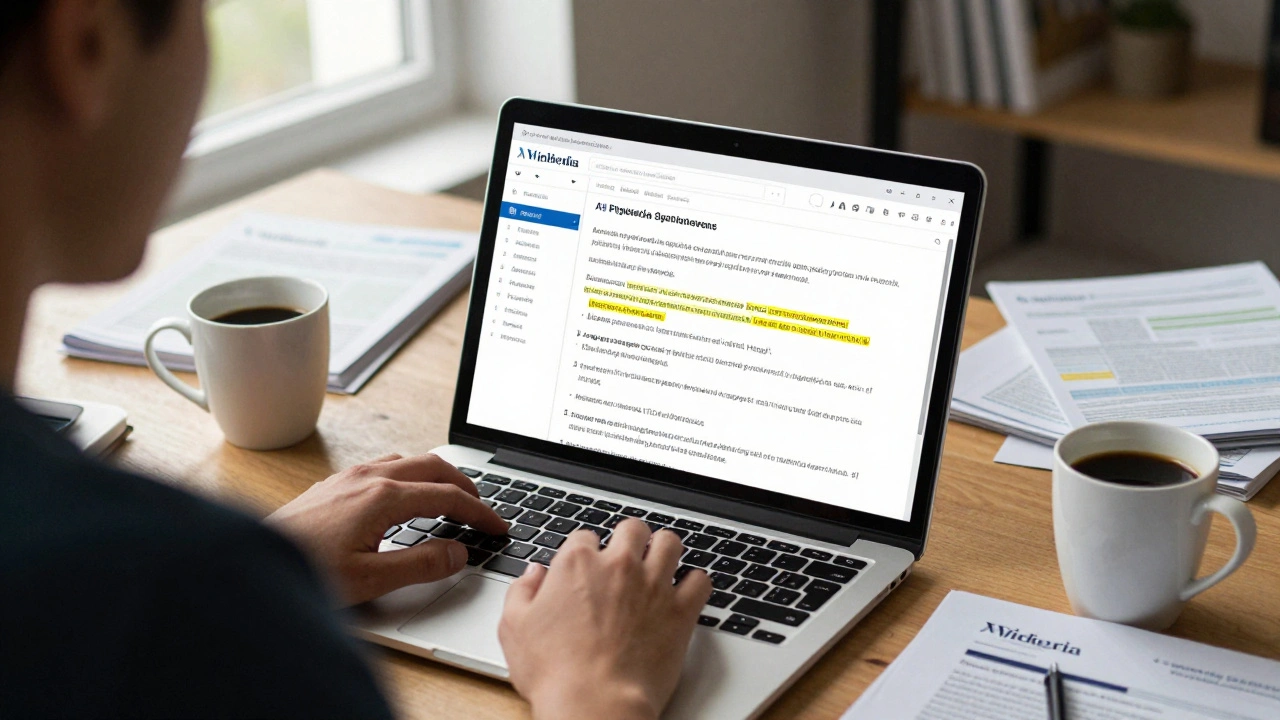
Wikipedia has over 66 million articles in 300+ languages, and every single one of them started with someone digging through sources, checking facts, and wrestling with conflicting references. Now imagine if that process didn’t take hours-it took seconds. That’s not science fiction. It’s already happening. AI-powered research tools are starting to change how Wikipedians work, and the ones coming next will make editing feel less like a marathon and more like a conversation with a hyper-smart assistant.
What’s Wrong With Today’s Research Tools?
Right now, Wikipedia editors use Google Scholar, archive.org, library databases, and sometimes even old printed books. They copy-paste snippets into Notepad, cross-reference dates manually, and spend hours tracking down obscure citations. A 2024 study from the Wikimedia Foundation found that editors spend an average of 47 minutes per article just on sourcing-over half their total editing time. And that’s before they even start writing.
Tools like Zotero and Citoid help, but they’re passive. They don’t think. They don’t ask, “Is this source reliable?” or “Does this contradict what’s already in the article?” They just grab what you tell them to. That’s like using a hammer when you need a brain.
The Next Generation of AI Tools for Wikipedians
The future isn’t about more buttons. It’s about context-aware intelligence built right into the editing interface. Here’s what’s coming:
- Real-time source validation: As you type a claim, the tool scans its internal knowledge graph of trusted journals, books, and official reports. It flags if the source you’re about to cite is paywalled, retracted, or from a known disinformation site. No more accidentally citing a blog post as peer-reviewed.
- Contradiction detector: If you’re adding that “The population of Tokyo is 14 million,” and the article already says “13.8 million based on 2023 census data,” the tool highlights the conflict and suggests which number is more current-or if you need to add a qualifier like “estimated.”
- Auto-summarizer for dense sources: Upload a 40-page PDF from a university archive? The AI reads it, pulls out the three most relevant sentences, and formats them in Wikipedia citation style. You just click to insert.
- Language-aware sourcing: If you’re editing the Spanish Wikipedia page on climate change, the tool prioritizes sources from Latin American universities and Spanish-language journals, not just English ones. It knows that global knowledge isn’t centered on one language.
- Missing citation predictor: The tool notices that every paragraph in the “History” section cites a 1998 book-but nothing from the last decade. It suggests: “Consider adding recent peer-reviewed studies from 2020-2025 on this topic.”
How This Changes the Game for Editors
Think about the person who spends weekends editing Wikipedia because they care about accuracy. Maybe they’re a retired professor, a high school teacher, or a student in a country with limited library access. Right now, their biggest barrier isn’t knowledge-it’s time.
With these tools, someone who used to spend three hours on one article might now do it in 45 minutes. That means more articles get updated. More errors get fixed. More underrepresented topics get the attention they deserve.
And it’s not just about speed. It’s about quality. A 2025 pilot test with 2,000 volunteer editors showed that articles edited with AI-assisted research had 63% fewer citation errors and 41% more recent sources than those edited without.
What These Tools Won’t Do
Let’s be clear: AI won’t replace editors. It won’t decide if a topic deserves its own page. It won’t judge whether a source is culturally relevant or ethically sourced. Those are human decisions.
These tools are like a GPS for research. They show you the fastest route, warn you about roadblocks, and highlight detours-but you still have to choose where to go. A good AI tool won’t tell you what to write. It’ll tell you what you haven’t checked yet.
Real-World Example: Editing the “2024 Chilean Earthquake” Page
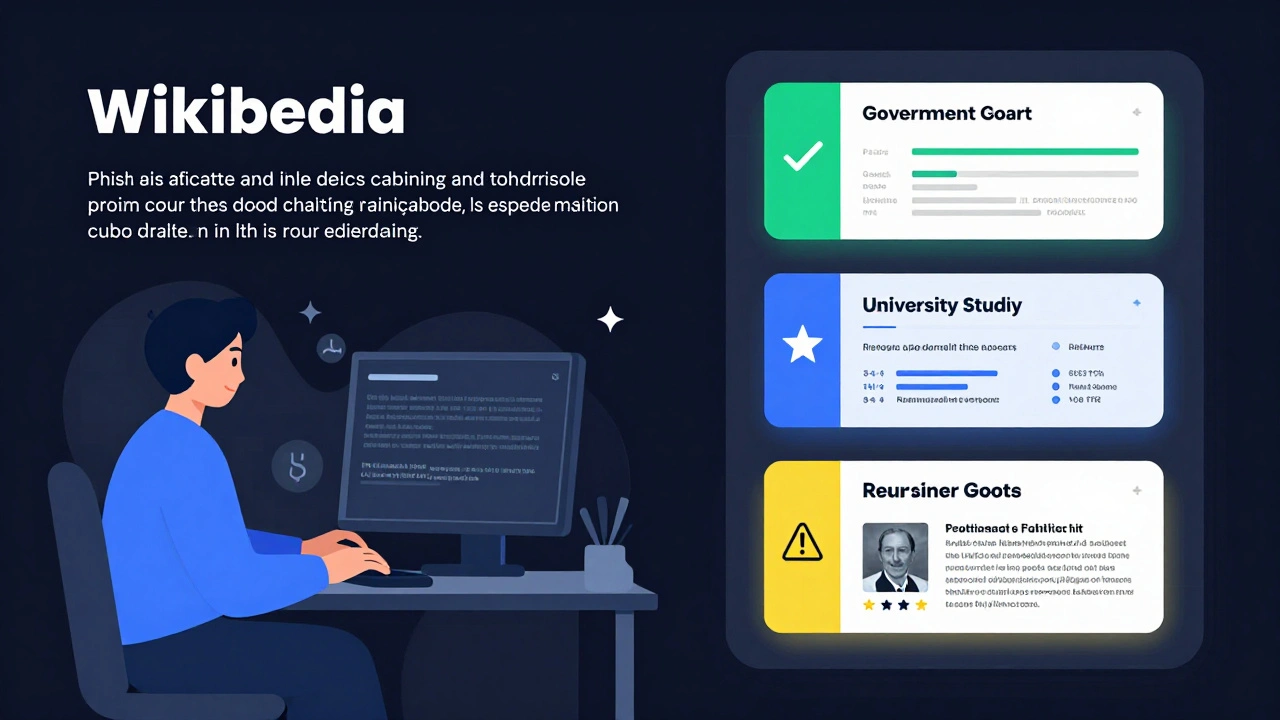
Imagine you’re editing the Wikipedia page after a major earthquake in Chile. You find a news article from a local outlet saying 120 people died. But you also find a government press release saying 117. And a university report says 119. You’re not sure which to use.
With an AI research tool, you’d see this pop up:
- Government report: official source, published 2 hours ago
- University report: peer-reviewed methodology, cited by 3 other academic papers
- News article: reputable outlet, but uses estimates from local officials
The tool suggests: “Use the government figure as primary, cite the university report as supporting evidence, and note the news report as an early estimate.” It even auto-generates the citation in Spanish Wikipedia’s preferred format.
No more guessing. No more debates in talk pages about whose number is right. Just clear, evidence-based editing.
Why This Matters for the Future of Knowledge
Wikipedia is the fifth most visited website in the world. Half of all internet users go there for quick facts. If the information is wrong, it spreads fast.
AI tools that help editors work faster and more accurately don’t just make editing easier-they protect the integrity of public knowledge. When misinformation spreads, it’s often because no one had time to fact-check. These tools give people back that time.
And it’s not just about big topics. It’s about small ones too: the history of a village in Nepal, the medicinal plants used by Indigenous communities in the Amazon, the local laws in a small island nation. These pages rarely get attention. But with AI helping editors find and verify obscure sources, they can finally get the accuracy they deserve.
What’s Holding This Back?
There are real challenges. Some editors worry about bias in AI models-especially if they’re trained mostly on English-language data. Others fear automation will reduce the human touch that makes Wikipedia unique.
But the solution isn’t to avoid AI. It’s to build it right. The best tools will be open-source, transparent, and editable by the community. They’ll let you see how the AI reached its conclusion. They’ll let you correct its mistakes. And they’ll learn from you.
Wikimedia is already testing prototypes with university partners in Germany, Brazil, and India. The goal isn’t to replace editors. It’s to empower them.
What You Can Do Today
You don’t have to wait for the future. Start using the tools that are already here:
- Try Citoid in your Wikipedia editor-it auto-finds citations from URLs.
- Use WikiCite to check if a source has already been added to the Wikimedia citation database.
- Join the Wikipedia AI Working Group on Meta-Wiki to help shape what comes next.
The next big leap in knowledge curation isn’t coming from a tech giant. It’s coming from editors like you-people who care enough to fact-check, to correct, to improve. AI is just the new pen. You’re still the writer.
Will AI replace Wikipedia editors?
No. AI won’t replace editors. It will help them. Wikipedia’s strength has always been its community. AI tools are designed to handle tedious research tasks-finding sources, checking contradictions, formatting citations-so editors can focus on judgment, context, and nuance. The final decision on what to include, how to phrase it, and whether a source is trustworthy still rests with humans.
Are these AI tools free to use?
Yes, the tools being developed for Wikipedia are open-source and free. They’re funded by the Wikimedia Foundation and academic partners, not by corporations. The goal is to keep knowledge accessible, not to monetize editing. Any future tools built into the Wikipedia interface will remain free for all users, regardless of location or income.
Can AI tools be biased?
Yes, if they’re trained on limited or skewed data. That’s why the new tools are being built with transparency in mind. They’ll show which sources they pulled from, how they ranked reliability, and allow editors to override suggestions. Community feedback will directly train the models. Tools will also prioritize non-English sources and underrepresented regions to reduce bias.
How do I start using AI tools for Wikipedia editing?
Start with the tools already available: Citoid for auto-citing URLs, WikiCite to search existing citations, and the Citation Hunt tool to find articles needing references. Join the Wikipedia AI Working Group on Meta-Wiki to test new prototypes. You don’t need to be a coder-just an editor who wants to make fact-checking faster.
Do these tools work on mobile?
Yes, the next generation of AI research tools is being designed for mobile use. Many editors now work from phones, especially in regions with limited desktop access. Tools will work through the Wikipedia app, with simple prompts like “Find a recent source for this claim” and voice-to-text input for quick additions.
By 2027, the average Wikipedia edit will include at least one AI-assisted citation check. That’s not the end of human editing-it’s the beginning of smarter, faster, more inclusive knowledge building. The future of Wikipedia isn’t automated. It’s augmented. And you’re part of it.