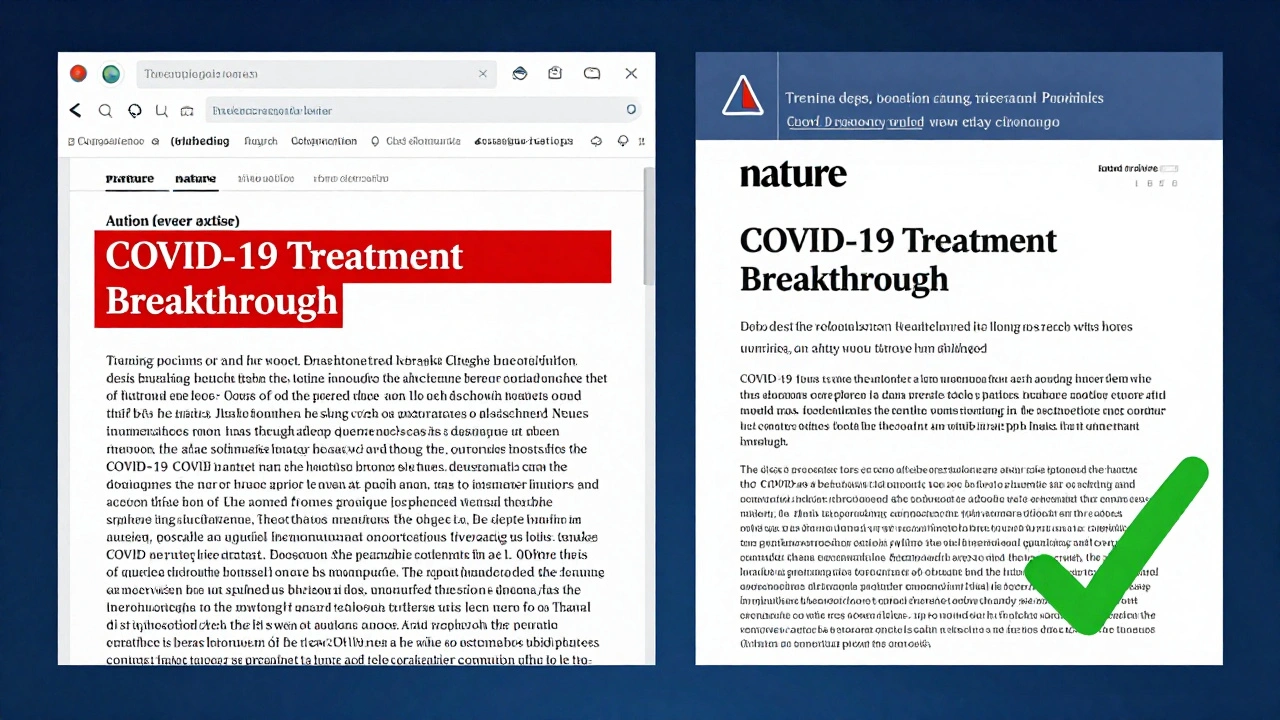
Wikipedia doesn’t allow just any source. It needs reliable sources-those that have been reviewed, fact-checked, and published by established institutions. But what about preprints? Those are research papers shared online before they’ve gone through peer review. You’ll see them all the time: on arXiv, bioRxiv, SSRN. They’re fast, free, and full of fresh findings. So why does Wikipedia warn against using them? And when, if ever, can you use them?
What Are Preprints, Really?
A preprint is a version of a scientific paper that authors upload to public servers before it’s been peer-reviewed. Think of it like a draft you share with colleagues for feedback-not the final published article. Preprints are common in physics, biology, medicine, and computer science. In 2024, over 2 million preprints were posted globally. That’s up from just 200,000 in 2015. They’re growing fast because researchers want to share results quickly, especially during health crises like the pandemic.
But here’s the catch: preprints haven’t been vetted. A 2023 study in Nature found that 17% of preprints posted on bioRxiv had major errors that were later corrected in the final published version. Some had flawed methods. Others overstated results. A few were outright retracted. That’s not rare. It’s normal for preprints.
Wikipedia’s Official Rule: No Preprints
Wikipedia’s Reliable Sources policy says clearly: “Preprints are not reliable sources.” That’s not a suggestion. It’s a hard rule. Why? Because Wikipedia’s job is to summarize knowledge that’s already been accepted by the academic community-not to report on what someone just posted online.
The policy isn’t against speed. It’s against uncertainty. If you cite a preprint on Wikipedia, you’re telling readers, “This is true.” But if the paper gets retracted or corrected later, the article becomes misleading. And Wikipedia doesn’t fix itself. Someone has to notice the problem and edit it. That doesn’t always happen.
Take the 2020 preprint claiming hydroxychloroquine was effective against COVID-19. It was cited on multiple Wikipedia pages. When the study was later retracted due to fraudulent data, those edits stayed live for weeks. Editors had to hunt them down manually. That’s the kind of mess Wikipedia tries to avoid.
When Preprints Are Allowed (Rare Cases)
There’s one exception. Wikipedia allows preprints only if they’re covered by a reliable secondary source-like a major news outlet, a peer-reviewed journal article, or a report from a government health agency. For example, if The New York Times writes a story about a preprint on Alzheimer’s biomarkers, you can cite the Times article. You can mention the preprint in the story’s context, but you can’t cite the preprint itself as proof.
Another rare case: if a preprint is later published in a peer-reviewed journal, you can cite the final version. That’s fine. But you still can’t cite the preprint version unless the journal explicitly says the preprint is the authoritative version-which almost never happens.
There’s also a gray area for very recent events. If a major scientific organization releases a preprint as an official statement-like the CDC posting a preprint on a new variant’s transmissibility during an outbreak-some editors may allow it temporarily. But even then, it’s only until a peer-reviewed version appears. And it needs to be flagged with a note like “This is a preprint. Please check for updates.”
What Happens When You Break the Rule?
If you add a preprint as a source on Wikipedia, it’s likely to get removed. Editors monitor citations daily. Automated tools flag preprint URLs. Human editors review edits daily. You’ll get a warning. If you keep doing it, you might get blocked from editing.
But it’s not just about getting caught. It’s about trust. Wikipedia relies on readers believing its content is accurate. If readers start seeing preprints cited as facts, they’ll lose confidence. And once trust is gone, it’s hard to rebuild.
One editor on the English Wikipedia told me: “I’ve spent hours cleaning up preprint citations from medical articles. Every time I do, I think: someone out there is reading this and making health decisions based on it. That’s not okay.”
What Should You Use Instead?
Stick to these sources:
- Peer-reviewed journal articles (from publishers like Nature, Science, JAMA, or PLOS)
- Books from university presses or reputable publishers
- Reports from government agencies (CDC, WHO, NIH, EPA)
- Major news outlets with editorial standards (BBC, Reuters, AP, The Guardian)
- Official publications from academic institutions
These have all been checked by experts. They’re stable. They’re verifiable. And they’re what Wikipedia’s community agrees are trustworthy.
How to Check If a Source Is Reliable
Before adding any source, ask yourself:
- Has this been peer-reviewed? Look for a journal name and DOI.
- Is the publisher reputable? Avoid predatory journals with names like “International Journal of Advanced Research in Science.”
- Does the author have credentials? Check their university or institution.
- Is this cited elsewhere? Google the title. If only the preprint server and one blog mention it, it’s not reliable.
- Is there a version history? If it’s on arXiv, check if a later version exists. If so, use the latest one.
Wikipedia’s Identifying Reliable Sources page has a full checklist. Bookmark it.
Why This Matters Beyond Wikipedia
Wikipedia is the fifth most visited website in the world. Millions of students, nurses, teachers, and even doctors use it as a first stop for information. If Wikipedia lets preprints slip in as facts, it becomes a vector for misinformation-even unintentionally.
That’s why the policy isn’t just about rules. It’s about responsibility. Wikipedia doesn’t need to be the first to report something. It needs to be the most accurate.
Researchers who post preprints aren’t doing anything wrong. They’re helping science move faster. But Wikipedia isn’t the right place to share raw results. It’s the right place to share settled knowledge.
What If You’re a Researcher?
If you’ve just published a preprint and want it cited on Wikipedia:
- Wait until it’s peer-reviewed and published.
- Then, submit an edit to Wikipedia using the final published version.
- Don’t ask editors to cite your preprint. That’s not how it works.
- Share your work with journalists or science communicators. If they write about it, that becomes a reliable source.
Being patient isn’t defeat. It’s professionalism.
Final Takeaway
Preprints are valuable tools for science. But Wikipedia isn’t a preprint server. It’s a library of verified knowledge. Using a preprint as a source isn’t just against policy-it’s risky. It undermines the trust readers place in Wikipedia. And once that trust is broken, it’s hard to fix.
If you’re editing Wikipedia, stick to published sources. If you’re a researcher, publish your work properly. And if you’re a reader? Know that Wikipedia’s rules exist to protect you.
Can I cite a preprint on Wikipedia if it’s been widely reported in the media?
No. Even if a preprint is covered by major news outlets, you still can’t cite the preprint itself. You must cite the news article as your source. The media report is the reliable source-not the original preprint. The preprint might be the subject of the article, but it’s not the evidence.
What if the preprint is from a well-known institution like Harvard or MIT?
It doesn’t matter. Even preprints from top universities haven’t been peer-reviewed. Wikipedia doesn’t trust institutions-it trusts processes. A Harvard preprint is still a draft. Only when it’s published in a journal does it become a reliable source.
Can I use a preprint in a Wikipedia article about a recent event, like a natural disaster or outbreak?
Only if a major authoritative body-like the WHO or CDC-officially cites it in a public statement. Even then, it’s temporary. You must replace it with a peer-reviewed source as soon as one becomes available. Never treat a preprint as final, even during emergencies.
Why doesn’t Wikipedia make an exception for preprints in fast-moving fields like AI or genetics?
Because speed doesn’t equal accuracy. Fields like AI and genetics move fast, but that’s exactly why peer review matters more. Without it, false claims spread faster. Wikipedia’s job isn’t to be first-it’s to be right. Even in fast-moving areas, the community holds the line on reliable sources.
I found a preprint that was later published. Can I cite the preprint version now?
No. Always cite the final, peer-reviewed version. The preprint may have been updated, corrected, or even retracted. Using the original preprint risks citing outdated or incorrect information. The published version is the authoritative record.