
Imagine walking into a library with millions of books where every single page has typos, missing dates, or outdated facts. Now imagine trying to fix them all by hand. That is essentially the daily reality for Wikipedia, the free online encyclopedia that relies on volunteer editors to maintain over 60 million articles across hundreds of languages. The scale is simply too big for humans alone. This is where artificial intelligence steps in-not as a ghostwriter, but as a tireless assistant that handles the boring, repetitive tasks so human editors can focus on writing and verifying content.
The idea of AI writing Wikipedia articles sounds tempting, but it comes with massive risks. Hallucinations, bias, and copyright violations make automated article generation a no-go for the platform. Instead, the real revolution in Wikipedia maintenance and quality control happens behind the scenes. AI tools are currently used to detect vandalism, organize messy data, translate text, and suggest edits without ever generating the prose itself. Here is how these tools work and why they are changing the way we build knowledge.
The Problem: Why Humans Can’t Do It Alone
To understand why AI assistance is necessary, you have to look at the sheer volume of changes happening on the platform every second. On any given day, there are more than 50,000 edits made to the English-language Wikipedia alone. Most of these are helpful updates, like fixing a typo or adding a new source. But some are malicious. Vandals delete entire pages, insert false information, or add spam links.
Human volunteers, known as patrollers, try to catch these bad edits quickly. However, they cannot monitor every change in real-time. If a vandal deletes a significant portion of an article, it might take hours before a human notices. In that time, readers see incorrect information. This delay is dangerous for topics related to health, politics, or current events. The need for faster detection led to the development of automated systems that can flag suspicious behavior instantly.
ORES: The Spam and Vandalism Detector
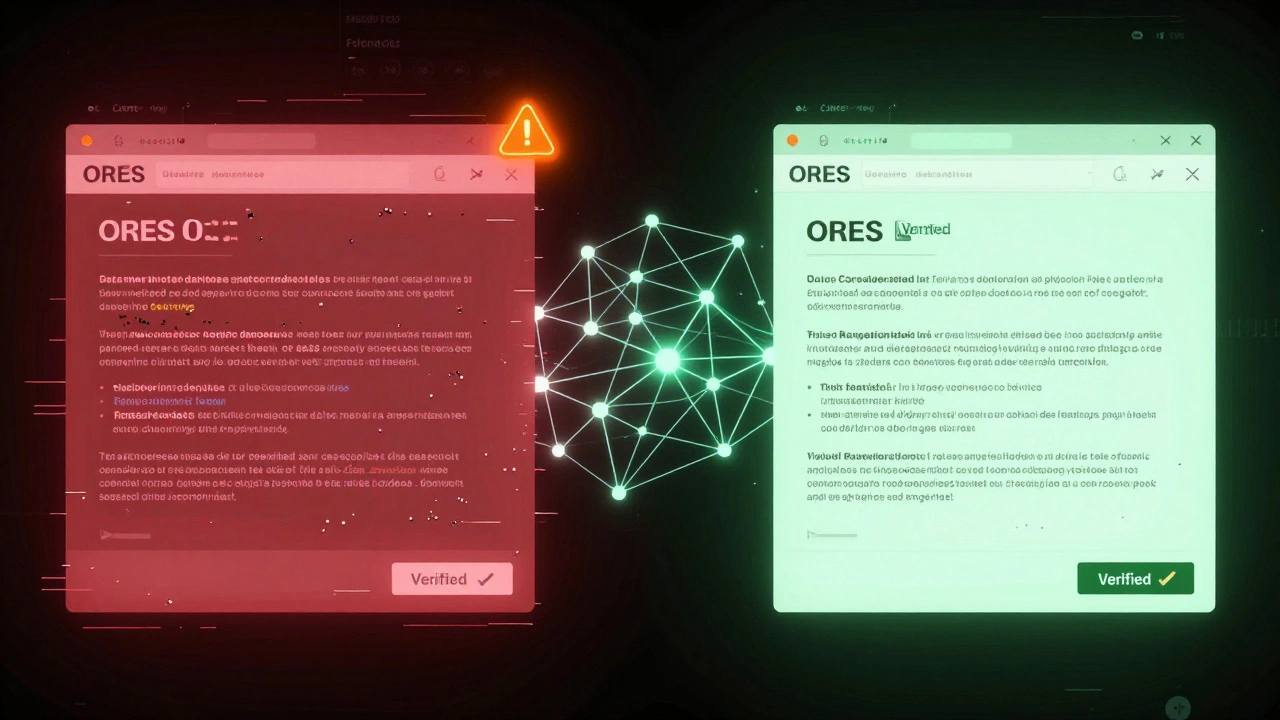
One of the most important AI tools in the Wikipedia ecosystem is ORES (Objective Revision Evaluation Service). Developed by the Wikimedia Foundation, ORES does not write text. Instead, it acts like a security guard. It analyzes edits as they happen and assigns a probability score indicating whether the edit is likely to be constructive or destructive.
ORES looks at several factors to make this judgment. It checks if the editor is new or established. It analyzes the amount of text added or removed. It scans for patterns associated with spam, such as repeated links to specific commercial sites. When ORES flags an edit as high-risk, it doesn't automatically revert it. Instead, it highlights the change for human reviewers. This allows experienced editors to prioritize their time, focusing only on the edits that actually need attention.
This system has drastically reduced the time it takes to remove vandalism. Before ORES, harmful edits often stayed live for minutes or even hours. Now, many are caught within seconds. The tool uses machine learning models trained on millions of past edits labeled by humans. Over time, the model gets better at distinguishing between a clumsy newbie trying to help and a troll trying to cause chaos.
Structured Data and Wikibase Integration
Another area where AI shines is in handling structured data. While Wikipedia articles are written in natural language, much of the factual information-like birth dates, coordinates, and chemical formulas-is stored in a separate database called Wikidata. Wikidata powers infoboxes, the summary tables you see at the top of most biography and product pages.
Keeping Wikidata consistent is a nightmare for humans. A single fact might be referenced in thousands of different Wikipedia articles. If one detail changes, say the population of a city, updating it manually across all those pages is impossible. AI tools help map relationships between entities in Wikidata and ensure consistency. They can identify when two entries refer to the same person or place and merge them correctly.
Furthermore, AI algorithms assist in extracting structured data from unstructured text. For example, an AI tool can scan a newly written article about a historical figure and suggest which dates, locations, and roles should be added to Wikidata. The human editor then reviews these suggestions and approves them. This process keeps the underlying data clean and usable for other applications, from search engines to academic research tools.
Translation and Language Accessibility
Wikipedia exists in over 300 languages, but content distribution is uneven. The English version has millions of articles, while smaller language versions have far fewer. Bridging this gap requires translation, a task that is both time-consuming and difficult for non-native speakers. Neural machine translation (NMT) tools have become essential here.
Tools like Language for All provide AI-assisted translation directly within the Wikipedia editing interface. An editor can select an article from the English Wikipedia, and the AI will generate a draft translation in their native language. Crucially, the AI does not publish this translation automatically. It serves as a starting point. The human editor must review the text, correct errors, adjust tone, and verify sources before publishing.
This approach respects the integrity of the encyclopedia while expanding access to knowledge. It allows editors who are not experts in a subject to contribute by translating existing, verified content. The AI handles the heavy lifting of vocabulary and grammar, while the human ensures cultural relevance and accuracy. This partnership has helped grow smaller language editions significantly, making knowledge accessible to communities that previously had limited resources.
Image Recognition and Media Verification
Wikipedia hosts billions of images, mostly sourced from Wikimedia Commons. Ensuring that these images comply with copyright laws and are appropriately tagged is another massive challenge. AI tools use computer vision to analyze uploaded images. They can detect if an image contains copyrighted material, such as logos or artwork that violates fair use policies.
Additionally, AI helps categorize images based on their content. An algorithm can recognize that a photo shows a bird, a specific species of tree, or a landmark. It then suggests appropriate tags and categories for the file. This makes it easier for users to find relevant media for their articles. Without these tools, many images would remain uncategorized and unusable, buried in a vast digital archive.
The AI also assists in detecting inappropriate content. Automated filters scan uploads for nudity, violence, or hate symbols. While no system is perfect, these filters catch the majority of obvious violations, reducing the burden on human moderators who would otherwise have to review every single upload.
The Human-in-the-Loop Model
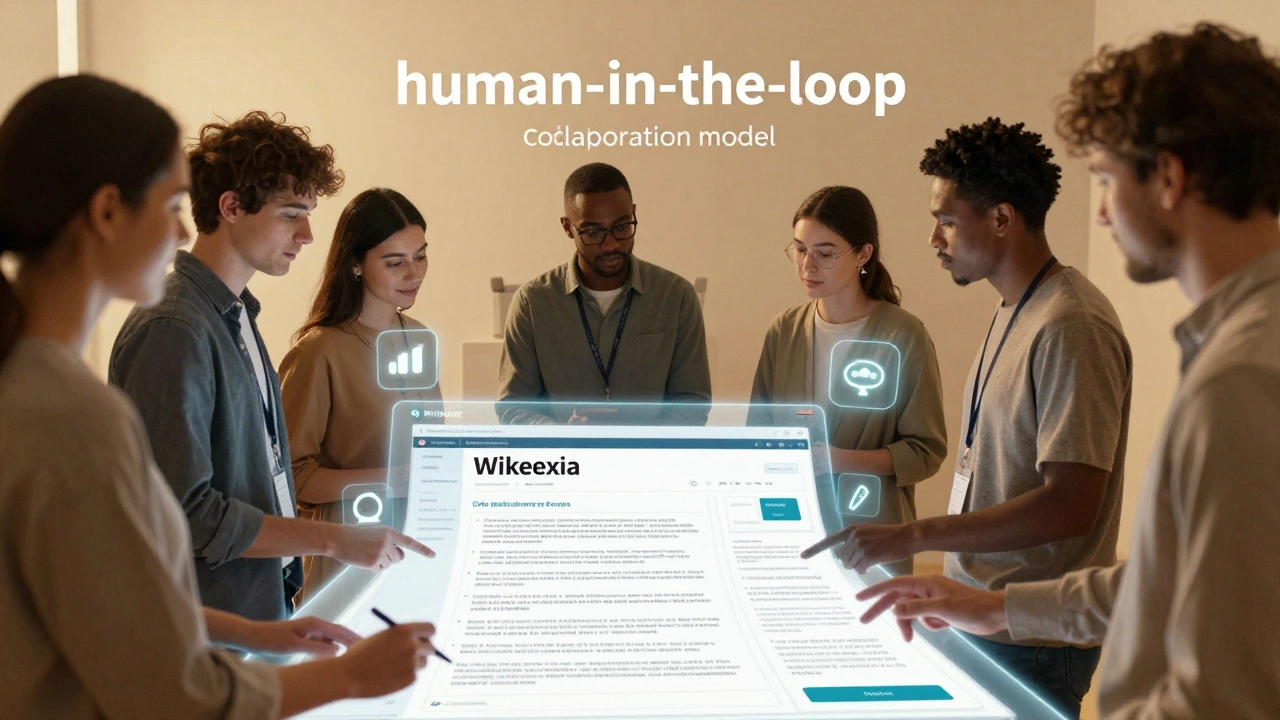
The key to successful AI integration in Wikipedia is the "human-in-the-loop" model. AI never acts alone. Every suggestion, flag, or translation generated by an algorithm must be reviewed by a human before it becomes part of the permanent record. This safeguard prevents the spread of misinformation and maintains the community's trust in the platform.
Editors retain full control over what gets published. If an AI tool suggests a correction, the editor can accept it, modify it, or reject it entirely. This collaboration leverages the speed and scale of machines while preserving the judgment and accountability of humans. It ensures that Wikipedia remains a reliable source of information, even as it grows larger and more complex.
This model also protects against bias. AI systems can inherit biases from their training data. By requiring human oversight, the community can identify and correct biased outputs. For example, if an AI consistently suggests certain phrasing for political figures, editors can intervene and enforce neutral point-of-view guidelines. The combination of AI efficiency and human ethics creates a robust system for maintaining quality.
Ethical Considerations and Community Trust
Introducing AI into a volunteer-driven project raises ethical questions. Some editors worry that automation could devalue human contribution or lead to job losses for paid editors. Others fear that opaque algorithms might make decisions that contradict community norms. To address these concerns, the Wikimedia Foundation emphasizes transparency and community governance.
All AI tools used on Wikipedia are open-source. Anyone can inspect the code, understand how decisions are made, and propose improvements. The community votes on which tools are deployed and under what conditions. This democratic process ensures that technology serves the mission of free knowledge rather than corporate interests. It also builds trust among editors, knowing that they have a say in how AI shapes their workspace.
Moreover, the focus on assistance rather than replacement aligns with Wikipedia's core values. The goal is not to automate editing away, but to empower volunteers to do more with less effort. By removing tedious tasks, AI allows editors to engage more deeply with content creation and verification. This strengthens the community rather than weakening it.
Future Directions for AI in Encyclopedias
As AI technology advances, its role in Wikipedia will continue to evolve. Future tools may offer more sophisticated context understanding, helping editors navigate complex topics with greater ease. Imagine an AI assistant that can summarize conflicting viewpoints in an article, highlighting areas where consensus is needed. Or tools that predict which articles are likely to become targets of coordinated attacks, allowing preemptive protection.
Research is also ongoing into using AI to improve citation quality. Current tools check if a link works, but future systems could analyze the reliability of sources, flagging low-quality blogs or biased news outlets. This would help maintain the high standards of verifiability that Wikipedia is known for. Additionally, AI could assist in identifying gaps in coverage, suggesting topics that lack comprehensive articles based on global interest and available data.
However, the principle remains unchanged: AI will not write the articles. The soul of Wikipedia lies in its human contributors-their passion, expertise, and dedication to sharing knowledge. AI is merely a tool, a powerful lever that amplifies human effort. As long as this balance is maintained, Wikipedia can continue to grow sustainably, serving the world’s curiosity with accuracy and integrity.
Does AI write Wikipedia articles?
No, AI does not write Wikipedia articles. The platform strictly prohibits automated article creation due to risks of hallucination and bias. AI tools are used only for assistance tasks like detecting vandalism, translating text, and organizing data, always requiring human review before publication.
What is ORES on Wikipedia?
ORES (Objective Revision Evaluation Service) is an AI tool developed by the Wikimedia Foundation. It analyzes edits in real-time to detect likely vandalism or spam, flagging suspicious changes for human reviewers to handle efficiently.
How does AI help with translations on Wikipedia?
AI-powered translation tools like Language for All generate draft translations of articles from one language to another. Human editors then review and refine these drafts to ensure accuracy and cultural appropriateness before publishing.
Can AI edit Wikipedia without human approval?
No, AI cannot edit Wikipedia without human approval. All AI-generated suggestions or changes must be reviewed and accepted by human editors. This "human-in-the-loop" model ensures quality and accountability.
Why is Wikidata important for AI tools?
Wikidata stores structured information linked to Wikipedia articles. AI tools use this data to maintain consistency across multiple pages, extract facts from text, and power features like infoboxes, ensuring accurate and up-to-date information.
Is the AI code used on Wikipedia open source?
Yes, all AI tools used on Wikipedia are open-source. This transparency allows anyone to inspect the code, understand how decisions are made, and contribute to improvements, fostering trust within the community.