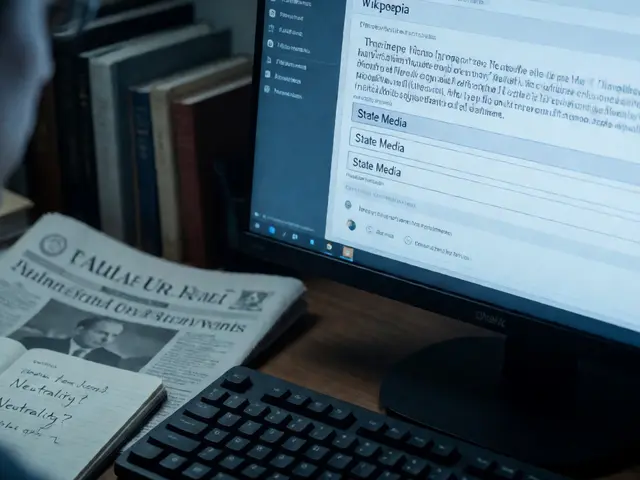
Wikipedia is not just a place to look up facts; it is a massive, living laboratory for human behavior. Every day, millions of edits create a digital trail that reveals how we think, argue, and share knowledge. When you treat Wikipediaa free, web-based, collaborative multilingual encyclopedia project supported by the non-profit Wikimedia Foundation as a dataset, you open doors for researchers across many different fields. You stop asking what is true and start asking why people believe what they write.
Scholars often get stuck in their own silos. A computer scientist might look only at code efficiency, while a sociologist looks only at group dynamics. But the most interesting work happens when these views mix. This approach helps us understand the encyclopedia beyond its pages. It forces us to connect technical systems with human psychology.
Why Disciplines Must Overlap
You cannot fully grasp Wikipedia Researchthe academic study of the processes, community, and content generation of Wikipedia with a single lens. Consider the problem of vandalism. A purely technical solution flags bad edits using algorithms. That stops some damage, but it misses the root cause. Maybe the editor feels ignored. Maybe there is a systemic bias in the policy. That requires social science.
Digital Humanities brings the tools of traditional scholarship to online data. They use text analysis to track how articles change over time. They look at narrative structures. On the other hand, Computer Science focuses on scalability and storage. When you combine them, you see patterns that neither could find alone. For example, understanding why certain topics get updated faster requires looking at both network traffic and cultural relevance.
Computational Methods in Action
Data mining gives you the hard numbers you need to back up your theories. Instead of guessing who contributes the most, you pull the raw edit logs. These logs contain timestamps, IP addresses, and revision histories. By running scripts against this data, you can identify active editors and dormant ones.
Wikimetricsquantitative measurements of activity and quality on Wikipedia play a huge role here. Metrics might include edit counts, retention rates, or reversion speeds. If you combine these with sentiment analysis from discussion pages, you get a clearer picture of community health. You move beyond simple stats to emotional intelligence in a digital crowd.
| Approach | Primary Focus | Key Metric |
|---|---|---|
| Quantitative | Volume of edits | Edit frequency |
| Qualitative | User motivation | Discussion tone |
| Technical | System performance | Server load |
| Social | Community norms | Conflict resolution |
This combination matters because platforms evolve. In earlier years, the focus was mostly on accuracy. Now, the conversation includes equity and representation. Algorithms detect bias, but humans define what bias looks like. You need linguists to help programmers build better filters. Without that collaboration, tools remain blind to nuance.
Social Dynamics and Governance
The rules that guide Wikipedia are created by volunteers. This is a unique form of governance. It operates without central bosses. Studying this requires political science and legal theory. How do groups reach consensus when everyone has a vote? You see real-world democratic experiments happening daily in talk pages.
Researchers analyze these discussions to map influence networks. Some users hold significant sway not because of rank, but because of trust. This concept maps onto Community Governancethe process by which communities establish and enforce rules. It is fascinating to watch how informal hierarchies form. Often, new policies emerge from crises rather than planning. A spike in vandalism triggers a rule change. A controversy over neutrality sparks a debate on sourcing.
Pyschology enters the picture when studying burnout. Editors quit. Why? Is it harassment? Or simply fatigue? Quantitative data shows when an account stops editing. Qualitative interviews explain the feeling of exhaustion. Mixing these datasets allows platforms to design better retention strategies. It shifts the focus from counting contributions to supporting contributors.

Tools for the Modern Scholar
You do not need to be a coder to do research, but you need access to tools. Most datasets are public. The Wikimedia Foundation provides historical dumps. These files contain the full text of every revision ever made. They are large and unwieldy, so you often use wrappers or APIs.
Popular tools include software that visualizes edit patterns. These dashboards let you see spikes in activity around news events. Did an earthquake happen? Did an election start? The graph shows immediate engagement. Machine Learninga subset of artificial intelligence focused on building models from data adds another layer. Models predict which articles will need cleanup or which users might be vandals before they act.
However, relying solely on automated tools carries risks. Algorithms can reinforce existing biases. If the training data comes from male-dominated editing history, the system learns to favor male perspectives. Interdisciplinary teams catch this early. They audit the model outputs for fairness. This ensures that technical progress does not come at the cost of inclusivity.
Ethical Considerations in Research
Using public data raises privacy questions. Even though edits are public, editors might reveal personal information. Anonymization is standard practice, but it requires care. You cannot link an edit to a real person easily, but cross-referencing can sometimes expose identity.
Respectful engagement with the community is mandatory. If you are studying the group, ask the group. Many projects require approval from the local administrators. This isn't just bureaucracy; it builds trust. It prevents research from feeling like surveillance. Ethical guidelines often suggest that findings should benefit the community. Your paper should offer insights that help volunteers improve their experience, not just satisfy academic curiosity.
Case Studies in Collaboration
Look at medical misinformation during health crises. Epidemiologists provide accurate disease data. Wikipedia editors update symptoms and treatment guides. Researchers compare the two to measure information spread. This saves lives. Faster correction of false claims reduces panic.
Another example involves gender gaps. Feminist theorists note the underrepresentation of women in biographies. Data scientists quantify the gap. Together, they launch campaigns to recruit diverse editors. The result is measurable growth in coverage of female figures. This proves that theory and practice need each other. One identifies the problem; the other fixes it.
These collaborations show the power of blending skills. You bring rigor from statistics. They bring depth from theory. The project moves forward faster. Students learn to speak multiple academic languages. They become more versatile researchers.
Future Directions and Challenges
The landscape changes quickly. As of 2026, AI-generated content poses new challenges. Can machines write perfect articles? If so, what is the role of humans? Research must adapt to distinguish human effort from synthetic text. Forensic linguistics helps here.
We also face the challenge of scale. The wiki grows larger every year. Storing petabytes of revision history requires advanced infrastructure. Open Science practices encourage sharing these resources globally. Data repositories become essential hubs for replication studies. Other scholars can verify your results by accessing the same raw material.
Ultimately, the goal remains knowledge. We study Wikipedia to understand how knowledge is built. Is it reliable? Is it fair? Is it sustainable? No single discipline holds all the answers. By working together, we ensure the platform serves humanity well.