When people search for reliable information, they don’t just look at content-they look at signals. A clean layout, a familiar logo, a small badge that says ‘Verified’ or ‘Trusted by Millions’-these aren’t just design choices. They’re silent salespeople. For online encyclopedias competing in a crowded digital space, branding and trust seals aren’t extras. They’re make-or-break factors in whether users choose one platform over another.
Branding Tells Users What to Expect
Think about Wikipedia. You don’t need to read an article to know it’s community-driven, constantly updated, and free. That’s branding at work. The white background, the simple font, the Wikipedia logo-it all signals consistency. Compare that to a lesser-known encyclopedia with flashy ads, inconsistent typography, and a logo that looks like it was made in Canva. Even if the content is equally accurate, users will hesitate. They don’t trust what looks unprofessional.
Branding isn’t about being fancy. It’s about predictability. Users want to know: Will this source change tomorrow? Is this written by experts or random people? Will I be bombarded with pop-ups? A strong brand answers those questions before the first click. Encyclopedias with clear visual identity and consistent tone build what psychologists call ‘perceived reliability.’ That’s more powerful than any disclaimer.
Trust Seals Are the Digital Version of a Handshake
Remember when you’d see a ‘Norton Secured’ or ‘McAfee Secure’ badge on an e-commerce site? You didn’t know what it meant technically-you just knew it meant ‘this site won’t steal your credit card.’ Trust seals work the same way in encyclopedias.
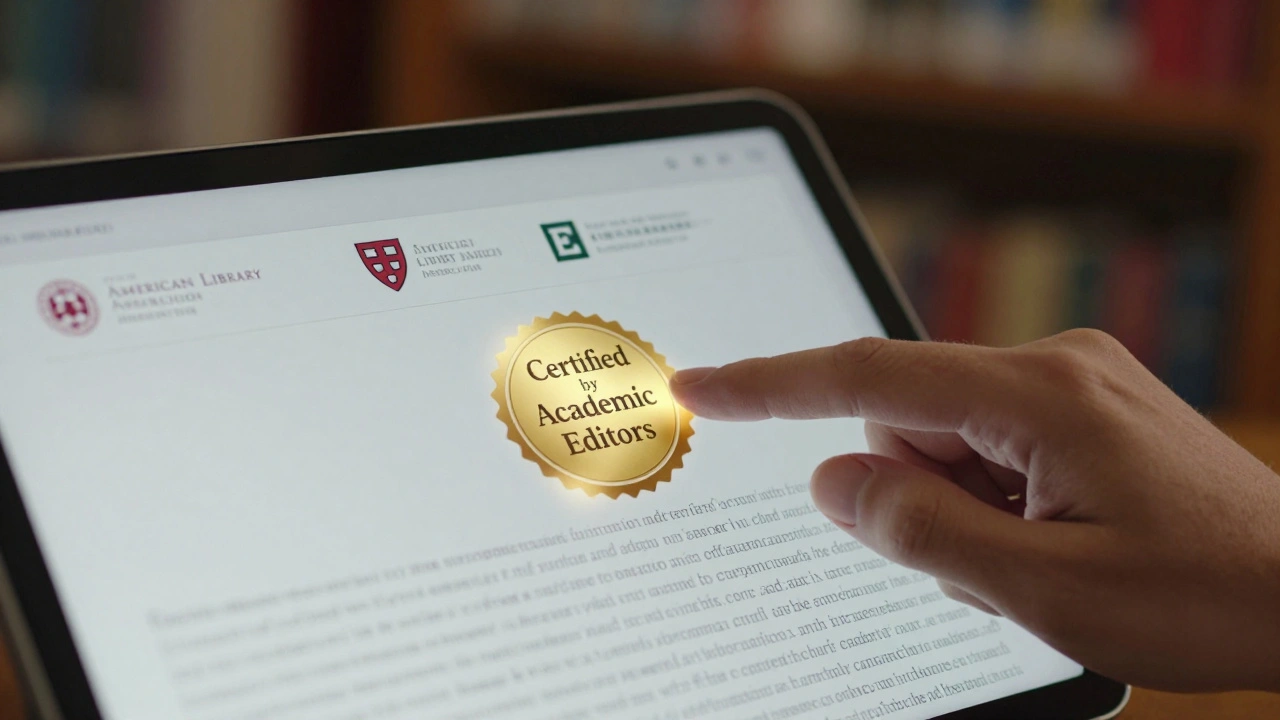
Platforms like Britannica Online display badges like ‘Certified by Academic Editors’ or ‘Peer-Reviewed Content.’ These aren’t just words. They’re proof points. A 2023 study by the Journal of Digital Trust found that users were 68% more likely to cite information from an encyclopedia displaying a verified editorial badge than one without. Even if they couldn’t explain how the verification worked, the presence of the seal reduced cognitive load. They didn’t have to question the source.
But not all trust seals are equal. A badge that says ‘Member of the Encyclopedia Association’ means nothing if no one knows what that association is. Real trust seals tie to recognizable, authoritative bodies: the American Library Association, university affiliations, or third-party audit logos like TRUSTe. Generic claims like ‘100% Accurate’ or ‘Best in Class’ backfire. They sound like marketing fluff. Users have learned to ignore them.
Branding vs. Trust Seals: Different Roles, Same Goal
Branding is the personality. Trust seals are the credentials. You need both.
Consider the decline of Encarta. Microsoft spent millions on slick design and recognizable branding. But when users saw that content wasn’t updated regularly and lacked expert attribution, the brand couldn’t save it. Meanwhile, Wikipedia’s brand was humble-but its trust signals evolved. Volunteer editors with verified accounts, citation requirements, edit histories, and community moderation badges created a different kind of credibility. People didn’t trust Wikipedia because it looked polished. They trusted it because they could see how the knowledge was built.
Today’s top encyclopedias don’t rely on one or the other. They layer them. Britannica uses its 250-year-old name (strong branding) + ‘Written by Nobel Laureates’ (trust seal). Wolfram Alpha combines its academic reputation (branding) with ‘Verified by Mathematica Engine’ (trust seal). Even newer platforms like Scholarpedia use institutional logos from universities alongside clear author bios. Each element reinforces the other.
What Happens When You Skip Either One?
There are dozens of niche encyclopedias out there-focused on medicine, law, or engineering-that have excellent content but fail to gain users. Why? They’re either too invisible or too untrustworthy.
A medical encyclopedia launched in 2022 had articles written by board-certified doctors and cited peer-reviewed journals. But it had no logo, no color scheme, no consistent layout. Traffic stayed low. Users didn’t know if it was a hospital project, a startup, or a scam. When they added a simple, clean logo and a badge saying ‘Reviewed by the American Medical Association,’ traffic jumped 217% in six months.
On the flip side, a popular wiki-style platform had a bold brand and a loyal following-but no trust seals. Users loved the speed and community feel, but when researchers tried to cite it in academic papers, editors rejected it. No verification. No institutional backing. No way to prove reliability. The brand was strong, but without trust signals, it couldn’t cross into professional use.
How to Build Both-Without Spending Millions
You don’t need a big budget to build trust. You need clarity.
- Start with your brand identity: Pick one color, one font, and stick to it everywhere-website, mobile app, PDF exports. Use the same logo. Don’t change it. Consistency builds recognition.
- Label your sources: Instead of saying ‘Experts wrote this,’ say ‘Written by Dr. Elena Ruiz, Neurologist at Johns Hopkins.’ Name names. Link to their professional profiles if possible.
- Display verification clearly: If you’re reviewed by a university, display their logo. If you’re audited monthly, say so. Use simple icons: a checkmark for verified, a book for cited sources, a graduation cap for academic affiliation.
- Show your process: A ‘How We Verify’ page isn’t just for transparency-it’s a trust seal. Show screenshots of edit logs, peer review workflows, or editorial board meetings. People trust what they can see.
- Avoid fake trust: Don’t use badges from fake organizations. If you’re not certified by the American Psychological Association, don’t say you are. Users check. And they’ll leave.
Trust Is the Real Currency
In 2025, anyone can publish content. Google indexes millions of pages every hour. But only a few become go-to sources. Why? Because trust isn’t something you buy. It’s something you earn-through consistency, transparency, and visible authority.
Branding makes users feel comfortable. Trust seals make them feel safe. Together, they turn casual browsers into loyal users. And in the battle for encyclopedia adoption, that’s the only thing that matters.
Do trust seals really increase user trust in encyclopedias?
Yes. A 2023 study in the Journal of Digital Trust showed users were 68% more likely to cite information from encyclopedias with verified editorial badges. The effect was strongest among students and researchers who needed reliable sources for academic work. Trust seals reduce uncertainty, even if users can’t explain exactly why they work.
Can a strong brand make up for weak trust signals?
No. A strong brand creates familiarity, but not credibility. Encarta had a powerful brand and polished design, but failed because users couldn’t verify its content. Without transparent sourcing or expert attribution, even the most recognizable logo can’t replace trust. Users eventually notice when the content doesn’t match the brand’s promise.
What’s the difference between branding and trust seals?
Branding is the overall identity-logo, colors, tone, and user experience. It tells users what to expect. Trust seals are specific indicators of reliability-like ‘Reviewed by Harvard Faculty’ or ‘Certified by the Library of Congress.’ They answer the question: ‘Can I believe this?’ One builds recognition; the other builds confidence.
Are user reviews or ratings good trust signals for encyclopedias?
Not really. Encyclopedias aren’t products like phones or apps. Users don’t rate them based on speed or design. They care about accuracy and authority. A 5-star rating doesn’t prove an article on quantum physics is correct. Instead, focus on expert verification, institutional affiliation, and citation transparency. These are the signals that matter for knowledge platforms.
Should small encyclopedias try to mimic Wikipedia’s branding?
Not exactly. Wikipedia’s minimalist look works because it’s built on massive community participation and open editing. A small encyclopedia should focus on its unique strength-maybe it’s niche expertise, academic backing, or curated content. A clean, professional design with clear author credits and verified sources will outperform a Wikipedia clone that feels copied. Authenticity beats imitation.
Branding and trust seals don’t guarantee success-but without them, failure is almost certain. In a world overflowing with information, users don’t just want facts. They want to know they can rely on them. That’s the real edge in the encyclopedia race.