You’re staring at two different numbers. One source says the earthquake was a 7.2 magnitude; another claims it was 6.8. A witness on Twitter says the suspect fled north; the police scanner says south. It’s 2:00 AM, your lead story is about to go live, and you have ten minutes to decide what goes on the homepage. This isn’t just a technical glitch-it’s the core crisis of modern news editing during developing stories.
If you’ve ever worked in a newsroom, you know that clarity is a luxury we rarely get until after the dust settles. The real job isn’t just fixing typos; it’s navigating the fog of war where facts shift by the minute. How do editors keep their heads when the ground beneath them keeps moving? It comes down to a specific set of mental models and rigid protocols that separate professional journalism from rumor mills.
The First Rule: Kill Your Darlings (And Your Ego)
Here’s a hard truth: being first is less important than being right. In the age of social media, the pressure to publish immediately is crushing. But an editor who publishes unverified data often has to issue corrections later, which erodes trust faster than waiting an extra hour does.
When conflicting information hits your desk, the first step is emotional detachment. You might have spent three hours chasing a specific angle. If new evidence contradicts that angle, you have to let it go. I’ve seen editors cling to a narrative because they were emotionally invested in the scoop, ignoring a clearer signal from a primary source. Don’t be that editor.
- Pause the impulse: Before hitting "publish," ask yourself: "Do I actually know this, or do I just want this to be true?"
- Separate confirmation from speculation: Just because a reporter saw a tweet doesn’t mean it’s confirmed fact. Treat social media as leads, not sources.
- Accept ambiguity: Sometimes, the most honest headline is one that admits we don’t know yet. "Authorities Investigating Cause" is safer than "Gas Leak Caused Explosion" if you haven’t verified the cause.
The Two-Source Rule Is Not Enough Anymore
We all learned the "two-source rule" in J-school. Get two independent sources to confirm a fact before publishing. That’s still the baseline, but in fast-moving crises, it’s often insufficient. Why? Because both sources might be wrong, or worse, they might be echoing the same flawed initial report.
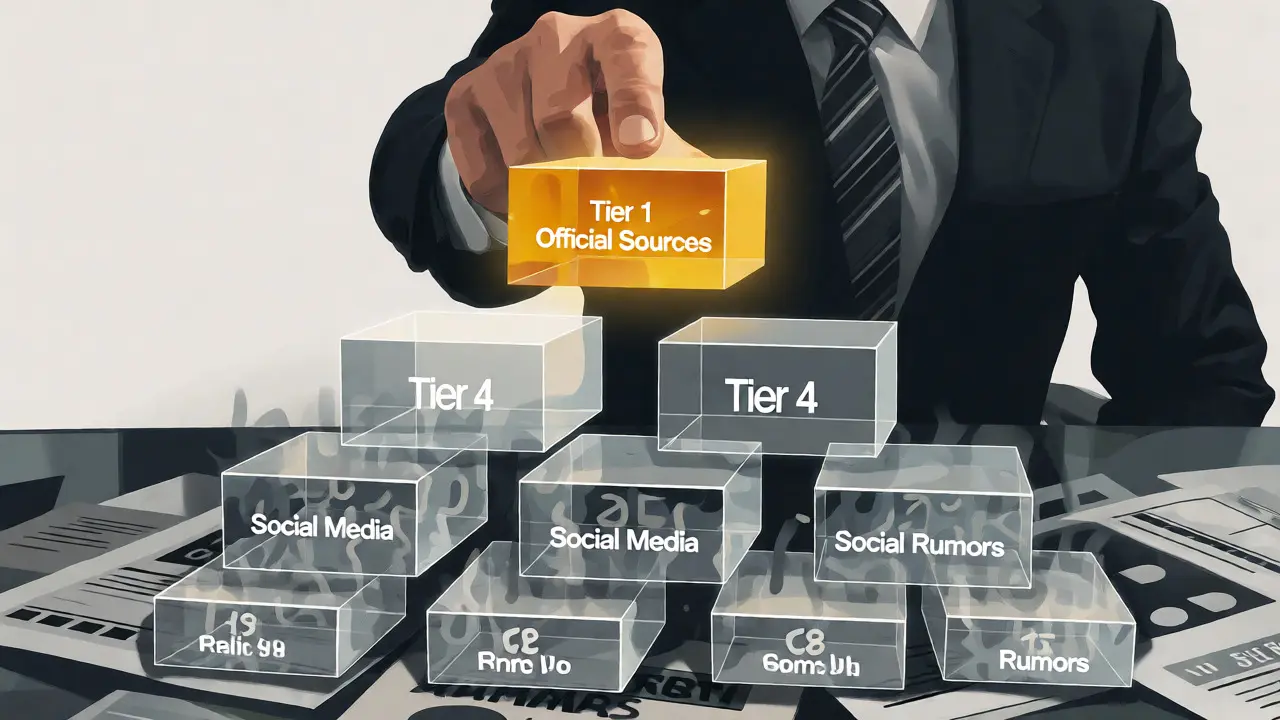
Instead, think in terms of source hierarchy. Not all sources are created equal. A direct quote from the fire chief on scene carries more weight than a secondary report from a local blog, even if the blog posted it first. When conflicts arise, weigh the reliability of the source over the recency of the post.
| Tier | Source Type | Verification Action |
|---|---|---|
| Tier 1 | Primary Official (Police, Fire, Hospital Spokesperson) | Cross-reference with official press releases or live briefings. |
| Tier 2 | Eyewitnesses with Direct Access (On-scene reporters, bystanders) | Corroborate visual evidence (photos/videos) with metadata. |
| Tier 3 | Secondary Media (Other news outlets, blogs) | Check original attribution. Did they cite Tier 1 or 2? |
| Tier 4 | Social Media Rumors (Twitter/X, TikTok trends) | Treat as leads only. Never publish without Tier 1/2 backup. |
If you have a Tier 1 source saying one thing and a Tier 4 source screaming something else, ignore the noise. Trust the chain of command, not the volume of tweets.
Contextualizing Conflicts: The "What We Know vs. What We Don't" Box
One of the most effective tools for handling conflicting info is transparency. Instead of hiding the uncertainty, show it. Many major outlets now use a "Developing Story" banner paired with a sidebar titled "What We Know So Far." This structure allows you to publish partial truths without misleading the reader.
For example, if reports conflict on the number of casualties, don’t guess. Write: "Initial reports suggested five injuries, but hospital officials have since updated the count to twelve. Authorities are still assessing the full scope." This approach builds credibility because you’re showing your work. Readers appreciate honesty about limitations more than false precision.
This method also protects you legally and reputationally. If you state a fact definitively and it turns out wrong, you’ve made an error. If you present it as "initial reports indicated," you’re accurately reporting the state of knowledge at that moment.
Leveraging Technology Without Losing Judgment
Newsrooms today rely heavily on digital tools to aggregate information. Tools like Dataminr or TweetDeck can flood your screen with alerts. But algorithms don’t understand nuance. They see keywords, not context.
I’ve watched junior editors panic because an algorithm flagged a spike in mentions of a politician’s name, assuming a scandal. In reality, the spike was due to a viral meme unrelated to policy. Technology should accelerate your search for verification, not replace it. Use these tools to find potential witnesses or documents, then call them. Pick up the phone. Email the press officer. Go to the source.
Consider this scenario: A video goes viral showing a protest turning violent. The caption says "Police brutality." But the timestamp is off by six months. Automated tools might miss this. Human judgment catches it. Always check the metadata of user-generated content. Reverse image searches are your best friend when dealing with conflicting visual evidence.
The Role of the Editor-in-Chief: Making the Call
At some point, someone has to make the final decision. In smaller newsrooms, that’s often the managing editor or the section head. In larger organizations, there’s a rapid-response team. Regardless of size, the person making the call needs a clear framework.
Ask three questions before approving a story with conflicting details:
- Is the conflict material? Does the difference between 50 injured and 60 injured change the story’s impact? If not, perhaps wait for the exact number rather than delaying the whole piece.
- Can we hedge safely? Can we phrase the sentence so it remains accurate regardless of the outcome? (e.g., "dozens injured" instead of "52 injured").
- What is the cost of being wrong? If we publish X and it’s wrong, will we lose advertisers, readers, or legal standing? If the cost is high, hold back.
This triage process prevents paralysis. You don’t need perfect information; you need sufficient confidence relative to the risk.

Communication Within the Newsroom
Conflicting information creates chaos if the team isn’t aligned. Imagine Reporter A files a draft saying the suspect was arrested. Reporter B is live-tweeting that the suspect is at large. The copy editor is confused. The producer is angry. Everyone is working against each other.
Effective newsrooms use shared dashboards or Slack channels dedicated to specific breaking stories. All updates go there. If new info conflicts, it’s flagged immediately. No one works in a silo. Regular stand-ups-every 30 minutes during major crises-ensure everyone is on the same page.
As an editor, your job is to synthesize these inputs. You’re the filter. You tell Reporter A, "Hold that arrest detail until we hear from the precinct." You tell Reporter B, "Keep tweeting, but label it 'unconfirmed.'" Clear communication stops internal friction from leaking into the final product.
Long-Term Impact: Building Trust Through Transparency
Handling conflicting info isn’t just about getting today’s story right. It’s about building long-term authority. Audiences are smart. They remember when you corrected yourself quickly and honestly. They forget minor delays, but they never forgive arrogance.
When a story evolves, update the article visibly. Add timestamps to updates. "Updated at 10:15 AM: Police confirm suspect identity." This shows you’re active and responsive. It turns a potential mistake into a demonstration of diligence.
In the end, editorial integrity is about respecting the reader’s intelligence. You don’t need to know everything instantly. You just need to know what you know, admit what you don’t, and correct the record when the picture clears up.
Should I delay a story if I have conflicting casualty numbers?
Not necessarily. If the event itself is confirmed, you can publish the main story using ranges (e.g., "several dozen") or attributing the figures to specific sources ("According to the Red Cross..."). Delay the entire story only if the core premise (like whether an explosion happened at all) is in doubt.
How do I verify social media claims quickly?
Use reverse image searches to check if photos are old. Check the account’s history for previous accuracy. Look for corroboration from local journalists or official accounts. If possible, contact the person who posted it directly via DM or phone to ask for permission and context.
What is the biggest mistake editors make with breaking news?
The biggest mistake is confusing speed with accuracy. Editors often feel pressured to match competitors’ posting times, leading to the publication of unverified rumors. It is better to be second and right than first and wrong, especially on sensitive topics like death tolls or criminal accusations.
How should corrections be handled for early errors?
Be transparent. Add an editor’s note at the top or bottom of the article explaining what changed and why. Do not silently delete the error. Acknowledging the correction publicly reinforces trust and shows that your newsroom values accuracy over saving face.
Does the two-source rule apply to eyewitness accounts?
Yes, but with caution. Eyewitness memory is fallible, especially under stress. Try to corroborate eyewitness accounts with physical evidence (video, photos) or official records. Relying solely on multiple eyewitnesses who may have influenced each other is risky.