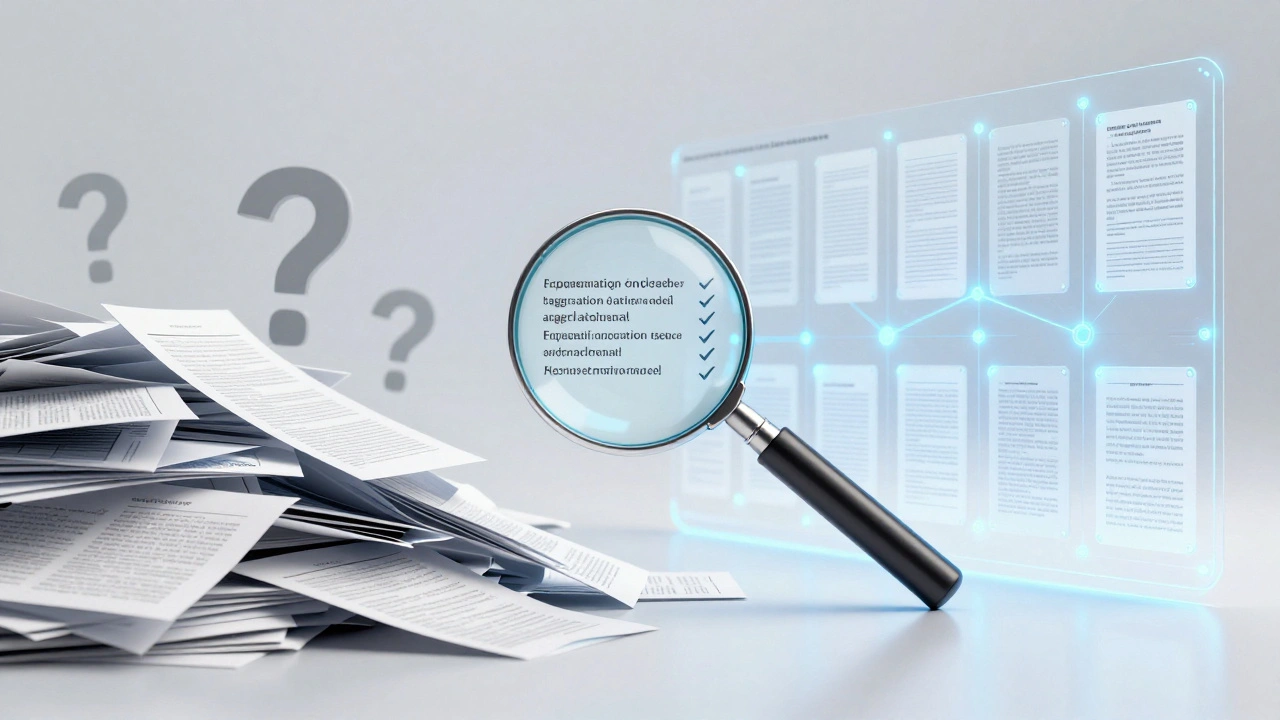
Imagine you are reading an article about a historical event. The text looks professional. It has citations. It feels authoritative. But what if the source is fabricated? In 2026, this is not a hypothetical nightmare; it is a daily reality for millions of readers. Disinformation is false or misleading information that is deliberately created and spread to deceive people. It thrives in the gaps between traditional media and modern digital platforms. For decades, online encyclopedias like Wikipedia have served as the starting point for research for billions of users worldwide. However, their open-edit model makes them vulnerable to manipulation. Meanwhile, professional fact-checkers at organizations like Snopes and PolitiFact spend hours verifying single claims with rigorous methodologies. What happens when these two worlds collide? Can the static, comprehensive nature of encyclopedias adopt the dynamic, investigative rigor of fact-checking? The answer lies in structural changes, not just good intentions.
The Structural Gap Between Encyclopedias and Fact-Checkers
To understand how to fix the problem, we first need to see why the current system fails. Traditional encyclopedias operate on a model of aggregation. They collect existing knowledge, summarize it, and present it neutrally. This works well for established facts, like the boiling point of water or the date of the French Revolution. It breaks down completely when dealing with emerging events, political controversies, or scientific debates where consensus is still forming.
Fact-checkers, on the other hand, operate on a model of verification. They do not assume the premise of a claim is true. They start from zero. A fact-checker does not ask, "What is the summary of this politician's speech?" They ask, "Did this politician say this? Is the statistic cited accurate? Is the context omitted?" This fundamental difference in approach creates a blind spot for encyclopedias. When an encyclopedia editor encounters a disputed claim, they often fall back on "both sides" neutrality, presenting conflicting views without weighing their evidentiary value. This gives equal weight to verified facts and demonstrable falsehoods, which is exactly what disinformation campaigns rely on.
The gap is not just philosophical; it is operational. Fact-checking requires specific skills: archival research, statistical literacy, and understanding of legal documents. Most encyclopedia editors are volunteers with varying levels of expertise. While many are highly knowledgeable, few have the training to detect sophisticated manipulation techniques like deepfakes, doctored images, or subtle logical fallacies embedded in complex narratives.
Adopting the Claim-Based Verification Model
The most immediate lesson encyclopedias can learn is to shift from summarizing narratives to verifying individual claims. Instead of writing a paragraph that says, "Critics argue that Policy X failed because it increased unemployment," an encyclopedia entry should break this down into verifiable units. Did unemployment increase? Was the increase statistically significant? Was it directly caused by Policy X, or were there other economic factors?
This approach mirrors the work of organizations like the Poynter Institute, a leading center for journalism education that promotes ethical standards and fact-checking techniques globally. Poynter advocates for transparency in sourcing. Every claim should be linked to its primary source. If a source is secondary, it must be traced back to the original data. Encyclopedias can implement this by requiring "claim-level citations." Currently, a citation at the end of a paragraph might support only one sentence while leaving others unverified. Claim-level citation forces every factual assertion to stand on its own merit.
Consider the case of health misinformation during recent pandemics. Many encyclopedia articles summarized various theories about treatments without clearly distinguishing between peer-reviewed clinical trials and anecdotal reports. A fact-checking approach would label each treatment with its evidence grade: "Proven effective," "Under study," or "Debunked." This adds a layer of semantic clarity that pure neutrality lacks. Readers need to know not just what people are saying, but what is actually true.
Integrating Real-Time Detection Tools
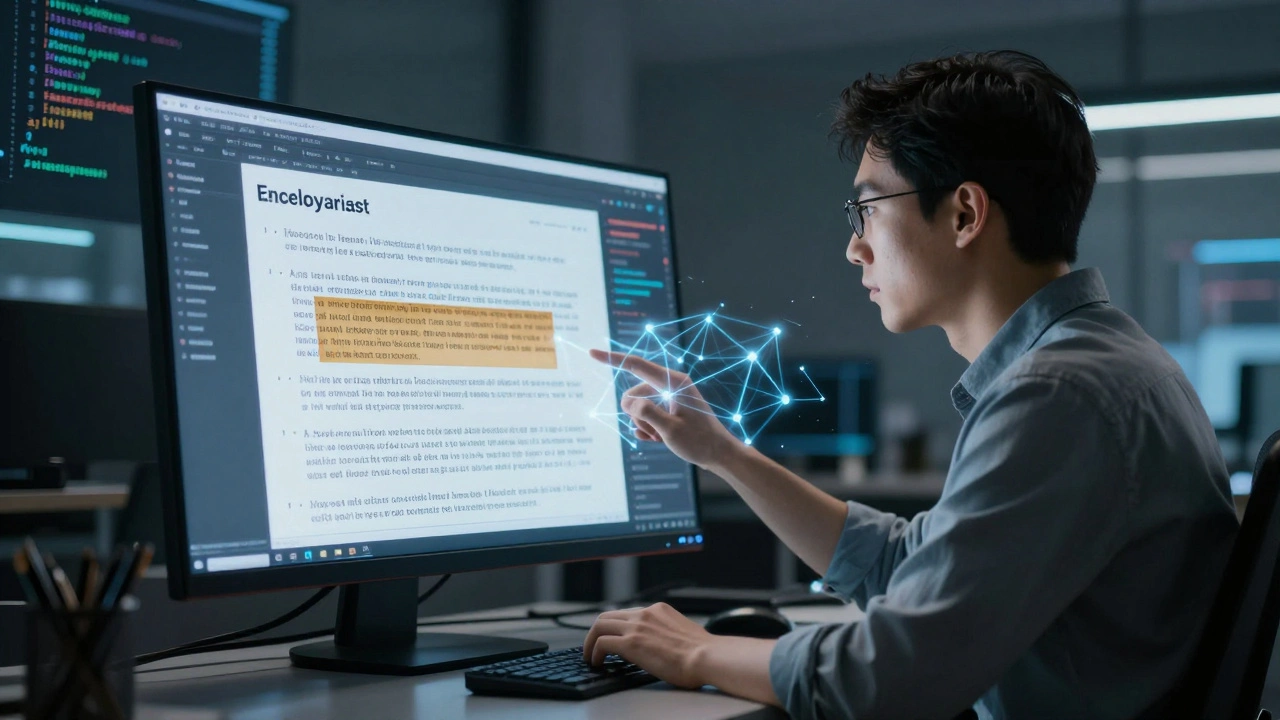
Human effort alone cannot keep up with the volume of edits on large-scale encyclopedias. This is where technology bridges the gap. Fact-checking organizations increasingly use automated tools to flag suspicious content. Encyclopedias can integrate similar systems directly into their editing interfaces. Imagine an editor typing a sentence about a controversial event. An AI assistant analyzes the text against known databases of verified facts and flagged disinformation patterns. If the editor writes something that contradicts established records or matches known fake news templates, the system highlights it for review.
Tools like AI-driven detection software uses machine learning algorithms to identify inconsistencies, deepfakes, and manipulated media by analyzing metadata and visual artifacts are becoming more sophisticated. These tools can check image provenance, verify video authenticity, and cross-reference statistics with official government datasets. By embedding these checks into the editing workflow, encyclopedias create a friction point for bad actors. It becomes harder to insert false information quickly because the system demands immediate justification.
This does not mean replacing human judgment. It means augmenting it. Editors become reviewers of AI-flagged content rather than passive acceptors of all edits. This shifts the burden of proof. Instead of assuming good faith, the system assumes caution until verification is complete. This is a crucial cultural shift for volunteer-based platforms that have historically prioritized openness over security.
| Feature | Traditional Encyclopedia Model | Fact-Checker Inspired Model |
|---|---|---|
| Primary Goal | Summarize existing knowledge | Verify truth of specific claims |
| Sourcing Standard | Reliable published sources | Primary sources and raw data |
| Handling Controversy | Neutral point of view (both sides) | Evidence-weighted assessment |
| Update Speed | Slow, consensus-driven | Rapid, reactive to new claims |
| Error Correction | Post-publication edits | Pre-publication verification flags |
Building a Culture of Skeptical Editing
Technology and structure are useless without the right culture. Fact-checkers are trained to be skeptical. They question everything. Encyclopedias, particularly those relying on volunteers, often foster a culture of collaboration and trust. While trust is essential for community building, it can be exploited by coordinated disinformation campaigns. We need to introduce "constructive skepticism" into the editorial guidelines.
This means changing how editors are onboarded. New contributors should undergo basic training in media literacy and logical fallacies. They should learn to recognize common tactics used by bad actors, such as sockpuppet accounts, edit wars designed to exhaust moderators, and the use of obscure sources to lend false credibility. Organizations like Media Bias/Fact Check provides ratings of news sources based on bias, reliability, and factual accuracy to help readers evaluate information quality offer excellent resources for this kind of training. Incorporating these lessons into encyclopedia onboarding programs would raise the baseline competence of the editor base.
Furthermore, experienced editors should be encouraged to act as mentors, not just enforcers. When a junior editor makes a mistake, the response should be educational. Explain why a source is unreliable. Show how to find better evidence. This builds institutional knowledge that persists even as individual volunteers come and go. It transforms the platform from a collection of articles into a living institution of verification.

Collaboration with Professional Networks
No single organization can solve the disinformation crisis alone. Encyclopedias must build formal partnerships with professional fact-checking networks. The International Fact-Checking Network (IFCN) is a global coalition of independent fact-checkers committed to high standards of accuracy, transparency, and non-partisanship sets the gold standard for verification practices. Encyclopedias can invite IFCN members to serve as subject-matter experts on contentious topics. For example, during an election cycle, political fact-checkers could review relevant encyclopedia entries for accuracy and completeness.
This collaboration should be bidirectional. Fact-checkers can use encyclopedias as a repository for background context. When debunking a viral rumor, a fact-checker needs to explain the historical or scientific context. Having access to well-verified, neutral summaries helps them craft clearer explanations. In return, the encyclopedia gains the benefit of specialized expertise that its generalist editors may lack.
We can also look to academic libraries for inspiration. Librarians are trained in information retrieval and source evaluation. Partnering with university libraries could provide encyclopedias with access to scholarly databases and expert consultations. This elevates the quality of references beyond popular media and into peer-reviewed literature, making it much harder for disinformation to take root.
The Role of Transparency in Trust
Finally, encyclopedias must be radically transparent about their processes. Readers need to know how an article was created, who edited it, and what challenges arose during its development. Fact-checkers publish their methodology. They show their receipts. Encyclopedias already have edit histories, but these are often buried and difficult for average users to interpret. We need user-friendly dashboards that display the "verification status" of key claims in an article.
For instance, an article about a medical treatment could have a sidebar showing: "Last verified by [Expert Name] on [Date]. Sources include [List of Primary Studies]. Disputed claims marked with [Icon]." This allows readers to assess the freshness and reliability of the information instantly. It acknowledges that knowledge is not static; it evolves as new evidence emerges. By showing the work behind the words, encyclopedias rebuild trust with a skeptical public.
In 2026, the battle against disinformation is not won by hiding errors but by exposing them. It is not won by claiming absolute neutrality but by demonstrating rigorous verification. Encyclopedias have the scale and reach to make a massive impact. But they must evolve from being mere repositories of text to becoming active participants in the verification ecosystem. By adopting the tools, tactics, and mindset of professional fact-checkers, they can restore their role as trusted guardians of human knowledge.
Why are online encyclopedias vulnerable to disinformation?
Online encyclopedias are vulnerable because they rely on open editing models where anyone can contribute. While this allows for rapid updates, it also enables bad actors to insert false information. Without strict pre-publication verification, false claims can persist until someone notices and corrects them. Additionally, the emphasis on neutrality can sometimes lead to giving equal weight to verified facts and demonstrable falsehoods.
How does fact-checking differ from traditional encyclopedia editing?
Traditional encyclopedia editing focuses on summarizing existing knowledge from reliable sources. Fact-checking starts from zero, verifying each individual claim against primary evidence. Fact-checkers prioritize truth and accuracy over neutrality, often labeling claims as true, false, or misleading based on evidence, whereas encyclopedias traditionally present multiple viewpoints without necessarily weighing their validity.
Can AI tools effectively detect disinformation in encyclopedias?
Yes, AI tools can significantly aid in detecting disinformation. Machine learning algorithms can analyze text for logical inconsistencies, check images for manipulation, and cross-reference statistics with verified databases. However, AI should be used as a support tool for human editors, not a replacement. Human judgment is still necessary to understand context and nuance that AI might miss.
What is the International Fact-Checking Network (IFCN)?
The International Fact-Checking Network (IFCN) is a global coalition of independent fact-checking organizations. It sets standards for accuracy, transparency, and non-partisanship in fact-checking. Encyclopedias can partner with IFCN members to gain access to expert verification services and ensure their content meets high journalistic standards.
How can readers verify the reliability of an encyclopedia article?
Readers should look for clear citations linking to primary sources. They can check the edit history to see who contributed to the article and if there are any ongoing disputes. Future improvements will include transparency dashboards showing the verification status of key claims and the credentials of the editors involved. Always cross-reference critical information with other reputable sources.