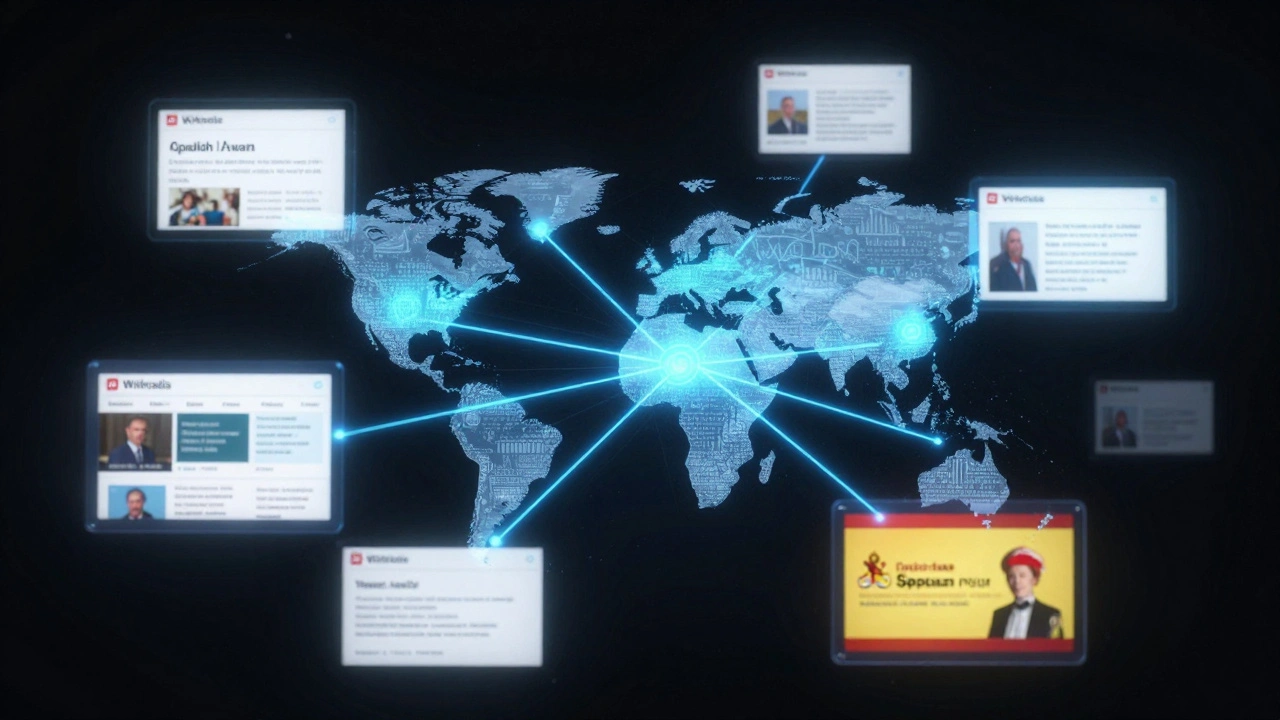
Ever clicked a link on Wikipedia in German and ended up on the same article in Japanese? That’s not magic-it’s interlanguage links at work. These little blue links at the bottom of every Wikipedia page are the quiet backbone of the world’s largest multilingual knowledge project. They connect over 300 language editions of Wikipedia, letting you jump from English to Swahili to Mandarin without leaving the site. But behind those simple links is a complex system of coordination, maintenance, and global collaboration that keeps Wikipedia working as one unified encyclopedia-not 300 separate ones.
What Are Interlanguage Links and Why Do They Matter?
Interlanguage links are hyperlinks that connect articles on the same topic across different language versions of Wikipedia. If you’re reading about "climate change" in Spanish, you’ll see a sidebar with links to the same article in French, Chinese, Russian, and dozens of other languages. These aren’t random suggestions-they’re manually added by editors who know both languages and confirm the content matches.
Without these links, Wikipedia would be a collection of isolated islands. A user in Brazil might never know that a detailed article on renewable energy exists in Portuguese, while a student in India searches in Hindi for the same topic. Interlanguage links make sure knowledge doesn’t get trapped by language barriers. They turn Wikipedia into a true global library.
Each link points to a specific article in another language edition. If the matching article doesn’t exist yet, the link stays grayed out-waiting for someone to write it. That’s part of the coordination challenge: keeping these connections alive across hundreds of communities with different levels of activity.
How Interlanguage Links Are Created and Maintained
Creating an interlanguage link isn’t as simple as copying a URL. Editors must first verify that two articles cover the same subject with comparable depth and accuracy. A short stub article in one language shouldn’t link to a detailed, well-sourced article in another. That would mislead readers.
Most links are added manually by experienced editors who monitor articles in multiple languages. Some use tools like the Interlanguage Links gadget or the Wikidata platform to help find matches. Others rely on community guidelines that vary slightly between language editions. For example, the English Wikipedia requires a minimum article length and at least two reliable sources before a link can be added. The Arabic Wikipedia might prioritize articles with cultural relevance to Arab-speaking regions.
Automated bots help too. They scan for articles with identical titles across languages and suggest possible links. But bots can’t judge quality. A bot might link a 50-word definition in Estonian to a 5,000-word deep dive in English-and that’s not helpful. Human editors step in to fix those mismatches.
Every month, thousands of edits are made to interlanguage links. Some are corrections. Others are updates when an article is expanded or moved. A single article about "COVID-19 vaccines" might have dozens of links updated after new research emerged in 2023. That’s a lot of coordination.
The Role of Wikidata in Unifying Language Editions
Before 2013, interlanguage links were stored directly inside each Wikipedia article’s code. That meant if you changed a link in the English version, you had to manually update it in every other language edition. Imagine editing 300 pages every time a new article was created. It was unsustainable.
That’s when Wikidata came in. Wikidata is a free, open knowledge base that stores structured data about everything-from people and places to books and scientific concepts. Now, interlanguage links are stored in Wikidata as statements tied to a unique item ID. For example, the topic "Albert Einstein" has one item: Q937. That item holds all the links to "Albert Einstein" in every language version of Wikipedia.
This shift changed everything. Now, if you add a link to the French article for "Albert Einstein," it automatically appears in the English, German, and Japanese versions too. Editors no longer have to touch dozens of pages. If an article is renamed or moved, Wikidata updates the link globally. It’s like having one master control panel for all language editions.
Wikidata also lets editors add other types of data: birth dates, population figures, coordinates. That means a single edit in Wikidata can improve articles across dozens of languages at once. It’s the glue holding Wikipedia’s multilingual structure together.
Challenges in Coordination Across Language Communities
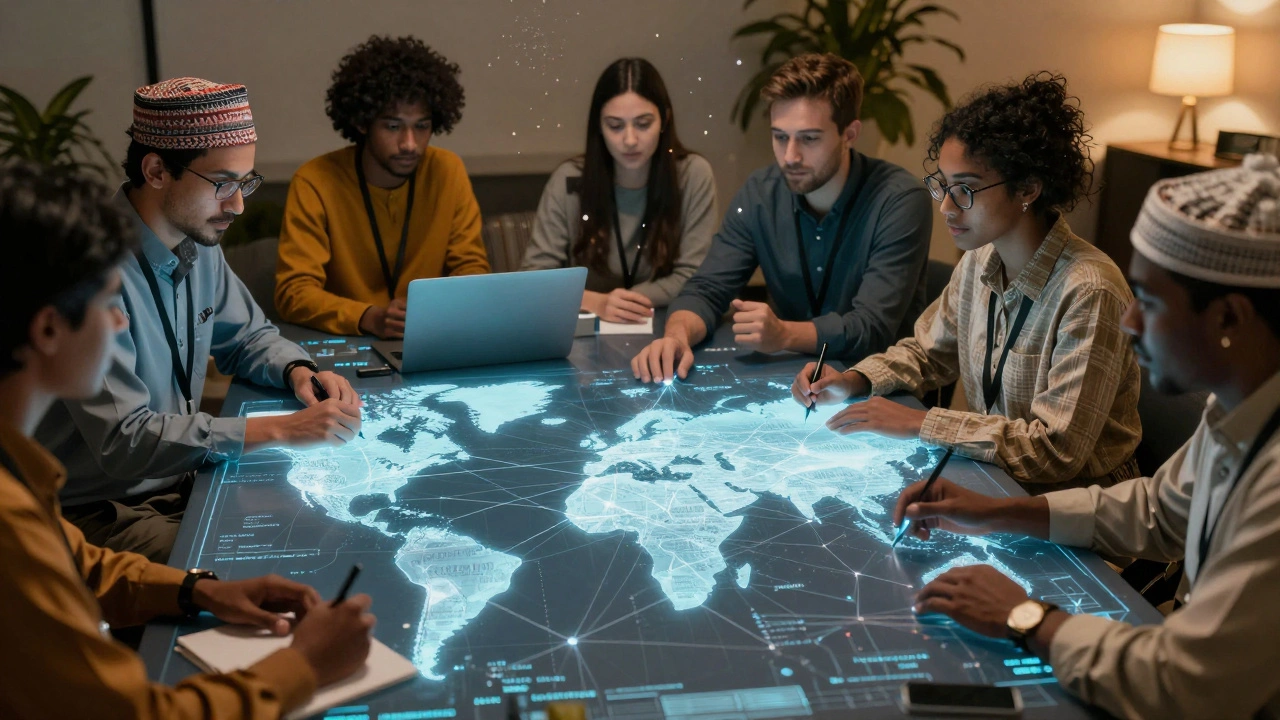
Even with Wikidata, coordination isn’t perfect. Not all language editions are equally active. The English Wikipedia has over 6.5 million articles. The Swahili Wikipedia has about 40,000. The Rohingya Wikipedia? Just over 1,000. That creates imbalances. A well-developed article in English might link to a barely started one in another language, leaving readers frustrated.
Some language communities don’t even use interlanguage links the same way. In the Chinese Wikipedia, editors often link to articles on Hong Kong or Taiwan that are treated differently than in English or German editions due to political sensitivities. This leads to broken or inconsistent links that require careful negotiation.
Then there’s the problem of missing articles. There are over 10,000 topics on the English Wikipedia that have no counterpart in the Bengali Wikipedia. That’s not because Bengali speakers don’t care-it’s because there aren’t enough editors to write them. Volunteer efforts like WikiProject Women in Red and WikiProject Missing Articles try to close these gaps, but progress is slow.
Language politics also play a role. Should a topic about "Catalan independence" link to the Spanish version, the Catalan version, or both? Who decides? These aren’t technical questions-they’re cultural ones. Editors have to navigate identity, history, and power in every link they make.
How Editors Collaborate Across Borders
Despite the challenges, Wikipedia’s multilingual communities work together in surprising ways. There are global events like "Wiki Loves Monuments," where photographers upload images of historical sites, and editors in different languages write articles using the same photos. There are translation drives where volunteers translate entire articles from English into smaller languages.
Some editors specialize in bridging languages. One editor from Poland might spend hours translating articles from French into Polish, then checking the Polish version against the original English to ensure accuracy. Others run bots that detect missing links and notify editors in underrepresented languages.
Communication happens on mailing lists, Discord channels, and global edit-a-thons. The Wikimedia Foundation supports these efforts with grants and training, but the real work is done by volunteers. You don’t need to be a linguist. You just need to care enough to click "add link" when you spot a gap.
What Happens When a Link Breaks?
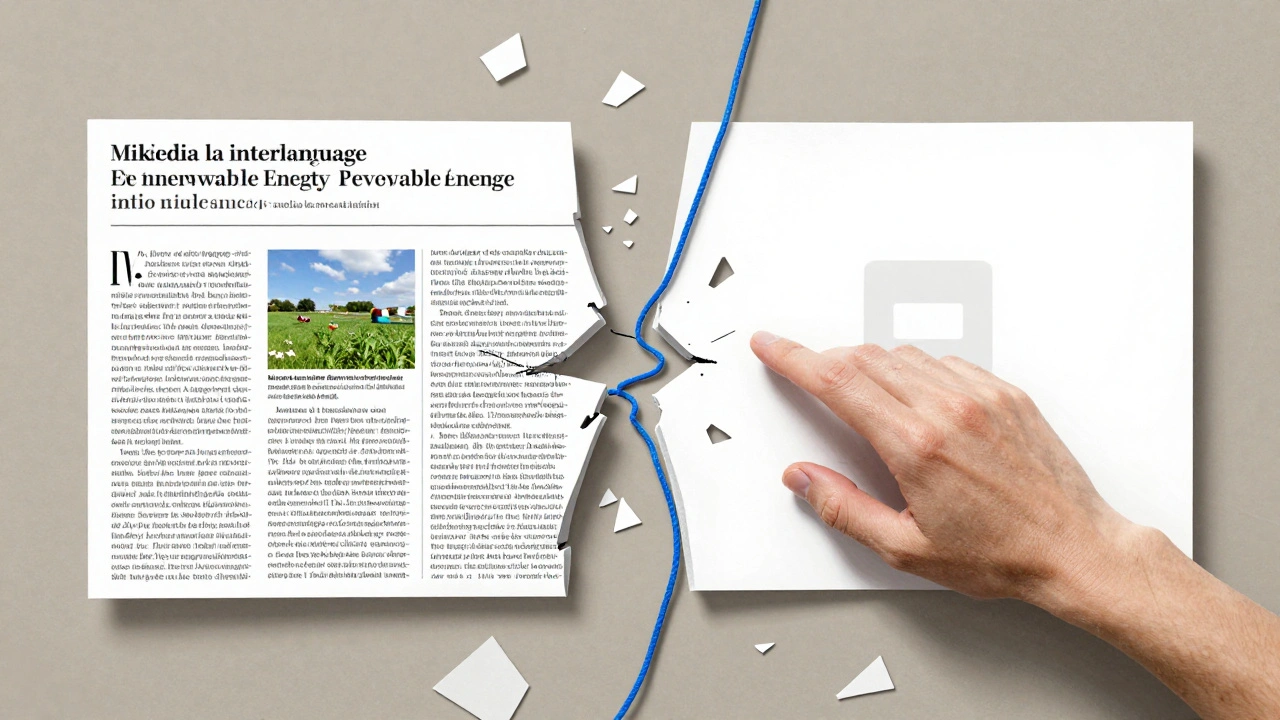
Broken interlanguage links are surprisingly common. An article gets deleted. A title changes. A language edition reorganizes its structure. Suddenly, a link that worked last year now leads to a 404 error.
Wikipedia has automated tools to track these. The "Broken Interlanguage Links" report runs weekly and flags articles with dead links. Volunteers then hunt them down. Sometimes, they find the article was moved to a different title. Other times, they realize the topic doesn’t exist in that language-and they write it.
In 2024, over 120,000 broken links were fixed across all language editions. That’s not just cleanup-it’s active knowledge restoration. Each fix means someone, somewhere, can now find information they couldn’t before.
Why This Matters Beyond Wikipedia
Interlanguage links aren’t just a Wikipedia feature. They’re a model for how global knowledge can be shared without central control. No single company owns them. No government controls them. They exist because thousands of people chose to collaborate across borders, languages, and time zones.
They show that knowledge doesn’t need to be translated by machines to be useful. Human judgment still matters. A good interlanguage link isn’t just a URL-it’s a promise: "This article you’re reading has a counterpart in another language, and it’s worth your time."
For learners, researchers, and curious minds, these links turn Wikipedia into a living, breathing world library. For editors, they’re a quiet act of global solidarity. And for the billions who use Wikipedia every day, they’re proof that shared knowledge can cross any language barrier-if people are willing to build the bridges.
How do interlanguage links work on Wikipedia?
Interlanguage links connect articles on the same topic across different language versions of Wikipedia. They appear in a sidebar on the left side of most articles and let users jump from one language to another. These links are stored in Wikidata, a central knowledge base, so a single edit updates all language editions at once.
Why are some interlanguage links missing?
Missing links usually mean the matching article doesn’t exist in that language, or it’s too short or poorly sourced to link to. Smaller language editions often have fewer editors, so articles on niche topics may not be written yet. Editors also avoid linking to low-quality articles to prevent misleading readers.
Can bots add interlanguage links automatically?
Yes, bots can suggest links based on matching article titles, but they can’t judge quality. Human editors must review them to ensure the content in both articles is comparable in depth and accuracy. Bots help with scale, but humans ensure correctness.
What is Wikidata’s role in interlanguage links?
Wikidata stores all interlanguage links as structured data tied to a unique item ID. Instead of editing each Wikipedia page individually, editors update the link once in Wikidata, and it appears across all language versions. This system replaced the old method of storing links directly in articles, making coordination much more efficient.
Are interlanguage links the same in every language edition of Wikipedia?
No. Each language community has its own rules. For example, the English Wikipedia requires two reliable sources before linking, while others may prioritize cultural relevance. Political or sensitive topics may also be linked differently based on local norms, leading to variations in how connections are made.