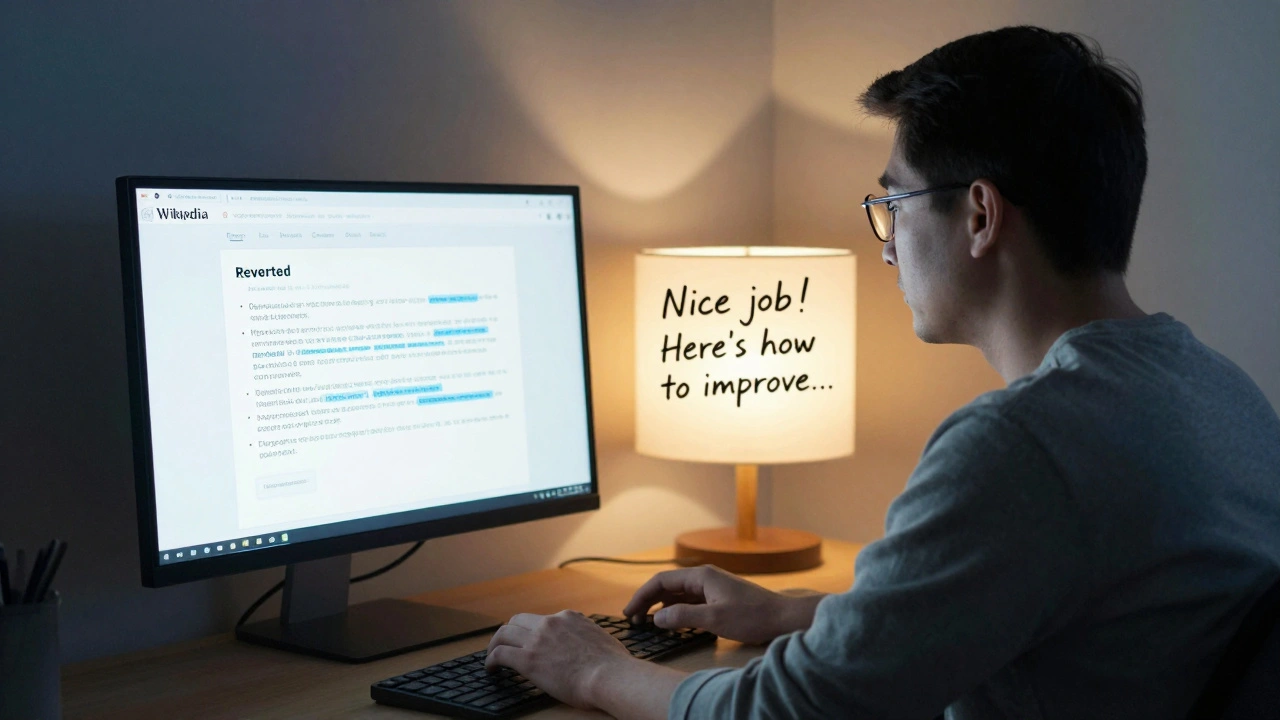
Wikipedia isn’t just a website. It’s a living, breathing community of millions of volunteers who show up, day after day, to write, edit, and fix things. But here’s the truth: most new editors quit within their first week. And the ones who stick around? They almost always had someone show them the way.
That someone is a mentor.
Wikipedia’s biggest challenge isn’t misinformation-it’s retention. The platform thrives on the work of unpaid, often anonymous, volunteers. But without support, new contributors burn out fast. Studies from the Wikimedia Foundation show that editors who receive even one meaningful message from an experienced editor are 40% more likely to make a second edit. And those who get regular guidance? They’re three times more likely to stick around past six months.
Why New Editors Leave
Imagine you’re a college student who just learned how to edit Wikipedia. You find a typo in a history article, fix it, and hit save. Then-boom. Your edit gets reverted. A message pops up: "This is not a neutral point of view. Please read WP:NPOV." You don’t know what that means. You check the help page. It’s full of jargon. You try again. Another revert. Then a warning. Then silence.
This isn’t rare. It’s standard.
Wikipedia’s culture is built on rules. Lots of them. And new editors aren’t warned about how strict the enforcement can be. They don’t know that their first edit might be flagged for "original research," "undue weight," or "notability." They think they’re helping. Instead, they feel attacked.
Without someone to explain why their edit was changed-and how to do it better-they walk away. And they never come back.
What Mentorship Actually Looks Like
Mentorship on Wikipedia isn’t formal. There’s no app. No training program. No certificate. It’s just a person taking five minutes to say: "Hey, I saw your edit. Nice job on the citation. Here’s how you can make it stronger."
Real mentors don’t just fix edits. They explain.
They link to the policy page and say: "This one’s tricky because X. Here’s an example of how someone else handled it." They send a quick talk page message. They reply within hours. They don’t use robotic templates. They write like humans.
One mentor I spoke to-Linda, a retired librarian from Ohio-told me she mentors three new editors a week. She doesn’t have a system. She just replies to their first edit with a personal note. "I tell them, ‘You didn’t mess up. You just didn’t know the rules yet.’ That changes everything."
She’s not alone. The Teahouse-a dedicated space on Wikipedia for new editors-has over 1,200 volunteer mentors. Since its launch in 2012, editors who visit the Teahouse are 50% more likely to become active after 30 days. And 60% of those who stick around say they wouldn’t have without someone taking time to talk to them.
Who Becomes a Mentor?
Most mentors aren’t the most experienced editors. They’re the ones who remember what it was like to be new.
Demographic data from the Wikimedia Foundation shows that mentors are disproportionately women, older adults, and non-native English speakers. Why? Because they’ve faced exclusion before. They know what it feels like to be talked over, ignored, or told they "don’t belong."
One study from 2024 found that editors who identified as women were 2.3 times more likely to offer mentorship than men, even when controlling for total edits. The reason? They’d been on the receiving end of harsh feedback themselves.
And it’s not just about gender. Editors from countries with lower internet access-like Indonesia, Nigeria, or Colombia-are more likely to mentor. Why? Because they had to fight harder to get their first edit approved. They know how hard it is to be heard.
The Ripple Effect
Mentorship doesn’t just keep one editor. It multiplies.
When a new editor gets a kind response, they’re more likely to help someone else later. One mentor told me: "I had someone help me in 2018. Now I help three people a month. One of them just started mentoring last week."
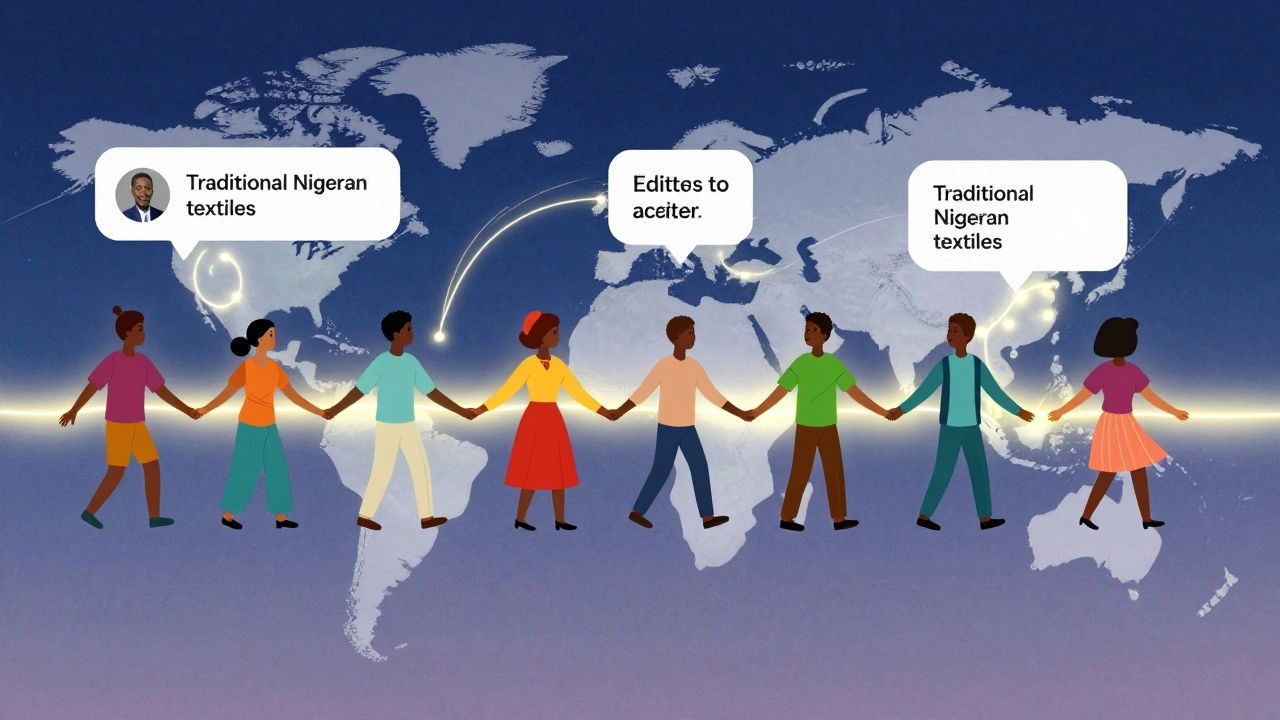
This creates a chain reaction. The more people who feel welcomed, the more people who show up. And the more people who show up, the more diverse the content becomes.
Take the article on "Traditional Nigerian textiles." In 2020, it was a two-sentence stub. A student from Lagos started editing it. She got help from a mentor in the UK. Then she connected with a textile historian in Nigeria. Now, it’s a 12-section article with 47 references, 12 photos, and citations from three Nigerian universities.
None of that would’ve happened if she’d been greeted with a template revert.
What Happens When Mentorship Fails
Wikipedia’s decline in active editors isn’t just about bots or algorithms. It’s about culture.
Between 2015 and 2025, the number of active editors dropped by 38%. But here’s the twist: the decline wasn’t uniform. Communities with strong mentorship networks-like the German, Spanish, and Portuguese Wikipedias-saw little to no drop. Meanwhile, the English Wikipedia, where harsh feedback is common and mentorship is rare, lost over 50% of its new editors.
Why? Because the English version has the most rules, the least patience, and the fewest personal interactions.
One 2023 survey of 2,000 new editors found that 68% said they quit because "no one responded to me." Only 12% said they quit because "the content was too hard."
It’s not about knowledge. It’s about belonging.
How You Can Help
You don’t need to be a top editor. You don’t need to have 10,000 edits. You just need to reply.
Here’s how:
- When you see a new editor’s first edit, leave a comment. Not a template. Not a warning. Just: "Thanks for your contribution! Here’s a tip..."
- Use the Teahouse page. It’s designed for beginners. You can answer questions, review drafts, or just say "Welcome."
- Don’t fix the edit for them. Explain it. "You added this source. The policy says we need a reliable one. Here’s how to find one."
- Reply within 24 hours. New editors are watching. If no one responds, they assume they’re not welcome.
There’s a myth that Wikipedia is a meritocracy-that the best edits rise to the top. But that’s only true if people know how to make good edits. And they won’t, unless someone shows them.
The Bigger Picture
Wikipedia’s survival isn’t about technology. It’s about people.
Every article you read was written by someone who had a moment of doubt. And if someone had taken the time to say, "You’re doing great," they kept going.
That’s the power of mentorship. It doesn’t fix the system. It fixes the person. And when enough people feel seen, the system changes on its own.
So if you’ve ever edited Wikipedia-even once-remember: you were once new too. And someone, somewhere, helped you. Now it’s your turn.
Do I need to be an expert to mentor on Wikipedia?
No. You don’t need thousands of edits or a high reputation score. All you need is to have been on Wikipedia long enough to understand how feedback works. Even editors with under 100 edits have successfully mentored others by simply replying kindly to new users. What matters isn’t experience-it’s empathy.
Can mentorship really increase Wikipedia’s editor numbers?
Yes. Data from the Wikimedia Foundation shows that editors who receive a personal message after their first edit are 40% more likely to make a second edit. Those who get consistent support are three times more likely to stay active past six months. Communities with strong mentorship networks, like the Spanish Wikipedia, have maintained stable editor counts for over a decade.
Why do new editors get reverted so often?
Wikipedia has strict policies on neutrality, sourcing, and notability. New editors often unknowingly break these rules-for example, by adding personal opinions or using blogs as sources. Reverts aren’t meant to punish; they’re meant to teach. But without context, reverts feel like rejection. That’s why mentorship is critical: it turns reverts into lessons.
Is mentorship only for beginners?
No. Even experienced editors benefit from feedback. Many longtime contributors say they learned new policies or improved their writing style after receiving guidance from peers. Mentorship isn’t a one-way street. It’s a cycle: you help someone, then someone helps you. That’s how communities grow.
What is the Teahouse on Wikipedia?
The Teahouse is a welcoming space on the English Wikipedia designed specifically for new editors. It’s staffed by volunteers who answer questions, review edits, and offer encouragement. Since its launch in 2012, it’s helped over 150,000 new editors. Those who use the Teahouse are 50% more likely to become active contributors after 30 days.