Every minute, thousands of edits flood into Wikipedia. Most are helpful - fixing typos, adding sources, expanding entries. But a shocking number aren’t. Some are ads for fake pharmaceuticals. Others are nonsense like "The moon is made of cheese and Elon Musk owns it." Some are outright attacks - racist slurs, doxxing, or propaganda. If left unchecked, Wikipedia would become a dumpster fire of lies and spam. So how does it stay clean?
The Scale of the Problem
Wikipedia has over 66 million articles across all languages. In 2025, it gets about 1.5 million edits per day. About 15% of those edits are harmful - either spam, vandalism, or deliberate misinformation. That’s roughly 225,000 bad edits every single day. No human team could possibly review that volume. So Wikipedia doesn’t rely on people alone. It uses a layered system of bots, filters, and community tools that work together like an immune system.
Bot Patrols: The First Line of Defense
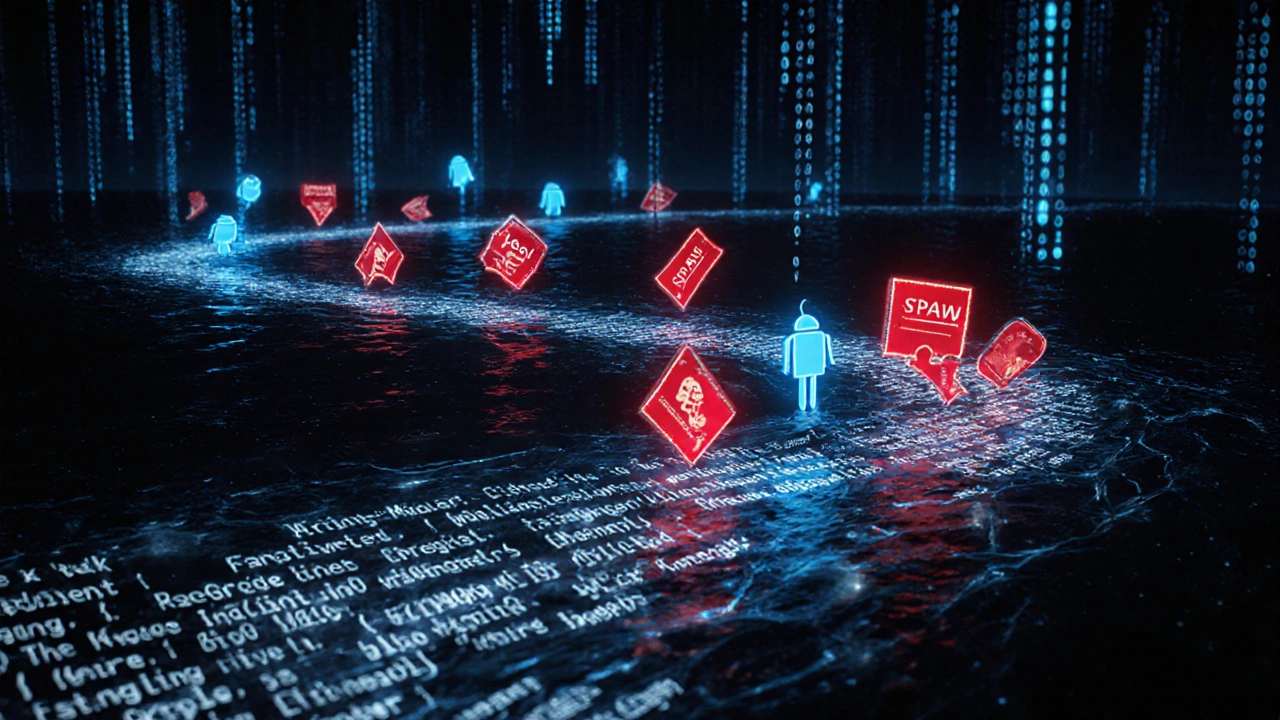
Wikipedia runs over 5,000 automated bots. These aren’t sci-fi robots. They’re scripts - simple programs that watch for patterns. One bot, called ClueBot NG, scans every edit in real time. It checks for things like: repeated links to the same commercial site, random strings of letters and numbers, or edits that match known spam templates. If it spots something suspicious, it reverts the edit instantly and flags it for human review.
Another bot, AntiVandal, tracks users who make repeated bad edits. If someone adds spam to five different articles in an hour, the bot locks their account automatically. These bots learn from past mistakes. Every time a human confirms a bot’s action was correct, the system gets smarter. In 2024, bots reverted over 92% of spam edits before any human saw them.
Pattern Recognition: How the Filters Work
Wikipedia doesn’t just look for keywords. It watches behavior. A spammer might try to sneak in a link to a weight-loss pill site by writing: "For best results, visit example[.]com." The system doesn’t just block "example.com." It notices the pattern: low-quality content, no references, sudden link insertion, and a new user account with no history. That’s enough to trigger a block.
The filters use machine learning trained on millions of past edits. They know that spam often comes from accounts created in the last 24 hours. They know that edits made between 2 a.m. and 5 a.m. UTC are more likely to be automated. They know that edits adding URLs with .xyz or .top domains are 87% more likely to be spam than those with .org or .edu. These aren’t guesses - they’re statistical truths built from decades of data.
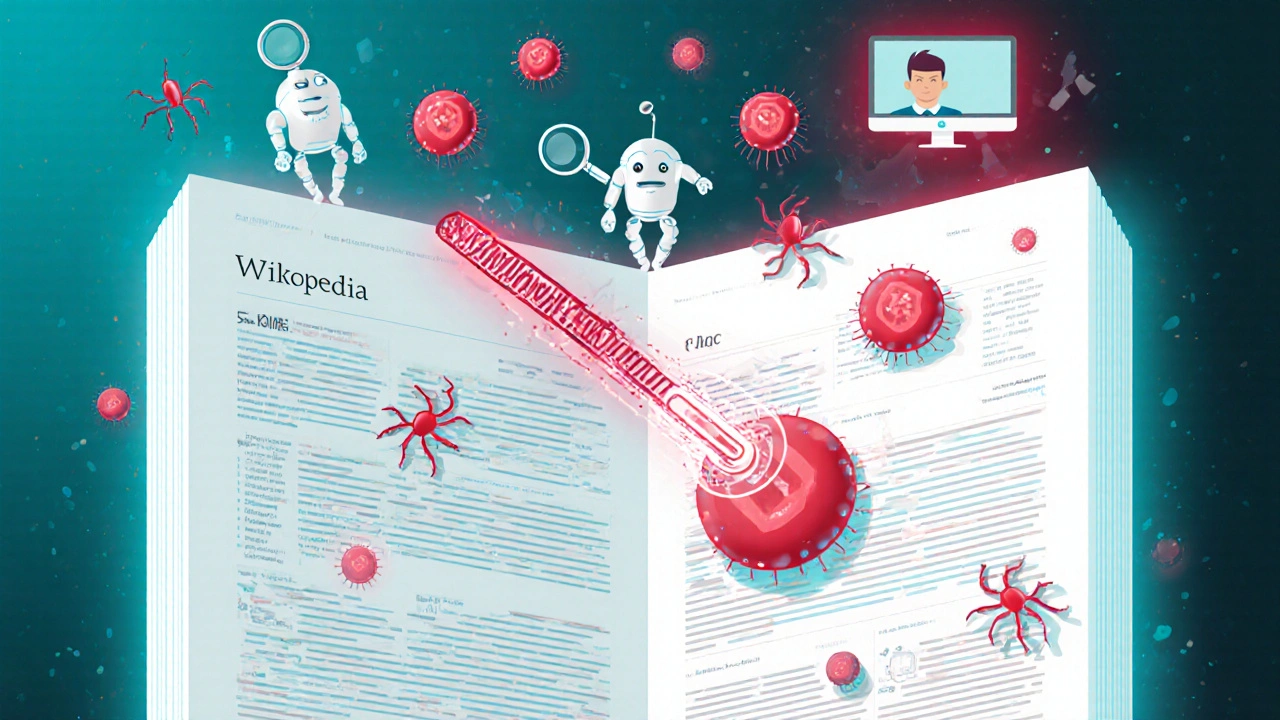
The Human Layer: Patrollers and Flagged Edits
Bots handle the bulk, but humans are still essential. Over 100,000 active editors patrol changes daily. They use tools like Recent Changes and Watchlists to monitor edits to articles they care about. When a bot flags an edit, it shows up in a special queue. Volunteers sort through these, deciding whether to delete, restore, or warn the user.
Some editors specialize in fighting spam. They know the tricks: fake citations that link to mirror sites, rewritten product descriptions disguised as encyclopedia entries, or bots that copy-paste the same comment across hundreds of talk pages. These experts build custom filters and train new bots. One volunteer, based in Germany, created a filter that catches 98% of crypto scam links by recognizing the exact phrasing scammers use: "This is the only official site. Join now before it’s too late."
Account Restrictions and Blocks
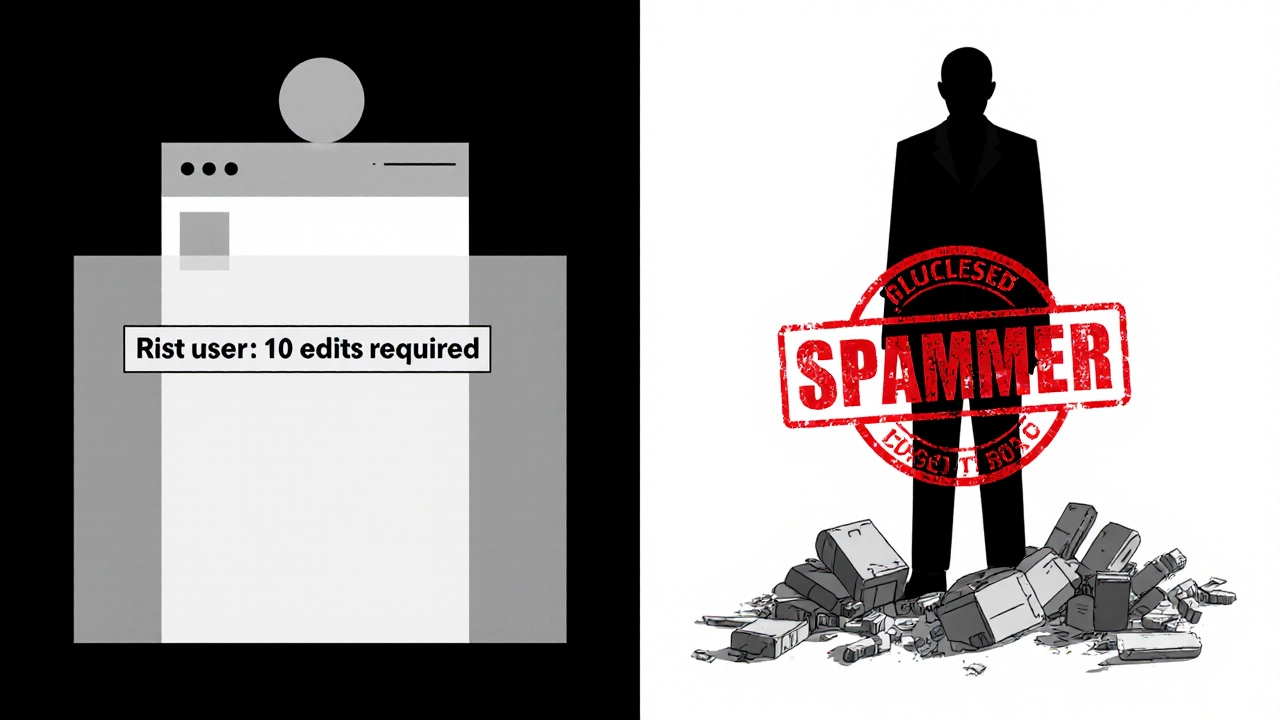
Wikipedia doesn’t just delete bad edits - it blocks the people behind them. New users can’t create pages until they’ve made 10 edits. They can’t move pages or upload files. These restrictions slow down spammers who rely on mass account creation.
Repeat offenders get longer blocks. A first offense might get a 24-hour block. A third offense? Six months. A user who keeps spamming after that? Permanent ban. The system tracks IP addresses too. If 20 spam edits come from the same IP in a day, the whole range gets temporarily locked - even if it’s a public library or school network. It’s not perfect, but it makes spamming expensive and hard.
Community Trust and Reputation
Wikipedia’s system works because it trusts the community. Editors earn trust over time. A user who consistently makes good edits gets autoconfirmed status - meaning their edits skip review queues. They can upload images, edit protected pages, and even help review others’ work. This creates a powerful incentive: good behavior is rewarded. Bad behavior is punished fast.
There’s no leaderboard for spam-fighting, but there’s a quiet culture of accountability. If a trusted editor makes a mistake, others call them out. If a bot goes rogue, volunteers report it and it’s fixed within hours. The system isn’t top-down. It’s a living network of people and machines holding each other accountable.
What Still Gets Through?
Despite all this, some spam slips through. It’s usually clever. One recent example: a user edited a page about a small town in Ohio to say, "This town has the world’s largest collection of vintage typewriters. Visit www.typewritercollectors[.]xyz for tours." The link looked real. The text was plausible. The bot didn’t flag it because the domain wasn’t on any blocklist yet. A human caught it two days later.
Spammers adapt. They use misspellings ("wikipedia" → "wikipidia"), they mimic editing styles, they wait weeks between edits to avoid detection. Wikipedia’s system has to keep evolving. Every month, new filters are added. Every quarter, bots are retrained. The goal isn’t perfection - it’s making spam so hard and slow to deploy that it’s not worth the effort.
Why This Matters Beyond Wikipedia
Wikipedia’s spam system is one of the most successful examples of open collaboration under attack. It’s not run by a corporation. It doesn’t have a billion-dollar budget. It survives on volunteers and code. And it works - better than most commercial platforms.
Other sites could learn from it. Twitter, Reddit, and YouTube still struggle with bot spam because they rely on reactive moderation. Wikipedia is proactive. It assumes bad faith and builds systems to stop it before it spreads. That’s why, in 2025, Wikipedia remains one of the most reliable sources of free knowledge on the internet - not because it’s perfect, but because it’s constantly fighting to stay that way.
How does Wikipedia detect spam automatically?
Wikipedia uses machine learning bots like ClueBot NG that scan edits for patterns: sudden links to commercial sites, nonsense text, or edits from new accounts. These bots compare each edit to millions of past spam examples and revert suspicious changes in seconds. They also track behavior - like how often someone edits, what time of day they’re active, and whether they use common spam phrases.
Can anyone edit Wikipedia, even spammers?
Yes, anyone can edit. But new users face restrictions: they can’t create new pages, upload files, or move articles until they’ve made at least 10 edits and waited four days. This slows down spam bots that rely on mass account creation. Even then, every edit is checked by bots and human patrollers before it sticks.
What happens to users who spam Wikipedia?
First-time offenders usually get a 24-hour block. Repeat offenders face longer blocks - weeks or months. If someone keeps spamming after multiple warnings, they get a permanent ban. The system also blocks IP ranges if many spam edits come from the same network. Accounts tied to known spam operations are deleted outright.
Do bots make mistakes?
Yes, but rarely. Bots revert edits based on rules and patterns, not intent. Sometimes they flag good edits - like a new user adding a legitimate link to a nonprofit. But humans review flagged edits daily and restore the correct ones. The system is designed to be corrected by people, not to be perfect on its own.
How does Wikipedia stay ahead of spammers?
Wikipedia’s community constantly updates filters and trains bots using new spam examples. Every week, volunteers report new spam tactics. These get added to detection rules. Spammers adapt, but so does Wikipedia. The system evolves faster than most commercial platforms because it’s open, transparent, and driven by volunteers who care about accuracy.