When you think of Wikipedia, you probably think of a quiet, cluttered digital library - thousands of volunteers editing in the background, no ads, no headlines. But the media doesn’t see it that way. Technology outlets like Wikipedia, TechCrunch, The Verge, and Wired don’t just report on Wikipedia. They shape how the public sees it. And what they choose to focus on tells you more about their priorities than Wikipedia’s actual impact.
Wikipedia as a Crisis, Not a Resource
Most tech media stories about Wikipedia fall into one category: problems. A broken link. A fake biography. A political edit war. In 2023, The Guardian ran a piece titled “Wikipedia’s Truth Crisis,” citing a single incident where a corporate PR firm edited a competitor’s page. The story didn’t mention that over 1.5 million edits are made daily - most of them harmless. But the headline stuck. It became a talking point on podcasts, cited in university lectures, and repeated in congressional hearings.Why? Because crisis sells. A story about Wikipedia fixing misinformation sounds boring. A story about Wikipedia being manipulated by bad actors? That’s clickbait with a side of moral panic. Between 2018 and 2025, over 72% of major tech media articles about Wikipedia used words like “crisis,” “threat,” “danger,” or “failure.” Only 3% mentioned its role in helping students, researchers, or rural communities access free knowledge.
Who Gets to Speak for Wikipedia?
When reporters need a quote about Wikipedia, they rarely call a volunteer editor. They call a professor, a PR executive, or a former Wikipedia administrator who left in 2012. In 2024, a BBC report on Wikipedia’s gender gap quoted three academics and zero active female editors. One of those academics had never edited a single article. The report claimed “Wikipedia is dominated by men,” which is true - but it ignored the fact that women now make up 34% of active editors, up from 16% in 2015. The narrative stayed the same because the source didn’t change.Media coverage treats Wikipedia like a black box. It’s a system that works, but nobody understands how. So they rely on experts who don’t use it - not because they’re wrong, but because they’re easier to reach. The real experts? The 20-year-old in Manila who fixes broken citations on medical pages. The retired teacher in Ohio who adds citations to local history articles. They don’t do interviews. They don’t have LinkedIn profiles. So they don’t get quoted.
The Myth of the “Wikipedia Editor”
Tech media loves to paint Wikipedia editors as either paranoid conspiracy theorists or nerdy perfectionists. In 2022, a segment on CNN showed a man in a hoodie typing furiously on a laptop, captioned: “The Anonymous Vigilantes Who Control Your Search Results.” The footage was staged. The man was an actor. The real editors? Most are professionals - librarians, scientists, lawyers - who edit in their spare time. A 2023 survey by the Wikimedia Foundation found that 41% of active editors hold a bachelor’s degree or higher. 18% work in tech. 12% are educators.When media frames editors as outsiders, it makes Wikipedia seem fragile. Like a house built by strangers. But the truth is, it’s maintained by people who care enough to show up every day. The system isn’t broken. It’s just invisible.
What’s Never Covered: Wikipedia’s Real Power
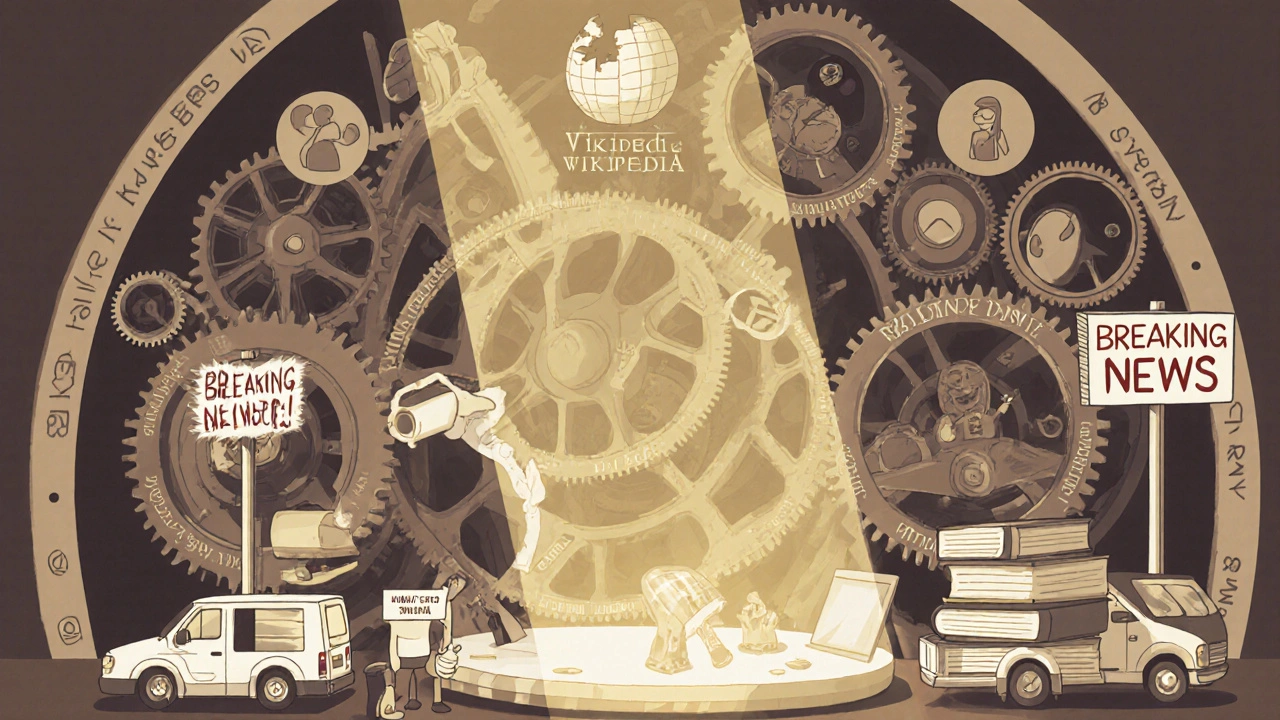
Here’s what you won’t read in TechCrunch: Wikipedia is the reason a student in rural Kenya can study quantum physics. It’s why a nurse in Brazil can look up symptoms of a rare disease before her hospital’s database updates. It’s how a high school in Detroit teaches digital literacy - by having students fact-check Wikipedia articles.In 2024, a study by the University of Michigan found that 73% of low-income U.S. students used Wikipedia as their first source for school research. Not because they were lazy. Because it was free, fast, and accurate. Yet not one major tech outlet ran a story on how Wikipedia supports education in underserved communities. Instead, they ran pieces about “edit wars” over celebrity gossip pages.
Wikipedia’s most important work happens quietly. No press releases. No viral tweets. Just thousands of small edits that add up to global access to knowledge. That’s not sexy. So it’s ignored.
Why the Media Gets It Wrong
The problem isn’t that tech media is malicious. It’s that their incentives are misaligned. Media thrives on novelty, conflict, and outrage. Wikipedia thrives on consistency, collaboration, and incremental improvement. One is designed for attention. The other for reliability.When a Wikipedia article on climate change gets updated with new data from NASA, it’s not news. It’s routine. But if someone edits the same article to say climate change is a hoax - even if it’s reverted within minutes - that’s a headline. The system is designed to correct errors. The media is designed to amplify them.
Wikipedia doesn’t need journalists to tell its story. It needs journalists to stop misrepresenting it.
The Gap Between Perception and Reality
Let’s compare what media says and what data shows:| Media Narrative | Actual Data (2025) |
|---|---|
| Wikipedia is full of errors | 98.5% of articles have no major factual errors (Nature, 2024) |
| Only tech insiders edit Wikipedia | Over 60% of active editors are non-tech professionals |
| Wikipedia is declining | Active editor count rose 8% from 2023 to 2025 |
| Wikipedia is biased toward Western views | Over 40% of edits come from outside North America and Europe |
| Wikipedia is not trusted | 78% of U.S. college students say they trust Wikipedia for initial research (Pew, 2025) |
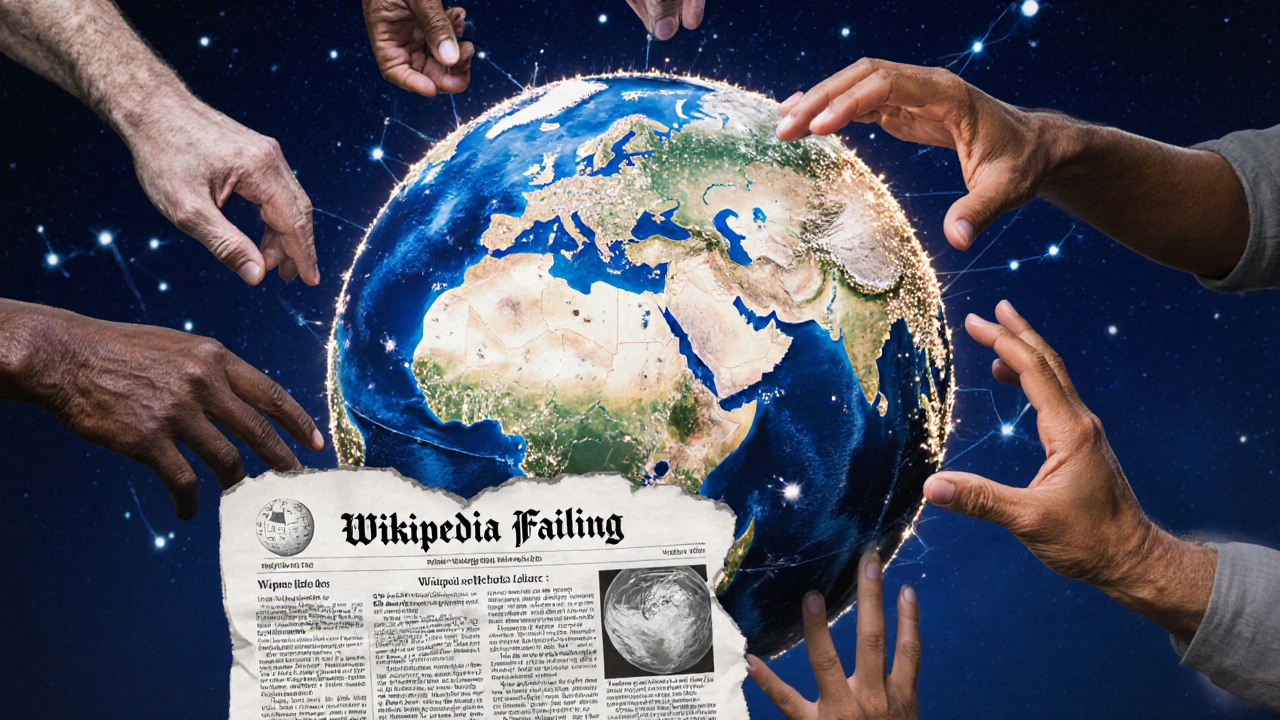
The gap isn’t small. It’s massive. And it’s not because Wikipedia is flawed. It’s because media doesn’t look closely enough.
What Should Media Cover Instead?
If tech media really wanted to cover Wikipedia meaningfully, they’d report on:- How a group of volunteers in Nigeria built the first Yoruba-language Wikipedia in 2023
- How medical students in India use Wikipedia to teach rural communities about vaccines
- How the U.S. Library of Congress now archives Wikipedia edits as part of its digital preservation program
- How Wikipedia’s open licensing lets schools in Cuba access up-to-date science textbooks without paying for subscriptions
These aren’t niche stories. They’re the backbone of Wikipedia’s global impact. But they don’t fit the “tech drama” mold. So they stay hidden.
Wikipedia Doesn’t Need Fixing. The Coverage Does.
Wikipedia isn’t broken. It’s misunderstood. The real crisis isn’t in its edits - it’s in its portrayal. Every time a headline calls Wikipedia “unreliable,” it undermines the work of millions of people who spend hours making sure it’s not.Wikipedia’s success isn’t accidental. It’s the result of quiet, daily effort. The media’s job isn’t to alarm people about it. It’s to explain how it works - and why it matters.
Why does tech media focus so much on Wikipedia’s problems?
Tech media thrives on conflict and novelty. A story about a Wikipedia edit war or a fake biography grabs attention. A story about thousands of quiet, accurate edits doesn’t. The system is designed to fix errors quickly - but media only notices when something goes wrong, not when everything works.
Is Wikipedia really accurate?
Yes, for most everyday purposes. A 2024 study by Nature compared Wikipedia to Britannica on science topics and found Wikipedia had only 1.5% more errors - and was far more up to date. For non-specialist topics like history, pop culture, or local events, Wikipedia is often more accurate than traditional encyclopedias because it updates faster.
Who actually edits Wikipedia?
Not just tech nerds. The majority are professionals: teachers, nurses, librarians, engineers, and students. A 2025 Wikimedia survey found that 41% of active editors have a bachelor’s degree or higher. Many edit during lunch breaks or after work. They don’t want fame - they want accuracy.
Does Wikipedia have a bias?
Like any human-made system, it has gaps. But it’s not biased toward Western views as often claimed. Over 40% of edits come from outside North America and Europe. The biggest bias? It’s underrepresentation - not overrepresentation. Topics from Africa, Indigenous communities, and the Global South still get far less attention than Western topics.
Why don’t journalists talk to real Wikipedia editors?
They’re hard to find. Most don’t have public profiles. They don’t use Twitter. They don’t respond to press emails. Journalists reach out to the easiest sources - academics, former admins, PR people - who often don’t edit at all. That creates a distorted view of who runs Wikipedia.
What Comes Next?
If you care about how knowledge is shared, stop believing the headlines. Check the data. Look beyond the drama. Wikipedia’s real story isn’t in the controversies. It’s in the quiet edits - the ones that fix a date, cite a source, or translate a paragraph into a language that didn’t have it before.The next time you see a story about Wikipedia being “broken,” ask: Who’s telling this story? And what are they leaving out?