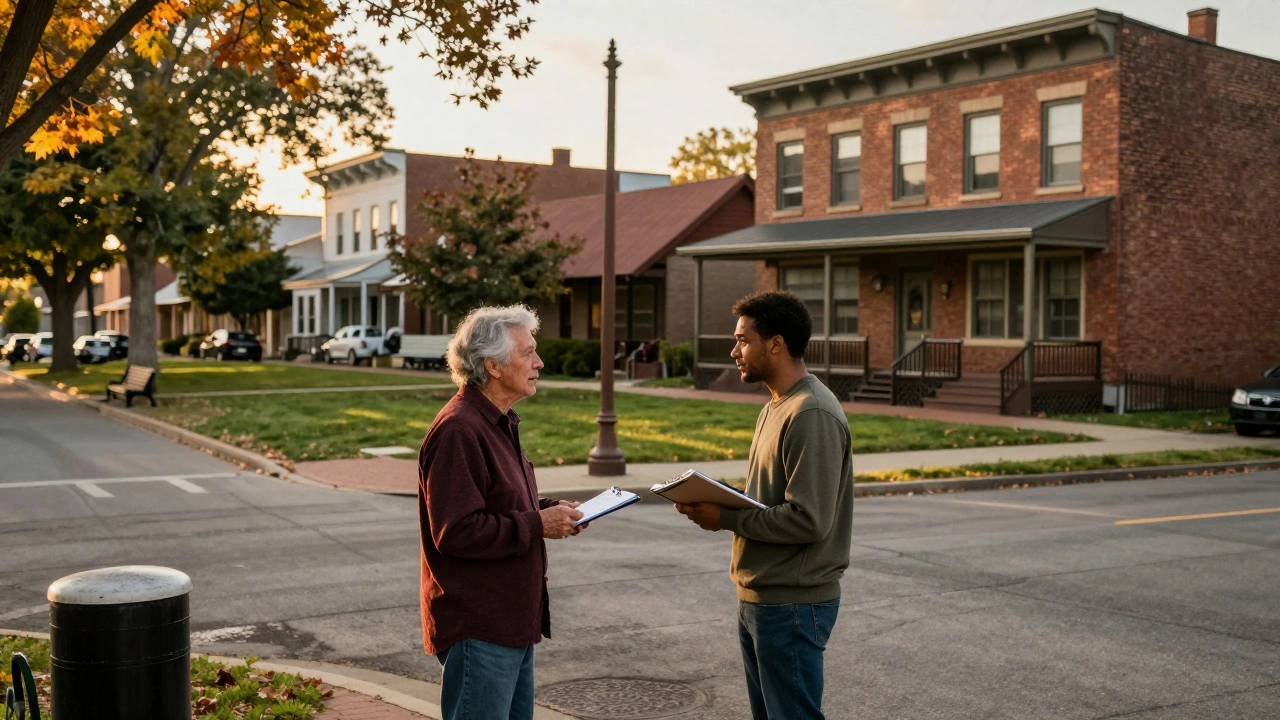
For The Signpost is a community-driven news organization dedicated to hyperlocal reporting and civic engagement. Because they operate in tight-knit circles, the risk of overlapping personal and professional lives is huge. When your source is also your neighbor, or your subject is a local business owner who sponsors your events, the line between reporting and friendship gets blurry. Avoiding these traps isn't just about following a handbook; it's about maintaining the trust of the people who actually read the paper.
The Reality of Hyperlocal Ties
In a big city daily, a journalist rarely knows the mayor personally. In community news, that's not the case. You might see the city council member at the grocery store or share a PTA group with the school board president. These relationships are actually an asset-they provide the access and trust needed to get real stories. But they also create a structural conflict. If a reporter is too close to a source, they might subconsciously pull punches or ignore a scandalous lead to protect a friend.
To handle this, The Signpost treats conflicts of interest as a constant reality rather than a rare mistake. They distinguish between actual conflicts (where a reporter has a financial stake) and perceived conflicts (where it just looks bad to the public). Both are dangerous because journalism relies on the conflicts of interest policy to ensure the audience believes the reporting is objective.
The Disclosure Framework
Transparency is the first line of defense. Instead of pretending they don't have ties to the community, the staff at The Signpost openly disclose them. If a reporter is covering a story involving a former employer or a family member, they don't just whisper it to their editor; they put it in the story. A simple sentence like "The reporter's sibling serves on the planning commission mentioned in this article" transforms a potential scandal into an act of honesty.
This approach follows the gold standard of Journalistic Ethics, which emphasizes that the audience's right to know about potential bias outweighs the reporter's desire for privacy. By being proactive, they stop the reader from discovering the connection later through a social media deep dive, which would look like a cover-up.
| Strategy | Approach | Pros | Cons |
|---|---|---|---|
| Avoidance | Reporter refuses the story entirely | Zero risk of bias | Loss of expert local knowledge |
| Disclosure | Reporter notes the tie in the text | High transparency | Reader may still feel biased |
| Recusal | Another reporter takes the lead | High objectivity | Slower production time |
Implementing the "Wall of Separation"
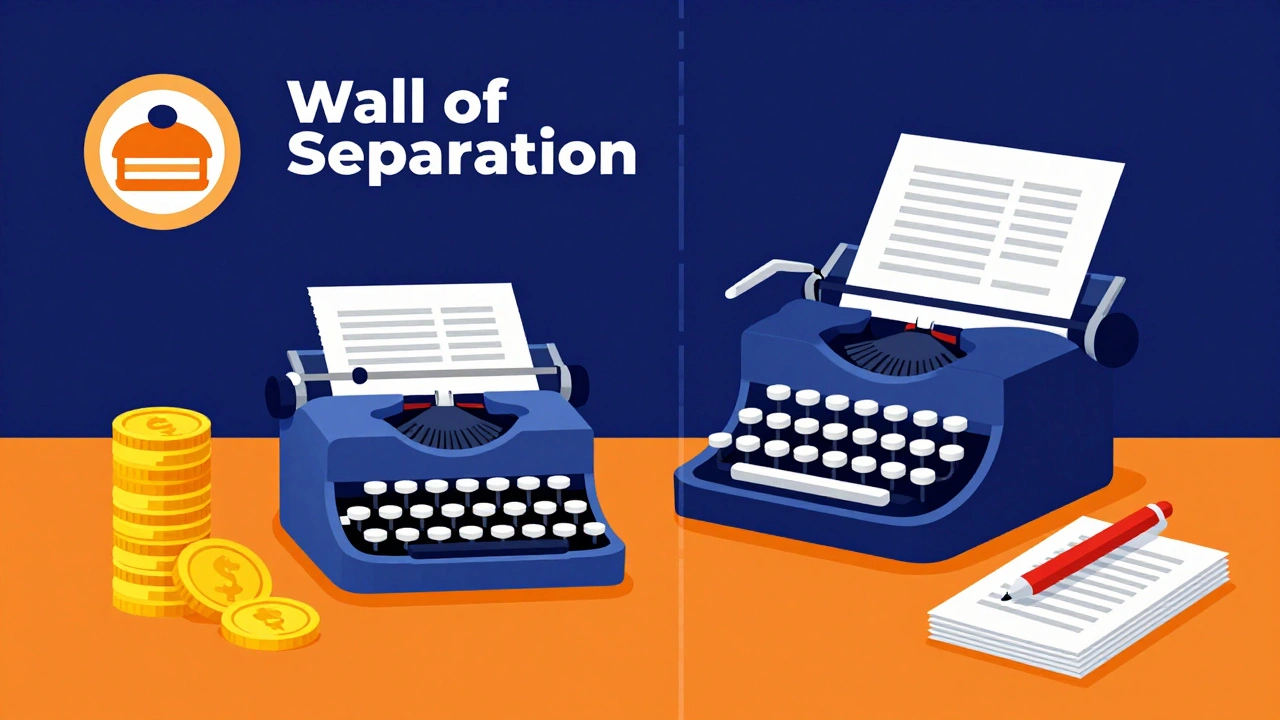
One of the toughest battles in community news is the split between the business side and the editorial side. When a local bakery pays for a full-page ad, they aren't paying for a glowing review in the news section. If the bakery's health inspection report comes back with a failing grade, the news team has to report it, even if the owner is a major advertiser.
The Signpost uses a strict Editorial Independence model. This means the people selling ads are not the people assigning stories. This "wall" ensures that the commercial interests of the publication do not dictate the journalistic integrity of the reporting. When a conflict arises-say, an advertiser threatens to pull their budget if a critical story runs-the editor-in-chief has the final say based on public interest, not the balance sheet.
The Internal Review Process
Before a sensitive story goes live, it goes through a multi-step vetting process. It's not just a spell check; it's a bias check. Editors ask specific questions: Who benefits from this angle? Who is being left out? Is the language leaning too heavily on a single source's perspective?
They also utilize Peer Review. In a community setting, this might involve asking another reporter who doesn't have a personal stake in the neighborhood to read the draft. This "fresh set of eyes" can catch subtle cues of favoritism that the original writer, blinded by familiarity, might miss.
Handling Community Backlash
Even with the best policies, mistakes happen. A reporter might forget to mention a connection, or a source might claim the coverage was unfair due to a personal grudge. The way The Signpost handles these moments is a key part of their ethics strategy. They don't delete the story and hope it goes away. Instead, they issue a formal correction or a "Note to Readers."
This practice of Accountability Journalism builds more trust than perfection ever could. When a news outlet admits it messed up a disclosure, it proves to the community that the rules are actually being enforced. It turns a failure into a demonstration of the system's integrity.
Guidance for Local Contributors
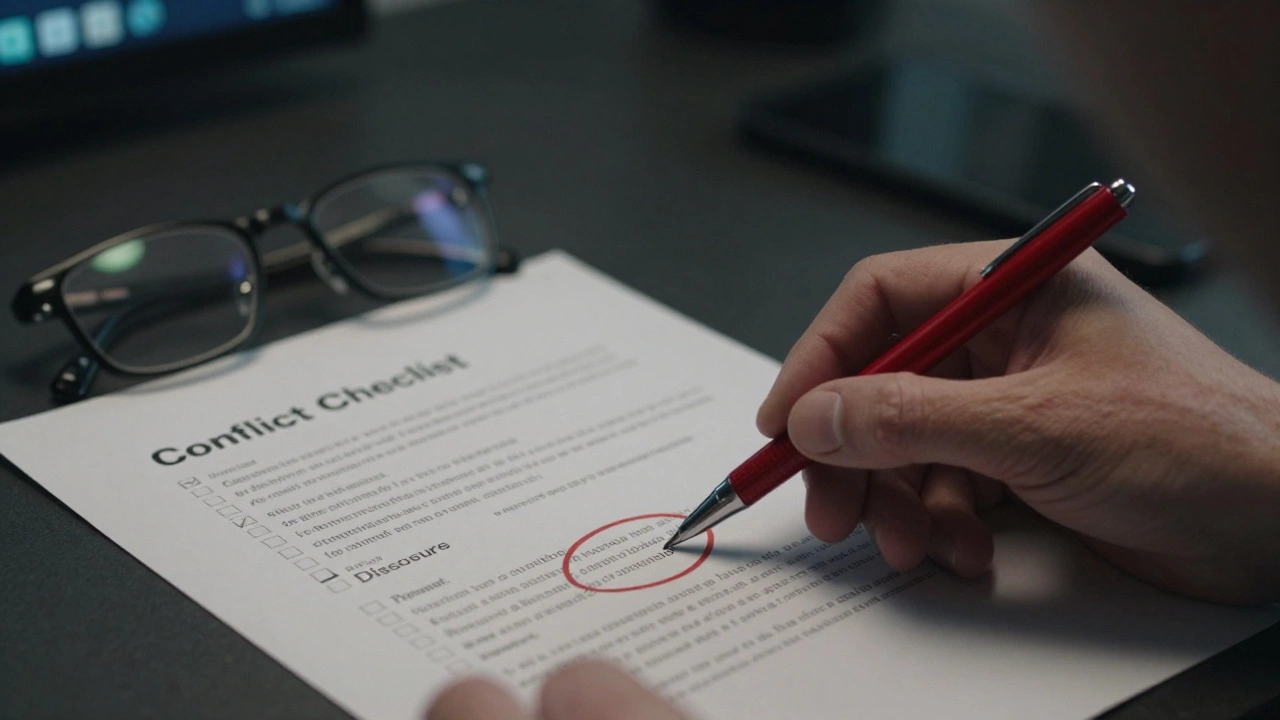
Since community news often relies on freelance contributors and citizen journalists, the risk of conflict increases. Many contributors aren't trained in professional ethics. To mitigate this, The Signpost provides a simplified "Conflict Checklist" for every guest writer.
- Do I have a financial interest in the outcome of this story?
- Is the subject of this piece a close friend, family member, or enemy?
- Am I receiving any gifts or favors in exchange for this coverage?
- Would a reasonable stranger feel deceived if they knew my relationship with the source?
If the answer to any of these is "yes," the contributor is required to disclose it before the piece is accepted for publication. This moves the burden of honesty from the editor (who can't know everyone's secrets) to the writer.
What happens if a reporter refuses to disclose a conflict?
At The Signpost, failure to disclose a known conflict of interest is considered a breach of professional conduct. This typically results in the immediate removal of the story, a public correction, and disciplinary action for the reporter, which can include suspension or termination depending on the severity of the omission.
Can a reporter cover a story if they have a conflict?
Yes, but it depends on the type of conflict. If it is a minor relationship (like a distant acquaintance), a clear disclosure in the text is usually sufficient. If it is a major conflict (like a financial stake in a company being reported on), the reporter is typically recused from the story entirely to maintain objectivity.
How does the "wall of separation" work in a small office?
Even in a small office, there is a hard rule that the sales team cannot influence story selection or content. While the business manager and the editor may discuss the general health of the publication, the editor has total autonomy over the news. No advertiser can "buy" a positive story or suppress a negative one.
Why is disclosure better than just avoiding the story?
In tiny communities, total avoidance is often impossible. If the only person qualified to cover a specific local issue has a connection to it, recusal would leave the community without news. Disclosure allows the reporting to happen while giving the reader the context they need to judge the information for themselves.
Who monitors the ethics of the reporting?
Internal monitoring is done by the editorial board during the review process. External monitoring happens through the community itself; readers are encouraged to flag potential conflicts through a dedicated "ethics tip-line," which is then investigated by the editor-in-chief.
Next Steps for Community Trust
For readers who want to ensure their local news is honest, the best move is to ask questions. If a story seems suspiciously one-sided, check for disclosures. If you notice a pattern where certain local figures are never criticized, it might be time to contact the outlet's editor to ask about their conflict-of-interest policy.
For aspiring community journalists, the lesson is simple: when in doubt, disclose. It is far better to be seen as "too cautious" than to be seen as a liar. The goal of community news isn't to be a detached observer, but to be a trusted neighbor who tells the truth, even when it's uncomfortable.