Key Takeaways for Multilingual Coordination
- Use the Meta-Wiki and dedicated coordination pages to align facts across languages.
- Leverage Content Translation tools to bridge the gap between high-resource and low-resource languages.
- Prioritize reliable primary sources (like official government alerts) to avoid the "translation loop" of errors.
- Establish a cross-language communication channel via Discord or Telegram for immediate sync.
The Chaos of the Breaking News Cycle
When a major event happens, Wikipedia is a free, multilingual online encyclopedia written collaboratively by volunteers. But the "collaborative" part gets messy during a crisis. Most editors stay within their own linguistic bubble. If you're editing in English, you might not know that an editor in the French edition has already found a primary source that corrects a major error in the death toll. This creates a fragmented reality where the truth depends on which language you speak.
The core problem is the "information lag." English Wikipedia usually has the most eyes on it, but the local language edition-say, Thai for an event in Bangkok-often has the most accurate, nuanced ground-level data. If the English community just translates the Thai version without verifying the sources, they might miss critical context. Conversely, if the Thai community ignores the English updates, they miss global perspectives and verified data from international agencies.
Establishing a Central Nerve Center
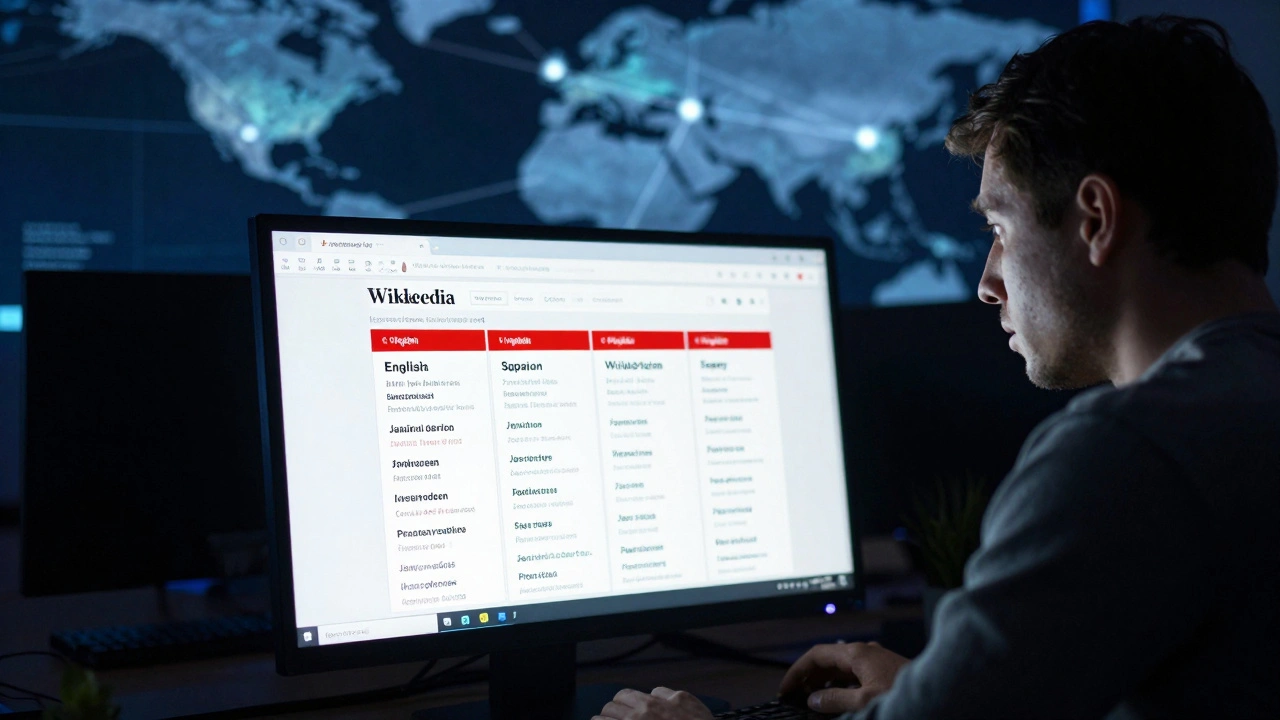
You can't coordinate 300 languages via a series of individual talk pages. You need a hub. In the Wikimedia ecosystem, this usually happens on Meta-Wiki, which is the central coordination site for all Wikimedia projects. During a massive event, a dedicated "Coordination Page" should be created.
A successful coordination page doesn't just list links; it acts as a live ledger. It should include a shared table of verified facts, a list of reliable sources that everyone agrees to use, and a directory of the lead editors from the biggest language editions. For example, during the 2024 Olympic Games, editors used shared documents to ensure that medal counts and athlete biographies remained synchronized across the top 10 languages, preventing the embarrassing scenario where a gold medalist was listed as a silver medalist in German but a gold medalist in English.
The Toolset for Rapid Translation
Manual translation is too slow for breaking news. That's where Content Translation comes in. This is a machine-learning-assisted tool that allows editors to translate articles from one language to another within the Wikipedia interface. It doesn't just swap words; it helps map entities from one language to another.
However, relying solely on AI is a trap. We call this the "Translation Loop." This happens when an editor translates a fact from English to Spanish, and then another editor translates that Spanish version back into English, inadvertently amplifying a mistake that was introduced in the first translation. To stop this, editors must always link back to the original primary source-not the other Wikipedia edition. If a tweet from a government official is the source, every language edition should link to that specific tweet, not to the English Wikipedia's summary of it.
| Phase | Primary Goal | Best Tool/Method | Risk to Avoid |
|---|---|---|---|
| Immediate (0-6 hours) | Basic Fact Alignment | Meta-Wiki / Discord | Unverified social media leaks |
| Active (6-48 hours) | Detailed Narrative Sync | Content Translation Tool | The Translation Loop |
| Stabilization (2+ days) | Source Verification | Cross-wiki Talk Pages | Over-reliance on English version |
Managing the "Language Hegemony"
There is a natural tendency for the English edition to become the "source of truth" simply because of its size. This is a mistake. In a crisis involving a specific region, the local language edition is the expert. If a disaster happens in Brazil, the Portuguese Wikipedia will have a deeper understanding of the local political landscape and geography than any English-speaking editor in London or New York.
To fight this, coordination should move in both directions. English editors should actively seek out the "Local Expert" editors on the regional wiki and ask, "Is this phrasing accurate?" or "Is this source considered reliable in your country?" This creates a peer-review system that spans the globe. When we use Wikidata-which is a central storage for structured data used by all Wikimedia projects-we can ensure that a date, a coordinate, or a death toll is updated in one place and automatically flows to every single language edition. This is the gold standard for coordination: update the data once, and the world sees it instantly.
Dealing with Conflicting Narratives
Not every major event is viewed the same way globally. A political conflict might be described as a "liberation" in one language and an "invasion" in another. Coordination isn't about forcing one single narrative; it's about ensuring the facts are the same even if the perspective differs.
The goal is to reach a consensus on the "hard data." For example, both editions should agree on the date the event started and the names of the parties involved. When the narratives diverge, coordinators should use the "Neutral Point of View" (NPOV) policy to document that different regions view the event differently. Instead of fighting an edit war across languages, the best approach is to add a section stating: "While sources in [Country A] describe the event as X, sources in [Country B] characterize it as Y." This turns a conflict into a comprehensive encyclopedic entry.

Pitfalls to Avoid During High-Stress Editing
The adrenaline of breaking news leads to mistakes. The most common is the "Source Cascade." This happens when a reputable news outlet reports a rumor, and then five different Wikipedia editors cite that news outlet as a primary source. Suddenly, the rumor is treated as a fact across ten languages. To prevent this, coordinators should insist on "primary source verification." If a news site says "The government says X," the editor should find the actual government statement before updating the page.
Another pitfall is the ignore-the-local-community trap. English-language editors often barge into smaller language wikis and start making massive changes without talking to the local admins. This causes friction and distrust. The rule of thumb should be: Listen first, edit second. Reach out on the local talk page, explain your goal, and offer to help with translation rather than just rewriting their content.
What is the best way to start a cross-language coordination effort?
Start by creating a coordination page on Meta-Wiki. Clearly state the event, the goal of the coordination, and provide a link to a shared real-time document or a chat channel. Invite editors from the most relevant language editions to join and establish a set of agreed-upon reliable sources to avoid conflicting data.
How does Wikidata help in breaking news scenarios?
Wikidata stores data as "claims" (e.g., "City X population is Y"). Because most language editions pull these values via "infoboxes," updating a value in Wikidata instantly updates it across all versions of the article. This eliminates the need to manually edit 300 different pages when a single statistic changes.
What should I do if two language editions completely disagree on a fact?
Avoid edit-warring across wikis. Instead, bring the dispute to the coordination page on Meta-Wiki. Focus on the sources: which source is more primary? Which is more recent? If both are high-quality but disagree, the correct encyclopedic approach is to present both viewpoints neutrally rather than choosing one as the absolute truth.
Is the Content Translation tool reliable for emergency updates?
It is a great starting point for speed, but it should never be the final step. AI translation can miss nuance or misinterpret technical terms during a crisis. Every translated section must be reviewed by a human speaker of the target language to ensure accuracy and proper tone.
How do I avoid the "Translation Loop"?
Always trace a fact back to its original primary source (e.g., an official report, a direct quote, or a government website). Never cite another Wikipedia article as a source. If you see a fact in the English version and want to move it to the Spanish version, find the source the English editor used and verify it yourself.
Next Steps for Event Coordinators
If you are currently managing a breaking news event, your first priority is to move communication out of isolated talk pages and into a shared space. Start a Meta-Wiki thread and identify the "Power Editors" in the 5-10 most relevant languages. Focus your energy on the data that is most likely to change-death tolls, locations, and official statements-and push those updates through Wikidata whenever possible.
For those who aren't in the middle of a crisis but want to be prepared, familiarize yourself with the Content Translation tool and practice navigating Meta-Wiki. Understanding how to bridge the gap between languages now means that when the next global event hits, you can spend less time arguing about translations and more time providing the world with accurate, real-time information.