Key Takeaways
- Avoid 'edit warring' by moving the fight to the talk page immediately.
- Use the Bold-Revert-Discuss (BRD) cycle to keep the main page stable.
- Focus on reliable sources, not your own opinion or logical arguments.
- Know when to stop arguing and call for a third-party mediator.
The Golden Rule of the Talk Page
Before you type a single word, you have to understand that a Wikipedia Talk Page is not a debate club. It is a workspace. In a debate, the person with the best logic wins. On Wikipedia, the person with the best Reliable Sources wins. If you find yourself saying, "But it's common sense that..." or "Logically, this must be true," you've already lost.
The core purpose of these pages is to reach a Consensus. This doesn't mean everyone loves the final wording. It means everyone agrees that the wording is supported by evidence and doesn't violate site policies. When a topic is contentious-think climate change, religious history, or active political scandals-the talk page becomes the only place where the "truth" of the article is negotiated.
Mastering the BRD Cycle
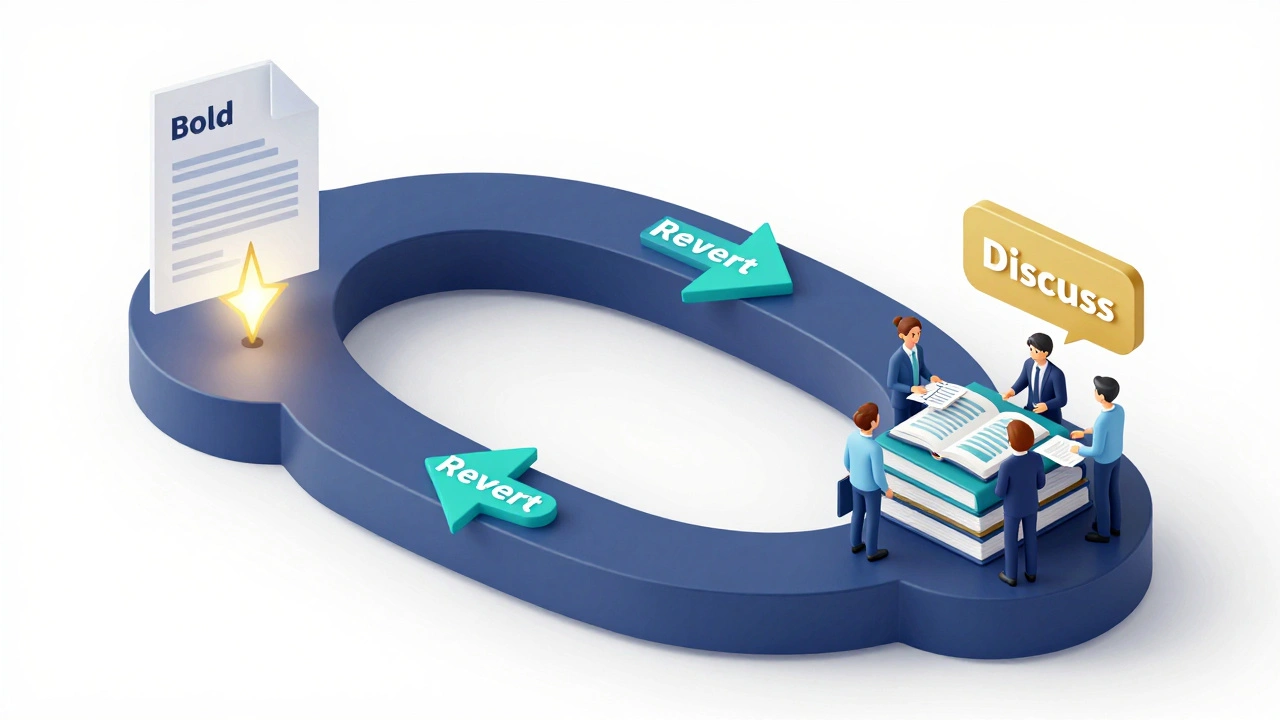
You'll often hear veteran editors talk about BRD. This stands for Bold, Revert, Discuss. It's the primary mechanism for handling Wikipedia Talk Page friction without causing a site-wide meltdown.
- Bold: You make a change to an article that you believe improves it. You don't ask for permission first because that would slow down the encyclopedia's growth.
- Revert: Another editor disagrees with your change and undoes it. This is normal. It's not a personal attack; it's a signal that the change is disputed.
- Discuss: This is where the magic happens. Instead of changing the page back for a third time (which is called an "edit war"), you go to the talk page. You explain why you made the change and provide the evidence to back it up.
If you skip the "Discuss" phase and keep reverting, you're violating the Three-Revert Rule. This rule states that you shouldn't revert the same edit more than three times in 24 hours. Breaking this is the fastest way to get your account flagged by administrators.
| Action | BRD Approach (Correct) | Edit Warring (Incorrect) |
|---|---|---|
| First Change | Boldly improve the text. | Change the text. |
| Second Change | Revert if you disagree. | Revert the change. |
| Third Action | Post evidence on the Talk Page. | Revert again to "win." |
| Outcome | Collaborative consensus. | Admin intervention/Ban. |
Navigating Neutral Point of View (NPOV)
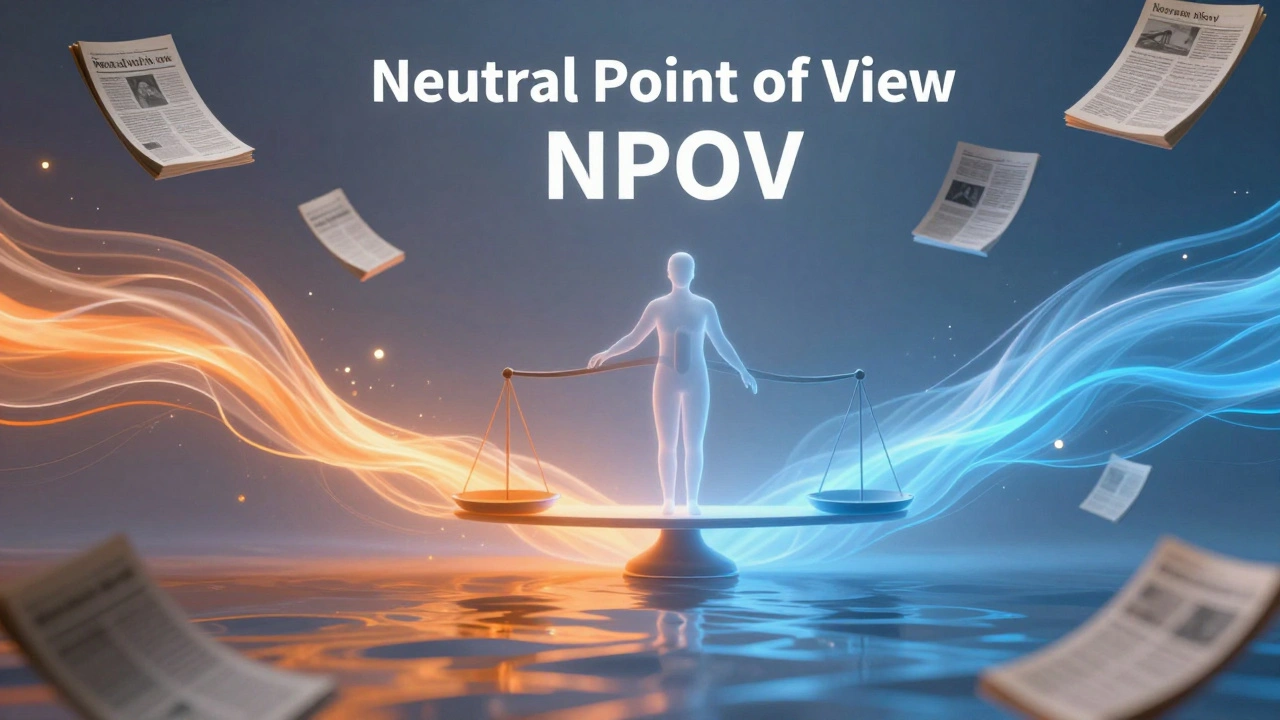
When topics get heated, the most important policy to lean on is NPOV, or Neutral Point of View. A common mistake beginners make is trying to write the "correct" version of a story. On Wikipedia, your job isn't to decide who is right; it's to report what the reliable sources say about the disagreement.
If two reputable news organizations disagree on a fact, the correct way to write the article is: "Source A states X, while Source B argues Y." This is called "due weight." You aren't taking a side; you're documenting the conflict. When you're arguing on the talk page, frame your suggestions around NPOV. Instead of saying "This section is biased," try "This section lacks the perspective provided by Source B, which would bring the article closer to NPOV."
De-escalating the Digital Tension
Talk pages can turn toxic quickly. People get defensive when their work is criticized. To keep the conversation productive, you need to use a few psychological tricks. First, avoid using the word "you." Instead of saying "You are ignoring the evidence," say "The evidence from this source seems to be overlooked." This shifts the focus from the person to the data.
Second, be specific. Vague claims like "this doesn't sound right" are useless. Instead, use a concrete example: "The phrasing in the second paragraph suggests the event was accidental, but the 2022 report from the National Archives explicitly calls it intentional." The more specific you are, the harder it is for the other person to dismiss you.
Third, know when to walk away. There is a point of diminishing returns where no amount of evidence will change a fellow editor's mind. When you hit that wall, stop replying. If the dispute is critical, you can request a Third-Party Opinion or a formal mediation. This brings in an editor who isn't emotionally invested in the fight to provide a neutral perspective.
Handling Advanced Dispute Resolution
Sometimes, a simple talk page discussion isn't enough. For deeply contentious topics, Wikipedia has a hierarchy of escalation. If a talk page becomes a stalemate, you might move the discussion to a specialized forum or request help from a Wikipedia Administrator. Admins aren't there to decide who is right about the facts, but they can protect a page (locking it) to prevent an edit war while a consensus is being reached.
In extreme cases, you might encounter the Arbitration Committee. This is essentially the "Supreme Court" of Wikipedia. They don't deal with the content of the articles, but with the behavior of the editors. If someone is harassing others on a talk page, the ArbCom is who steps in to hand down permanent sanctions.
What happens if I accidentally start an edit war?
The moment you realize you've reverted a change more than twice, stop immediately. Go to the talk page, apologize for the overlap, and clearly explain your reasoning with sources. Most administrators are lenient if you show a genuine effort to move the conflict to the talk page.
How do I know if a source is "reliable" enough for a contentious topic?
For high-conflict areas, Wikipedia requires "high-quality" sources. This usually means peer-reviewed academic journals or reputable news outlets with a history of fact-checking. Avoid blogs, social media posts, or press releases from the parties involved in the dispute.
Can I use the talk page to suggest a total rewrite of a section?
Yes, but don't just say "this section is bad." Propose a specific alternative. Post the rewritten text on the talk page and explain exactly how it improves the article's neutrality or accuracy. This makes it much easier for others to agree to the change.
What is the difference between a talk page and a community portal?
A talk page is specific to a single article or a group of related articles. A community portal is for general discussions about Wikipedia's rules, policies, and site-wide improvements. Always use the article's specific talk page for content disputes.
How long does it usually take to reach a consensus?
It varies wildly. Some disputes are settled in an hour; others can drag on for years. The key is to keep the dialogue open. If there's a stalemate, try to agree on a "compromise wording" that acknowledges both perspectives until better evidence emerges.
Next Steps for New Editors
If you're just starting out, don't jump straight into the most contentious articles-like politics or religion-until you've spent some time editing "safe" pages. This helps you get a feel for the community's tone and the technical side of editing. Once you're comfortable, try observing a few high-conflict talk pages without participating. Watch how experienced editors use sources to shut down emotional arguments.
If you find yourself in a heated dispute, take a break. The "24-hour rule" is a great habit: if a talk page interaction makes you angry, wait a full day before replying. This prevents you from saying something that could lead to a conduct warning and ensures your arguments remain focused on the facts, not the friction.