
Quick Takeaways
- Administrators use technical tools to stop vandalism and protect pages.
- Sanctions range from simple warnings to permanent bans (Global Blocks).
- Community consensus, not individual whim, drives most enforcement actions.
- The system balances open editing with the need for stability.
The Toolbelt of a Wikipedia Administrator
Being an Administrator isn't a promotion or a job; it's a set of permissions. Most people think admins "run" the site, but they actually spend most of their time doing digital janitorial work. Their primary goal is to keep the site functional while following the rules that the rest of the community wrote.The most critical tool in their kit is the ability to protect pages. When a page becomes a battlefield for an edit war-where two people keep undoing each other's changes every few seconds-an admin can lock the page. This means only other admins or established users can edit it for a set period. It forces the fighting parties to move their argument to a "Talk page" and reach a compromise instead of fighting in the live article.
Then there is the blocking tool. If a user is creating fake accounts to bypass a previous ban or is posting blatant hate speech, an admin can restrict their IP address or account. This isn't always permanent. Some blocks are "time-outs"-a 24-hour break to let a heated user cool off-while others are indefinite for severe violations like systemic harassment.
Admins also have access to deletion tools. While a regular user can propose that a page be deleted by adding a template, only an admin can actually wipe the page from the database. This prevents a single person from deleting a page just because they don't like the subject. Every deletion usually requires a trail of evidence showing the page violates the General Exclusion Criteria, such as lacking notability or being a duplicate.
| Action | Regular User | Administrator | Effect |
|---|---|---|---|
| Edit Content | Yes | Yes | Changes live article text |
| Protect Page | No | Yes | Prevents unauthorized edits |
| Block User | No | Yes | Restricts account/IP access |
| Delete Page | No | Yes | Removes page from database |
| Propose Deletion | Yes | Yes | Starts a community discussion |
The Ladder of Community Sanctions
Enforcement doesn't start with a ban. Wikipedia uses a progressive system of sanctions to ensure people aren't punished harshly for simple mistakes. Most new users don't know the complex rules regarding Neutral Point of View (NPOV) or Verifiability. Banning someone for a mistake is seen as counterproductive.The first step is almost always a warning. This usually happens on the user's talk page. An editor might say, "Hey, you can't add original research here; please provide a source." If the user ignores the warning or becomes aggressive, the situation escalates. This is where the Community Sanctions system kicks in, which is a more formal process than a simple admin block.
For repeat offenders, the community can implement Topic Bans. This is a surgical strike. Instead of banning a person from all of Wikipedia, they are banned from editing a specific subject. For example, if someone constantly disrupts pages about a specific political candidate with biased language, they might be banned from all politics-related articles but allowed to continue editing pages about botany or cinema.
The most severe level is the Global Block. This is handled by a special group called the Global Sysops. A global block prevents a user from editing any Wikipedia project in any language. This is reserved for the worst of the worst: people running botnets to create thousands of spam accounts or those engaging in coordinated harassment campaigns.

The Role of Consensus and Governance
One of the weirdest parts about Wikipedia is that the people with the technical power (admins) often have the least say in the rules. The real power lies in Consensus. If an admin deletes a page that the community wants to keep, the community can overturn that decision through a process called Articles for Deletion (AfD).This creates a check-and-balance system. If an admin starts acting like a dictator, the community can start a Request for Adminship (RfA) process in reverse-essentially campaigning to have that person's admin status removed. It's a social contract: admins provide the tools, but the community provides the legitimacy.
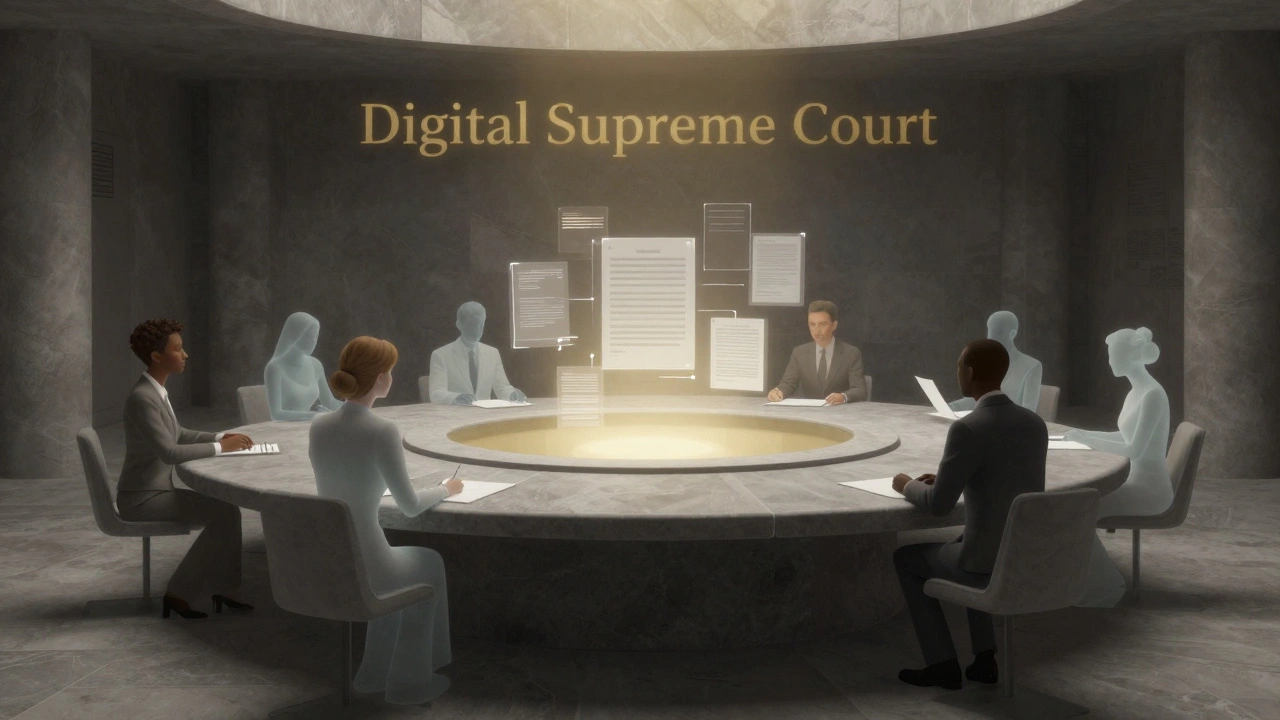
Governance is also managed through specialized boards. For instance, the Arbitration Committee (ArbCom) acts as the "Supreme Court" of Wikipedia. They don't deal with whether a sentence is worded correctly; they deal with behavioral issues. If two users have been fighting for three years and cannot stop, ArbCom steps in to issue a final, binding ruling. Their decisions are rarely overturned and often involve the most restrictive sanctions available.
Common Pitfalls in Policy Enforcement
Enforcement isn't perfect. One common issue is Admin Abuse, where a volunteer uses their tools to settle a personal grudge or push a specific ideological agenda. Because Wikipedia is a global project, different cultures have different ideas of what "neutral" means. An admin in one country might see a specific edit as vandalism, while an admin in another sees it as a necessary correction.Another problem is the "barrier to entry." The rules are so complex that new users often feel intimidated. When a new editor gets a stern warning about a policy they've never heard of, they often quit. This creates a cycle where the site is maintained by a shrinking group of "power users" who know every loophole, making the site feel like a gated community rather than an open encyclopedia.
Finally, there is the struggle with coordinated attacks. When a government or a corporate PR firm hires people to scrub a page of negative information, the standard "warning-block-ban" cycle is too slow. In these cases, admins must use Semi-protection, which requires a user to have a confirmed account for at least four days before they can edit the page. This slows down the attackers without totally locking out legitimate users.
Next Steps for New Editors and Aspiring Admins
If you're new to the site and find yourself on the receiving end of a warning, don't panic. The best move is to go to your talk page and ask for clarification. Most experienced editors are happy to help if you show a willingness to learn. Avoid the urge to "fight" the edit; instead, find a reliable secondary source that supports your point and present it on the talk page.For those who want to become admins, the path is long. You can't just apply; you have to prove yourself. Start by making thousands of small, helpful edits. Learn how to use the Recent Changes feed to catch vandalism in real-time. Once you have a reputation for being calm, fair, and knowledgeable about the rules, you can seek the community's support in an RfA. Just be prepared: the process is public, rigorous, and often surprisingly intense.
Can a regular user get someone banned?
No, regular users cannot technically ban anyone. However, they can report a user's behavior to an administrator or use the "Request a block" process. The admin then reviews the evidence and decides if a block is warranted based on community policy.
What happens if an admin makes a mistake?
Almost every admin action can be appealed. If a page was deleted unfairly, a user can use the "Request restoration" process. If a block was unjustified, the user can appeal it on their own talk page or through a specialized appeal board.
Is a block the same as being banned?
In Wikipedia terms, a "block" is the technical action of preventing an account or IP from editing. A "ban" is often a social or policy-based restriction, like a topic ban, which tells a user they are not allowed to edit a specific subject, even if they aren't technically blocked from the whole site.
Why do some pages have "View Source" instead of "Edit"?
This means the page is protected. An administrator has locked the page to prevent vandalism or an edit war. Depending on the level of protection, you might need to be an autoconfirmed user or an admin to make changes.
How does the Arbitration Committee differ from admins?
Admins handle the "day-to-day" technical cleanup (blocking spammers, deleting junk). The Arbitration Committee handles complex behavioral disputes. ArbCom is like a court of law; they hear evidence from both sides and issue a final ruling on how a person must behave on the site.