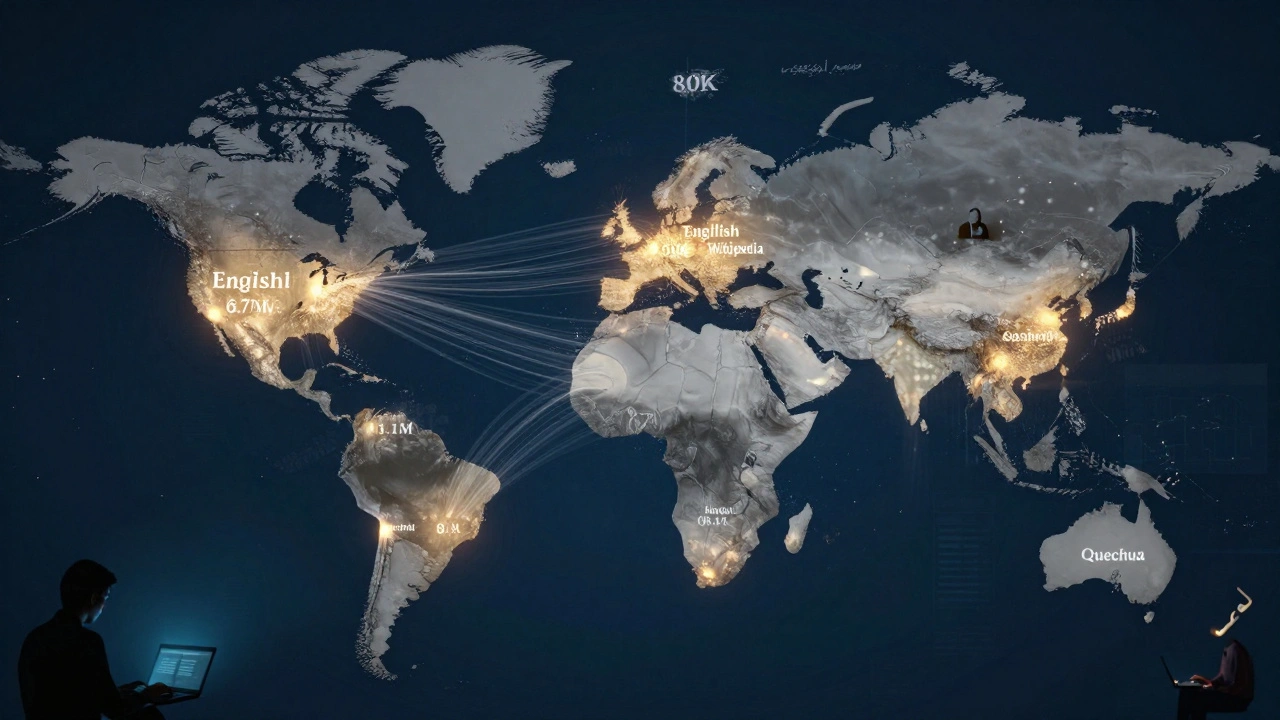
Wikipedia is the world’s largest encyclopedia, but not all languages are treated the same. If you think every language has equal depth of coverage, you’re mistaken. English Wikipedia has over 6.7 million articles. Hindi Wikipedia? Just over 1.1 million. Swahili? Around 80,000. The gap isn’t just about population size-it’s about who has access, who has time, and who feels their language matters in global media.
Why English Dominates Wikipedia
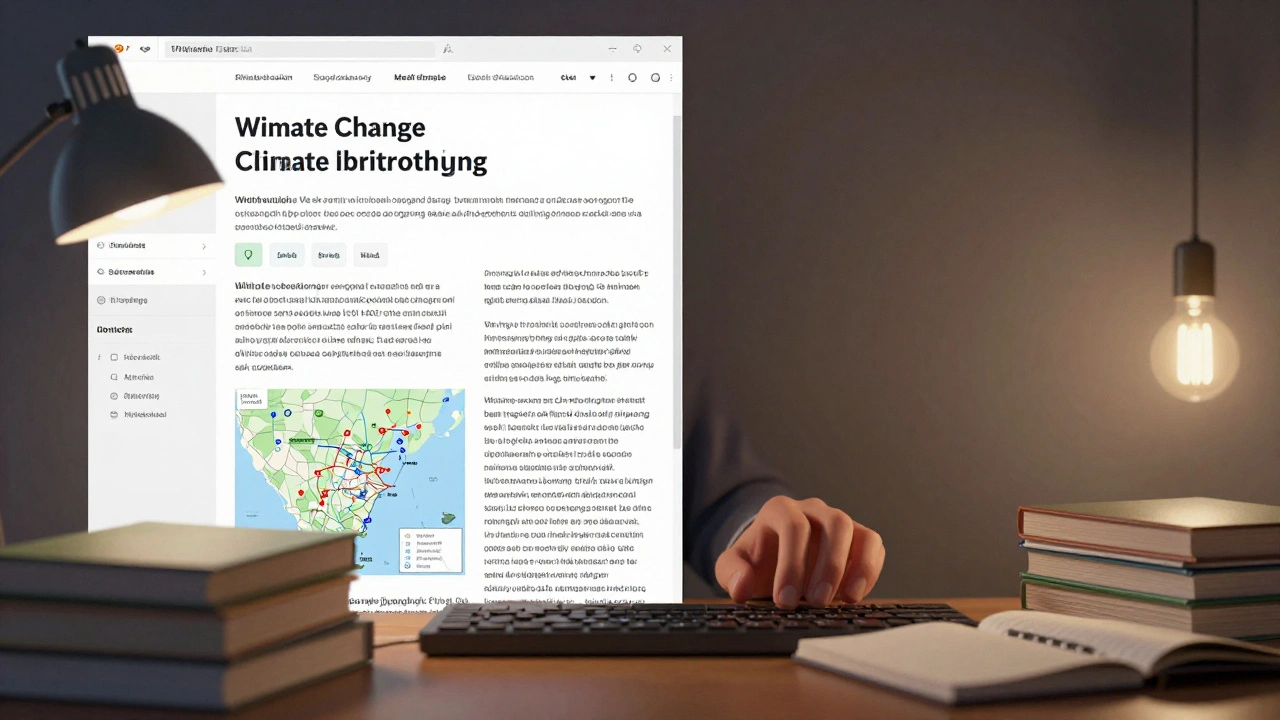
English Wikipedia isn’t just bigger-it’s deeper. A single English article on climate change might include subsections on policy, economics, regional impacts, scientific models, and historical trends. Compare that to a Swahili article on the same topic: it often stops at a basic definition. Why? Because most of the world’s academic papers, news reports, and technical documents are published in English. That’s what editors pull from. If your source material is mostly in English, you can’t write a detailed article in Swahili without translation work most volunteers just don’t have time for.
There are over 7,000 spoken languages, but Wikipedia’s top 10 languages account for nearly 80% of all edits. English leads by a huge margin, followed by German, French, Japanese, and Russian. These languages have strong educational systems, high internet penetration, and large communities of contributors who are often connected to universities or tech hubs. Meanwhile, languages like Quechua, Yoruba, or Bengali have millions of speakers but far fewer editors. In some cases, there are fewer than 10 active editors for entire language versions.
It’s Not Just About Speakers
Population doesn’t equal coverage. Bengali has over 300 million native speakers, yet its Wikipedia has fewer articles than Dutch, spoken by just 25 million. Why? Because Dutch has a long history of digital engagement, strong public funding for education, and a culture of online collaboration. Bengali speakers, meanwhile, often face barriers: unreliable internet in rural areas, lack of digital literacy tools in their language, and competing priorities like daily survival.
Even within the same country, language gaps show up. India has 22 officially recognized languages, but only Hindi and English Wikipedia have strong, active communities. Tamil, Telugu, and Marathi Wikipedias exist, but they’re often run by small groups of volunteers who patch together content from translated English articles. There’s little original reporting, no local journalism integration, and almost no coverage of regional politics or cultural events.
Media Bias Shows Up in the Edit History
Global media doesn’t just influence Wikipedia-it shapes it. When major outlets like BBC, Reuters, or The New York Times cover a story, that coverage often gets mirrored across dozens of language versions. But when a crisis happens in a non-Western country-say, a flood in Pakistan or a political protest in Sudan-coverage on Wikipedia often lags. Why? Because English-language media may not report it, and without that initial report, editors in other languages have nothing to build on.
Take the 2023 earthquake in Turkey and Syria. English Wikipedia had detailed, real-time updates within hours: maps, casualty numbers, rescue efforts, international aid responses. Arabic Wikipedia? It had a basic article, but updates were delayed by days. Urdu Wikipedia? Almost none. Meanwhile, Turkish Wikipedia had detailed, firsthand accounts from local volunteers-because they were there. This isn’t a technical problem. It’s a media problem. Global media prioritizes certain stories, and Wikipedia follows.
Who’s Editing These Pages?
Wikipedia doesn’t have staff writers. It’s all volunteers. And those volunteers aren’t evenly distributed. A 2024 study from the University of California found that over 60% of active Wikipedia editors in non-English languages are based in North America or Europe. That means someone in Germany might be editing the Swahili Wikipedia-not because they speak Swahili, but because they’re trying to "help."
That creates distortions. Articles on African history might be written with Western frameworks. Indigenous knowledge systems are often reduced to footnotes. Local traditions get mislabeled as "folklore." And in places like Southeast Asia, articles about colonial history are sometimes rewritten to fit Western narratives because those are the sources available.
The most successful language Wikipedias aren’t the ones with the most speakers-they’re the ones with the most local, passionate editors who understand their culture deeply. The Vietnamese Wikipedia, for example, has over 1.5 million articles, even though Vietnamese is spoken by fewer people than Indonesian. Why? Because Vietnam has a strong tradition of community-driven education, and many young editors see Wikipedia as a way to preserve national knowledge.
What’s Missing? Local News, Local Voices
Wikipedia’s biggest blind spot isn’t language-it’s journalism. Most articles rely on secondary sources: books, academic journals, news reports. But in many countries, local newspapers are dying. Radio stations are shutting down. Community blogs vanish. Without those primary sources, Wikipedia can’t capture real-time events.
Imagine a small town in Nigeria where a new water project starts. The local newspaper writes about it. The mayor gives a speech. Residents post videos of the opening. None of that ends up on Wikipedia. Why? Because Wikipedia doesn’t accept original reporting. It needs published sources. But if those sources don’t exist, the event never gets documented. That’s not just a gap in knowledge-it’s erasing history.
Some language communities are fighting back. The Kurdish Wikipedia has started archiving oral histories from elders. The Maori Wikipedia in New Zealand includes traditional stories told in native dialects. These efforts aren’t just about information-they’re about cultural survival.
What Can Be Done?
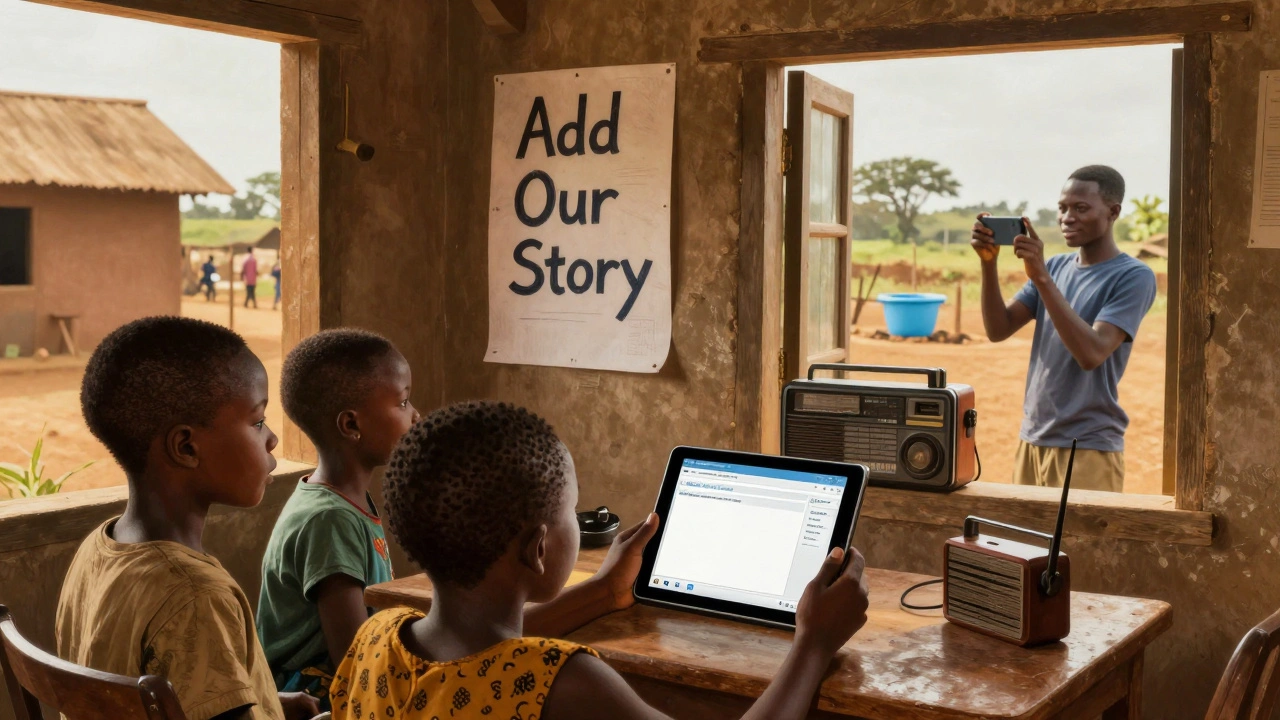
There’s no single fix. But some ideas are working. The Wikimedia Foundation now funds "edit-a-thons" in underrepresented languages, training local journalists and librarians to contribute. In Brazil, partnerships with public universities let students earn credit for editing the Portuguese Wikipedia. In Ghana, mobile teams go to villages with tablets and teach people how to add local facts.
But real change needs more than training. It needs investment. Wikipedia needs to stop treating language versions as afterthoughts. It needs to fund local content creation-not just translations. It needs to partner with local media outlets, not just global ones. And it needs to accept that not every article has to follow the same structure. A detailed article on traditional fishing methods in the Philippines shouldn’t be forced into a Western scientific format.
Wikipedia’s mission is to collect "the sum of all human knowledge." But right now, it’s mostly collecting the sum of what English-speaking editors think is important. Until that changes, the world’s knowledge will remain uneven, unbalanced, and incomplete.
Why doesn’t Wikipedia have more articles in African languages?
Many African languages lack the infrastructure needed to support large-scale editing. Internet access is uneven, digital tools aren’t always available in local languages, and there’s often no tradition of written documentation. Without local media, academic sources, or education systems that encourage online contribution, it’s hard to build depth. A few languages like Swahili and Yoruba have growing communities, but most have fewer than 20 active editors.
Is English Wikipedia the most reliable version?
Not necessarily. English Wikipedia has more articles and more editors, which means it’s updated faster and often has more citations. But reliability isn’t about quantity-it’s about accuracy. Some non-English versions, like German or Japanese Wikipedia, have stricter citation rules and fewer anonymous edits. In fact, German Wikipedia often has more detailed, peer-reviewed content than its English counterpart on topics like history and science. The best version depends on the topic and the community behind it.
Can I contribute to a Wikipedia in a language I don’t speak?
Yes, but with limits. You can translate existing articles from English or another language, but you shouldn’t write original content unless you’re fluent. Poor translations can spread misinformation. For example, a literal translation of "climate change" into a language without an equivalent term might confuse readers. The best way to help is to support local editors-donate to Wikimedia projects focused on underrepresented languages, or help train people in your region to edit their own Wikipedia.
Do governments support Wikipedia in local languages?
Sometimes. In countries like India and Brazil, public universities have partnered with Wikimedia to train students. In Rwanda and Kenya, government digital initiatives have included Wikipedia editing as part of civic education. But in authoritarian regimes, Wikipedia is often blocked or censored-especially if it covers political topics. In places like China or Iran, local language versions are either nonexistent or heavily restricted.
How does Wikipedia handle misinformation in smaller language versions?
Smaller language Wikipedias often have fewer editors, which means less oversight. That makes them more vulnerable to bias or false information. Some communities use automated tools to flag suspicious edits. Others rely on trusted volunteers who review every change. In languages with very few editors, misinformation can stay for months before being corrected. That’s why supporting these communities isn’t just about adding content-it’s about building editorial resilience.
What’s Next?
If you care about global knowledge equity, don’t just read Wikipedia-help build it. Find a language you’re connected to, even if it’s not your native one. Join an edit-a-thon. Help translate. Support local journalists who want to contribute. The future of global media isn’t just about who speaks the loudest-it’s about who gets to be heard.