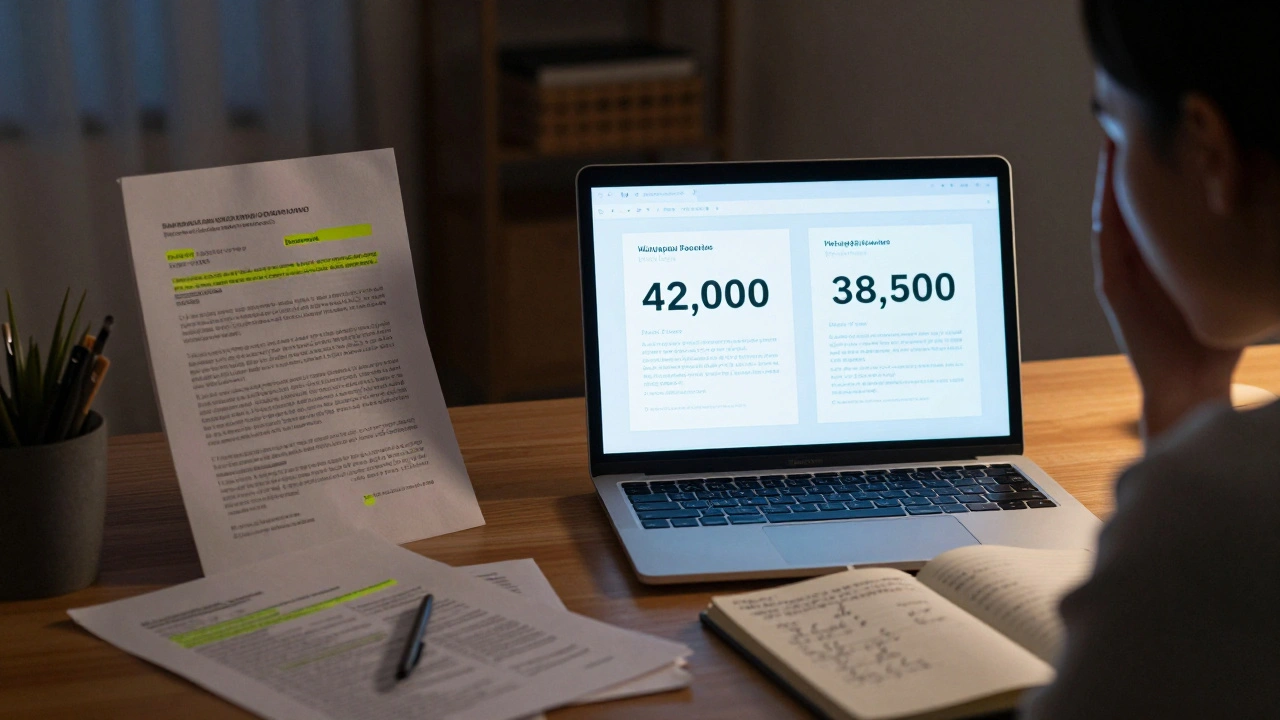
You open Wikipedia to check a simple fact-say, the population of a small city. You find two different numbers in two different articles. One says 42,000. Another says 38,500. Both cite sources. Both look legit. Now what?
Why Wikipedia Has Contradictory Information
Wikipedia isn’t a single authoritative book. It’s a living document edited by tens of thousands of volunteers. That’s its strength-and its weakness. Anyone can edit it. That means conflicting data slips in all the time. You’ll find contradictions because:- Different editors rely on different sources-some outdated, some local, some biased
- One article might use a 2020 census, another a 2023 municipal estimate
- Editors don’t always update all related pages when one changes
- Some sources themselves disagree-government agencies, academic studies, and news outlets often report different numbers
It’s not a bug. It’s a feature of open collaboration. But that doesn’t mean you should accept every number you see.
Start with the Talk Page
Every Wikipedia article has a Talk page. It’s where editors argue, clarify, and resolve disputes. If you spot conflicting info, go there first. Type the article name, then add “/Talk” to the URL.For example, if you’re looking at “Population of Green Bay, Wisconsin,” go to “Talk:Population of Green Bay, Wisconsin.”
Chances are, someone else already noticed the conflict. You might find threads like:
- “Source A says 110,000, but the U.S. Census Bureau’s 2023 estimate is 107,200. Should we update?”
- “This 2019 study was retracted. Remove it.”
- “The city’s website says 109,000. That’s more current than the census.”
These conversations show you which sources are trusted, which are disputed, and why. Editors often link to official documents, press releases, or academic papers. That’s your goldmine.
Check the References-Not Just the Numbers
Don’t just glance at the citation. Click it. Read the original source. A Wikipedia article might say “According to the 2022 State Health Report,” but what if that report only covers urban areas and excludes rural populations? Or what if the report was published in March 2022 but updated in July with revised figures?Here’s how to dig deeper:
- Find the reference number in the article (like [12])
- Click the link-it should take you to the source
- Look for the publication date, author, and methodology
- Check if it’s a government agency, university, or peer-reviewed journal
- See if other sources cite the same data
Government data (like the U.S. Census Bureau, CDC, or Bureau of Labor Statistics) is usually the most reliable. Academic journals are next. News outlets vary. Blogs and personal websites? Skip them unless they link to primary data.
One real example: A Wikipedia article on “Lead levels in Flint, Michigan water” once listed two conflicting ranges. One cited a 2015 EPA report. The other cited a 2016 Michigan Department of Health study. The EPA report was based on initial sampling. The state study used more homes and better methods. The correct number came from the later, more thorough study. The talk page had already flagged this-after three months of debate.
Look for the “Citation Needed” Tags
Wikipedia uses warning tags like Citation needed, More citations needed, or Conflicting information. If you see one, don’t ignore it. It’s a red flag.These tags are added by editors who know the info is shaky. Click the tag-it often links to the talk page where the debate is happening. Sometimes, the tag is there because no one has updated the article with the latest data. Other times, it’s because the sources are too weak to trust.
Use these tags as your starting point for investigation. If an article has multiple conflicting claims and no clear resolution, the tag tells you: “This isn’t settled. Be careful.”
Use External Tools to Cross-Check
Wikipedia isn’t the only place to check facts. Use these free tools:- Google Scholar - Search for academic studies on the topic. Look for peer-reviewed papers with large sample sizes and recent dates.
- Government databases - Try data.gov, census.gov, or your state’s official site. These are primary sources.
- Fact-checking sites - Sites like PolitiFact, Snopes, or AP News Verify have already vetted controversial claims. If they’ve covered it, read their analysis.
- Library databases - If you have access to a public library, use their subscription services like JSTOR or ProQuest. They often have older, harder-to-find reports.
For example, if you’re checking the number of people who use public transit in Chicago, Wikipedia might cite a 2021 transit authority report. But the Chicago Transit Authority’s own website updated that number in October 2025. The Wikipedia article hasn’t caught up. Go to the source.
Know When to Trust Wikipedia
Wikipedia isn’t always wrong. In fact, studies show it’s often as accurate as Encyclopædia Britannica on scientific topics. But accuracy depends on how much attention an article gets.High-traffic topics-like climate change, vaccines, or major historical events-have dozens of editors watching for errors. Contradictions get fixed fast. Low-traffic topics-like small towns, niche hobbies, or obscure historical figures-are more likely to have outdated or conflicting info.
Here’s a rule of thumb:
- High-traffic article? Probably reliable if it has 10+ citations from official sources
- Low-traffic article? Double-check every number. Look for the talk page. Find the original source.
Also, avoid articles with “This article needs attention” banners. That’s a clear signal the community knows something’s off.
How to Contribute-If You’re Confident
If you find a contradiction and you’ve verified the correct info through reliable sources, you can fix it. But don’t just edit. Explain why.Use the edit summary box to say something like:
Updated population figure to match 2025 U.S. Census estimate (https://data.census.gov). Previous figure from 2020 survey, now outdated.
Then save. The edit will show up in the article’s history. Other editors will see your reasoning. If they disagree, they’ll comment on the Talk page-and you’ll have started a conversation.
Wikipedia thrives on evidence, not opinions. If you back up your change with a credible source, you’re helping improve the site.
What to Do When You Can’t Decide
Sometimes, even after checking sources, you still get conflicting answers. That’s normal. Real-world data is messy.Here’s what to do:
- Use the range: “Estimated between 38,500 and 42,000 (sources vary)”
- Note the most recent data: “Latest official estimate (2025): 40,100”
- Explain the discrepancy: “The 2020 census recorded 38,500; the city’s 2025 projection is 42,000 due to new housing developments.”
It’s better to admit uncertainty than to pick a number that might be wrong. That’s how real research works.
Final Tip: Treat Wikipedia Like a Library Card Catalog
Wikipedia doesn’t give you the answer. It gives you a path to the answer. Think of it as a map to sources-not the source itself.Every citation is a door. Open it. Walk through. See what’s on the other side. If the doors lead to different rooms, figure out which one has the best lighting, the clearest labels, and the most recent signs.
That’s how you handle contradictory information-not by guessing, but by following the trail.