Wikipedia is the first place most students and researchers go when starting a literature review. It’s fast, free, and surprisingly detailed. But here’s the problem: your professor told you not to cite it. So what do you do?
You don’t avoid Wikipedia. You use it right.
Wikipedia isn’t a source you quote in your paper. It’s a map. A starting point. A way to find the real research that belongs in your literature review. The key isn’t whether Wikipedia is "academic"-it’s whether you know how to turn its content into credible references.
Why Wikipedia Works as a Research Tool
Wikipedia articles on academic topics are often written and edited by experts. A 2021 study from the University of Oxford found that Wikipedia entries in STEM fields had accuracy rates comparable to Encyclopaedia Britannica. That doesn’t mean you cite Wikipedia. It means the references behind it are often solid.
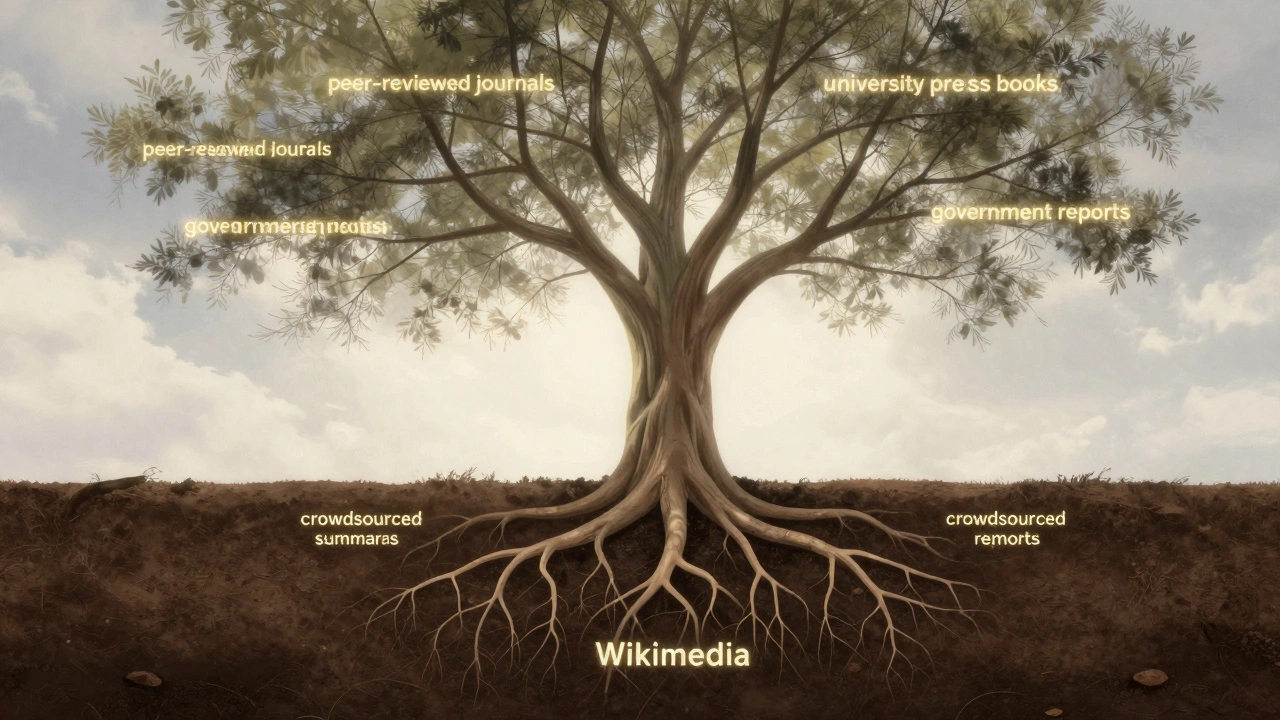
Look at the bottom of any well-written Wikipedia page. You’ll see a References section. That’s where the real research lives. Each citation there is a peer-reviewed journal article, a book from a university press, or a government report. Those are the sources you need.
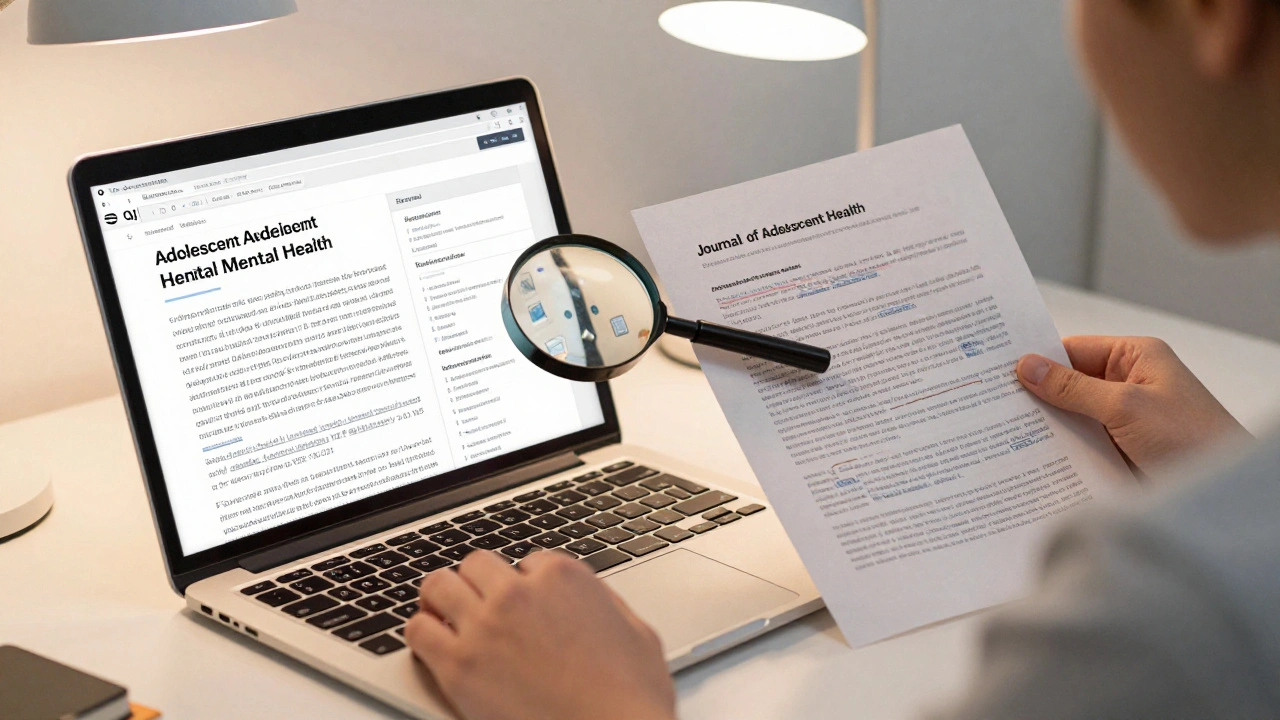
For example, if you’re writing about the effects of social media on adolescent mental health, Wikipedia might summarize key studies from the Journal of Adolescent Health or the American Psychological Association. You don’t use the summary. You track down the original studies listed in the references. Then you cite those.
How to Extract Sources from Wikipedia Entries
Here’s a simple five-step method that works every time:
- Search for your topic on Wikipedia. Use precise terms-like "cognitive behavioral therapy for anxiety in teens" instead of just "anxiety treatment."
- Read the introduction and summary sections. Get a sense of the major theories, debates, and key researchers.
- Scroll to the References section. Look for sources published in the last 10 years. Avoid anything older unless it’s a foundational study.
- Click on the citation. If it’s a journal article, copy the title and search it in Google Scholar. If it’s a book, search the title and author in your university library catalog.
- Download or access the full text. Add it to your reference manager. Then close Wikipedia.
This method works because Wikipedia acts as a filter. It’s already done the work of sorting through hundreds of papers to highlight the most relevant ones. You’re not copying its content-you’re using it to find the sources that already passed peer review.
What Not to Do
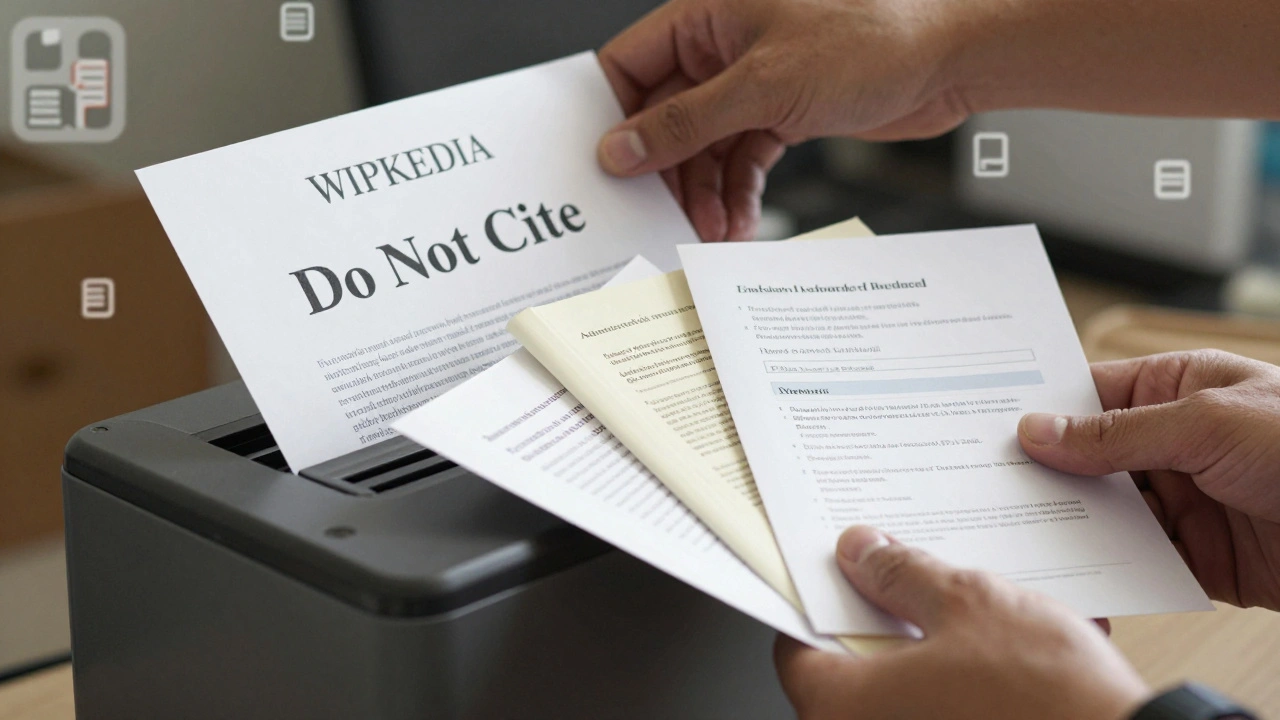
Don’t copy text from Wikipedia. Even if you paraphrase, you’re still using someone else’s synthesis without giving credit to the original authors. That’s plagiarism, even if you didn’t mean to do it.
Don’t use Wikipedia as your only source. A literature review needs depth. You need multiple perspectives, conflicting findings, and longitudinal data. Wikipedia can give you a snapshot, but not the full picture.
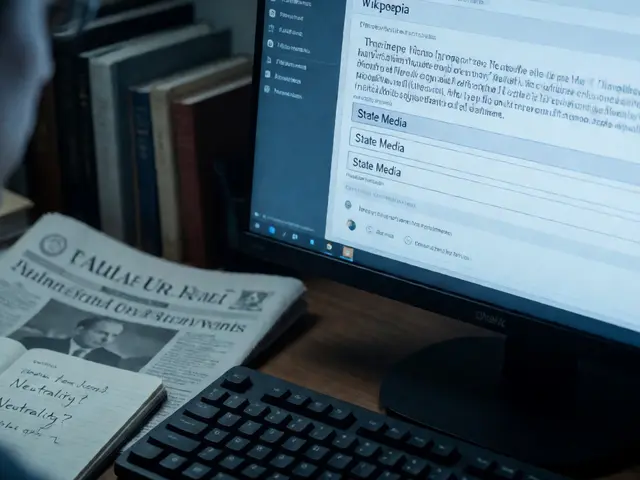
Don’t trust every Wikipedia page. Some topics-especially political, medical, or controversial ones-have poorly maintained articles. Check the talk page. Look for edit wars, warning banners, or notes like "This article needs more citations." If the article looks shaky, skip it and find another path to the source.
When Wikipedia Is Actually Useful in Academic Writing
There are two legitimate cases where you might mention Wikipedia directly in your literature review.
First, if you’re studying how knowledge is produced online. If your research is about digital literacy, misinformation, or the role of crowdsourced knowledge in academia, then Wikipedia becomes your subject-not your source. You can analyze its editing patterns, reliability over time, or how it handles disputed topics.
Second, if you’re citing a Wikipedia page as evidence of public understanding. For example, if you’re researching how the public perceives climate change, and you find that Wikipedia’s entry on the topic has been edited 300 times in a year, that’s a data point worth noting. You’re not citing the content. You’re citing the activity.
In both cases, you must cite the exact version of the page using the URL and timestamp. Wikipedia provides a "Permanent link" under the Tools menu. Use that. Don’t link to the main article page-it changes every day.
Building a Strong Literature Review Without Wikipedia Citations
Once you’ve pulled your sources from Wikipedia’s references, organize them by theme. Group studies that support the same argument. Note where they disagree. Look for gaps: What hasn’t been studied? Who’s missing from the conversation?
Use your reference manager-Zotero, Mendeley, or EndNote-to tag each source with keywords like "methodology," "sample size," or "limitation." That way, when you start writing, you can filter your sources by what you need.
For example, if your review focuses on longitudinal studies, you can pull only those tagged as such. You’ll avoid mixing in cross-sectional data that doesn’t fit your framework.
Wikipedia helped you find those studies. But now you’re working with real academic work. That’s what your professor wants to see.
Common Mistakes and How to Fix Them
Here are the three most common errors students make when using Wikipedia in literature reviews-and how to avoid them.
- Mistake: "I cited Wikipedia because it had the definition I needed." Fix: Use a dictionary or academic glossary instead. Merriam-Webster’s Medical Dictionary or the APA Dictionary of Psychology are free online and properly cited.
- Mistake: "I used Wikipedia to save time." Fix: Yes, it saves time-but only if you use it to find sources, not to write your paper. The real time-saver is knowing exactly which journal articles to read.
- Mistake: "I thought it was okay because my friend did it." Fix: Academic standards aren’t set by peers. They’re set by journals, universities, and peer review. Follow their rules.
There’s no shame in using Wikipedia. But there’s real risk in using it the wrong way.
Final Checklist for Using Wikipedia in Your Literature Review
Before you submit your paper, run through this quick checklist:
- Did I use Wikipedia only to find sources, not to write content?
- Did I track every source back to its original publication?
- Did I cite peer-reviewed journals, books, or reports-not Wikipedia?
- Did I avoid citing Wikipedia unless my topic is about Wikipedia itself?
- Did I check the reliability of each Wikipedia page I used as a starting point?
If you answered yes to all five, you’ve done it right.
Wikipedia isn’t the enemy of academic writing. It’s a tool. Like a library card. Like a search engine. Like a citation manager. It’s not the source. But it can lead you to one.
Can I cite Wikipedia in my academic literature review?
No, you should not cite Wikipedia as a source in a literature review unless your research topic is specifically about Wikipedia itself. Wikipedia is an encyclopedia, not a peer-reviewed source. Instead, use the references listed at the bottom of Wikipedia articles to find original scholarly work and cite those directly.
Why do professors say not to use Wikipedia?
Professors discourage citing Wikipedia because it’s editable by anyone, and its content can change without notice. Academic writing requires stable, verifiable sources that have undergone peer review. Wikipedia doesn’t meet that standard. But it’s still useful for finding sources that do.
Is Wikipedia accurate enough for academic research?
Studies show that Wikipedia’s accuracy in scientific and medical topics is often comparable to traditional encyclopedias. However, accuracy varies by topic and how recently the page was updated. Always check the references, edit history, and talk page to assess reliability before using it as a research starting point.
How do I find scholarly sources from Wikipedia references?
Click on any citation in Wikipedia’s References section. Copy the title or author name and search it in Google Scholar or your university library database. Most will lead you to peer-reviewed journal articles, books, or government reports. Use those as your actual sources.
What should I do if a Wikipedia article has no references?
If a Wikipedia article lacks citations, don’t use it as a research starting point. Look for another article on the same topic, or use academic databases directly. A lack of references usually means the content is either outdated, poorly maintained, or not yet vetted by experts.