When you turn on the news during an election season, it’s easy to feel like you’re being sold a story instead of being told one. The headlines scream. The talking heads raise their voices. And somewhere in the middle of it all, the truth gets buried under layers of opinion, outrage, and selective facts. This isn’t new. But today, with social media amplifying every echo chamber and algorithms rewarding outrage over accuracy, keeping a neutral point of view in political reporting isn’t just hard-it’s becoming a radical act.
What Does Neutral Even Mean?
Neutral doesn’t mean you ignore facts. It doesn’t mean you’re passive. It doesn’t mean you say both sides are equally right when one side is clearly lying. A neutral point of view in journalism means presenting the facts as clearly, completely, and contextually as possible-without letting your own beliefs, your audience’s expectations, or the pressure of ratings shape what gets reported.
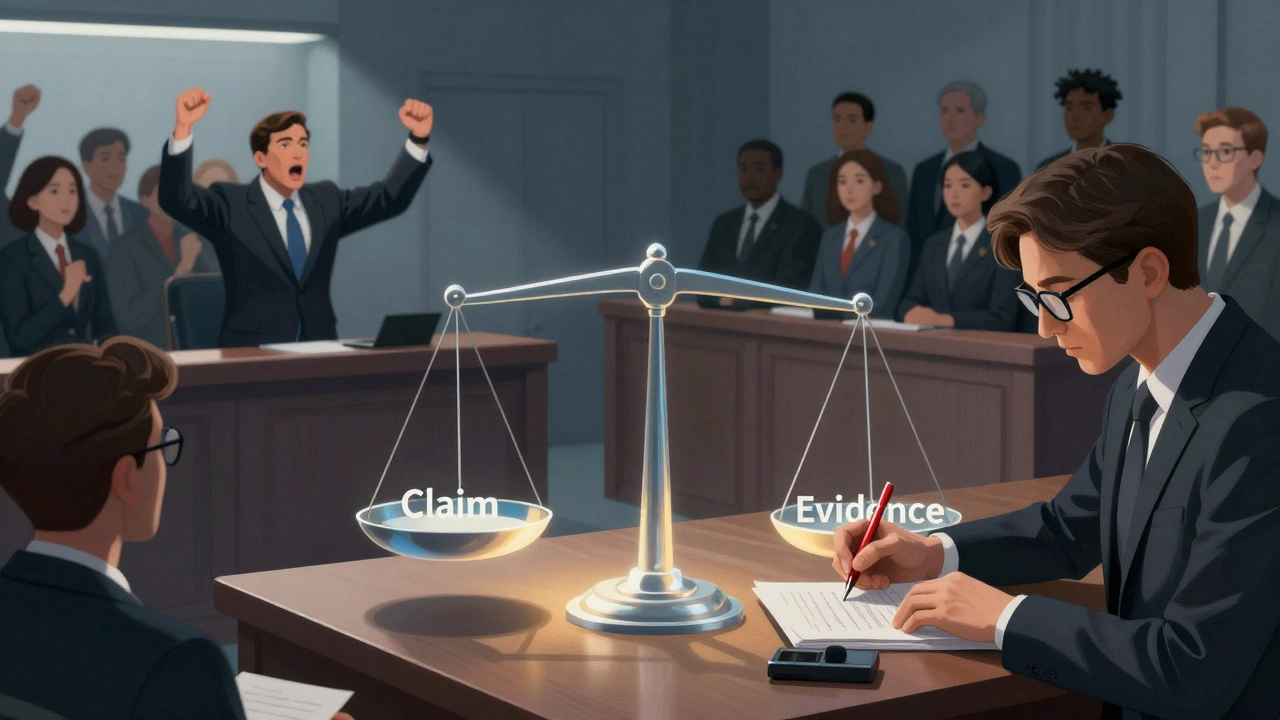
Think of it like a courtroom. The reporter isn’t the prosecutor or the defense attorney. They’re the court stenographer. Their job isn’t to argue for guilt or innocence. Their job is to record what was said, what was shown, what was denied-and leave the judgment to the jury. In politics, the jury is the public. The reporter’s job is to make sure the jury has all the evidence, not just the evidence that fits a narrative.
Why Is This So Hard Right Now?
Let’s be honest: most newsrooms are under pressure. They need clicks. They need shares. They need to keep their audience from walking away. And when your audience is deeply partisan, the easiest way to keep them engaged is to feed them confirmation bias.
A 2024 study by the Pew Research Center found that 68% of Americans get their political news from sources they trust because those sources align with their political identity-not because they’re accurate. That means when a reporter tries to present both sides of a claim, they’re often accused of being “fake” by one side and “biased” by the other. The result? Many journalists give up. They pick a side. Or they avoid hard stories altogether.
But here’s the problem: when journalism abandons neutrality, democracy loses its shared reality. If half the country believes one version of events and the other half believes a completely different version, there’s no common ground for debate. There’s only war.
How Do You Actually Stay Neutral?
It’s not about being emotionless. It’s about being disciplined. Here’s how it works in practice:
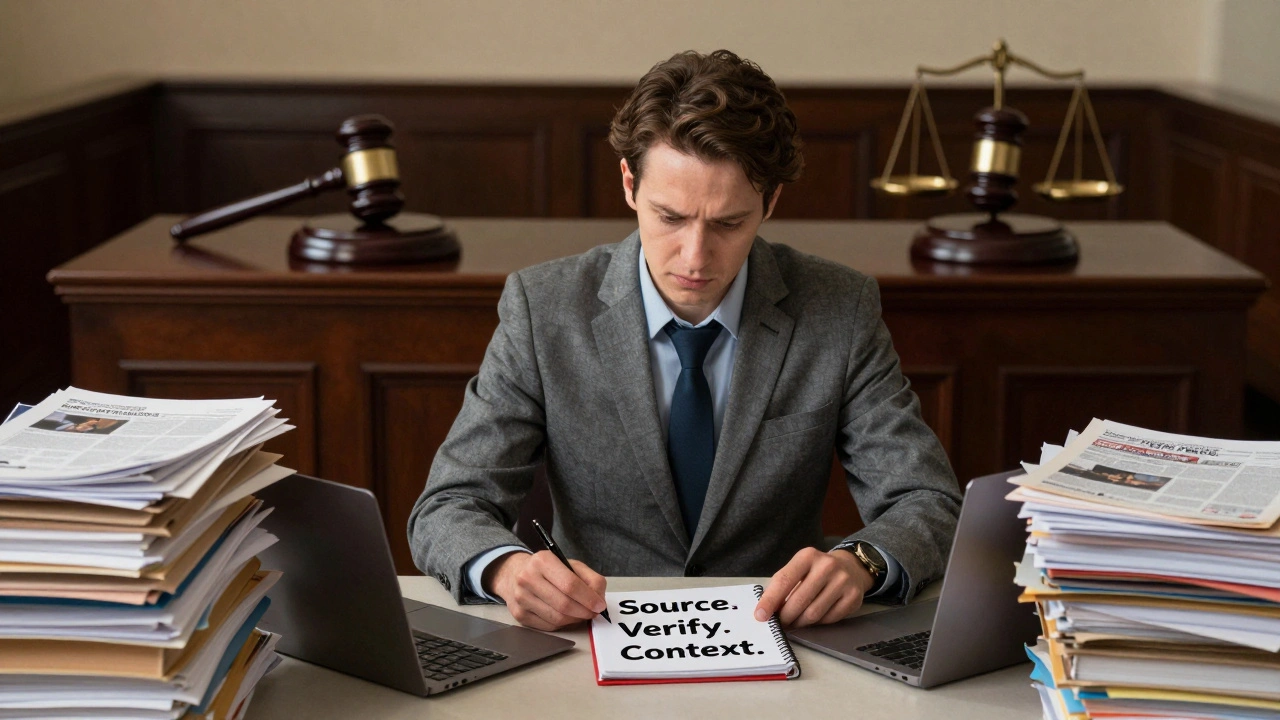
- Source everything. Don’t report a claim unless you can trace it to at least two independent, credible sources. If a politician says “unemployment dropped 30%,” find the original data. Check the agency that released it. See how it compares to historical trends. Don’t take the politician’s word-or your editor’s.
- Context is king. A statistic without context is a lie. Saying “crime rose 15% last year” means nothing unless you tell readers: Was it 14% the year before? Is it still below the 2010 average? Did it spike in one neighborhood or across the whole state? Numbers without context are weapons.
- Don’t give equal weight to unequal claims. If one side says climate change is a hoax and the other cites 97% of climate scientists, don’t say “some experts believe…” as if both sides are equally valid. Call out the falsehood. Say: “This claim has been repeatedly debunked by peer-reviewed research.” That’s not bias. That’s accuracy.
- Use plain language. Avoid loaded terms like “radical,” “extremist,” or “elite.” These words carry emotional weight. Instead, describe behavior. “The lawmaker blocked all amendments to the bill” is better than “The radical lawmaker sabotaged the process.”
- Explain your process. If you’re covering a heated debate, add a short sidebar: “How we reported this.” List your sources. Mention what you couldn’t verify. Transparency builds trust better than pretending you’re omniscient.
Real-World Examples of What Works
In 2023, the Associated Press covered the debate over abortion access in Ohio. Instead of framing it as “pro-life vs. pro-choice,” they broke it down this way:
- What did the ballot measure actually say?
- What did medical experts say about the health impacts?
- What were the legal precedents?
- What did voters in similar states do in the past?
No opinion. No slogans. Just facts, layered with context. The article got 2.3 million views. Comments were split-but the vast majority said: “Finally, someone told me what happened, not what they think.”
Similarly, the BBC’s political unit has a strict internal rule: if a claim is made by a public official, they must verify it within 24 hours before reporting it-even if it’s a headline-worthy claim. This rule has cost them scoops. But it’s saved them from being the source of misinformation.

The Cost of Failing
When journalists stop trying to be neutral, they stop being trusted. A 2025 Gallup poll found that only 23% of Americans believe news organizations “report the truth.” That number was 41% in 2010.
And it’s not just about trust. It’s about safety. Journalists who are seen as “biased” are targeted. In 2024, over 120 reporters in the U.S. were physically threatened after covering election-related stories-most because their reporting was labeled “fake” by partisan influencers.
When neutrality is abandoned, journalism becomes a weapon. And when journalism becomes a weapon, democracy becomes a battlefield.
What Can You Do?
You don’t have to be a reporter to demand better. Here’s how you can help:
- Ask: “Where did this come from?” before sharing a headline.
- Support outlets that show their sourcing. Look for “How we reported this” boxes.
- Call out bias-on both sides. If a news site always portrays one party as villains and the other as heroes, stop consuming it.
- Read the same story from two different outlets. Compare how they frame it. Notice what’s left out.
- Don’t punish journalists for being fair. If they report something you don’t like, challenge the facts-not the fairness.
Neutrality isn’t about being boring. It’s about being brave. It’s about standing in the middle of the storm and saying: “Here’s what happened. Here’s what we know. Here’s what we don’t. The rest is up to you.”
That’s not easy. But it’s the only way we’ll ever find our way back to a shared truth.
Can a journalist ever be completely neutral?
Complete neutrality is impossible-everyone has biases. But professional journalism doesn’t require perfection. It requires discipline. Journalists are trained to recognize their own biases, check facts with multiple sources, and correct errors publicly. The goal isn’t to be emotionless-it’s to ensure that personal beliefs don’t shape the story. That’s why newsrooms have editors, fact-checkers, and ethics guidelines. It’s a system designed to minimize bias, not eliminate it.
Isn’t neutrality just giving equal time to lies?
No. Neutrality isn’t about false balance. It’s about truth. If a claim is false, you don’t say “some say X, others say Y.” You say “X is false, according to Y sources.” For example, if someone claims vaccines cause autism, you don’t present that as a valid opinion. You state: “This claim has been thoroughly disproven by dozens of peer-reviewed studies from institutions like the CDC and WHO.” That’s not bias-it’s reporting the truth. Journalists who do this correctly aren’t taking sides-they’re upholding facts.
Why do some outlets claim they’re neutral but still seem biased?
Because “neutral” is often used as a marketing term. Some outlets use the word to sound fair while subtly favoring one side through word choice, framing, or what they leave out. For example, calling one side “pro-choice” and the other “anti-abortion” isn’t neutral-it’s framing. True neutrality uses consistent, descriptive language: “supporters of abortion access” and “opponents of abortion access.” The difference isn’t subtle. It’s intentional. Always look at how sources are selected, how quotes are edited, and what context is missing.
Do news organizations have guidelines for neutrality?
Yes. Major outlets like The New York Times, Reuters, and the BBC have detailed journalism ethics manuals. The AP Stylebook, used by over 90% of U.S. newsrooms, includes specific rules on avoiding loaded language. For example, it advises against using “terrorist” unless legally confirmed and recommends “alleged” when guilt isn’t proven. These aren’t suggestions-they’re rules. Journalists who break them risk being fired. The fact that these guidelines exist shows that neutrality isn’t a myth-it’s a practiced standard.
What’s the difference between neutrality and objectivity?
Neutrality is about how you present information: fairly, without favoritism. Objectivity is about how you gather it: using evidence, not emotion. You can be objective without being neutral-like a scientist who believes in a theory but reports data that contradicts it. You can be neutral without being objective-like a reporter who repeats claims without checking them. The best journalism combines both: gathering facts rigorously and presenting them fairly. Most modern newsrooms prioritize neutrality because it’s more practical. Objectivity, as a philosophical ideal, is harder to measure.