Every week, a small but fiercely dedicated team of volunteers publishes a newspaper that no one pays for, no one sells, and yet millions read. It’s not a traditional news outlet. It doesn’t have advertisers or a headquarters. It’s The Signpost, the independent newspaper of the Wikipedia community. And every now and then, it goes beyond its weekly format to produce something special - a special edition, crafted to capture the big moments that move Wikipedia forward.
What Makes a Special Edition?
Most weeks, The Signpost runs about five to seven short articles: updates on policy changes, disputes between editors, new tools, and occasional human-interest stories from the editing front lines. But when something big happens - like a major policy vote, a surprise leadership change, or the annual Wikimania conference - the team steps up. They pause the regular schedule. They pull together reporters from across the globe. And they publish a special edition that feels more like a magazine than a newsletter.
These aren’t just longer articles. They’re carefully researched, deeply sourced, and often include interviews with people you’d never see quoted elsewhere - the volunteer who ran the server room for ten years, the librarian who helped organize the first Wikimania in Europe, or the teenager who started editing after seeing a typo in a Wikipedia article about her hometown.
Wikimania: The Heartbeat of the Movement
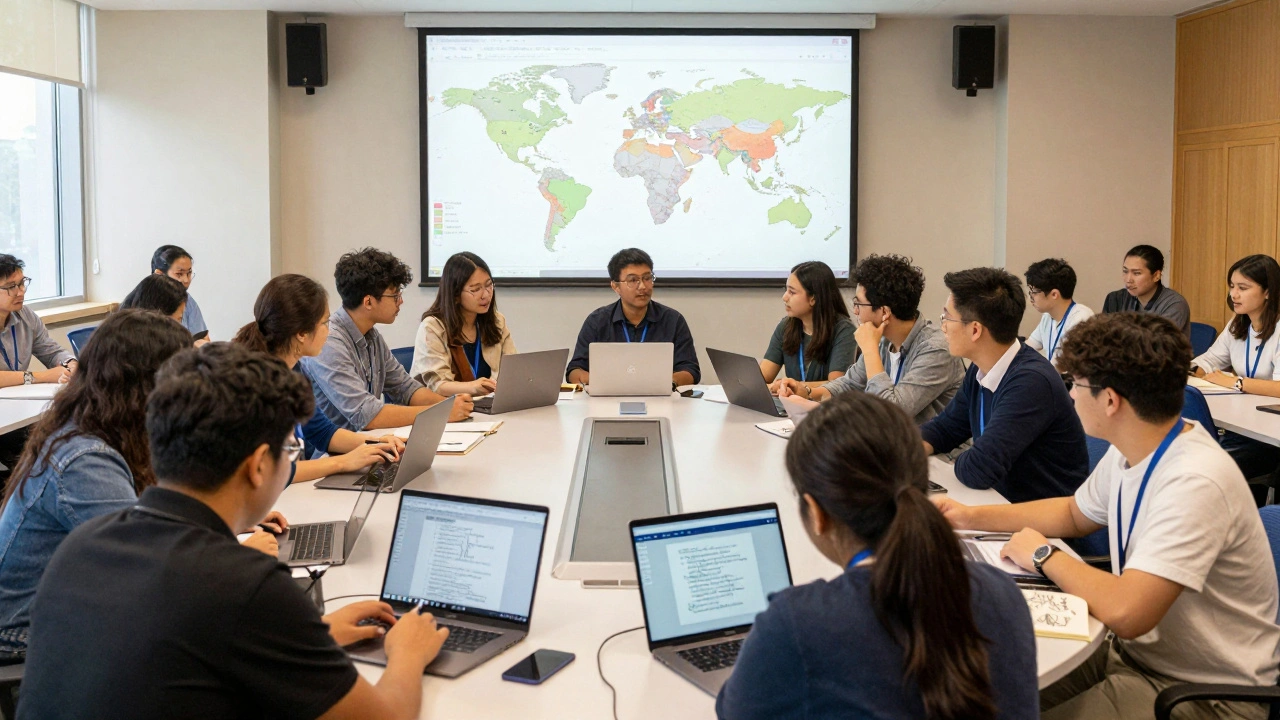
Wikimania is Wikipedia’s annual global gathering. It’s not a corporate summit. There are no keynote speeches from CEOs. Instead, you’ll find hundreds of volunteers from over 80 countries meeting in a hotel conference center - sometimes in a university, sometimes in a museum - to talk about how to make Wikipedia better. They debate citation standards in the lobby. They fix broken links in the cafeteria. They argue about gender representation in the hallway.
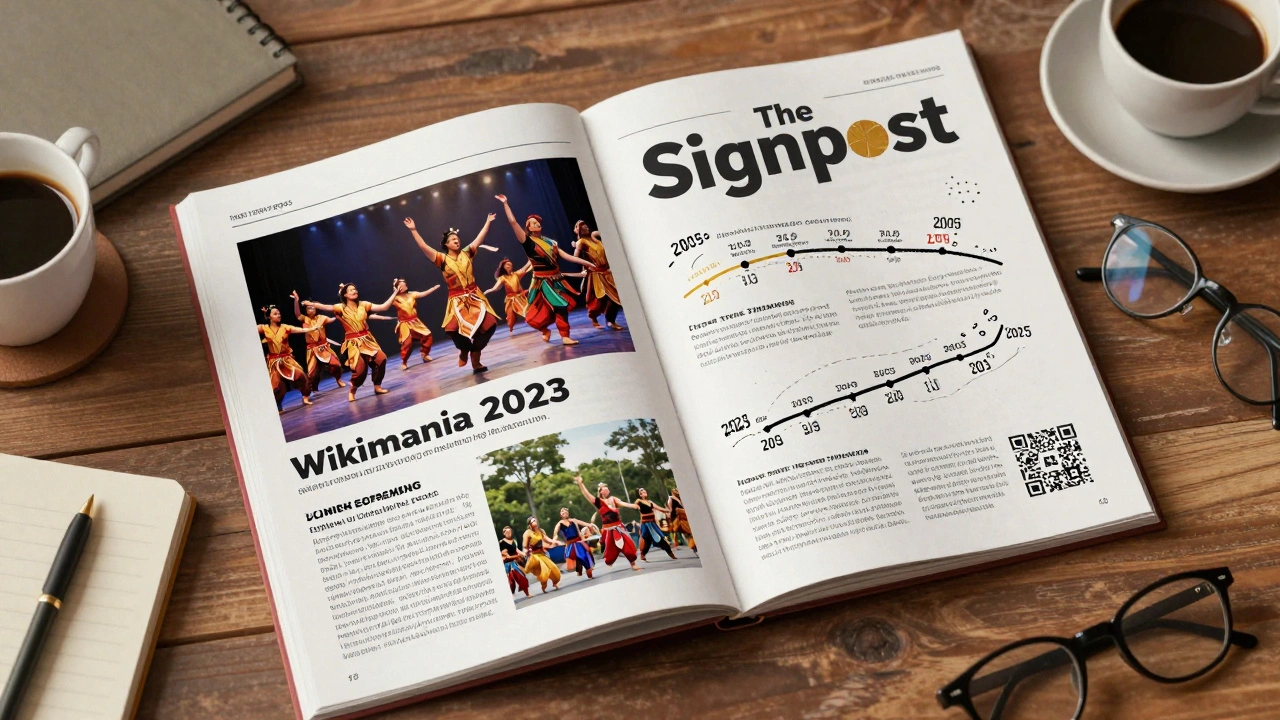
Special editions of The Signpost have covered every Wikimania since 2007. The 2023 edition in Singapore ran 42 pages. It included a map of where editors traveled from, a breakdown of which languages saw the biggest growth, and a photo essay of the night when the Thai community hosted a traditional dance performance for the whole conference. That edition alone had over 170,000 page views in its first week.
One of the most memorable special editions came after Wikimania 2019 in Stockholm. A team of six editors spent six weeks compiling stories from attendees. They found that 38% of participants had never met another editor in person before. One woman from rural Nigeria described how she traveled 12 hours by bus and train just to attend. Another man from Venezuela shared how Wikipedia helped him rebuild his medical library after the country’s internet collapsed. These weren’t statistics. They were human moments - and The Signpost gave them space to breathe.
How Special Editions Are Made
There’s no editorial board. No paid staff. Just volunteers who show up, week after week, to write, edit, and fact-check. When a special edition is planned, a call goes out on the project’s mailing list. People reply with ideas. Someone volunteers to lead research. Another offers to design the layout. A third handles translations. It’s messy. It’s slow. And it works.
For the 2025 Wikimania special edition - covering the event in Cape Town - the team spent three months preparing. They reached out to editors in South Africa, Kenya, and Nigeria to get local perspectives. They interviewed the head of the Wikimedia Foundation’s Africa program. They tracked how many new articles were created during the conference, and which ones were most cited afterward. They even included a QR code linking to an audio interview with a 92-year-old editor from Johannesburg who started contributing in 2004.
The final product? A 56-page PDF with original photography, sidebars on editing challenges in underrepresented languages, and a timeline of Wikimania’s evolution from 2005 to 2025. It was downloaded over 200,000 times. And it was all done by people who don’t get paid a cent.
Why It Matters
Wikipedia is often called the encyclopedia that anyone can edit. But that’s only half the story. The real miracle is that it’s also the encyclopedia that anyone can write about - even the people who build it. The Signpost’s special editions do something rare: they treat Wikipedia not as a static database, but as a living, breathing community.
When you read a special edition, you don’t just learn about a conference or a policy change. You learn about the people behind the edits. You see how a single article on the history of indigenous languages in Bolivia grew from a few sentences into a full chapter because five editors from three continents spent months collaborating. You understand why a volunteer in Ukraine stayed up all night during the war to update casualty statistics - not because they were paid, but because they believed it mattered.
These editions are archives. They’re history. And they’re proof that the internet doesn’t have to be driven by algorithms and clicks to create something meaningful.
The Legacy of the Special Editions
Some of the most important moments in Wikipedia’s history were first documented in these special issues. The 2011 edition covering the “Wikimedia Foundation v. NSA” lawsuit was cited in legal papers. The 2017 edition on gender gaps in editing became a key reference in UN reports. The 2020 edition on misinformation during the pandemic was used by university courses in journalism and media studies.
They’re not perfect. Sometimes deadlines slip. Sometimes sources are wrong. But they’re honest. They’re transparent. And they’re built by the same people who fix broken links and argue over citation styles every day.
There’s no subscription fee. No paywall. No ads. Just a website, a PDF, and a belief that stories about community matter - even when the community is made of strangers who’ve never met.
How to Find and Use These Editions
Special editions are archived on The Signpost’s website under the “Special Reports” section. You can browse them by year or topic. Each one includes a downloadable PDF, a full HTML version, and a list of contributors. Many are translated into Spanish, French, Arabic, and Russian.
They’re useful for:
- Researchers studying online collaboration
- Wikipedia editors looking for context on past decisions
- Students learning about open-source communities
- Anyone curious about how the world’s largest encyclopedia really works
Want to contribute? You don’t need to be a journalist. If you’ve edited Wikipedia for more than a year, you can apply to join the team. The Signpost trains its own reporters. They teach you how to interview, how to fact-check, and how to write without bias. No experience needed - just curiosity and a willingness to listen.
Are special editions of The Signpost official Wikipedia publications?
No. The Signpost is entirely independent. It is not run by the Wikimedia Foundation, nor does it represent official policy. It’s a community-run newspaper written by volunteers, for volunteers. While it often reports on Foundation decisions, it also critiques them. That independence is why so many editors trust it.
Can I submit a story idea for a special edition?
Yes. The Signpost welcomes story pitches from any registered Wikipedia editor. You can submit ideas through their public discussion page or by emailing the editorial team. They especially encourage stories from underrepresented regions and languages. If your idea is compelling, they’ll help you report it - even if you’ve never written a news article before.
How often do special editions come out?
There’s no set schedule. They’re published when something significant happens - usually once or twice a year. The most common triggers are Wikimania, major policy votes, or large-scale community initiatives like the 2024 Global Edit-a-thon on Indigenous Knowledge. Some years have none. Others have three.
Are special editions available in languages other than English?
Yes. Since 2019, the team has partnered with volunteer translators to produce full translations of major special editions into Spanish, French, Arabic, Russian, and Portuguese. Smaller summaries are available in over a dozen other languages. You can find them on the same archive page, labeled by language.
Do special editions include original data or just reporting?
They often include original analysis. For example, the 2023 Wikimania edition included a dataset of 12,000 edits made during the conference, mapped by language and region. The 2024 edition on AI and Wikipedia featured a survey of 3,500 editors about their views on AI-assisted editing. These aren’t just summaries - they’re primary research, done by volunteers using public data and open tools.